


Indian Pierced Wood Table
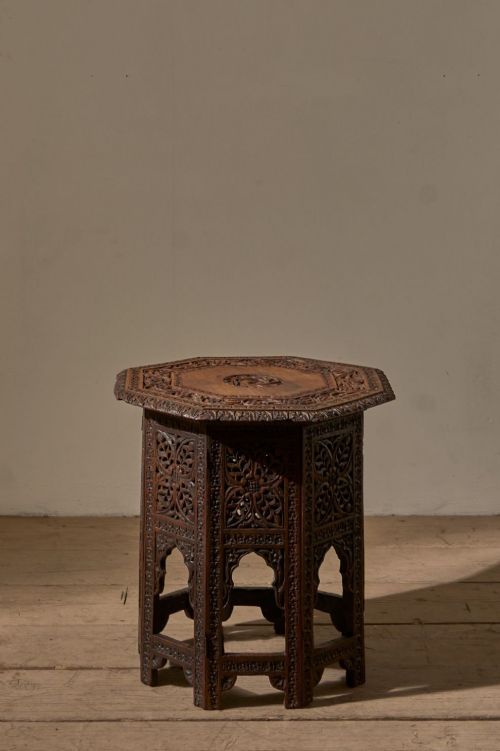
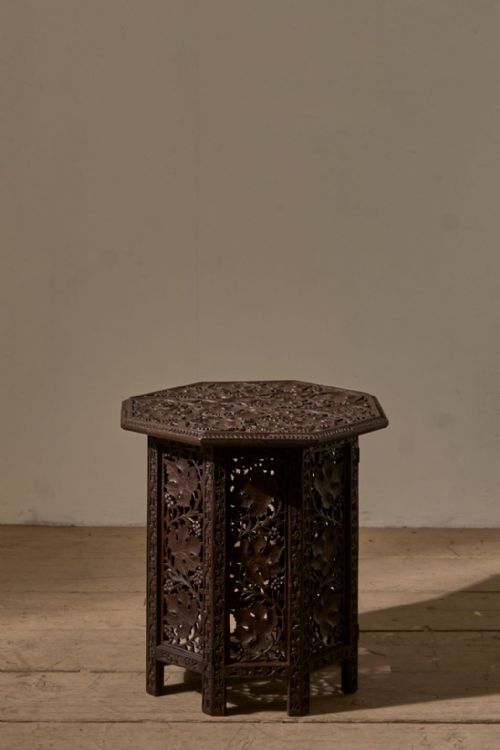
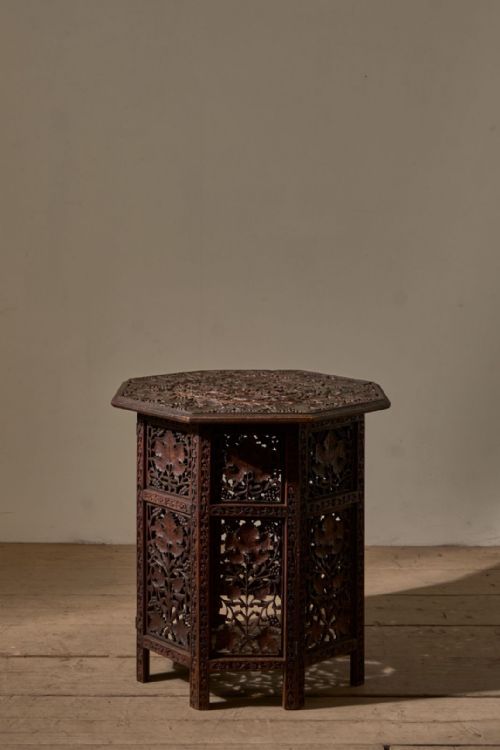
An indian pierced wood table brings intricate colonial craftsmanship into a room, offering deep relief carving and distinctive folding or occasional forms.
Indian Pierced Wood Table
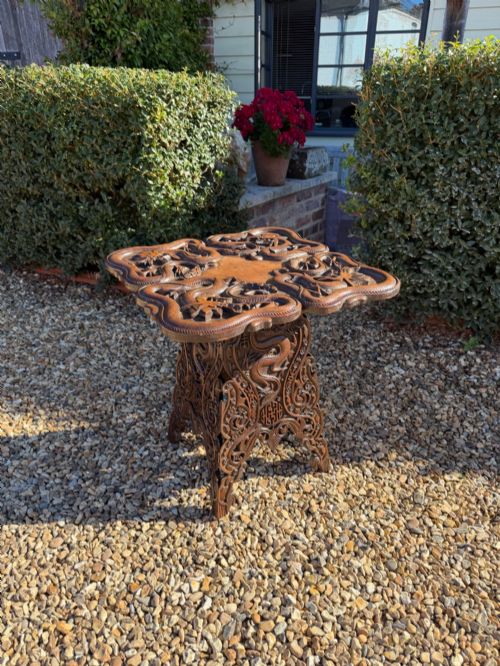
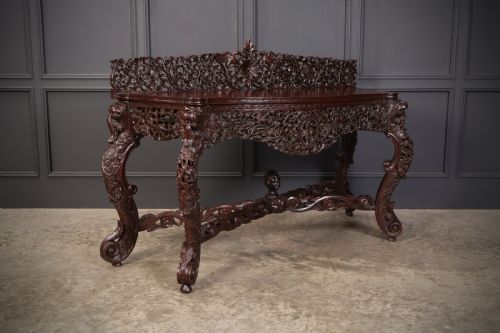
An indian pierced wood table encompasses side tables, occasional tables, console tables, and centre tables originating from the nineteenth century through the early decades of the twentieth century. These pieces frequently reflect Anglo-Indian, Anglo-Burmese, and colonial styles, capturing the stylistic interchange between British domestic demands and South Asian woodworking traditions.
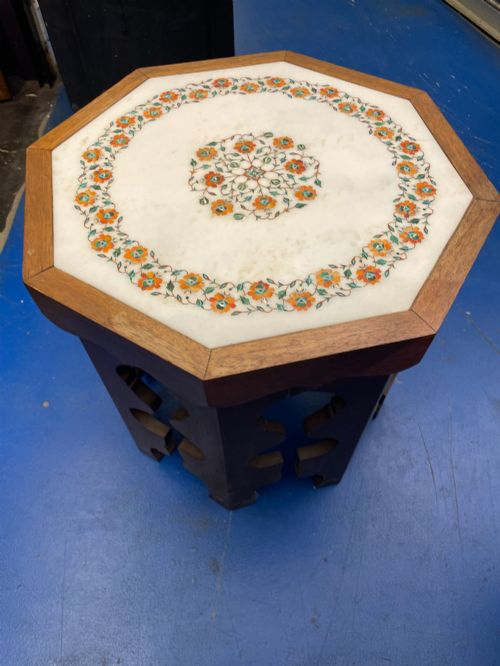
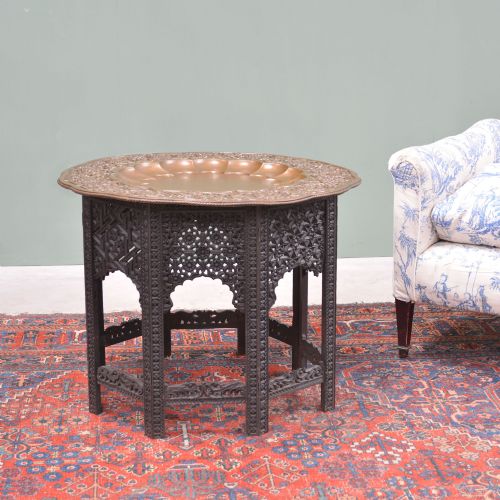
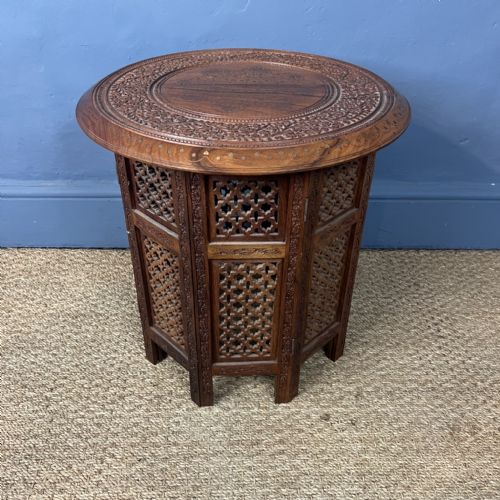
The most common examples on this page are side tables and occasional tables featuring folding mechanisms, removable tray tops, or tilt-top designs in teak, padauk, and rosewood. Makers often utilised dense tropical timbers that accepted deep pierced carving and intricate fretwork without losing structural integrity.
Assessing Quality
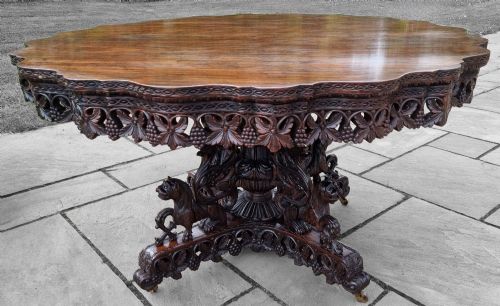
Quality rests upon the crispness and depth of the hand carving, where superior examples exhibit undercut foliage and sharply defined figurative details rather than shallow, mechanical stamping. The choice of timber also dictates the standard of the piece, with dense, figured padauk and rosewood achieving finer definition than softer secondary woods.
The integrity of the construction, especially in folding and tilt-top mechanisms, distinguishes finer workshop production from standard utility items. Furthermore, the precision of brass or bone inlay work and the retention of original surface patination determine the standing of an individual piece.
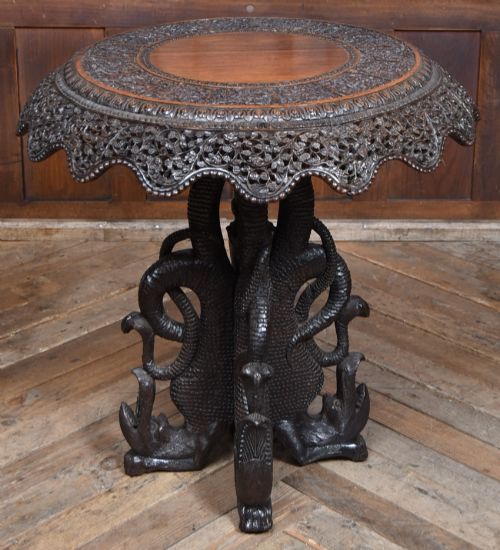
Several tables feature hidden serpents and peacocks carved deep within the foliage.
The Indian Pierced Wood Table Glossary
- Anglo-Indian
- A style of furniture produced in India during the British colonial period, combining European furniture forms with traditional South Asian carving techniques.
- Padauk
- A heavy, durable reddish-brown tropical hardwood favoured by colonial makers for its stability and suitability for deep relief carving.
- Fretwork
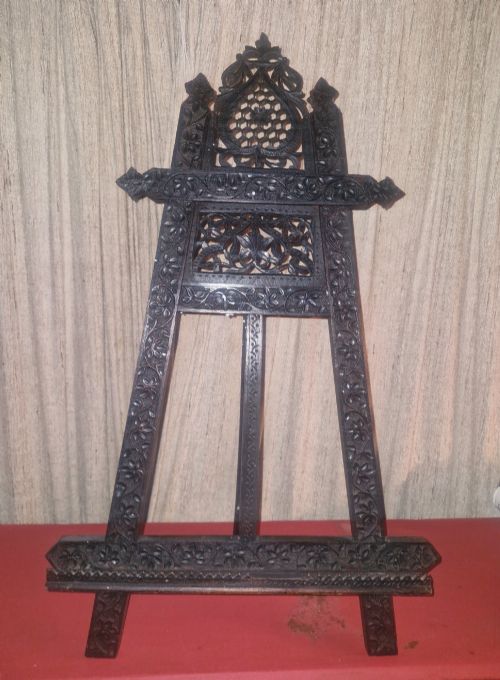
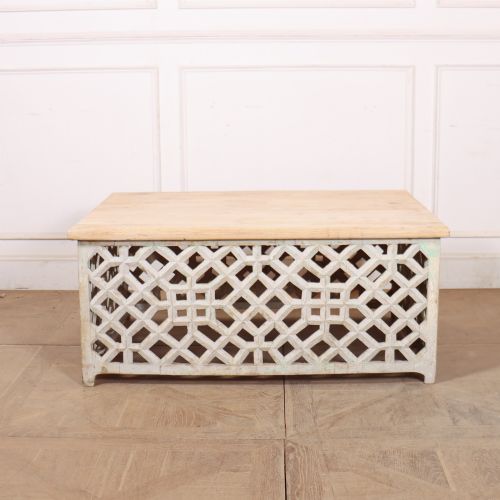
- Ornamental perforated woodwork created by cutting patterns through thin boards, commonly seen in the pierced friezes and panels of these tables.
- Campaign Table
- Portable furniture designed to fold or dismantle easily for travel, often fitted with clever hinges and folding X-frames.
- Tray Top
- A removable tabletop with a raised rim, frequently designed to lift off a folding or fixed wooden stand for serving or display.
Indian Pierced Wood Table: Frequently Asked Questions
How do I care for an indian pierced wood table?
Dust the intricate pierced carvings regularly using a soft brush to prevent the accumulation of dirt within the recesses. Feed the hardwood surface occasionally with a mild, traditional wax to preserve the natural grain and protect the dry timber.
Avoid placing these tables in direct sunlight or near heat sources, as extreme temperature fluctuations can cause the dense tropical woods and inlaid metals to warp or contract.
Were these tables made for export?
Many of these pieces were produced specifically for the export market and the domestic British colonial residences during the nineteenth and early twentieth centuries. They combined traditional local woodworking skills with European furniture shapes such as occasional, centre, and console tables.
Workshops in regions such as Hoshiarpur and Burma developed distinct regional styles to satisfy British demand for ornate, exotic home furnishings.
How do I distinguish between Indian and Burmese examples?
Burmese pieces frequently utilise heavily carved teak and padauk with deep, sculptural figures, often displaying dense foliage, dragons, or mythological motifs. Indian examples, particularly those associated with Hoshiarpur, more commonly feature intricate geometric pierced fretwork combined with delicate brass or bone inlay.
Examining the underlying timber and the specific character of the piercing will usually indicate the regional workshop tradition.
Are the folding tables structurally stable?
The folding bases and X-frame supports are engineered to hold steady when fully opened, though the nature of older joints requires careful handling. Many were designed for occasional use or colonial portability rather than heavy permanent loading.
Checking the pivot points and hinges ensures the frame locks securely into position before placing any items on the surface.