


Vintage Indian Coffee Table
A vintage indian coffee table brings low, heavily carved surfaces and intricate brass or bone inlay into a modern sitting room.
Vintage Indian Coffee Table
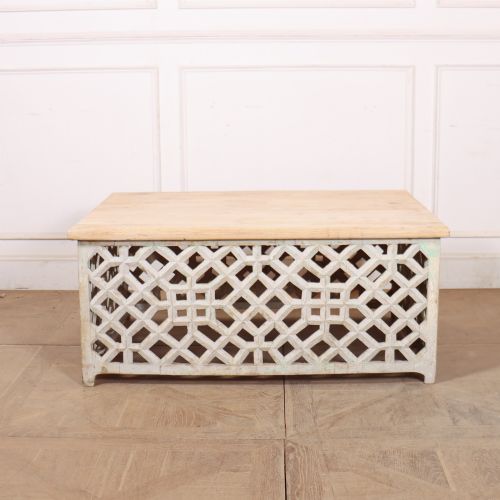
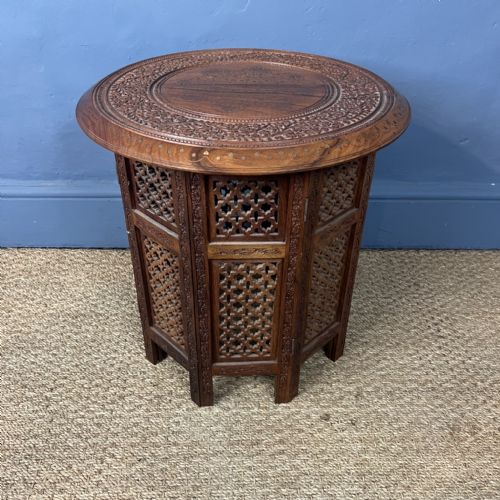
When you search for a vintage indian coffee table, you encounter low occasional surfaces designed for sitting close to the floor, often adapted from traditional low tables, trays and trunks. The selection spans periods from the Georgian era through Victorian times into the early twentieth century, taking forms such as octagonal folding tables, nests of three, and carved coffee tables.
The aesthetic bridges British colonial taste and traditional South Asian craftsmanship, resulting in Anglo-Indian and colonial Indian styles. Alongside coffee tables, the groupings include side tables, daybeds, hall benches and occasional tables that share the same low proportions and dense surface ornamentation.
Materials and construction
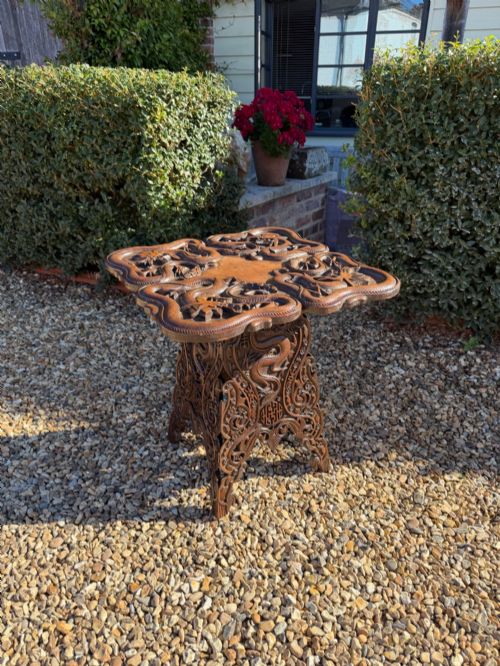
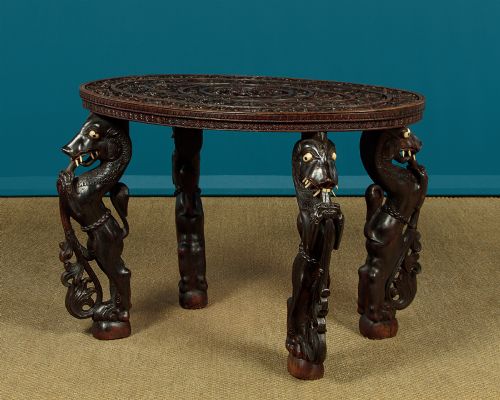
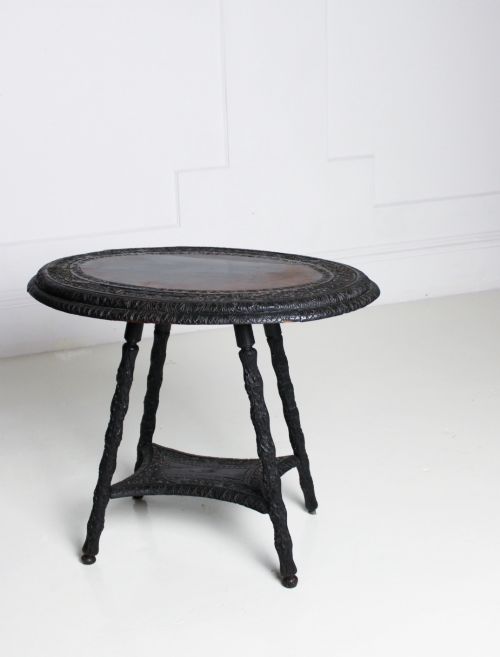
Cabinetmakers utilised dense timbers including teak, rosewood, walnut and general hardwood as the structural base for carving and inlay work. Artisans shaped these woods into folding frames, octagonal tops and sturdy legs often carved in the form of elephants.
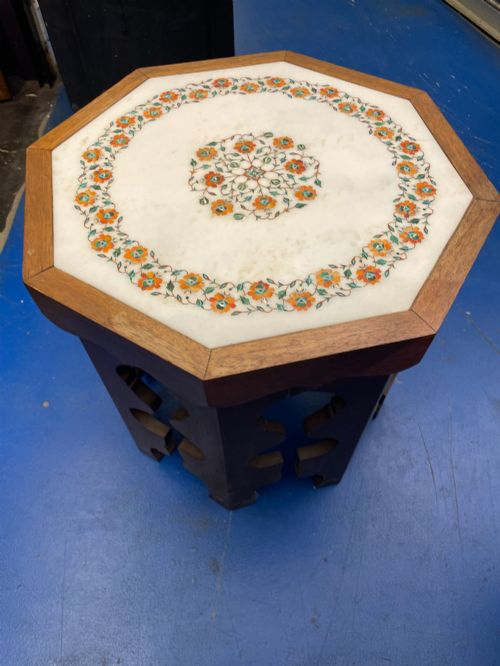
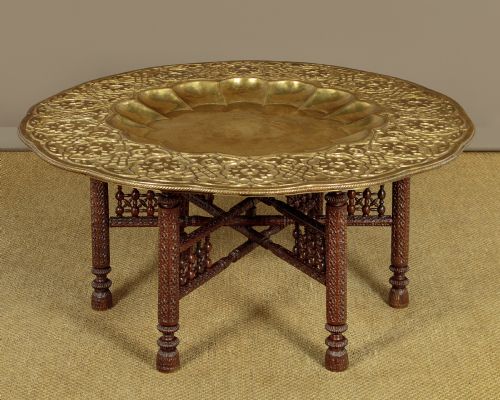
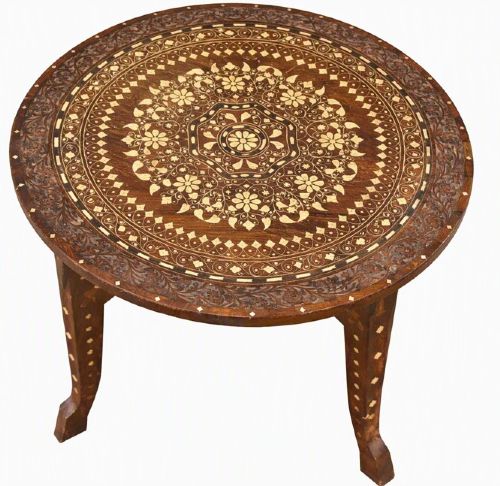
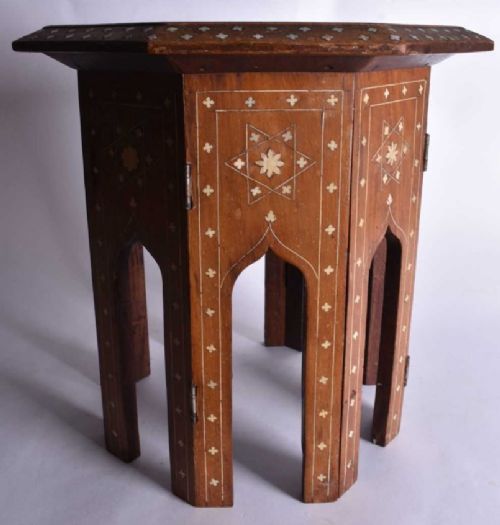
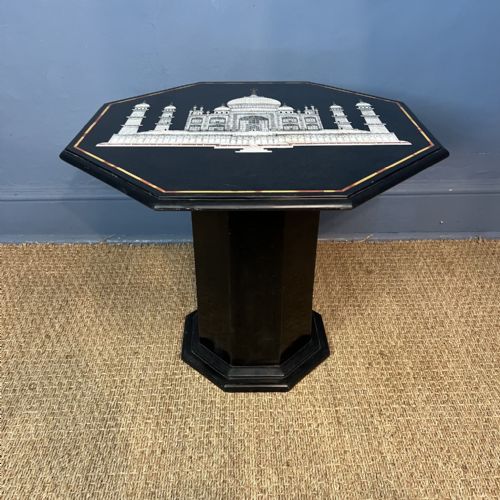
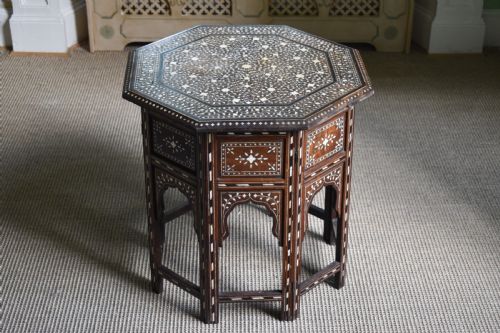
Surfaces receive elaborate decoration through brass, copper, mother-of-pearl and bone inlay, alongside intricate surface carving. Tray tops and folding bases allow versatility, while specialised techniques produce distinctive regional styles such as Hoshiarpur inlay and black marble Taj Mahal work.
Object forms span coffee tables, side tables, nests of tables, daybeds, hall benches, and octagonal folding Damascus tables originating from the nineteenth and early twentieth centuries.
Factors of quality
Quality rests upon the depth, crispness and ambition of the hand carving across the hardwood structure. Pieces featuring fully realised figurative elements like elephant heads display superior artisan skill compared to simpler geometric surfaces.
The integrity of the inlay work marks the difference between tiers of craftsmanship. Complete retention of bone, mother-of-pearl, brass or copper wire without replacement sections elevates a table, as does the stability of folding mechanisms and joinery.
Liberty & Co
The Vintage Indian Coffee Table Glossary
- Anglo-Indian
- Describes furniture made in India during the British colonial period for both export and local European residents, blending Western furniture forms with traditional Indian craftsmanship. It accounts for a large portion of the carved occasional tables.
- Hoshiarpur
- A North Indian city renowned for its intricate inlaid woodwork, typically featuring delicate bone or metal geometric patterns set into a dark hardwood base. Tables from this tradition display exceptional density of pattern.
- Takhat
- A traditional low Indian seating platform or table used for sitting or lounging near the floor. These low forms adapt naturally into low coffee tables for contemporary interiors.
- Damascus Table
- An octagonal folding table originating from Middle Eastern or Syrian traditions that heavily influenced eclectic colonial interiors. They feature intricate mother-of-pearl and metal inlay.
- Tray Top Table
- A surface comprising a removable metal or carved wooden tray resting upon a collapsible folding wooden base. This portable design facilitates easy storage and serving.
Vintage Indian Coffee Table: Frequently Asked Questions
What is an Anglo-Indian table?
An Anglo-Indian table is a piece of furniture manufactured in India during the nineteenth or early twentieth centuries, combining traditional South Asian carving techniques with British furniture forms.
These pieces were constructed for colonial officers and export markets, utilising dense local timbers like teak and rosewood decorated with elaborate brass or bone inlay.
How do I use a low coffee table?
These low surfaces sit naturally at floor level or adjacent to low modern seating, serving as central display points in a living room. Their compact proportions work well in smaller spaces where standard furniture might overwhelm the room.
Folding tray tables and octagonal designs offer flexibility because they collapse easily when floor space is required for other activities.
How do I care for inlaid wood?
Inlaid wooden surfaces require gentle dusting with a dry, soft cloth to prevent moisture from settling into the microscopic gaps around the bone or brass work. Avoid placing them in direct sunlight or near heat sources, which can cause the timber to shrink and the delicate inlay to loosen.
Applying a modest amount of neutral beeswax periodically helps nourish hardwoods like teak and rosewood without harming the metal or bone elements.
How can I tell the period?
Dating relies on examining the construction methods, wood types, and the style of the carving or inlay work. Pieces from the Georgian and Victorian eras often display hand-sawn timber marks and distinct patination on the hardware.
Art Deco and early twentieth-century examples incorporate cleaner structural lines alongside traditional carving, while pieces stamped by retailers provide a clearer chronological anchor.