
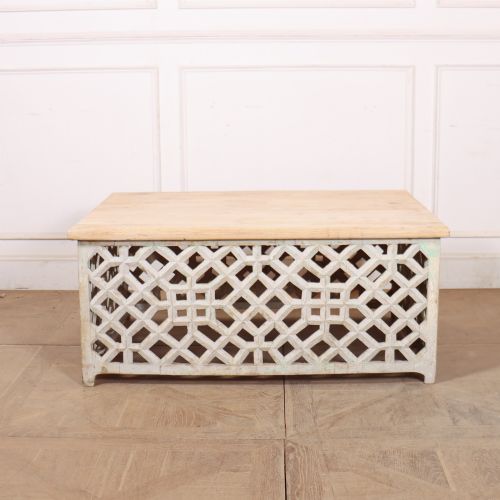
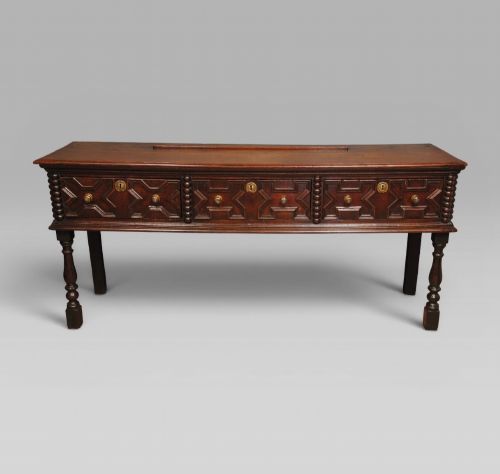


Carved Geometric Low Table
These carved geometric low table pieces combine heavy timber construction with intricate panel work, offering a low surface rooted in centuries of cabinet-making tradition.
Carved Geometric Low Table
A carved geometric low table brings together centuries-old furniture forms, drawing particularly on seventeenth-century oak dresser bases and servers adapted for low surface use. The selection spans robust seventeenth-century styles through to twentieth-century coffee tables incorporating antique Chinese fretwork panels and glass tops.
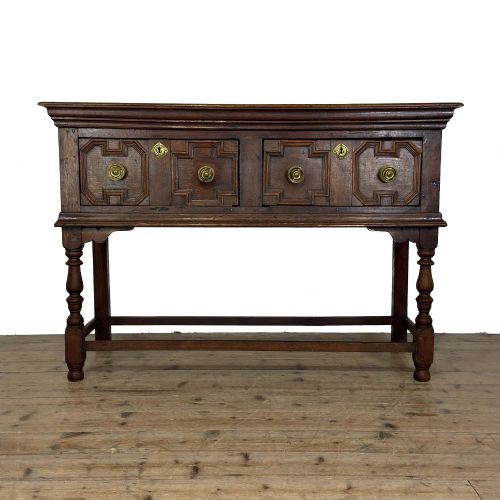
Buyers will encounter items ranging from authentic seventeenth-century oak server bases with geometrically moulded drawer fronts to later revival pieces and repurposed nineteenth-century elements. These pieces blend the sturdy utility of early English country house furniture with the decorative potential of carved and moulded woodwork.
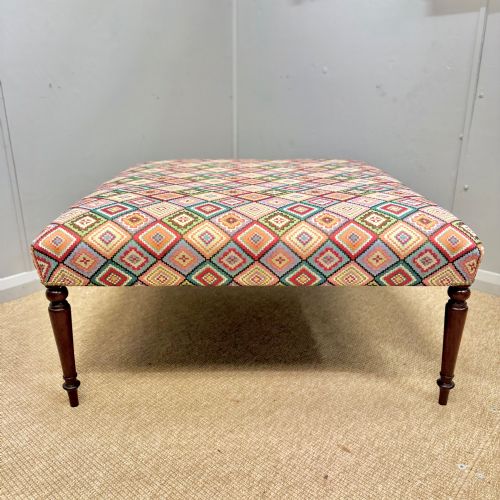
The assortment includes low coffee tables, upholstered footstools, and low dressers, reflecting diverse origins from English oak workshops to Anglo-Indian studios and Chinese export aesthetics. Each piece relies on low proportions and surface ornamentation to create a distinct focal point in a room.
Materials and construction methods
Makers relied heavily on solid oak, elm, and mahogany, shaping the dense timber with hand tools to build robust frames and drawer fronts. Iron and brass fittings appear across the pieces, providing functional hinges, handles, and structural reinforcement.
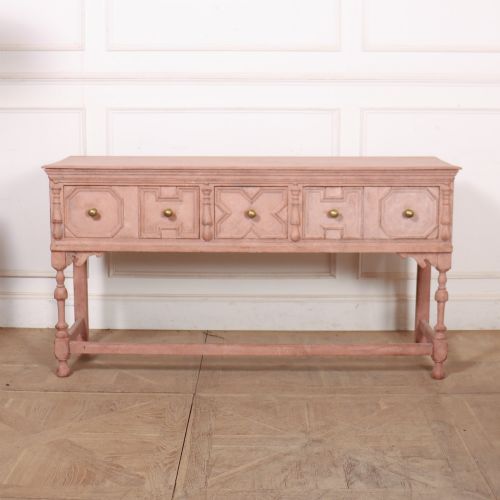
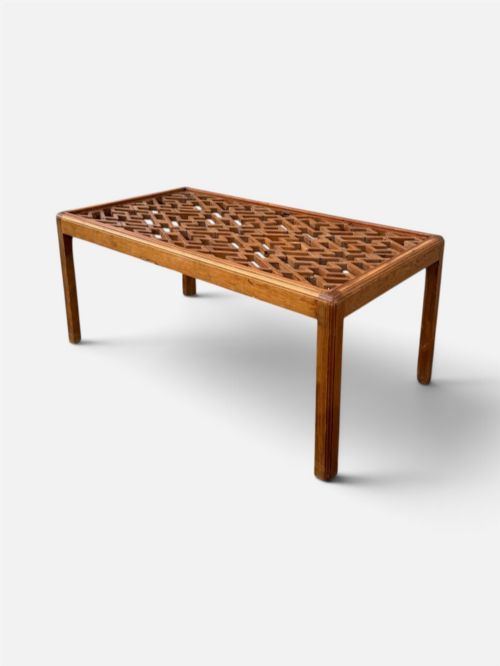
Surface decoration frequently involves geometric moulding, carved panels, and painted finishes applied directly to the wood. Some twentieth-century examples integrate repurposed antique elements, such as fretwork panels, beneath glass tabletops.
Listings feature oak, mahogany, elm, brass, and woven fabric across periods spanning the seventeenth century through to the nineteen-fifties.
Assessing quality in construction and detail
The standard of a carved geometric low table rests on the depth and crispness of its woodwork, where hand-carved mouldings and joints display superior joinery compared to later machine-cut adaptations. Timber selection also dictates overall merit, with well-figured oak and rich mahogany holding greater visual presence.
Integration of antique components defines the success of hybrid pieces, ensuring that older elements sit harmoniously within modern low table proportions without appearing forced or incongruous.
The Carved Geometric Low Table Glossary
- Geometric moulding
- A method of applying raised wooden strips in angular, repeating patterns onto drawer fronts or panels. This technique creates texture and shadow across the surface of early furniture.
- Dresser base
- The lower section of a traditional dining room storage unit, featuring cupboards and drawers beneath a flat top. These sturdy timber units frequently form the basis for low tables.
- Jacobean style
- An English design aesthetic from the early seventeenth century characterised by heavy proportions, straight lines, and geometric panel carving. Revival pieces often emulate these distinct traits.
- Fretwork
- Openwork ornamentation carved or pierced through thin sheets of wood in decorative patterns. It frequently appears in Chinese and Anglo-Indian decorative traditions.
- Block front
- A cabinet-making technique where the front of a piece is divided visually into three vertical sections, with the outer sections projecting forward. This adds sculptural depth to storage furniture.
Carved Geometric Low Table: Frequently Asked Questions
What is a carved geometric low table?
A carved geometric low table is a low surface built using traditional timber construction methods, often incorporating repurposed elements like seventeenth-century oak dresser bases or Chinese fretwork panels.
These pieces combine historical woodworking styles, such as Jacobean moulding, with the proportions required for modern living spaces.
How were these tables used originally?
Many items in this category started as larger furniture pieces, such as servers and dresser bases used in English country houses for food preparation and storage.
Over time, cabinet makers and restorers adapted these robust timber frames into lower formats suited for contemporary coffee tables and display surfaces.
How do I care for antique oak low tables?
Solid oak and mahogany surfaces benefit from regular dusting with a soft cloth and occasional treatment with appropriate beeswax to nourish the timber.
Keep these wooden tables away from direct heat sources and strong sunlight to prevent the dry timber from cracking or fading.
How can I tell a seventeenth-century piece apart from a revival?
Original seventeenth-century pieces display authentic tool marks, natural timber shrinkage, and period-appropriate joint construction without modern fixings.
Revival furniture from later centuries often mimics these early geometric forms but utilises machine-cut elements and standardised hardware.