


Indian Carved Trunk Table
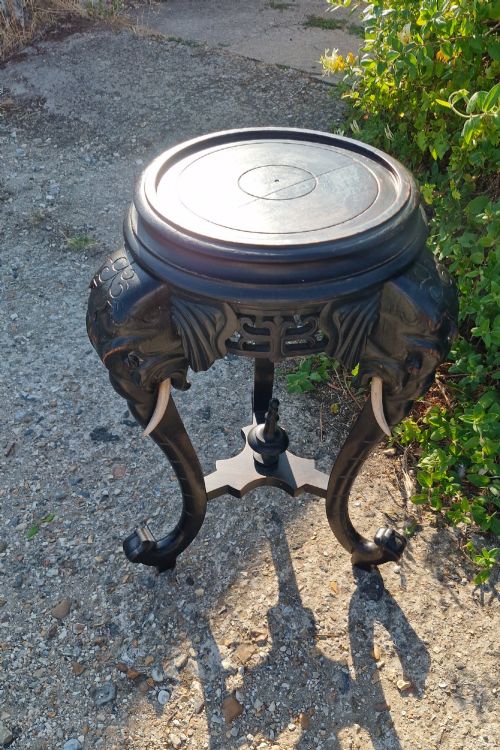
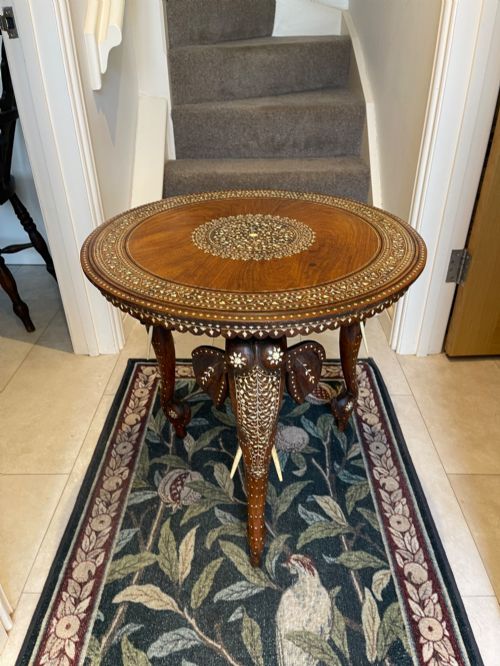
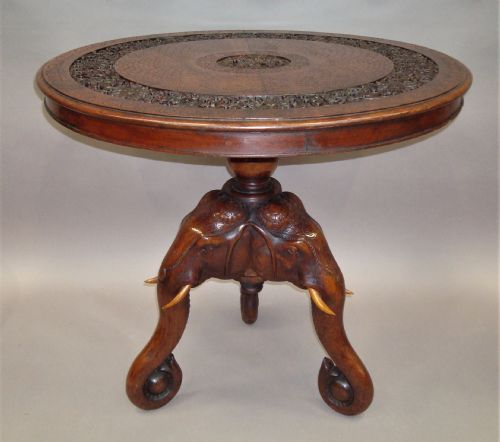
An indian carved trunk table brings intricate craftsmanship into a room, offering distinct table surfaces supported by carved elephant forms.
Indian Carved Trunk Table
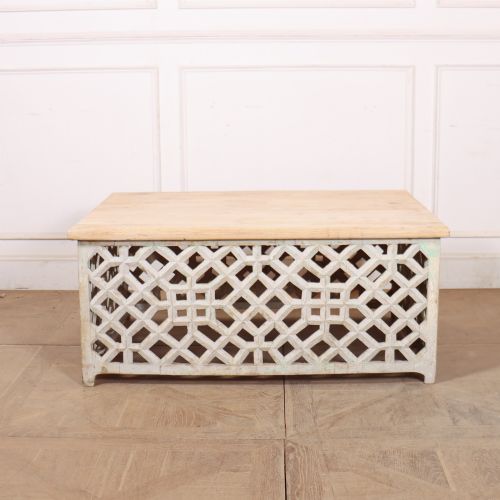
When you search for an indian carved trunk table, you are looking at items that bridge the gap between traditional storage chests and occasional furniture. These pieces frequently manifest as side tables, coffee tables, and occasional tables featuring carved wooden tusks, trunk supports, and detailed surface patterns.
The versions you are most likely to meet on this page span the Victorian era, the Georgian period, and the late nineteenth and early twentieth centuries. They originate primarily from regional traditions such as the Bombay Presidency and Hoshiarpur, embodying Anglo-Indian Colonial styles.
Many examples function simultaneously as small display surfaces and sculptural statements, utilising structural forms derived from trunks and coffers. Their design merges British colonial utility with local Indian woodworking artistry to create distinctive domestic objects.
Materials and construction methods
The pieces recorded in these listings rely heavily on dense timbers such as teak, rosewood, and general hardwoods. Artisans worked these materials by hand, executing elaborate surface carving and incorporating applied details like painted wooden tusks.
Structural elements frequently combine octagonal or circular tabletops with figurative supports, utilising traditional joinery appropriate for occasional furniture and storage trunks. Certain items also incorporate contrasting components of bone, brass, and painted wood to highlight the carved motifs.
Several tables come equipped with painted wooden tusks, ensuring the elephant supports are fully prepared for imaginary jungle excursions.
What separates the finest examples
Quality in these items rests upon the crispness and depth of the carving across the tabletop and the figurative supports. Finer pieces demonstrate precise control over intricate floral and geometric patterns, whereas lesser examples show softer, shallower incisions.
The choice and preparation of the timber also determine the overall standard, with select hardwoods displaying a more unified grain and richer natural tone. Additionally, the proportion and balance of the elephant head and trunk supports dictate the visual success of the piece.
The Indian Carved Trunk Table Glossary
- Anglo-Indian
- A descriptive term for furniture made in India during the British colonial period, combining local craftsmanship with European forms.
- Hoshiarpur
- A North Indian centre renowned for intricate woodwork, particularly pieces featuring detailed carving.
- Bombay Presidency
- A historical region in Western India associated with distinctive nineteenth-century teak occasional tables and octagonal surfaces.
- Occasional table
- A small, movable table designed for specific, intermittent uses within a room, such as holding a lamp or small objects.
- Elephant table
- An occasional table whose base is formed or supported by carved elephant heads, trunks, and tusks.
Indian Carved Trunk Table: Frequently Asked Questions
What is an indian carved trunk table?
These items are small occasional or coffee tables that incorporate decorative trunk motifs and elephant supports into their design. They function as both functional surfaces and sculptural elements within a room.
The form draws heavily on regional Indian woodworking traditions and colonial tastes, resulting in distinct tables made from teak and other dense hardwoods.
How were these tables used?
They served primarily as decorative occasional tables in colonial and Victorian interiors, holding items like lamps, books, or small ornaments. Their compact size allowed them to be easily moved around a living space.
Some pieces also retain characteristics of traditional storage trunks and coffers, merging utility with detailed figurative carving.
Where do these tables originate?
The pieces recorded here stem from workshops in regions such as Hoshiarpur and the Bombay Presidency during the nineteenth and early twentieth centuries. They represent an intersection of local artisan skills and British domestic requirements.
Makers utilised native timbers to produce items tailored for both local use and export to Western markets.
How do I live with one?
Placing an indian carved trunk table in a room requires balancing its ornate surface work with simpler surrounding furniture. It works well as a focal point for displaying small objects or standing beside a seating area.
Regular dusting and avoiding direct sunlight help preserve the detailed wooden carving and any applied painted elements over time.