




Pierced Wood Lamp Table
These pierced wood lamp table pieces bring intricate carved detail and useful surface space into a room, offering both decorative presence and practical function.
Pierced Wood Lamp Table
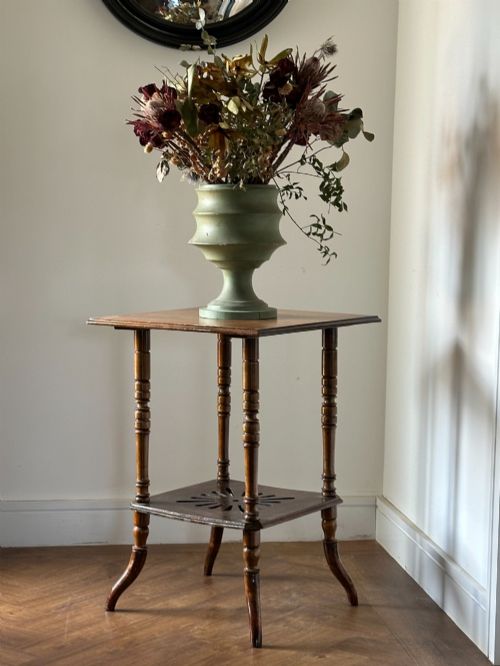
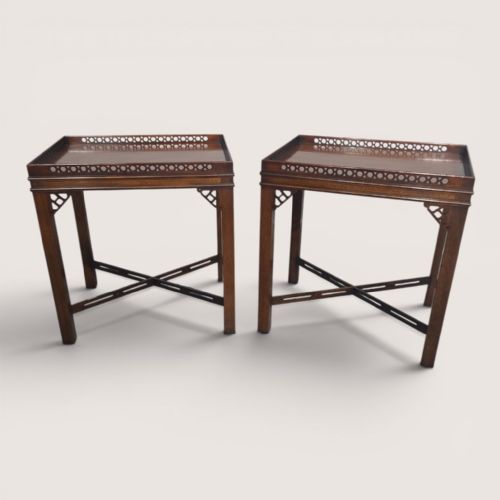
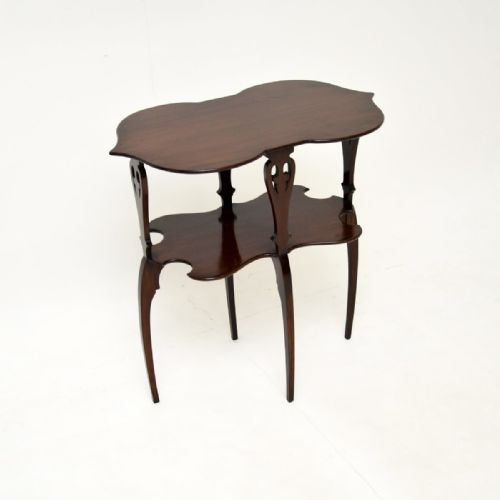
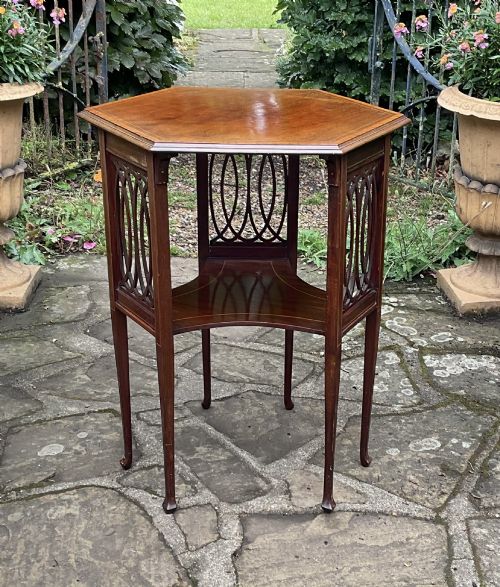
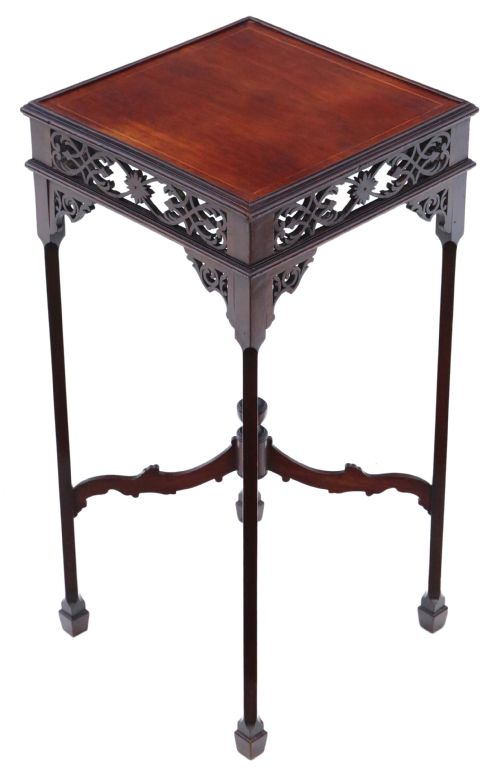
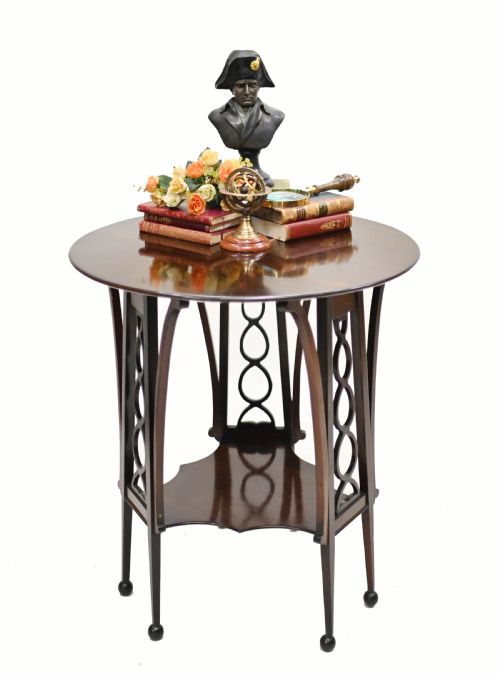
When you search for a pierced wood lamp table, you encounter a selection of occasional tables, side tables, and plant stands designed to hold lighting or display decorative items. The pieces on this page span from the nineteenth century through the 1930s, encompassing Edwardian, Victorian, Aesthetic Movement, and Anglo-Indian styles.
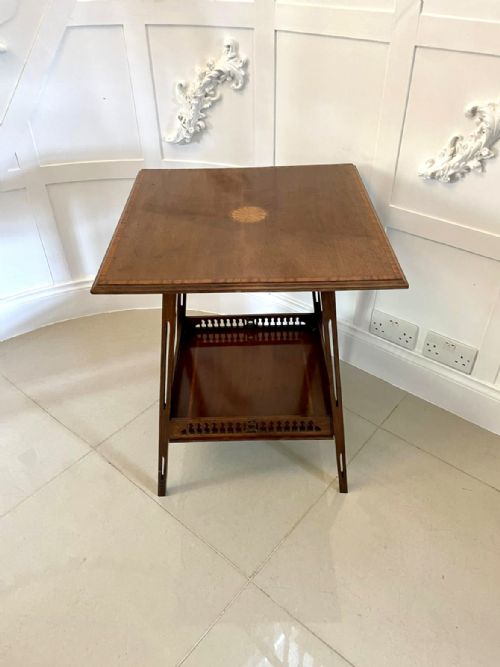
You are most likely to meet mahogany or teak side tables featuring intricate cut-out or carved decoration, alongside occasional tables with boxwood inlay. Forms range from round and oval tops to octagonal shapes and folding frames.
The origins of these items stretch across English workshops and colonial production centres, notably Anglo-Indian and Balinese examples. Each piece serves primarily as a stable surface for a lamp while adding texture through pierced and carved woodwork.
What varies in quality
The distinction between standard examples and superior pieces rests upon the crispness of the pierced carving and the selection of timber. Finer tables exhibit deep, clean-edged fretwork and well-figured mahogany or rosewood with harmonious grain patterns.
Construction details also separate the tiers of quality, particularly the precision of boxwood inlay and the stability of joints in folding or tilt-top variants. Lesser pieces rely on superficial surface decoration, whereas superior examples integrate the carved motifs into the structural design of the frame.
Some folding teak tables from the colonial period fold completely flat, proving that portable furniture was just as clever a century ago as it is today.
E.W Godwin
The Pierced Wood Lamp Table Glossary
- Pierced wood
- Woodwork cut completely through in decorative patterns to let light pass or create openwork designs. This technique defines the visual lightness of many eastern and colonial tables.
- Occasional table
- A small, movable table intended for specific, intermittent use in a room rather than permanent placement. They frequently serve as lamp stands or display surfaces.
- Boxwood inlay
- The insertion of small pieces of pale boxwood into contrasting darker wood surfaces to form linear or geometric patterns. It appears frequently on Edwardian and Victorian occasional tables.
- Tilt-top
- A tabletop hinged to its pedestal or base so it can be pivoted into a vertical position when not in use. This mechanism saved space in nineteenth-century domestic interiors.
- Fretwork
- Ornamental perforated woodwork created by cutting patterns with a scroll saw or piercing chisel. It provides intricate geometric or floral borders on table skirts.
Pierced Wood Lamp Table: Frequently Asked Questions
What is a pierced wood lamp table?
A pierced wood lamp table is a small occasional or side table featuring openwork carved decoration, designed to support a table lamp or display objects.
These pieces combine decorative fretwork with a stable flat surface, originating across various nineteenth and early twentieth-century design movements.
How were these tables used originally?
In period interiors, these tables held oil lamps or early electric table lamps beside seating areas or in hallways.
Their compact size allowed them to be moved easily around a room to provide light and surface space wherever required.
How do I identify an Edwardian example?
Edwardian tables often feature lighter mahogany timbers combined with delicate boxwood stringing and inlay work. The overall aesthetic tends toward refined elegance rather than the heavier carving found in earlier Victorian pieces.
They frequently take oval or occasional table forms, reflecting the domestic fashions of the early twentieth century.
How do I care for a hardwood lamp table?
Maintain the timber by dusting regularly with a soft, dry cloth and avoiding placement near direct heat sources or strong sunlight. Periodic application of appropriate furniture wax helps preserve the finish of mahogany and rosewood surfaces.
Take care around pierced sections during cleaning to avoid catching delicate carved edges.