
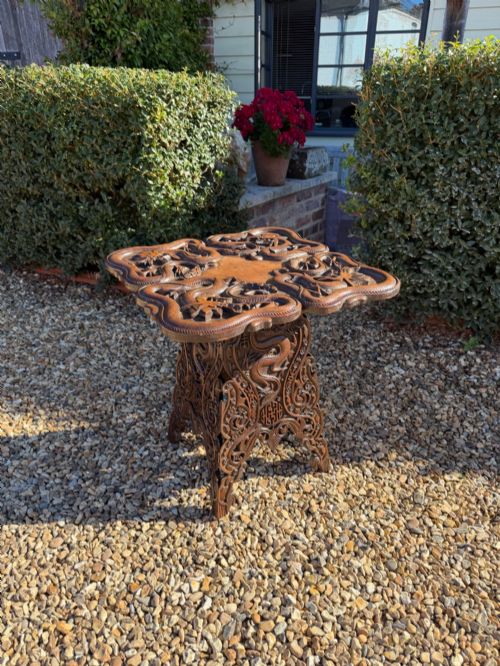
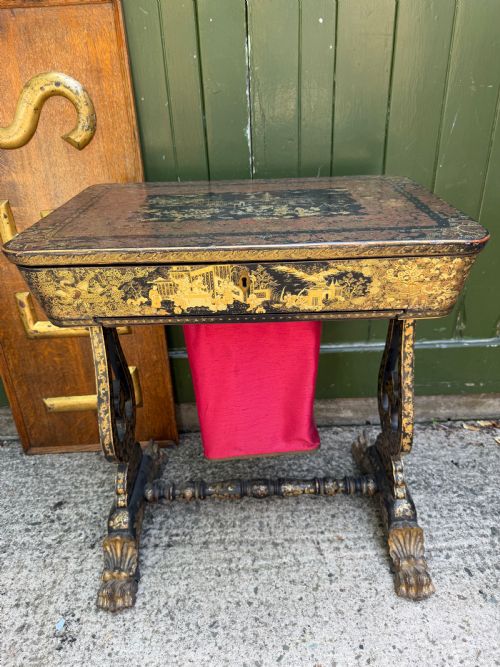


Hand Carved End Table
These hand carved end table examples bring together regional craftsmanship and domestic utility, offering a distinctive focal point for any interior.
Hand Carved End Table
A hand carved end table serves as a functional surface while showcasing detailed regional woodworking traditions from various global origins. Buyers searching for a hand carved end table typically encounter occasional tables, side tables, lamp tables, nesting sets, and butcher blocks spanning the nineteenth century and the early twentieth century. These pieces encompass diverse cultural aesthetics including Anglo-Indian, Chinese Export, French Provincial, and Kashmiri styles.
The forms on this page range from multi-tiered nests of tables and octagonal occasional pieces to solid elm kitchen chopping blocks and tilt-top lamp tables. Materials extend from teak and hardwood to lacquer and painted wood. This variety reflects both utilitarian kitchen implements and decorative parlour furnishings produced across different decades.
How they were made
Makers utilised solid timbers such as teak, elm, and diverse hardwoods, often shaping them with hand tools to achieve substantial structural forms like tree trunk chopping blocks and heavy side tables. Surface ornamentation relied heavily on manual chiselling and relief carving, evident in Anglo-Indian camel tables and Chinese octagonal surfaces. In other instances, artisans applied layered lacquer or hand-painted details directly onto the wooden substrate, as seen in red lacquer and gilded sewing tables.
Construction methods varied according to regional workshop practices, combining traditional joinery with surface embellishments such as gilding. Artisans selected woods based on local availability, turning dense hardwoods for colonial market export and working native European elm for provincial chopping blocks.
Camel tables from the colonial period bring an exotic silhouette to the parlour, complete with carved wooden beasts supporting the tabletop.
What varies in quality
The depth and crispness of the manual carving separate standard production from superior examples, particularly in the intricate foliage and figural motifs found on colonial and export pieces. Superior specimens maintain structural stability in their joints and tilt mechanisms despite the natural movement of aged timber. Furthermore, the preservation of original surface treatments - such as early lacquer, gilding, or hand-painted highlights - determines the visual integrity of the piece.
Subtle proportions and balanced weight distribution also distinguish finer occasional tables from utilitarian blocks. Where carving is deep and undercut rather than shallow and uniform, the hand of a skilled artisan becomes apparent.
The Hand Carved End Table Glossary
- Anglo-Indian
- Pertaining to furniture manufactured in India during the British colonial period, frequently combining British furniture forms with local deep-relief carving traditions. These pieces often utilise dense native timbers like teak.
- Tilt-top
- A tabletop construction featuring a mechanism that allows the surface to pivot into a vertical position when not in use. This design originated to save floor space in smaller period rooms.
- Nesting tables
- A set of graduated tables designed to fit neatly beneath one another to conserve space. The evidence shows sets comprising four tables originating from Chinese export and Kashmiri workshops.
- Lacquer
- A durable finish applied in multiple layers to a wooden base and polished to a smooth sheen. Asian export pieces frequently employed this technique alongside gilded decoration.
Hand Carved End Table: Frequently Asked Questions
What is an end table?
An end table is a small surface placed beside seating furniture to hold lamps, drinks, or decorative items.
In historical contexts, these were often called occasional tables, lamp tables, or side tables depending on their intended room placement.
How were nesting tables used?
Nesting tables provided flexible surface space that could be expanded when entertaining guests.
The smaller units fit beneath the main table when not in use, making them practical for smaller domestic spaces.
What is a chopping block?
A chopping block is a heavy wooden block utilised historically for food preparation in kitchens.
Examples from the evidence include solid elm French provincial blocks and nineteenth-century tree trunk forms.