
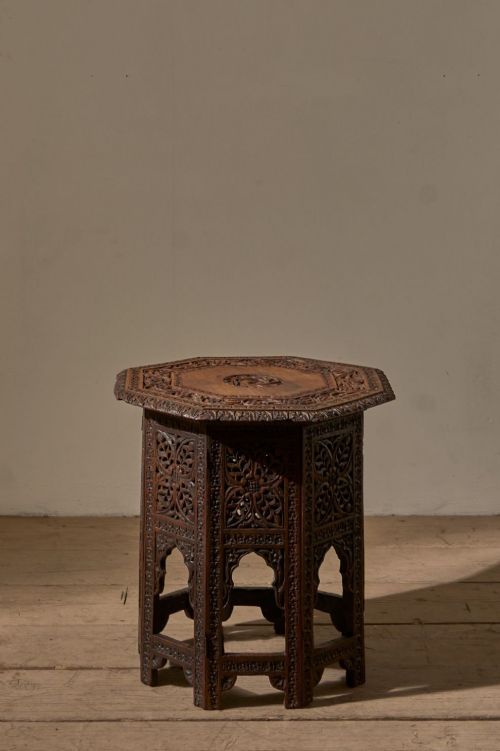
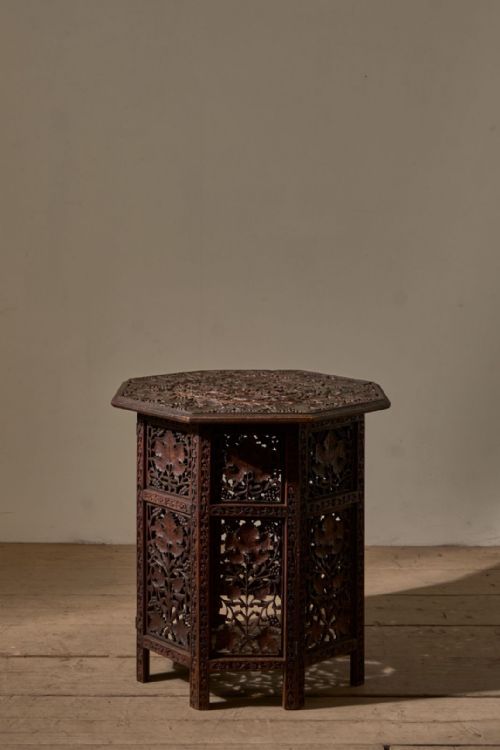


Indian Carved Folding Table
An indian carved folding table brings intricate craftsmanship and collapsible practicality into a room, offering rich textures and portable surface space.
Indian Carved Folding Table
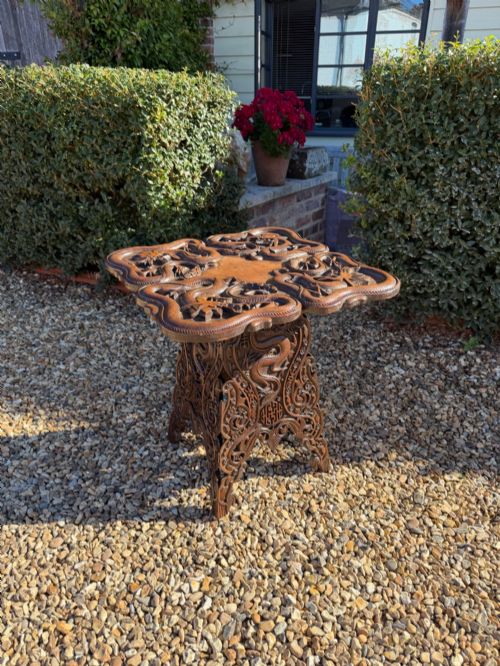
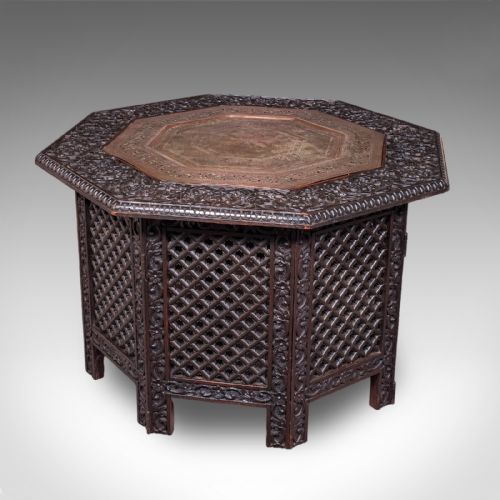
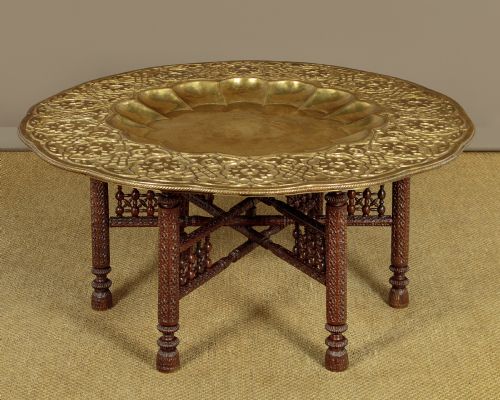
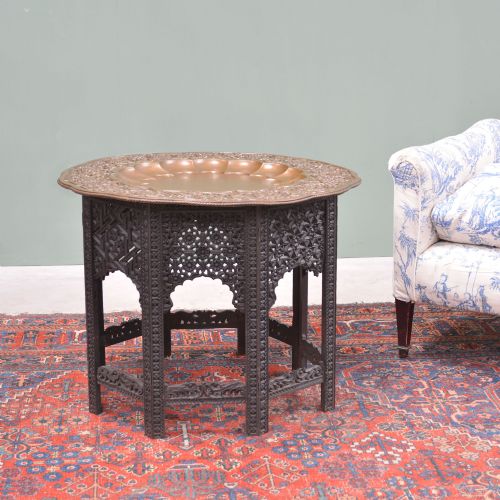
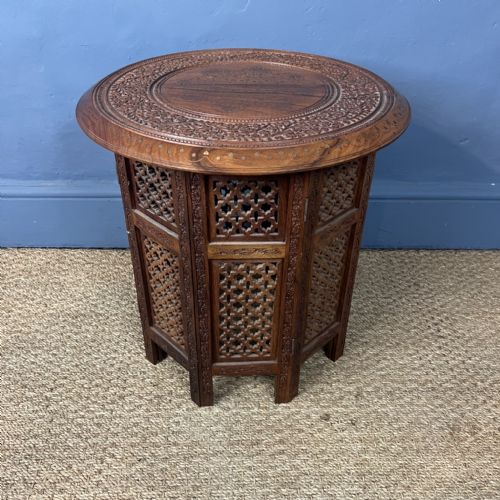
An indian carved folding table is a versatile surface designed for portability, combining traditional woodworking with a collapsible base structure. These pieces appear frequently in octagonal or circular formats, functioning as occasional, side, or coffee tables within domestic settings.
The objects stem from periods spanning the Victorian era through the early twentieth century, including pieces made during the 1880s, 1890s, and the 1900s to 1930s. Alongside standard tables, the selection includes related folding forms such as campaign tables and tray tables.
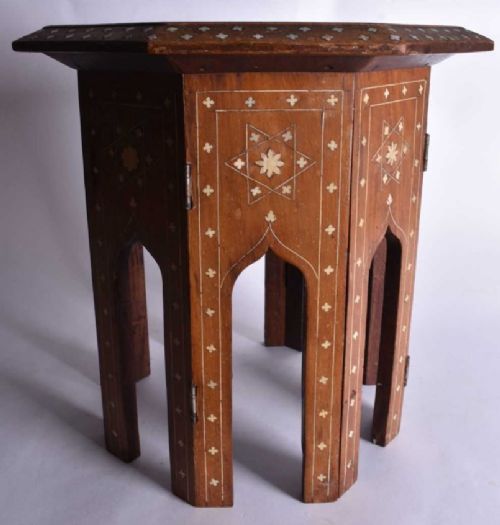
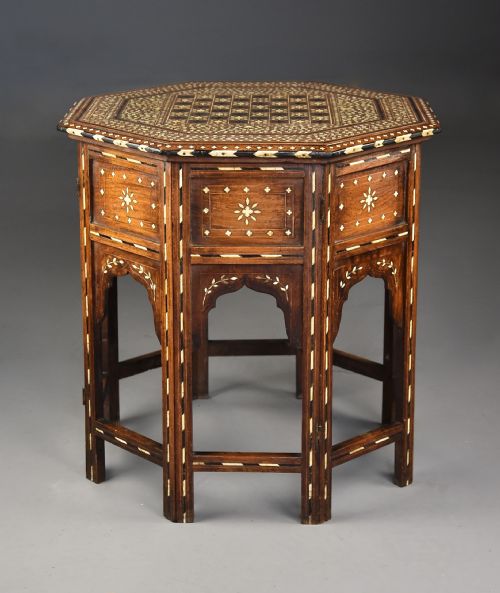
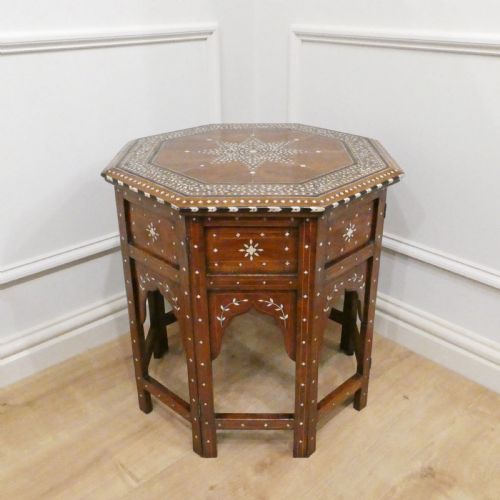
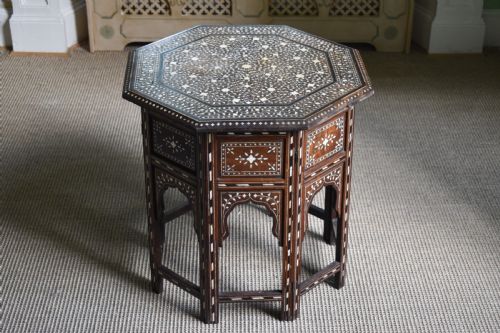
Originating largely from specific design traditions, these items frequently align with Anglo-Indian, Hoshiarpur, or colonial aesthetics. Buyers most commonly encounter teak or hardwood versions featuring intricate surface decoration and folding lattice bases.
How They Were Made
Artisans constructed these tables using dense timbers such as teak, padauk, rosewood, and sheesham wood, providing a stable foundation for deep surface carving. Pierced folding bases utilised hinged wooden lattice mechanisms that allowed the frame to collapse flat when not in use.
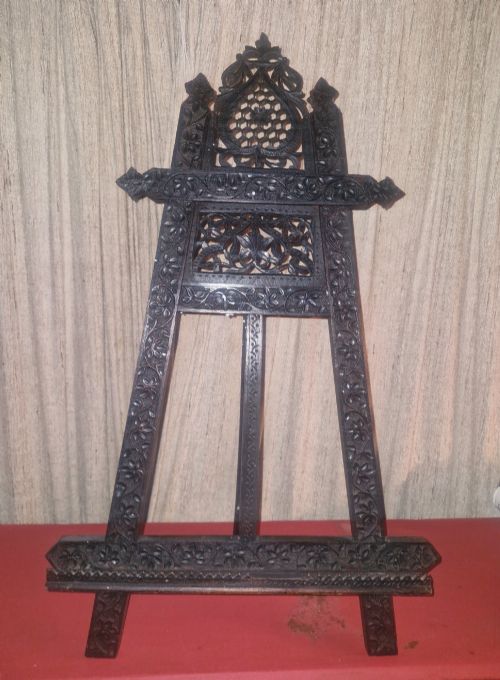
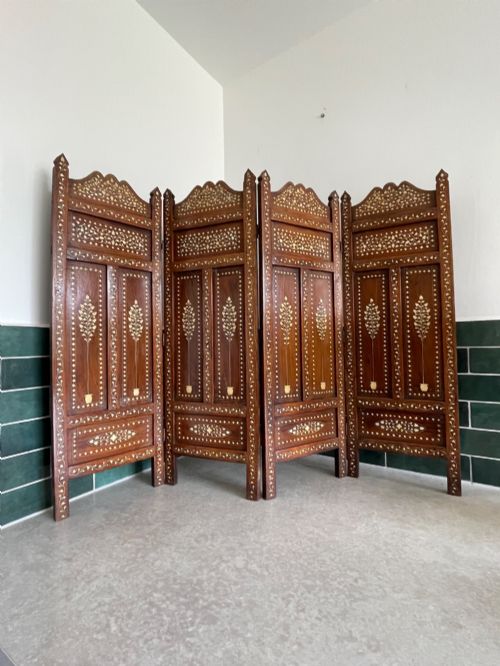
Surface ornamentation relied heavily on contrasting inlay work, incorporating sheets of brass, copper, bone, and mother of pearl into recessed channels within the timber. Artisans carved intricate foliage, geometric motifs, and animal designs across the wooden surfaces and folding panel legs.
Listings feature items spanning the Victorian period through the 1930s, constructed from teak, padauk, and sheesham wood.
What Varies in Quality
The standard of execution depends on the precision of the surface carving and the complexity of the inlay work. Finer examples display tightly registered brass or bone inlay embedded flush into the hardwood without gaps or loose adhesive.
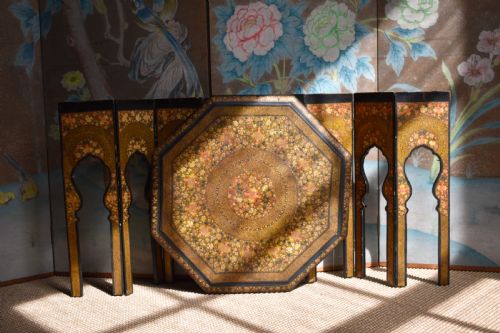
Structural integrity of the folding mechanism separates robust examples from simpler items. Better constructed pieces maintain rigid stability when opened, utilising well-fitted wooden hinges and substantial timber thickness that resists warping over time.
The Indian Carved Folding Table Glossary
- Hoshiarpur
- A district in Punjab known for producing distinctive inlaid woodwork and furniture. Items from this region typically feature dense bone or brass inlay work set into teak.
- Campaign table
- A portable piece of furniture designed to be easily folded and transported for travel. These items incorporate hinged frames and detachable tops.
- Octagonal top
- A geometric tabletop shape possessing eight distinct sides. This profile is frequently paired with folding accordion bases.
- Padauk
- A heavy tropical hardwood valued for its durability and reddish-brown coloration. Makers utilised this timber for substantial carved side tables.
Indian Carved Folding Table: Frequently Asked Questions
How do I fold the table base?
The support frame typically consists of a pierced wooden lattice that works on a hinged action. Lifting the tabletop slightly allows the interlocking wooden sections to pivot and fold flat.
Store the detached top and folded base carefully to prevent strain on the central pivot points when not in use.
What wood types were used?
Makers predominantly employed dense tropical hardwoods such as teak, shisham, padauk, and rosewood. These timbers provided the necessary weight and strength for detailed carving.
Inlaid metals and bone sat securely within these stable woods without causing significant splitting or warping.
How should I clean the inlay?
Dust the carved surfaces regularly with a soft, dry brush to prevent debris accumulating in the recessed channels. Avoid harsh liquid cleaners that might loosen brass, copper, or bone elements.
Apply a minimal amount of appropriate furniture wax sparingly to maintain the timber without dulling the metal details.
Are these tables completely portable?
Most variants were designed with collapsible or detachable elements specifically for ease of movement and storage. The hinged bases fold flat while the tops lift off independently.
Campaign and occasional versions reflect this functional requirement for flexible living spaces.