
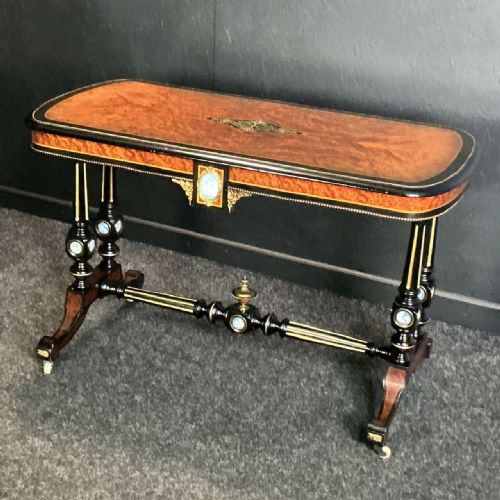
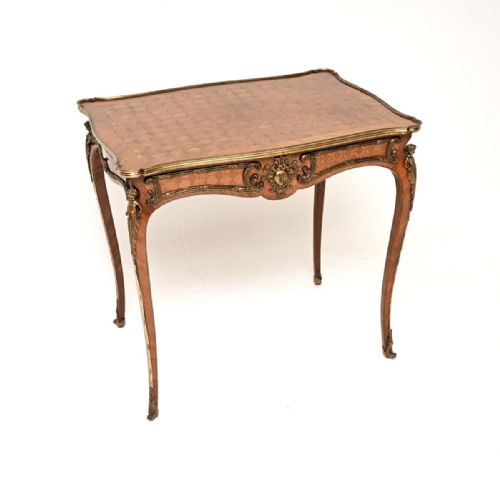
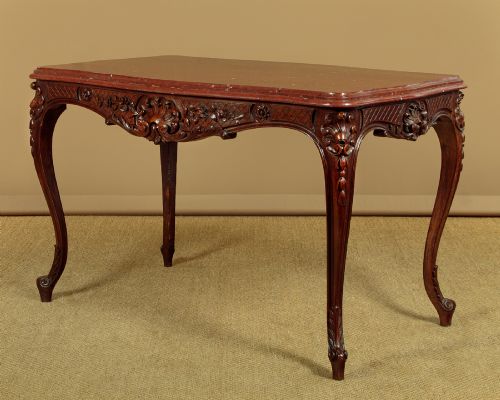
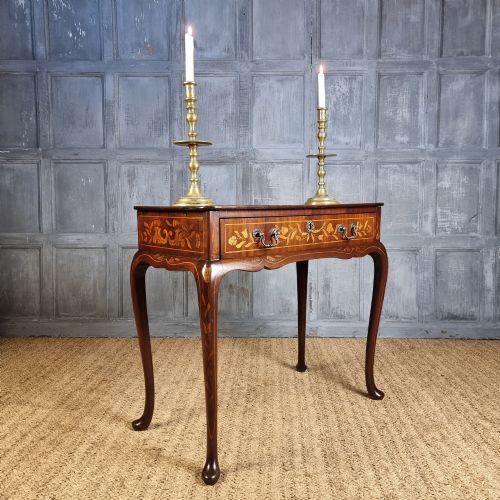

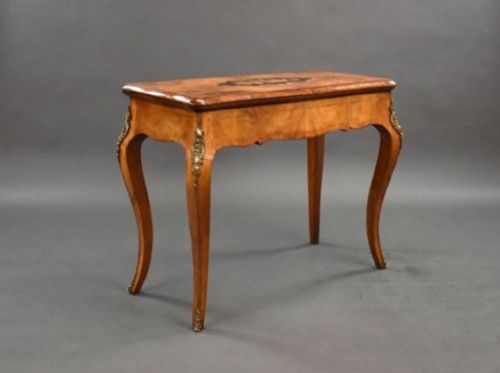
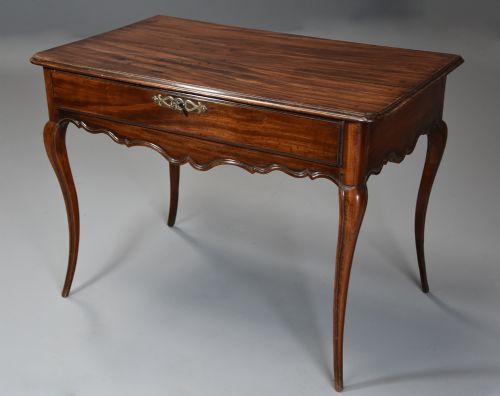


French Walnut Console Table
A french walnut console table brings sculptural warmth and polished marble to a hallway, carrying the refined proportions of nineteenth-century reception rooms.

French Walnut Console Table
Buyers will frequently encounter variants incorporating marquetry inlay, or fold-over tops that transform the wall piece into a card or games table. The selection spans distinct regional interpretations, moving from austere Louis Philippe forms to ornate Rococo and Empire revivals.
While primarily built as side or console tables, the broader grouping encompasses serving tables and bureau plat desks sharing the same walnut timber and decorative vocabulary. These pieces reflect a French tradition of domestic elegance focused on proportion and surface figure.
How they were made
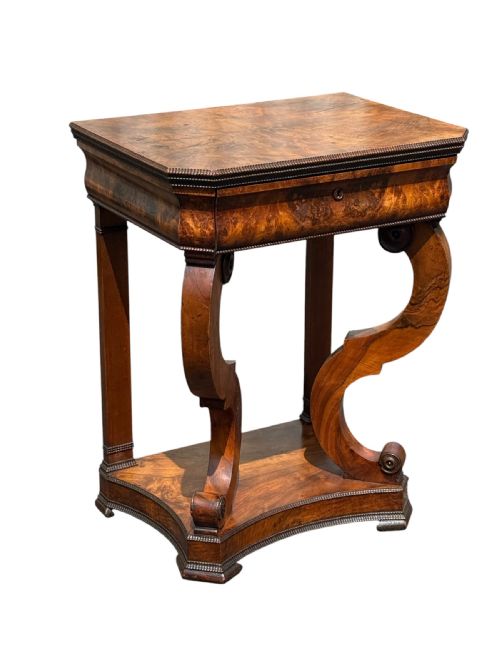
Cabinetmakers constructed these tables using solid walnut frameworks overlaid with carefully selected burr walnut or figured veneers. Marquetry and parquetry panels utilised contrasting exotic woods arranged in geometric or floral patterns across the tabletops.
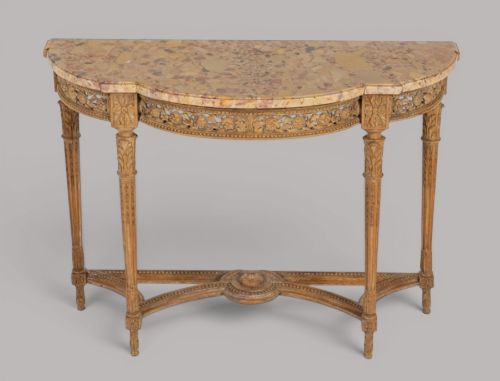
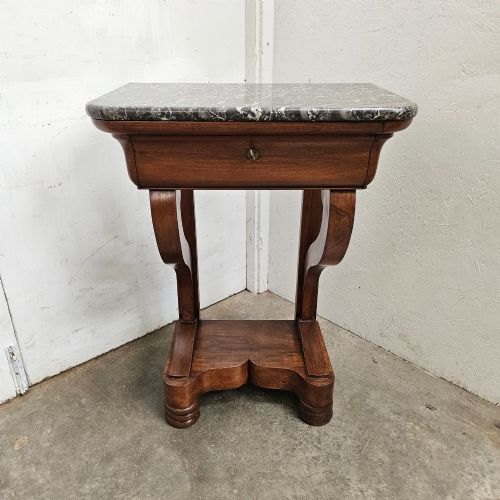
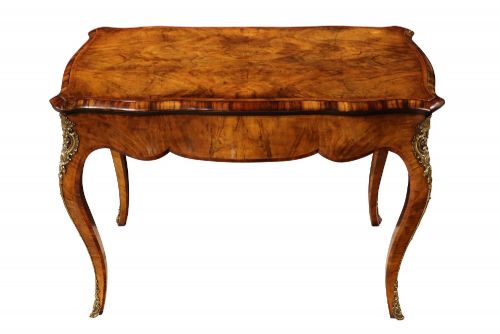
Heavy marble tops, often rouge or white, were shaped to follow the serpentine or demi-lune contours of the walnut carcase. Gilt bronze or ormolu mounts punctuated the corners and aprons, while brass detailing reinforced the structural edges of empire and revival pieces.
The listings span multiple centuries, ranging from eighteenth-century examples to later Art Deco interpretations.
What varies in quality
Quality rests in the selection of the timber grain and the crispness of the hand-carved details along the apron and legs. Figured burr walnut and complex multi-wood marquetry separate standard workshop production from exhibition-grade pieces.
The integration of original marble tops and fire-gilt ormolu mounts dictates the standing of a piece within the range. Superior examples maintain precise joinery in their fold-over mechanisms and retain their original patination across the polished walnut surfaces.
Edward And Robert·Holland Plus Son
The French Walnut Console Table Glossary
- Console table
- A table designed to stand against a wall, traditionally secured with brackets or resting on front legs.
- Marquetry
- Decorative veneer work forming pictures or patterns using various coloured woods and natural materials.
- Ormolu
- Gilt bronze mounts applied to furniture for decorative accent and edge protection.
- Demi-lune
- A half-moon shape characteristic of console table tops designed to sit flush against a wall.
- Parquetry
- Geometric mosaic woodwork arranged in repeating patterns across tabletops and drawer fronts.
- Burr walnut
- Sourced from tree growths, this timber yields swirling, highly figured grain patterns prized by cabinetmakers.
French Walnut Console Table: Frequently Asked Questions
Where should I place a console table?
These shallow tables suit hallways, entryways, or narrow wall spaces behind sofas where floor area is restricted.
Their restrained depth allows them to display lamps and decorative objects without obstructing household traffic.
How do I care for walnut and marble?
Maintain the polished walnut timber using traditional beeswax and soft cloths rather than modern silicone sprays.
Keep marble tops protected from acidic liquids, wiping spills immediately to prevent permanent staining of the stone.
Did these tables always have marble tops?
While many revival and empire pieces incorporate heavy marble slabs, numerous examples feature solid or veneered wood tops.
Wooden surfaces frequently display parquetry or marquetry inlay work instead of stone.
How do I distinguish revival periods?
Louis XV revival pieces display sweeping cabriole legs and organic floral carving, whilst Empire items favour symmetrical architectural lines.
Ormolu mounts and classical motifs help date tables closer to the nineteenth-century revival movements.