



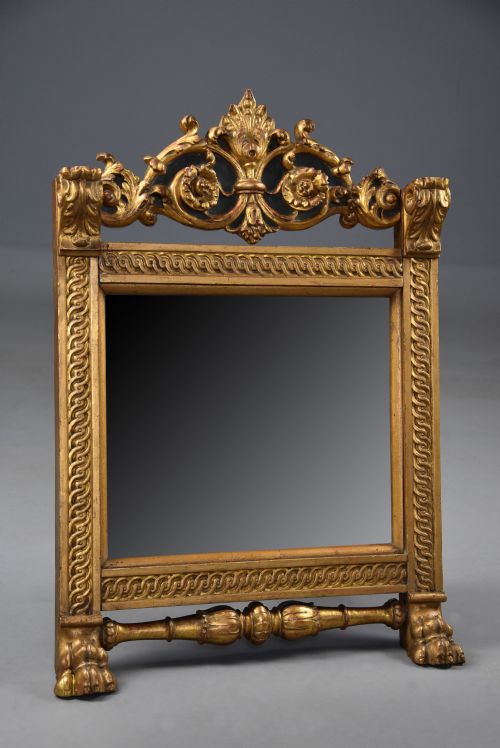


French Toilet Mirror
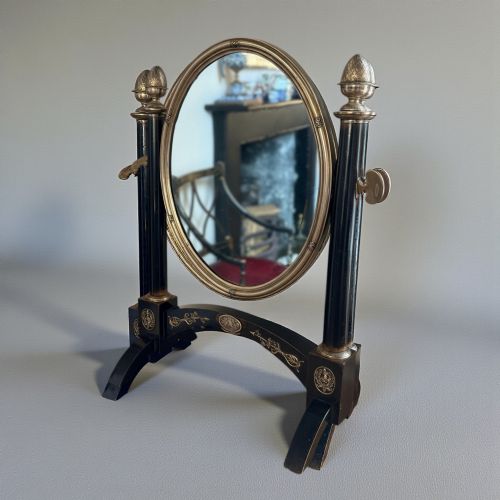
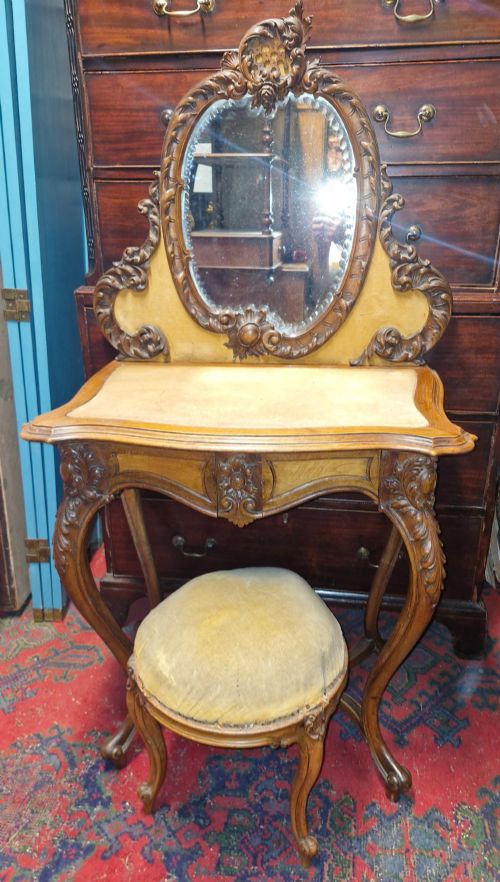
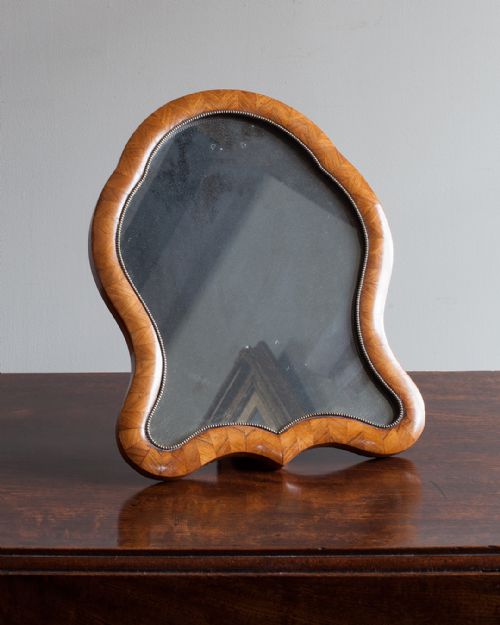
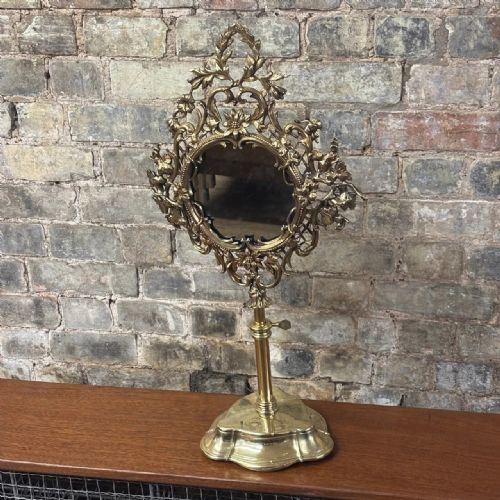
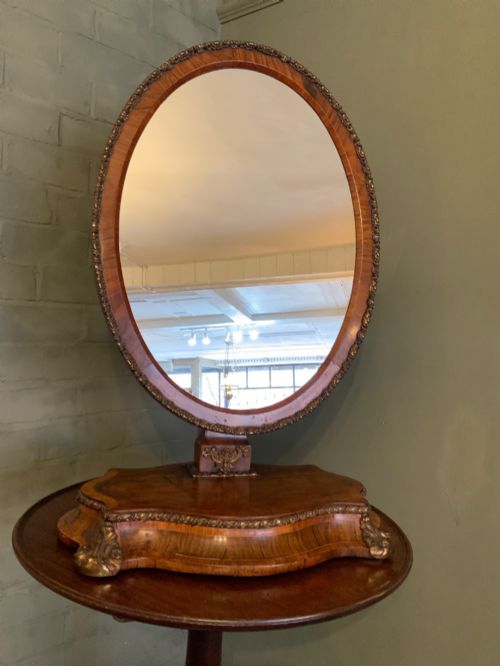
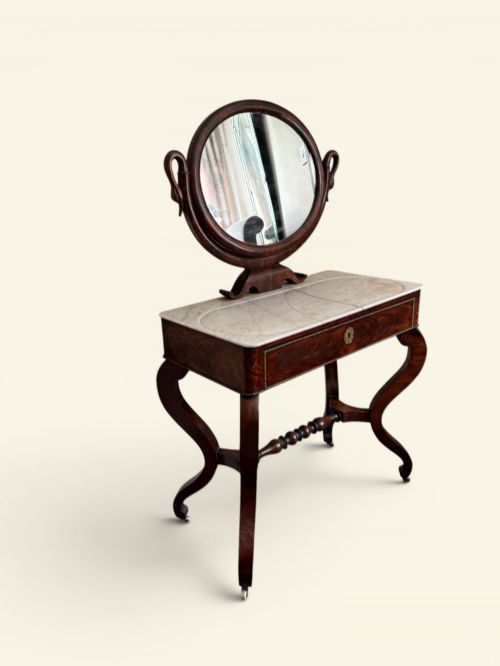
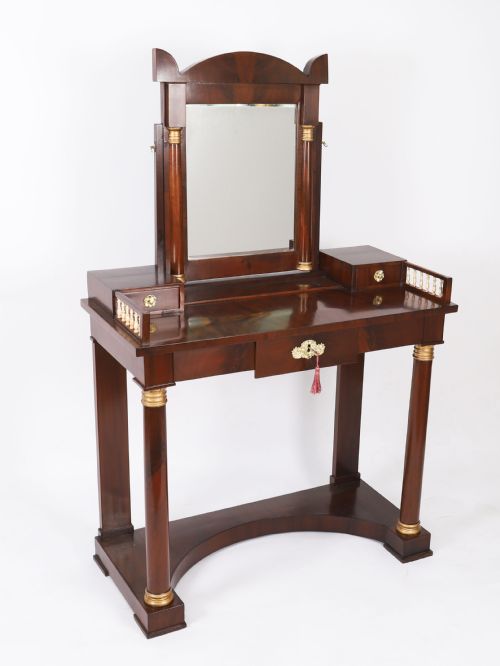
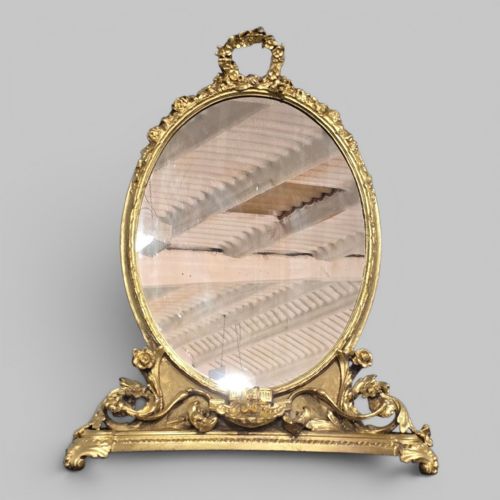
These french toilet mirror examples bring period elegance to a dressing surface, offering adjustable glass framed in bronze, mahogany or giltwood.
French Toilet Mirror
A french toilet mirror sits upon a chest, table or dedicated dressing furniture to provide a movable reflection for grooming and toilette. These pieces range from compact tabletop glasses with trinket drawers to larger architectural frames supported by scrolls and pedestals.
The versions most commonly found here date from the nineteenth century, encompassing styles from the Empire period through to Rococo Revival and Edwardian interpretations. Makers constructed these mirrors to balance functional utility with decorative presence in bedrooms and boudoirs.
Materials and construction methods
Cabinetmakers utilised dense timbers such as mahogany, walnut, kingwood and rosewood, frequently incorporating crossbanding or marquetry details into the frames and bases. Ormolu mounts, gilt bronze, brass and champleve enamel provide ornamental contrast against the timber surfaces.
Many examples feature pivoting or adjustable mechanisms held by brass arms or pedestal mounts, allowing the glass to tilt at various angles. Giltwood and gesso techniques were applied to create ornate carved frames with floral and scroll motifs.
French Toilet Mirror Retail Price Guide 2026
Typical asking prices for french toilet mirror among the pieces listed under this phrase on Sellingantiques today, from the lower quarter to the upper quarter. They describe what is for sale here now, not the wider market.
Several mirrors include tiny hidden trinket drawers designed to hold lost earrings and secret love letters.
Distinguishing quality across pieces
Quality rests in the crispness of the bronze casting and ormolu chasing, where sharp detailing on mounts separates superior work from softer secondary casting. The selection of timber veneers and the depth of hand-carved gesso or giltwood enrich the overall visual weight.
The integrity of the pivoting mechanism and the clarity of the original bevelled glass plate indicate the standard of production. Substantial brass hardware and solid secondary woods beneath the veneers denote careful workshop execution.
Jean Gille
The French Toilet Mirror Glossary
- Ormolu
- Gilded bronze applied to furniture mounts and decorative objects. This technique creates a rich metallic lustre that contrasts with dark wood.
- Champleve
- An enamelling technique where troughs are dug into a metal surface and filled with vitreous colour before firing. It frequently appears on nineteenth-century frames.
- Empire
- A neoclassical design style spanning the early nineteenth century. It relies on symmetrical forms and classical bronze mounts.
- Cheval mirror
- A full-length floor mirror hung in a frame that allows it to swing. Some larger variants appear alongside tabletop forms.
- Gesso
- A plaster-like mixture applied to wood surfaces as a base for gilding. It enables intricate relief carving on frames.
French Toilet Mirror: Frequently Asked Questions
Where should a french toilet mirror be placed?
These mirrors sit comfortably on dressing tables, chests of drawers or sideboards where adequate light reaches the glass. Their proportions allow them to anchor a surface without overwhelming surrounding furniture.
Ensure the supporting surface is deep enough to accommodate the base and any integrated trinket drawers safely. Position them away from direct moisture to protect the timber and silvered glass backing.
How do I adjust the glass angle?
Most models utilise side screw caps, pivots or brass arms connected to upright supports. Tightening or loosening these fittings allows the mirror plate to tilt to the desired viewing angle.
Handle the frame gently when adjusting to avoid placing stress on the historic joints and metal mountings. Older mechanisms benefit from periodic checks to ensure the screws remain secure.
Are the mirrors original to the frames?
Many pieces retain their original bevelled glass plates, which may show light foxing or small age spots. Replacements do occur over long periods of use, though period mercury or early silvered glass often exhibits distinct characteristics.
Look for consistent signs of wear between the frame and the glass edges to understand the piece's history. Minor silver degradation is normal for antique examples and confirms their age.
How do I care for the wood and ormolu?
Dust timber surfaces regularly with a soft, dry cloth and avoid commercial silicone polishes. Ormolu mounts require gentle cleaning with a dry brush to remove dust from crevices without disturbing the gilding.
Keep the mirrors away from direct sunlight and fluctuating radiator heat to prevent timber splitting or veneer lifting. Natural wax applied sparingly helps maintain the finish of mahogany and walnut.