



Ribbon Top Mirror
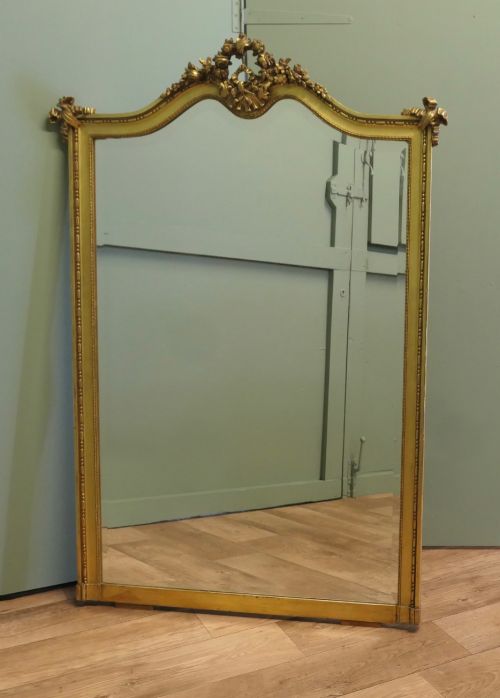
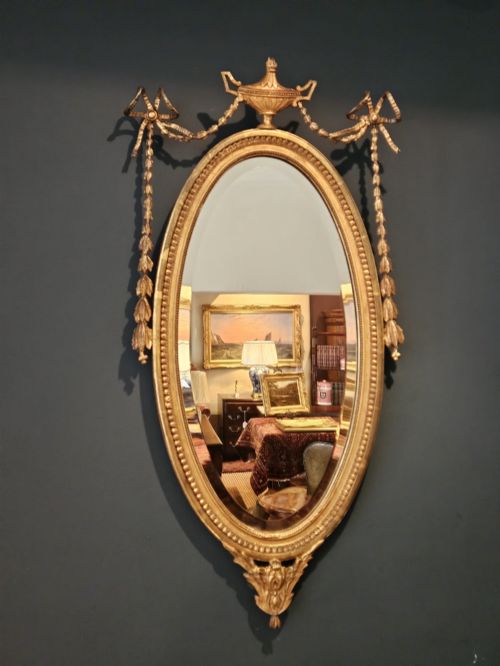
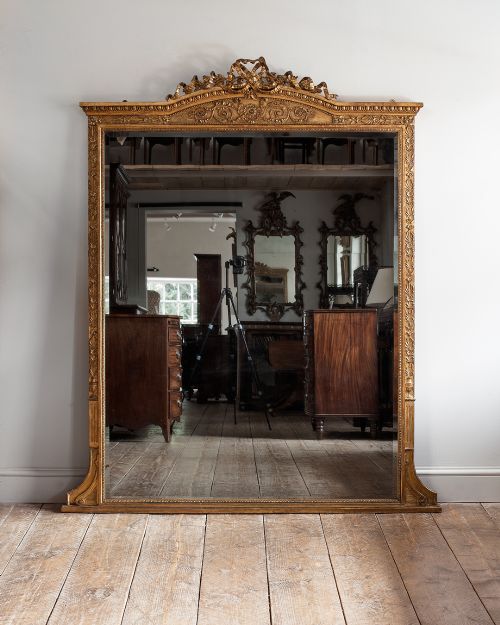
Ribbon top mirror examples combine carved motifs with classic frames, offering decorative elegance for period interiors.
Ribbon Top Mirror
A ribbon top mirror is a wall or overmantle hanging featuring carved decorative ribbon motifs at the crest, often associated with French Neoclassical and Louis XVI revival designs. Buyers searching this phrase look for wall mirrors and overmantle mirrors that display these characteristic tied ribbon accents.
The pieces appearing on this page span the nineteenth century through the early twentieth century, including Victorian, Regency style, and French Art Deco examples. Overmantle mirrors and wall mirrors form the majority of the available selection, frequently rendered in giltwood or carved wood.
Origins stretch across French and English workshops, taking the form of large architectural overmantles, dressing mirrors, and paired girandoles. The specific ribbon top detail crowns frames shaped as arches, ovals, and rectangles.
How they were made
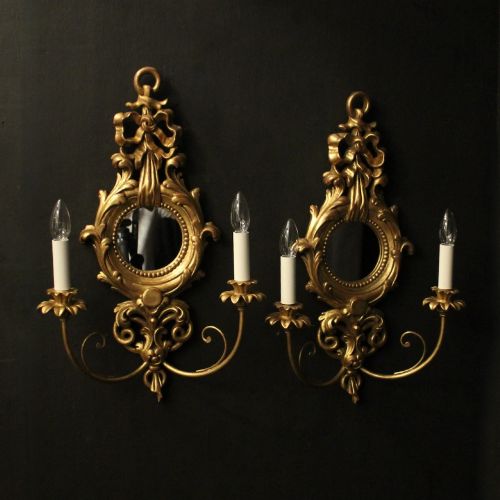
Makers constructed these frames using wood, gesso, and giltwood, applying carved details by hand before finishing the surfaces with gold leaf or paint. Metal and bronze also appear in specific pieces such as wall sconces and vanity mirrors.
Mirrored glass panels were set within these heavily decorated wooden or gilt frames, sometimes accompanied by rope twist carvings, floral garlands, or integrated twin arms for lighting.
Ribbon Top Mirror Retail Price Guide 2026
Typical asking prices for ribbon top mirror among the pieces listed under this phrase on Sellingantiques today, from the lower quarter to the upper quarter. They describe what is for sale here now, not the wider market.
Observed design influences span nineteenth century French, Victorian, Louis XVI revival, French Art Deco, and Regency styles.
What varies in quality
Quality in a ribbon top mirror rests upon the depth and crispness of the carved ribbon and surrounding motifs, where hand-carved wood outshines simpler moulded gesso applications. The preservation of original giltwood or painted surfaces dictates the visual integrity of the piece.
Proportion and scale also separate standard productions from exceptional items, particularly in large overmantle and full-height floor mirrors where frame balance governs the overall presence.
The Ribbon Top Mirror Glossary
- Giltwood
- Wood carved and then treated with gold leaf or gilding. This surface finish defines many traditional antique mirror frames.
- Gesso
- A plaster-like mixture applied to wood frames to provide a smooth base for carving or gilding. It allows intricate decorative details to be formed around the mirror glass.
- Overmantle mirror
- A large mirror designed to hang directly above a fireplace mantel. These pieces often feature wide proportions suited to domestic reception rooms.
- Girandole
- A decorative wall mirror fitted with candle sconces or arms attached to the frame. The reflective glass multiplies the candlelight in a room.
Ribbon Top Mirror: Frequently Asked Questions
Where should a ribbon top mirror hang?
These mirrors suit placement above a drawing room fireplace or as a focal point on a principal hallway wall. Their decorative crests benefit from adequate vertical clearance.
Overmantle versions anchor room proportions when centered above a mantelpiece, while smaller wall mirrors function effectively above console tables.
How do I date a ribbon top mirror?
Dating relies upon examining the backboards, frame construction methods, and the style of the gilt or paint finish. Nineteenth-century examples often display hand- cut wood elements and period framing techniques.
Comparative analysis with Louis XVI revival and French Neoclassical design indicators helps narrow the production era.
Are these mirrors heavy to hang?
Larger overmantle and floor mirrors possess substantial weight due to their timber frames and glass panels. Secure wall fixings into structural studs or masonry are necessary for safe installation.
Professional hanging is recommended for grander pieces to ensure proper weight distribution.
What is the difference between an overmantle and a wall mirror?
Overmantle mirrors are specifically proportioned for horizontal placement above fireplaces, traditionally echoing the width of the hearth below. Standard wall mirrors utilise varied vertical or horizontal dimensions for general room placement.
Both formats can incorporate the characteristic ribbon top motif.