



French Style Hall Table
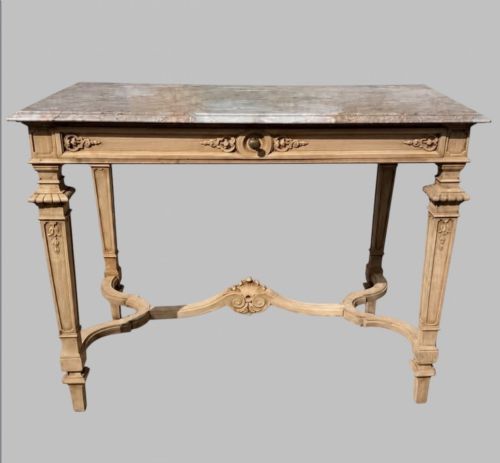
A french style hall table brings continental proportion and marble to an entranceway, balancing display with functional surface area.
French Style Hall Table
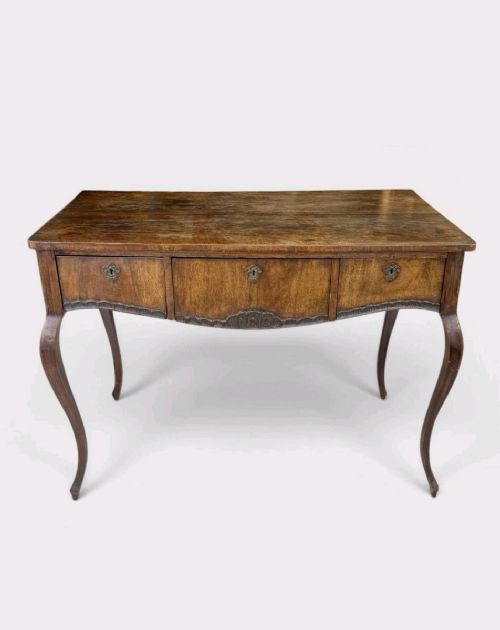
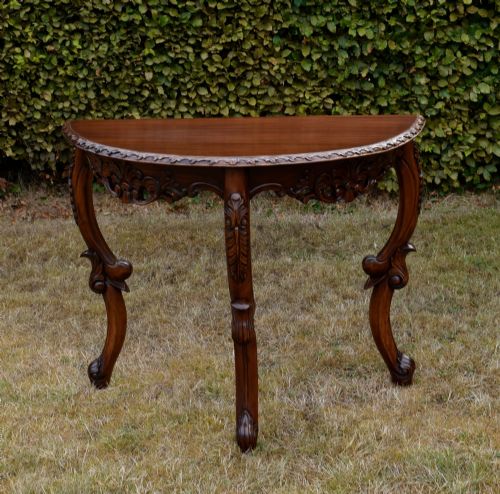
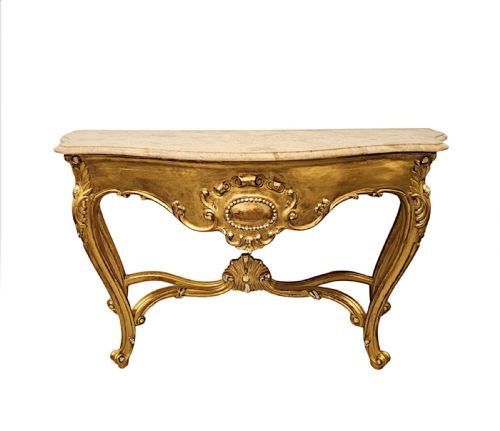
A french style hall table typically manifests as a console, demi-lune, or side table designed to sit flat against a wall or anchor the centre of a room. When searching this phrase, buyers encounter pieces spanning from the early nineteenth century through the 1930s, alongside revival styles referencing earlier monarchies.
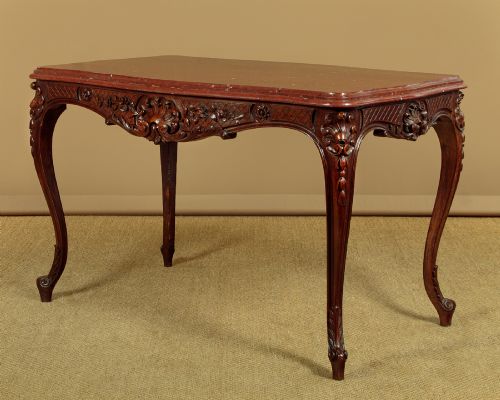
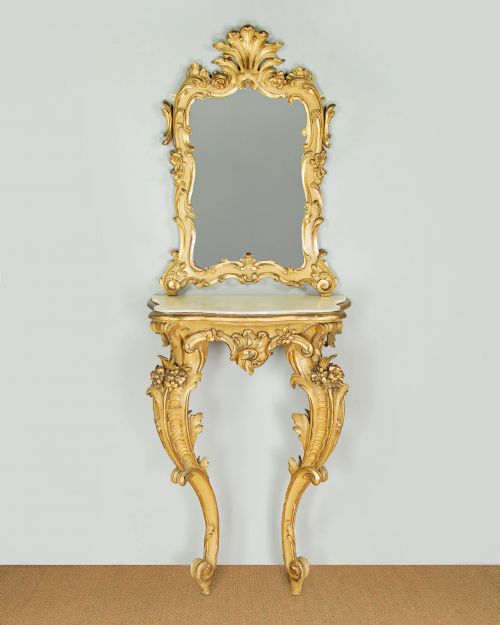
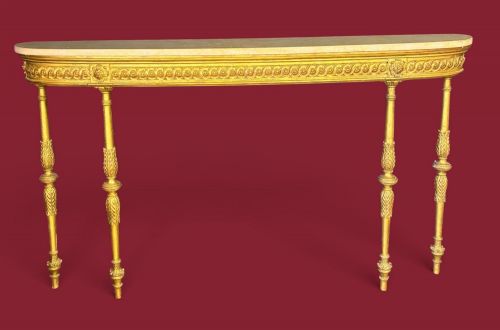
The physical form often includes stone or timber tops supported by carved frames, with matching mirror sets appearing occasionally in the selection. Proportions lean toward narrow depths suited to corridors and entrance halls, utilising curved serpentine outlines or straight neoclassical lines.
Origins trace through Victorian interpretations and continental workshops, incorporating mahogany, walnut, and painted finishes. Pieces range from provincial oak examples to grand giltwood constructions with elaborate mounts.
Materials and Construction
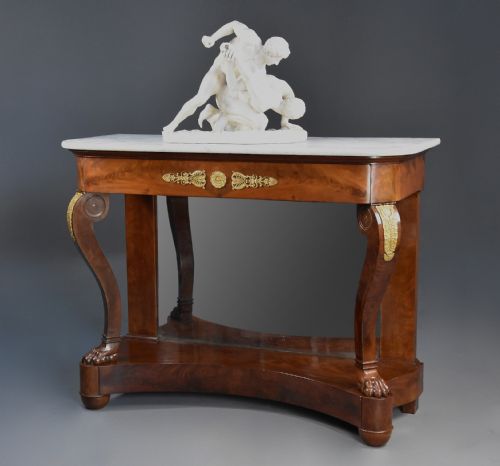
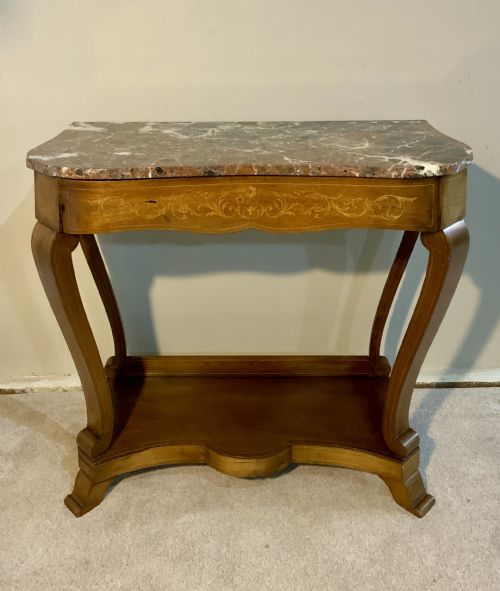
Cabinetmakers constructed these tables using a foundation of solid timbers such as mahogany, walnut, oak, and cherrywood, frequently overlaid with veneers including kingwood, burr birch, and satinwood. Tops were frequently finished with heavy slabs of white or rouge marble, fitted precisely into the wooden framing.
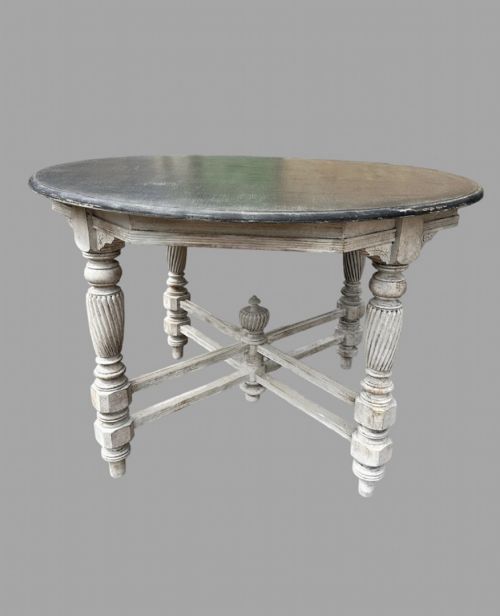
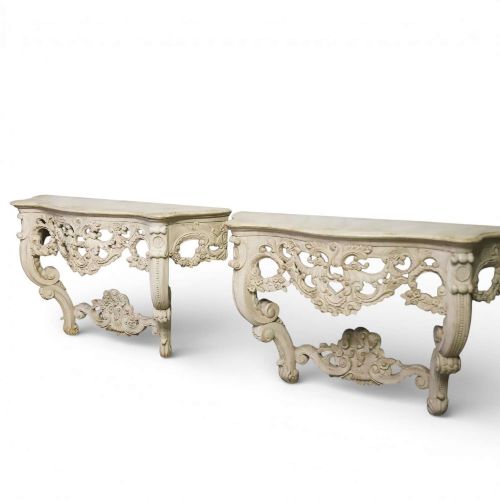
Decorative surface details rely on hand-carving, parcel-gilding, and parquetry inlay, supplemented by cast brass and ormolu mounts. Painted finishes in antique white or soft tones appear on specific regional and twentieth-century variants.
Craftsmanship and Material Depth
Quality separates along the execution of carved detail and the selection of raw materials, distinguishing mass-produced revival pieces from master-carved console tables. Heavy fire-gilt ormolu mounts and finely figured veneers like burr walnut or kingwood signal higher workshop standards.
The structural integrity of the marble top and the precision of its seating into the wooden rebate dictate durability and refinement. Hand-carved wooden frames exhibit depth and undercut relief, whereas lesser examples rely on moulded composition ornament.
Francois Linke
The French Style Hall Table Glossary
- Console table
- A table designed to stand against a wall, frequently fixed with brackets or resting on front legs. They often feature shallow depths to fit narrow corridors.
- Demi-lune
- A half-moon shaped table with a flat back edge designed to sit flush against a wall. This profile is common among eighteenth and nineteenth-century side furniture.
- Giltwood
- Timber treated with gold leaf or gesso and gilding. It appears frequently on decorative neoclassical and rococo revival frames.
- Ormolu
- Gilded bronze applied as mounts and decorative hardware on furniture. The technique involves mercury amalgamation on cast bronze.
- Gueridon
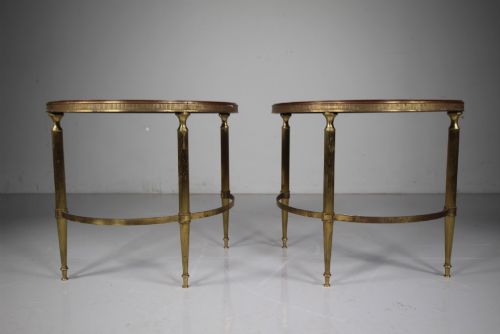
- A small circular table on a central pillar or tripod base. These pieces frequently feature marble tops and served various occasional functions.
- Parquetry
- Geometric wood inlay forming patterned surfaces on tabletops and friezes. Craftsmen used contrasting timbers to create optical depth.
French Style Hall Table: Frequently Asked Questions
What is a french style hall table used for?
These tables provide a decorative surface in entrance halls and narrow corridors for holding letters, keys, or display items. Historically, they anchored formal reception rooms alongside matching mirrors.
Their shallow depth allows placement in circulation spaces without obstructing movement, combining surface utility with architectural presence.
How do I identify the period of a table?
Dating relies on secondary timber choices, construction methods, and stylistic revival markers such as Empire, Rococo, or Neoclassical motifs. Nineteenth-century pieces often feature heavier mahogany or walnut carcasses with hand-cut dovetails.
Twentieth-century iterations introduce painted finishes, simpler brass mounts, or lighter proportions while retaining historical design vocabulary.
Are marble tops original to these tables?
Marble tops on antique console and side tables are generally original components fitted directly to the wooden framework. Rouge and white marble slabs were chosen to provide a durable, cooling surface that contrasted with warm wood veneers.
Inspection of the underside reveals the seating rebate and grain alignment where the stone rests against the timber frieze.
How do I place a demi-lune table?
A demi-lune table sits flat against a wall, making it ideal for entryways, landings, or the middle of long corridors. Its curved front softens the geometry of square rooms.
Pairing the table with a matching wall mirror creates a traditional focal point for arrival spaces.