




Semicircular Hall Table
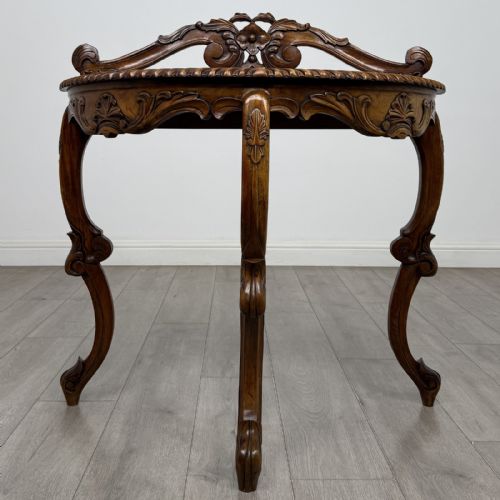
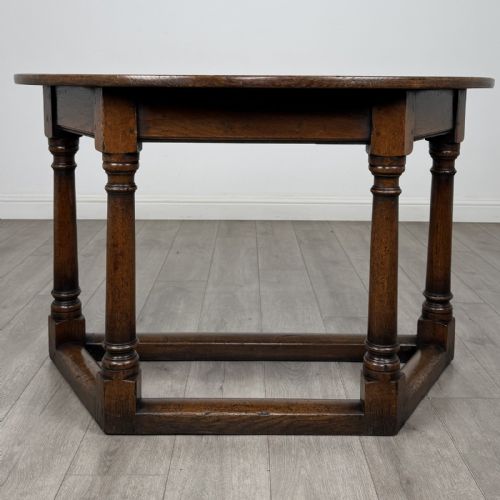
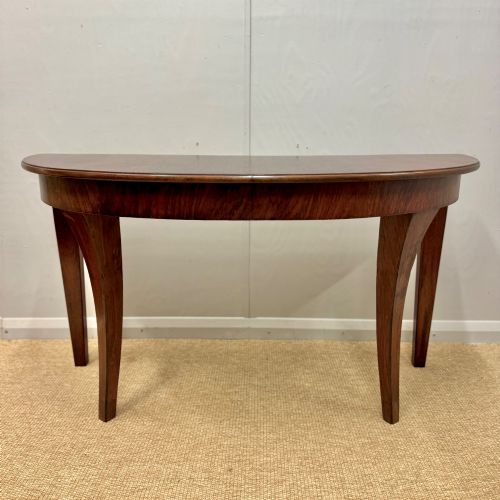
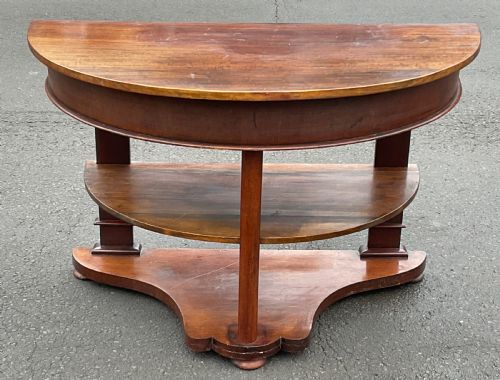
A semicircular hall table brings understated grace to an entrance, offering a flat wall edge and a curved front that saves floor space.
Semicircular Hall Table
A semicircular hall table sits flush against the wall in narrow spaces, making the most of tight hallways without blocking movement. These console tables appear most frequently in 19th-century interpretations of earlier classical designs.
Makers shaped these demi-lune forms in mahogany, oak, and rosewood, often pairing the timber with marble or incorporating fold-over tops for dual use as card tables. Swedish and French origins also surface, showing Gustavian and neoclassical influences.
Georgian and Regency styles dominate the selection, bringing refined silhouettes and inlaid decoration to domestic interiors. A buyer is most likely to meet a mahogany or oak version dating from the 19th century.
How they were made
Cabinet makers constructed these console tables using solid timbers and decorative veneers such as satinwood, mahogany, and rosewood. Crossbanding and intricate inlay work frequently accentuate the curved edge of the top.
Giltwood detailing and marble inserts appear on pieces influenced by French and neoclassical design, adding heavier visual weight. Brass hardware and concave leg structures provide structural support while maintaining delicate proportions.
Semicircular Hall Table Retail Price Guide 2026
Typical asking prices for semicircular hall table among the pieces listed under this phrase on Sellingantiques today, from the lower quarter to the upper quarter. They describe what is for sale here now, not the wider market.
Mahogany and oak appear most frequently among the woods recorded on these semicircular hall tables.
What varies in quality
The sophistication of the timber selection and the precision of the crossbanding separate standard examples from finer works. Superior pieces integrate subtle stringing and harmonious grain patterns that follow the difficult curve of the demi-lune top.
Design ambition also defines the tier of a piece, moving from simple oak side tables to elaborate Adams design consoles with gesso and giltwood enrichment. The integrity of the leg joinery and the crispness of any carved or inlaid ornament dictate the overall success of the object.
The Semicircular Hall Table Glossary
- Demi-lune
- Half-moon shape used to describe tables with a flat rear edge for placement against a wall. This profile defines the classic hall console.
- Console table
- A table supported by wall brackets or console legs, designed to stand against a vertical surface. They often feature ornamental legs at the front.
- Crossbanding
- A strip of veneer running perpendicular to the grain of the main surface, framing the top. This technique demonstrates high cabinet-making skill.
- Gustavian
- The Swedish interpretation of French neoclassical style, characterised by lighter proportions and restrained ornamentation. It frequently employs pale painted finishes or bleached timbers.
- Giltwood
- Wood that has been coated with gold leaf or a gold-coloured finish. It is common in neoclassical and revival pieces.
Semicircular Hall Table: Frequently Asked Questions
Where should a semicircular hall table go?
These tables find their natural home in entrance halls, corridors, and narrow landings where depth is limited. Their flat back allows them to anchor securely against the wall while the curved front softens the geometry of a boxy room.
They also work effectively in living rooms or dining spaces beneath a mirror or painting. The shallow profile ensures they remain out of the main pathway of foot traffic.
Can a demi-lune table serve as a desk?
Most antique demi-lune tables lack the knee clearance and internal storage required for regular desk work. Their primary historical function was decorative display or occasional surface use.
Certain examples feature fold-over tops that open to create a larger surface for games or writing. However, the curved front generally restricts comfortable seating underneath for prolonged tasks.
How do I identify a Georgian style table?
Georgian style pieces rely on classical proportions, symmetrical arrangement, and disciplined ornamentation such as stringing or restrained inlay. Mahogany and oak are the dominant woods, often finished with polished patination.
They tend to feel substantial yet balanced, avoiding the heavier gilt excesses found in later revival periods. Look for tapered legs and clean architectural lines.
What is the difference between console and side tables?
A console table historically relied on wall brackets for a portion of its structural support, though many freestanding antique versions retain the name due to their intended placement. Side tables are strictly freestanding pieces designed to stand against any wall.
In practice, antique dealers often use the terms interchangeably for semicircular hall furniture. Both types prioritize surface display over concealed storage.