

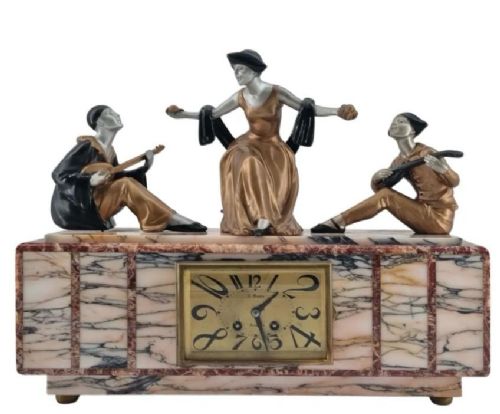


French Spelter Figures
French spelter figures are decorative metal sculptures capturing historic, mythological and modern subjects that bring period character to interior spaces.
French Spelter Figures
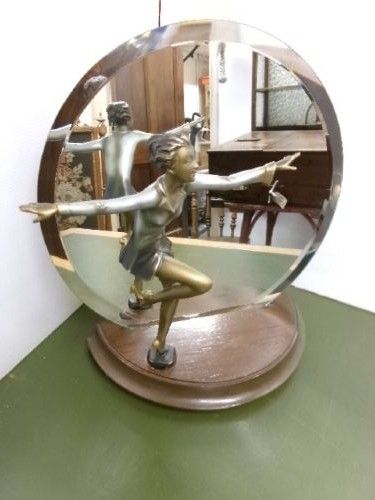
French spelter figures encompass sculptures, lamps, clocks and bookends originating across the nineteenth and early twentieth centuries. These pieces reflect shifting aesthetics from nineteenth century realism and Renaissance revival through to flowing Art Nouveau forms and geometric Art Deco designs.
The most common examples on this page date from the late nineteenth century and the Art Deco period of the nineteen twenties and thirties. Buyers encounter single figures, matched pairs and functional items incorporating figural sculpture.
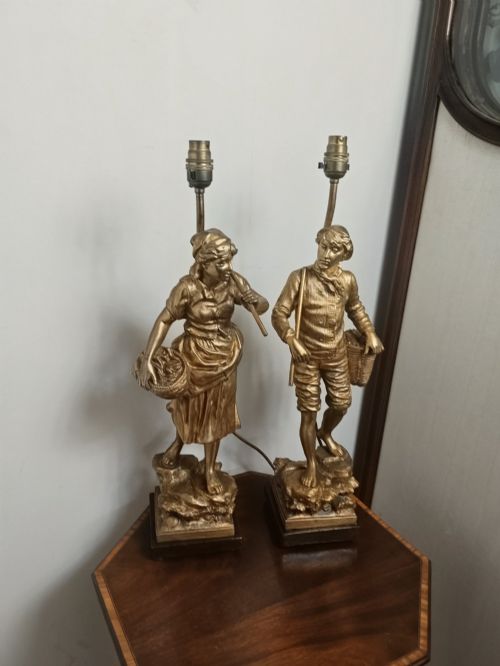
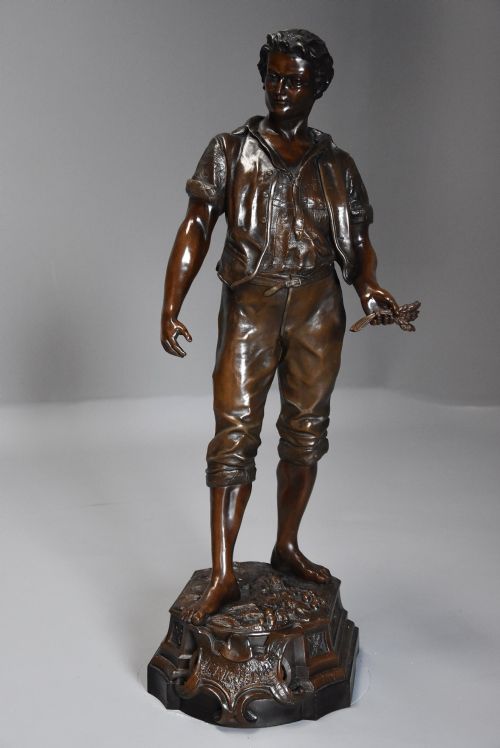
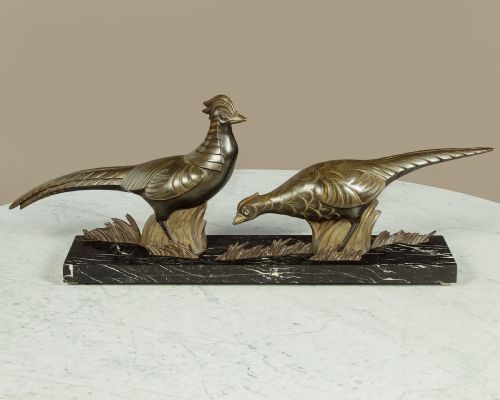
Subjects range from farm labourers, soldiers and cavaliers to dancers, animals and mythological characters. They often stand upon bases of marble, onyx or wood.
Materials and technique
Spelter, an alloy primarily composed of zinc, served as the principal metal for these castings because it accepted intricate detail and fluid mould lines easily. Founders often applied patinated, bronzed, gilt or silvered surface finishes to simulate more expensive bronze.
Many sculptural works incorporate secondary materials such as marble or onyx for bases, alongside brass, glass and wood components used in lamps and clock garnitures. Signatures and foundry marks were frequently impressed into the metal or the base during production.
Listings feature items spanning the nineteenth century, Edwardian era, and the nineteen twenties and thirties.
Quality and execution
The integrity of the surface finish and the retention of original patination dictate visual success. Integrated combinations with substantial marble or onyx bases elevate the presence of the piece.
L & F Moreau·Auguste Moreau·F.Milliot·Sega·C Masson·Geo Maxim·H. Bal·Chiparus·E Rousseau·Phillipe H. Mourey
The French Spelter Figures Glossary
- Spelter
- A zinc-based alloy commonly utilised for nineteenth and twentieth century decorative sculptures. It provides a lighter and more malleable alternative to traditional bronze.
- Patination
- The surface coloration and ageing applied to metal objects. This finish develops or is chemically induced to simulate bronze or aged metal.
- Garniture
- A set of matching ornamental objects for a mantelpiece, typically comprising a clock accompanied by side pieces such as vases or candlesticks.
- Art Deco
- A design style prominent around nineteen thirty characterised by sleek geometric shapes, stylised figures and modern industrial motifs.
French Spelter Figures: Frequently Asked Questions
What is spelter?
Spelter is a zinc alloy that was widely utilised by French foundries to cast decorative sculptures and lamps during the nineteenth and twentieth centuries.
It offered an economical alternative to bronze while allowing makers to achieve high levels of surface detail.
How do I identify Art Deco figures?
Art Deco figures typically date around nineteen thirty and display stylised forms, geometric lines and subjects such as dancers, athletes and sleek animals.
They frequently incorporate materials like marble or onyx into the bases.
Are these figures solid metal?
Spelter figures are cast metal objects, often produced as hollow forms to reduce weight and material usage.
Many sit upon heavy bases made from marble, onyx or wood to provide stability.
How should I clean them?
Dust these figures gently with a soft, dry cloth to protect the delicate surface patination and finishes.
Avoid liquid cleaners, abrasives and polishes which can strip away the original bronzing or gilt.