
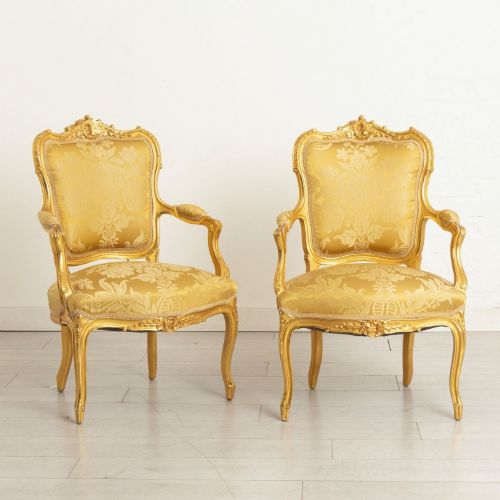


French Rococo Fauteuil
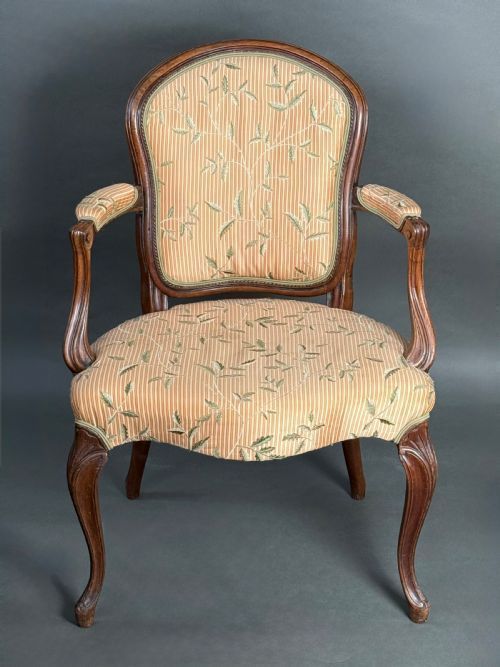
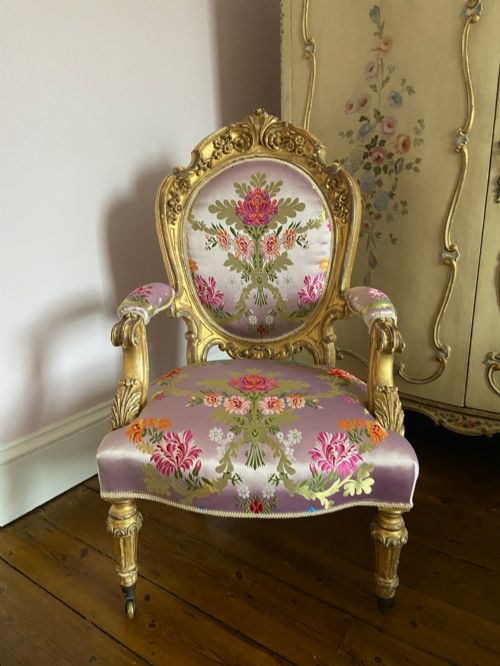
A French rococo fauteuil brings open-armed seating into a room with carved walnut, giltwood and upholstered silk.
French Rococo Fauteuil
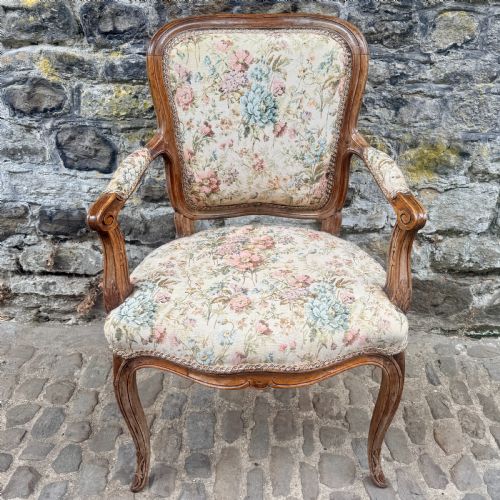
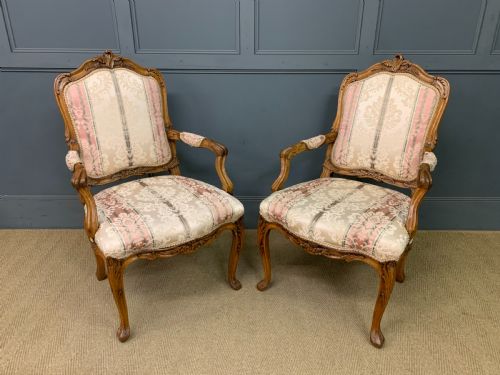
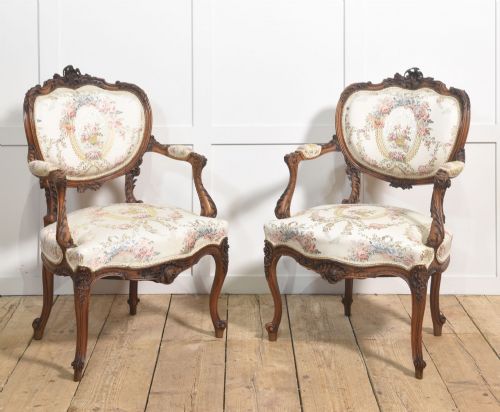
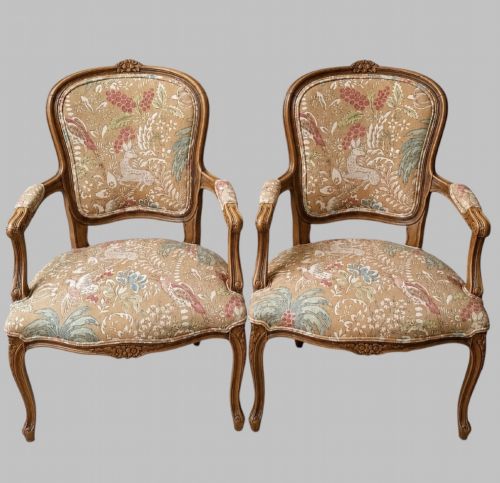
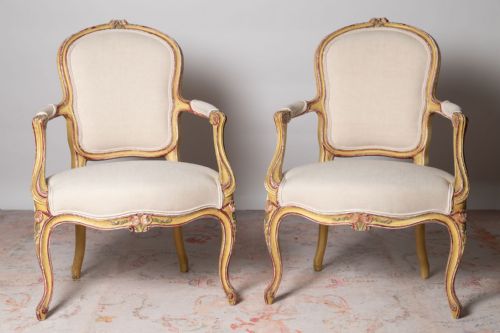
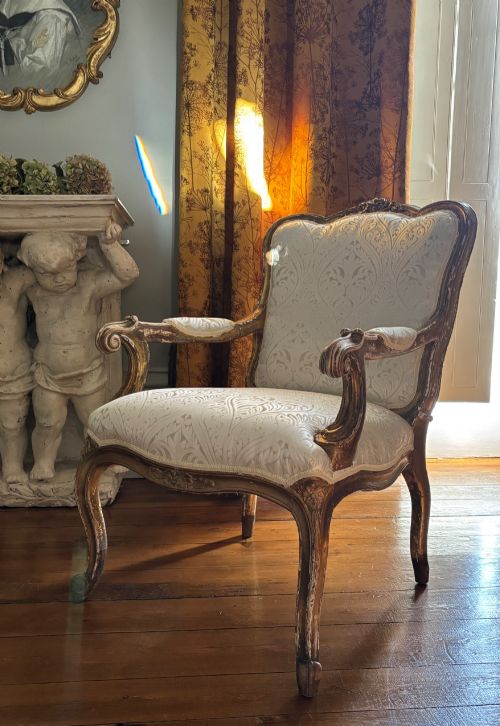
A French rococo fauteuil is an open-armed seating form designed for eighteenth-century salons, though buyers today most frequently encounter revival pieces produced across the nineteenth and twentieth centuries. These chairs combine carved wooden frames with upholstered backs and seats, appearing singly or in pairs and occasional matching suites.
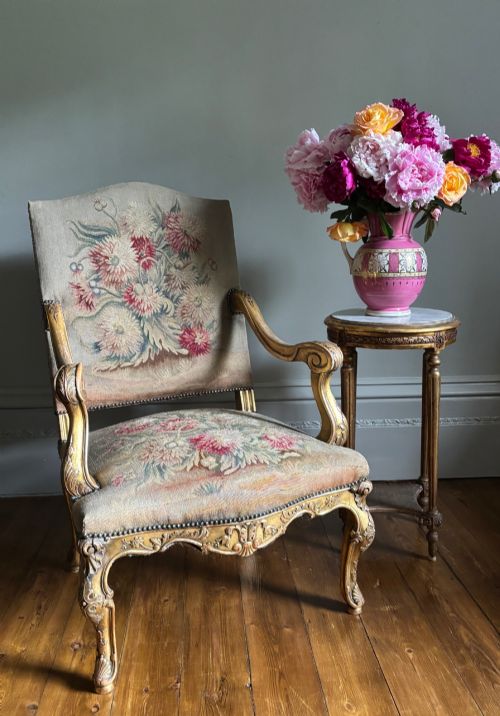
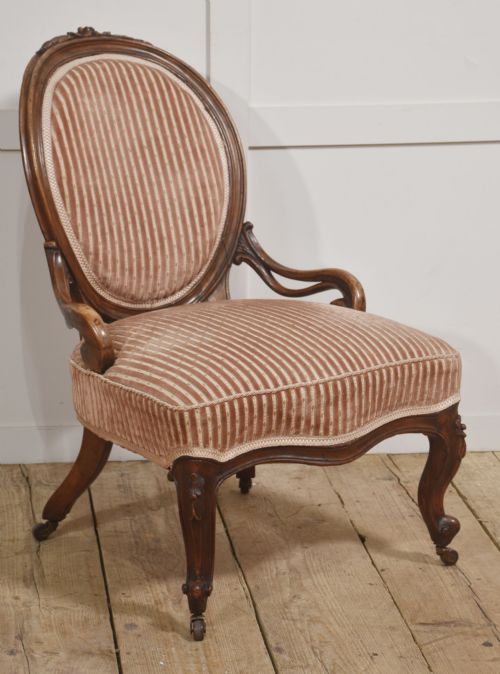
The selections span genuine eighteenth-century examples alongside nineteenth-century revival iterations and later twentieth-century interpretations. Frames range from provincial walnut and carved beech to gilded wood, upholstered in contemporary silks, velvets and patterned fabrics.
Materials and construction
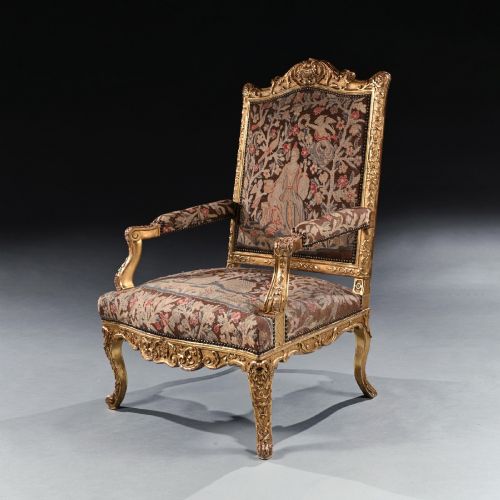
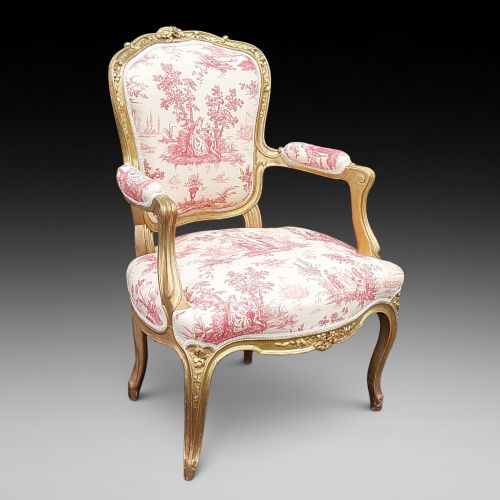
Makers shaped frames primarily from solid walnut, beech, rosewood and mahogany, carving curved lines directly into the timber. Giltwood surfaces received thin layers of gold leaf applied over preparation grounds on carved wood.
Upholstery techniques involved webbing and stuffing fixed directly to the frame or housed within removable elements, finished with silk, velvet or printed fabric secured by tacks.
Listings feature walnut, giltwood, beech and rosewood frames paired with silk, velvet and standard upholstery fabrics across multiple centuries.
Distinctions in standard
Quality rests in the depth and crispness of the hand-carving along the cabriole legs and serpentine frames, where sharper definition separates finer artisan work from softer moulding. The weight and grain of the timber, whether dense walnut or solid rosewood, dictate the structural integrity of the chair.
Gilding application marks the upper tiers of production, using genuine leaf that burnishes to a warm lustre rather than flat metallic paint. Upholstery choice and execution also reflect the grade, utilising traditional silk fabrics and precise stitching over standard modern textiles.
Blaise Maucuy·Colefax and Fowler
The French Rococo Fauteuil Glossary
- Fauteuil
- An open-armed upholstered armchair originating in France. The open wooden arms distinguish it from the fully upholstered confessional or wing chair.
- Giltwood
- Timber coated with gold leaf or powder. This surface treatment gives furniture a bright metallic finish popular in formal salons.
- Cabriole leg
- A furniture leg that bends outward in a convex curve and tapers inward in a concave curve. It echoes natural animal forms typical of the rococo style.
- Louis XV style
- A decorative aesthetic defined by asymmetrical curves, scrollwork and floral motifs. Furniture from this design vocabulary avoids straight lines in favour of flowing contours.
French Rococo Fauteuil: Frequently Asked Questions
What is a french rococo fauteuil?
A french rococo fauteuil is an open-armed upholstered armchair designed with curved wooden frames and floral carvings. These seats originated in eighteenth-century France to provide comfortable seating for formal reception rooms.
Today, buyers find both authentic period examples and later nineteenth-century revival pieces modelled on the same aesthetic. They function as both decorative statements and usable seating within sitting rooms.
How do I identify the period?
Dating relies on examining the timber species, carving style and construction methods used in the frame. Eighteenth-century pieces display hand-cut joinery and period-specific tool marks, while revival pieces from the nineteenth and twentieth centuries show machine intervention or different fastening techniques.
Stylistic shifts also provide clues, as mid-nineteenth-century revival work often exhibits heavier proportions than authentic eighteenth-century models. Comparing the patination of the wood and the wear patterns helps confirm the age of the frame.
Where should I place these chairs?
These armchairs suit drawing rooms, bedrooms and reading corners where their decorative carved frames remain visible. Placing a pair opposite a fireplace or flanking a low table creates a balanced arrangement.
Because the arms are open, they occupy less visual weight in a room than fully upholstered armchairs. They pair well with antique wooden side tables and upholstered small sofas.
How do I care for the upholstery?
Maintenance depends on the specific fabric covering the seat and back, whether silk, velvet or printed cotton. Regular gentle vacuuming with a soft brush attachment removes surface dust before it settles into the fibres.
Avoid placing these chairs in direct sunlight to prevent fading on delicate silks and velvets. Professional cleaning is recommended for antique textile upholstery to preserve the original fibres.