


Vintage Walnut Fauteuils
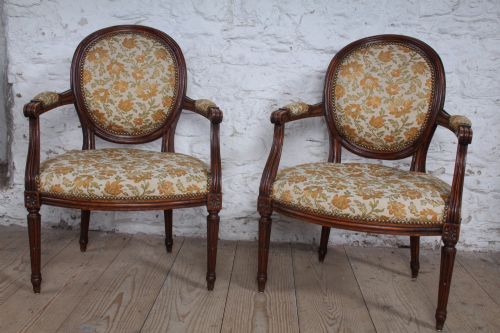
These vintage walnut fauteuils bring French seating styles from the eighteenth century through to the early twentieth century into your room.
Vintage Walnut Fauteuils
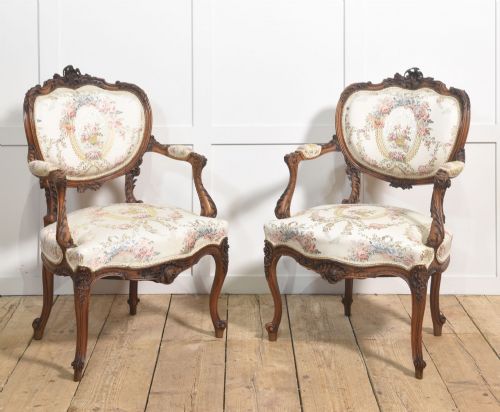
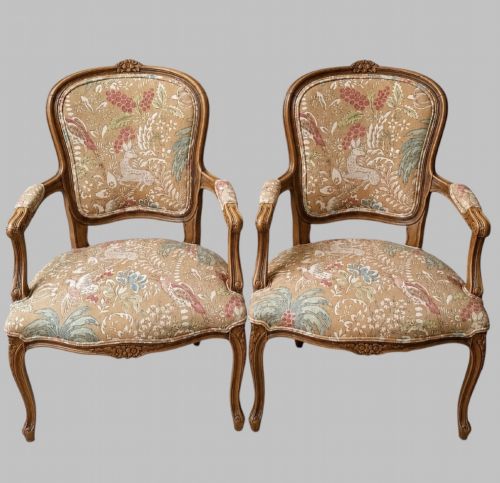
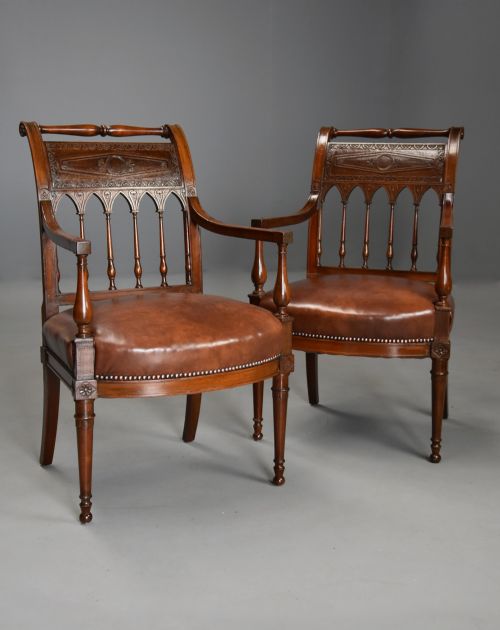
Vintage walnut fauteuils are open-armed upholstered seats shaped by historical French design traditions, spanning Louis XV, Louis XVI, Directoire, and Empire styles. When you search for vintage walnut fauteuils, you encounter pieces originating from the nineteenth and early twentieth centuries alongside eighteenth-century examples.
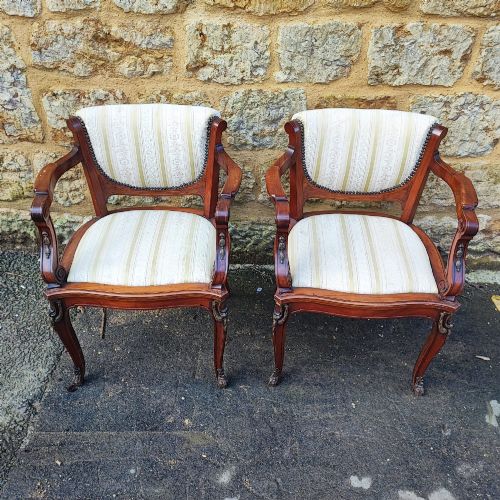
The selection here comprises individual armchairs, matching pairs, salon chairs, and three-piece suites combining a small sofa with two armchairs. These items function as drawing room seating, bedroom chairs, and decorative focal points in period interiors.
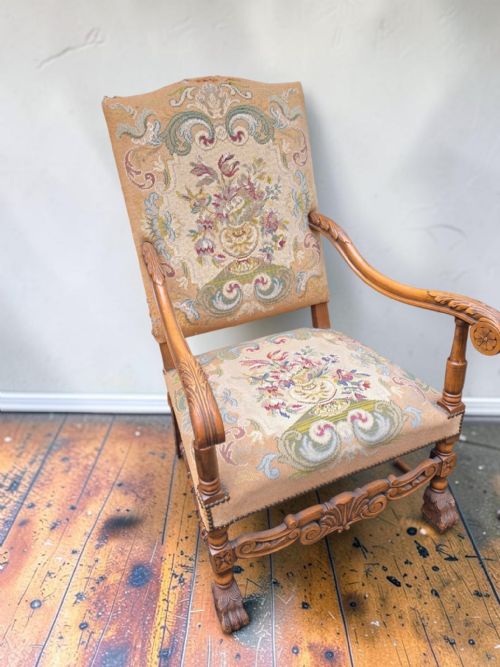
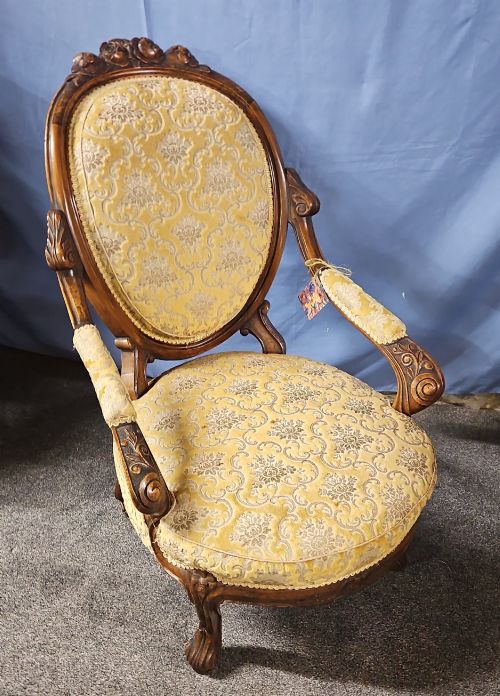
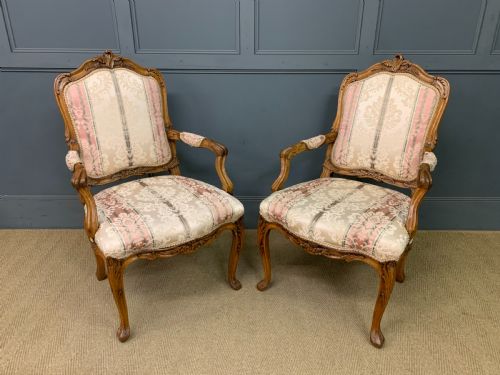
Most pieces display carved wooden frames built from solid walnut, often finished with traditional revival details that reflect French chateau or provincial aesthetics. The upholstered elements range from plain fabric and velvet to needlepoint tapestry panels and damask.
How they were made
Cabinet makers constructed the structural frames from solid walnut, shaping the wood with hand-carved ornamentation that defines styles such as Louis XV Revival and Renaissance Revival. These frames frequently incorporate curved cabriole legs, moulded arms, and floral or scroll motifs.
The upholstery methods rely on traditional stuffing materials secured beneath textile covers like damask, velvet, and tapestry upholstery. Brass details or decorative nailheads sometimes secure the fabric edges to the wooden framework.
Listings span four centuries of design, ranging from 18th-century originals to 1930s neo-rococo interpretations.
What varies in quality
The distinction between standard production and the top of the range rests on the crispness of the wood carving and the weight of the solid walnut frame. Superior pieces display deep, fluid relief carving executed by hand, whereas lesser examples feature shallow or mechanical shaping.
Upholstery execution and textile selection also determine the standing of a piece, with fine needlepoint tapestry panels and heavy silk damask elevating the item above basic fabric coverings. The structural integrity of the joints and the balanced proportions of the open arms dictate how successfully the chair marries comfort with period form.
The Vintage Walnut Fauteuils Glossary
- Fauteuil
- An open-armed upholstered armchair originating in France, typically featuring exposed wood framing. This form developed distinctive regional and royal style variations over successive centuries.
- Louis Quinze
- A style referencing the reign of Louis XV, characterised by asymmetry, C-scrolls, and graceful cabriole legs. Walnut frames of this design often feature organic floral carvings.
- Tapisserie
- A textile worked in needlepoint or petit point, frequently utilised for historical chair seats and backs. These panels display pictorial or geometric designs created with coloured wool and silk threads.
- Damask
- A reversible figured fabric woven on a loom, featuring patterns formed by contrasting warp and weft threads. This material appears on formal upholstered seating suites from the nineteenth century onward.
- Empire
- A neoclassical style inspired by ancient Roman and Greek forms, emerging around the early nineteenth century. Chairs in this manner display restrained rectilinear frames and classical ornamentation.
Vintage Walnut Fauteuils: Frequently Asked Questions
What is a fauteuil?
A fauteuil is an upholstered armchair with open wooden sides, designed in France during the seventeenth century and revived in later periods. The style emphasises decorative wood frames alongside comfortable padded armrests.
These chairs served primarily as formal seating in salons and withdrawing rooms. Their open construction allowed space for wide court fashions while providing seated comfort.
How do I date a walnut armchair?
Dating involves examining the carving style, construction joints, and framing proportions against known historical periods such as the Louis XV Revival or Victorian eras. Subsidiary clues appear in the type of upholstery fabric and underlying webbing.
Earlier pieces from the eighteenth century exhibit hand-shaped joinery and organic wear patterns on the walnut. Later revival items from around nineteen hundred often combine period motifs with heavier industrial framing techniques.
Where should I place a salon chair?
Salon chairs suit drawing rooms, bedrooms, and quiet reading corners where their decorative carved walnut frames remain visible. They function well as occasional seating rather than heavy daily lounging chairs.
Pairing matching armchairs on either side of a fireplace or beneath a window creates a balanced period arrangement. Their open arm design prevents them from visually crowding smaller spaces.
Are these chairs comfortable for daily use?
Most vintage fauteuils offer upright, supportive seating designed for formal conversation rather than reclining. The depth and angle of the seat reflect nineteenth-century ergonomics.
Many examples retain traditional spring or stuffed padding that provides firm support. Placing a small lumbar cushion behind you can adjust the fit for modern relaxing.