


Open Arm Salon Chairs
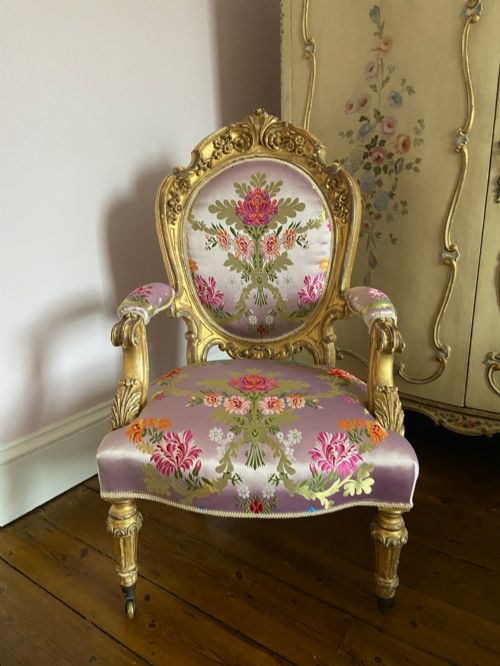
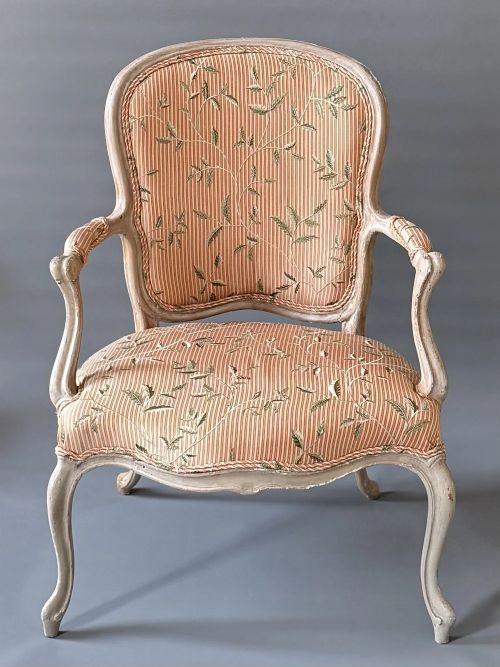
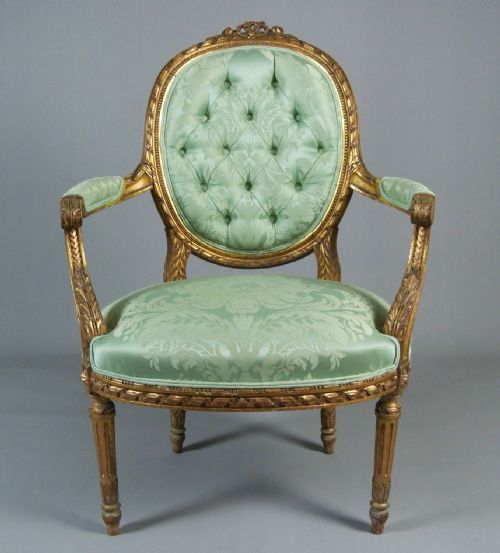
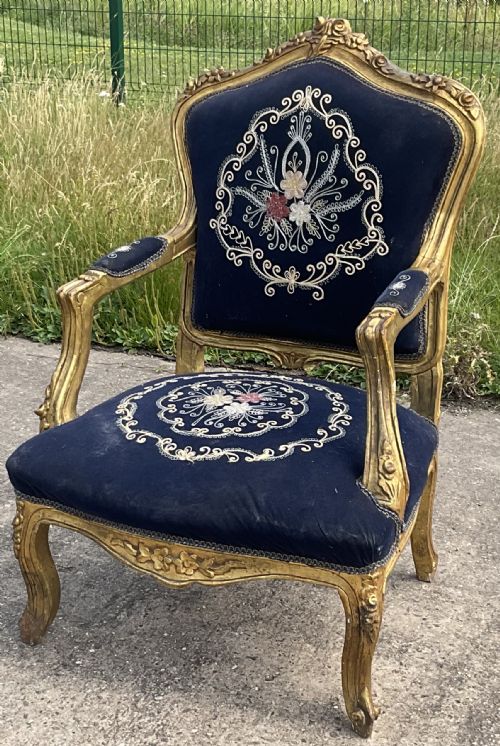
Open arm salon chairs bring formal seating into the drawing room with exposed frames and upholstered comfort, offering period elegance for daily use.
Open Arm Salon Chairs
Open arm salon chairs provide formal yet comfortable seating designed for nineteenth-century drawing rooms and parlours. The pieces on this page span the eighteenth, nineteenth, and early twentieth centuries, drawing heavily on French and English revival styles.
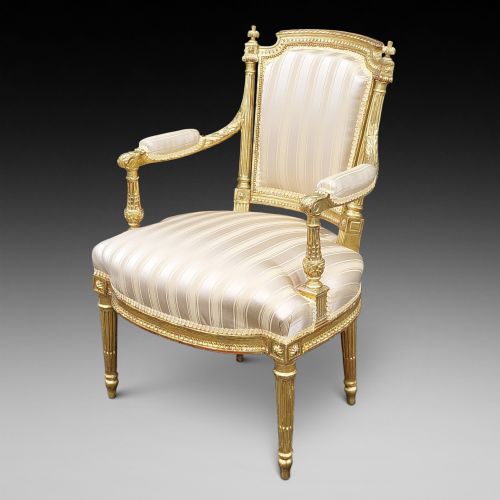
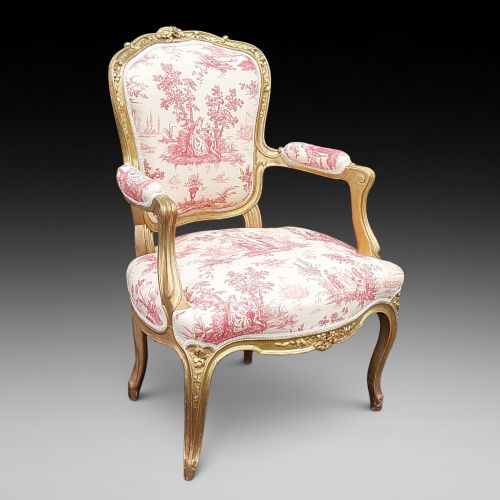
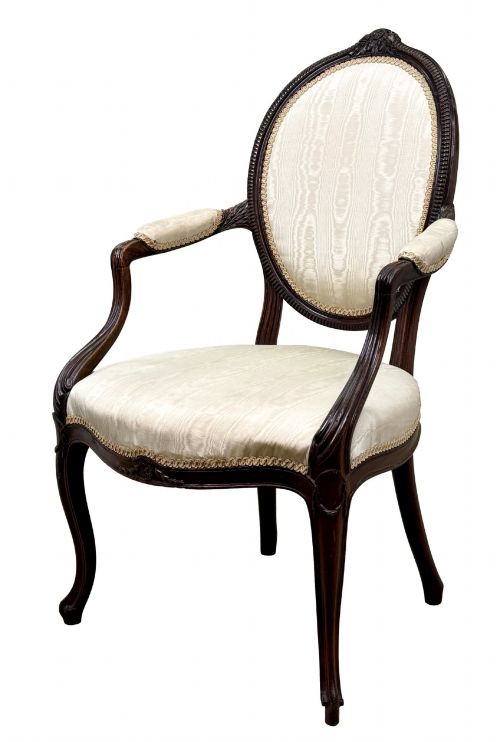
Most examples you meet here date from the Victorian era and adopt walnut, mahogany, or giltwood frames. Forms range from French Louis XV style fauteuils to English Hepplewhite and Victorian balloon back armchairs.
Makers designed these seats for entertaining and repose, combining carved wooden arm frames with padded upholstery. Pairs and larger sets frequently appear alongside single collector pieces.
Materials and construction
Cabinet makers utilised dense hardwoods such as walnut, mahogany, oak, and rosewood to construct the structural frames. Many nineteenth-century examples also employ giltwood or painted finishes to mimic fashionable French aesthetics.
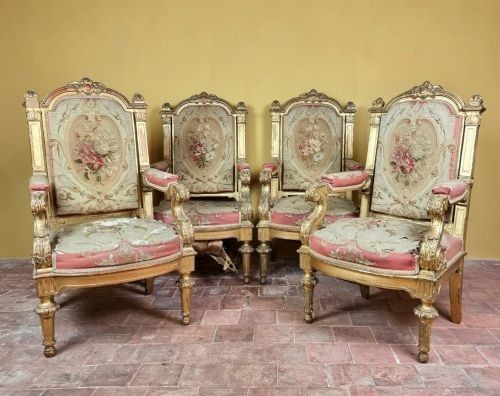
Upholstery techniques combined traditional stuffing with decorative textiles, including velvet, tapestry, needlepoint panels, and fabric. Skilled artisans carved intricate floral and scroll motifs directly into the wooden frames and arm supports.
Giltwood, rosewood, and walnut dominate the frame materials across the nineteenth-century selections.
Factors of quality
The crispness and depth of hand carving on the wooden frame separate standard production from superior pieces. Crisp floral details and well-defined mouldings indicate skilled joinery and high workshop standards.
The choice of primary timber and the integrity of the original giltwood or painted surface dictate overall desirability. Retaining period upholstery materials like needlework or tapestry further elevates a piece.
Holland and Sons·Thomas Chippendale
The Open Arm Salon Chairs Glossary
- Fauteuil
- An open-arm armchair with an exposed wooden frame originating in France. These seats typically feature upholstered backrests and arm pads.
- Giltwood
- Wood that has been treated with a thin layer of gold leaf. This finish appears frequently on formal nineteenth-century salon seating.
- Hepplewhite
- An eighteenth-century English furniture style known for elegance and tapered legs. Pieces in this tradition often utilise mahogany.
- Tapisserie
- Woven textile used for historical upholstery and wall hangings. Antique examples display intricate pictorial or floral scenes.
- Salon
- A formal reception room for social gatherings and conversation. Seating made for these spaces prioritised decorative elegance alongside comfort.
Open Arm Salon Chairs: Frequently Asked Questions
Where did these chairs sit?
These seats belonged in formal drawing rooms, parlours, and reception spaces where hosts entertained guests. They provided comfortable resting places during social calls and musical evenings.
Their decorative frames allowed them to be placed against walls or arranged in conversational groups around the room.
How do I spot French revival?
French revival pieces display curved cabriole legs, asymmetrical scrollwork, and exposed carved wooden frames inspired by Louis XV or Louis XVI designs. Makers often utilised giltwood, paint, or walnut for these continental forms.
English interpretations tend to use mahogany or walnut with straighter lines, whereas French versions embrace ornate floral carvings.
Can I use them daily?
These salon chairs function well for everyday seating provided the underlying frame remains sturdy and sound. Walnut and mahogany frames offer robust structural support for regular domestic use.
Consider the condition of the internal webbing and padding before placing heavy demands on nineteenth-century upholstery.
Are pairs common?
Pairs and matching sets appear frequently because drawing rooms traditionally required symmetrical seating arrangements. Matching armchairs flanked fireplaces, windows, or cabinets.
Finding a matched pair or a set of four increases the utility and historical coherence of the seating.