



French Revival Gilt Mirrors
French revival gilt mirrors bring opulent 19th-century decorative schemes into modern rooms through ornate gilded frames and reflective glass.
French Revival Gilt Mirrors
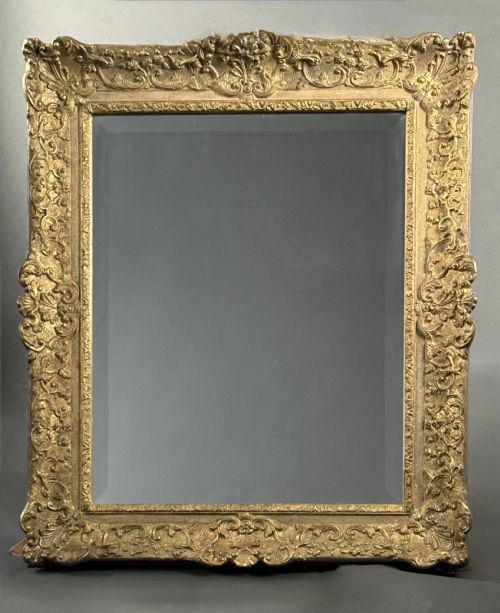
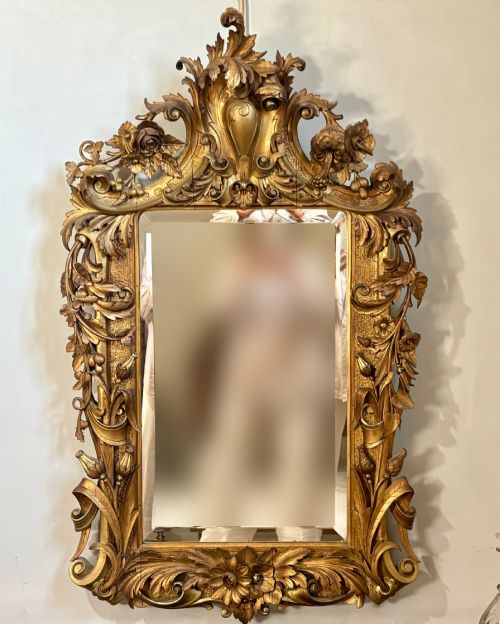
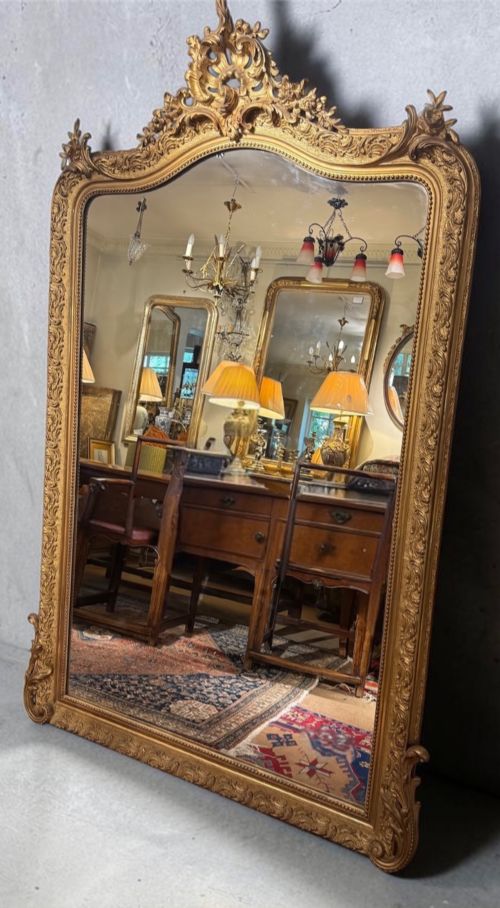
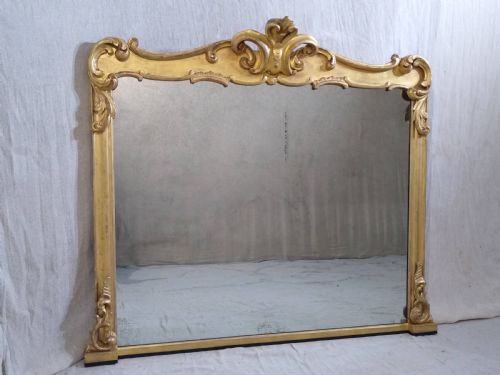
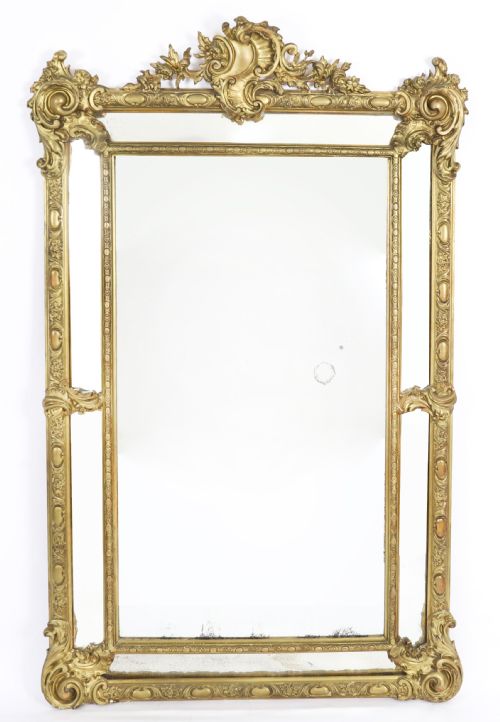
French revival gilt mirrors encompass grand wall hangings, overmantles, and smaller vanity pieces designed to capture the decorative exuberance of earlier European court styles. When searching for french revival gilt mirrors, buyers encounter items spanning the nineteenth and early twentieth centuries, drawing heavily upon Rococo and Louis XV motifs.
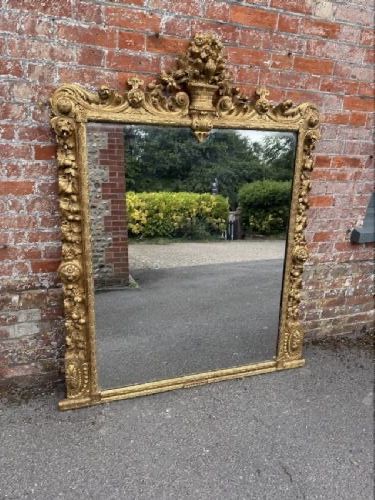
The selection on this page relies on pieces created across Victorian and Edwardian periods, alongside later twentieth-century iterations. Large overmantles and archtop wall mirrors dominate the forms, frequently displaying asymmetrical cartouches and intricate crestings characteristic of revival aesthetics.
Materials and construction methods
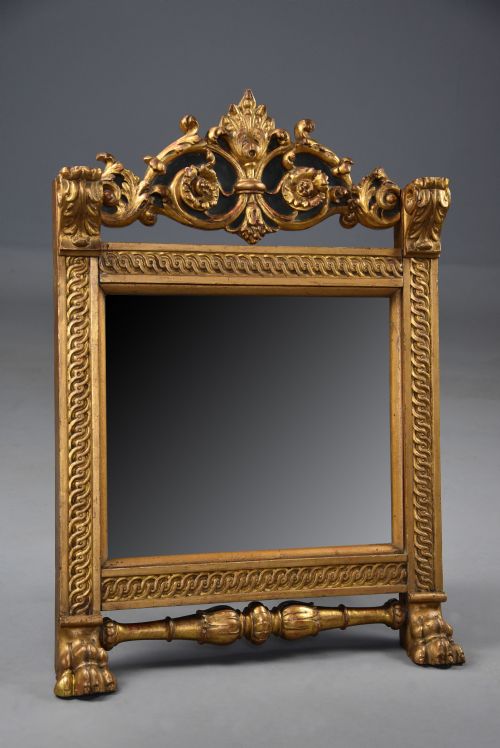
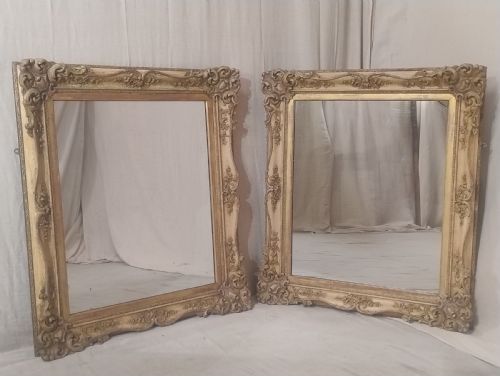
Makers built these frames using carved wood, gesso, and composition moulded ornaments applied over a wooden base. Artisans then applied gold leaf or metallic paint to create the bright gilt surface that defines the aesthetic.
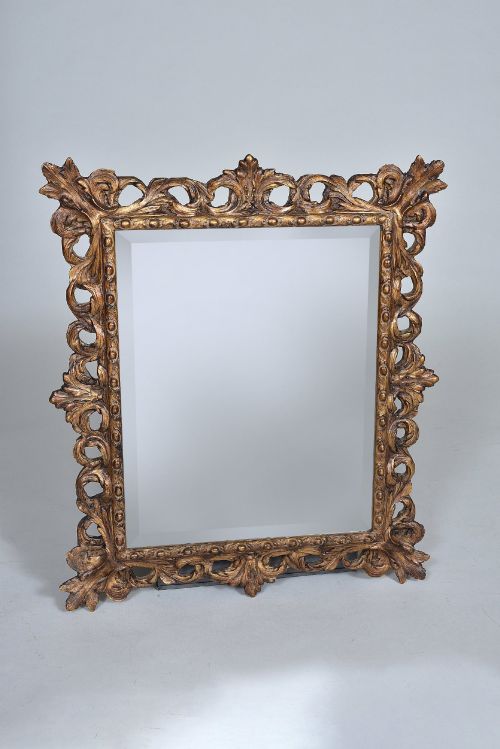
Mirror plates consist of traditional glass, occasionally bevelled at the edges to catch and refract light. Heavier overmantle forms utilise robust timber construction to support the substantial weight of both the frame and the glass.
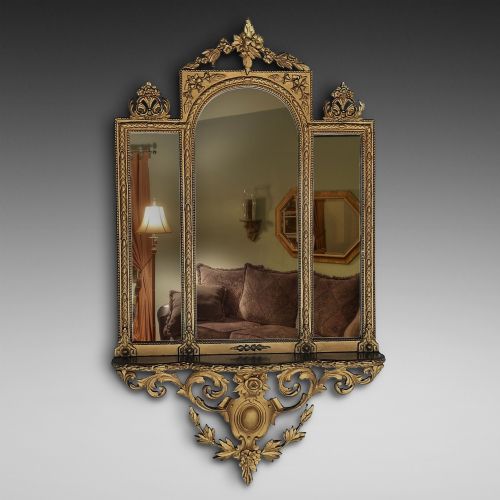
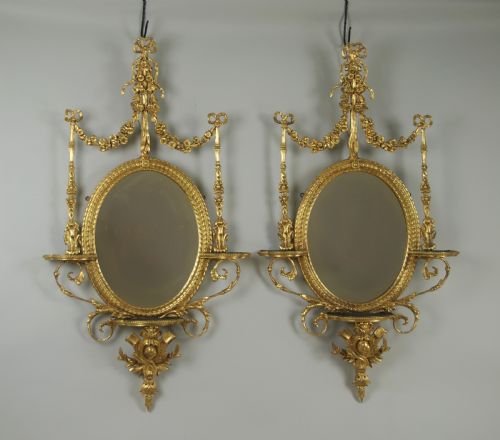
Some oval wall mirrors arrive with built-in display brackets, ready to hold tiny porcelain treasures.
Assessing quality in antique frames
Depth and crispness of the carved detail distinguish superior examples from mass-produced alternatives. Hand-carved wooden elements and finely modelled gesso retain sharp contours, whereas heavy composition mouldings can appear rounded or indistinct.
The preservation of the original gold leaf or early gilding layers determines visual authenticity. Original mirror plates showing natural foxing and age spots also contribute to the integrity of the piece.
G. Durand
The French Revival Gilt Mirrors Glossary
- Giltwood
- Wood that has been coated with gold leaf or a gold-coloured substance. This finish provides the characteristic metallic sheen seen on period frames.
- Gesso
- A plaster-like mixture applied to wood frames as a base for gilding and moulding. It allows artisans to carve intricate decorative reliefs.
- Composition
- A moulded mixture of whiting, resin, and oil pressed into ornamental shapes. It was widely utilised for repeating decorative motifs on 19th-century frames.
- Overmantel mirror
- A large mirror designed to hang above a fireplace mantel. These pieces often feature wide proportions to match the scale of the hearth.
- Cartouche
- An ornamental tablet or panel resembling a rolled-up scroll, frequently placed at the crest of French revival frames. It anchors asymmetrical Rococo designs.
- Girandole
- A decorative wall mirror fitted with candle sconces attached to the frame. The polished glass and gilt surface helped reflect candlelight around darkened rooms.
French Revival Gilt Mirrors: Frequently Asked Questions
Where should I hang an overmantle mirror?
Position overmantle mirrors securely above a fireplace mantelpiece to anchor the room's central focal point. Their grand scale naturally draws the eye upward and reflects ambient light across the space.
Ensure the wall fixings match the substantial weight of timber and glass assemblies. Professional installation is recommended for very large nineteenth-century examples.
Are these mirrors original to the nineteenth century?
Many items date from the Victorian era through the early twentieth century, reflecting revivals of earlier French court aesthetics. Dating relies on construction techniques, backboards, and the composition of the frame materials.
Makers replicated Rococo and Louis XV styles across multiple decades, meaning stylistic indicators often span distinct manufacturing periods.
What causes foxing on old mirror glass?
Foxing occurs when moisture degrades the silver backing behind the glass over many decades. These dark spots and cloudy patches are natural signs of age in antique mirrors.
Many collectors prize original glass with foxing because it confirms the genuine antiquity of the piece. Replacing the plate diminishes the historical integrity of the mirror.