




Antique Gold Display Shelves
These antique gold display shelves are gilded and mirrored ledges and étagères designed to showcase small objects.
Antique Gold Display Shelves
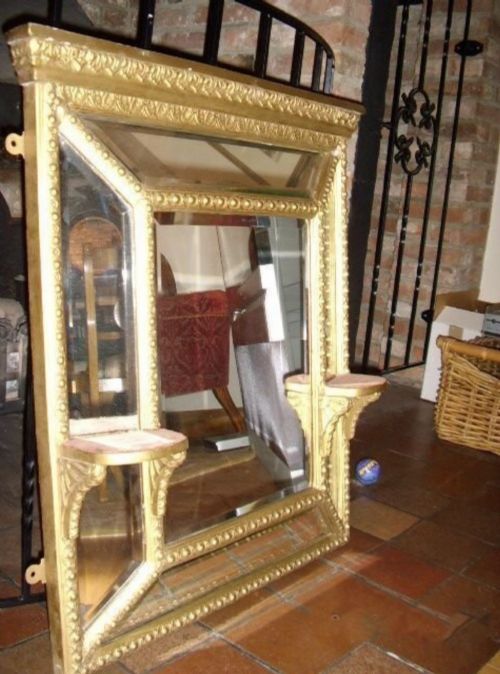
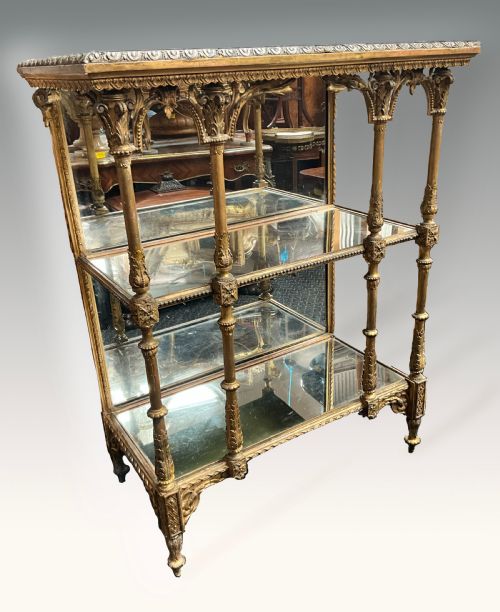
When you search for antique gold display shelves, you encounter pieces that range from Victorian and late nineteenth-century étagères to carved wall brackets and overmantel mirrors with integrated ledges. The selection spans the nineteenth century up to the early twentieth century, taking forms such as wall shelves, bookcases, and cabinets-on-stand.
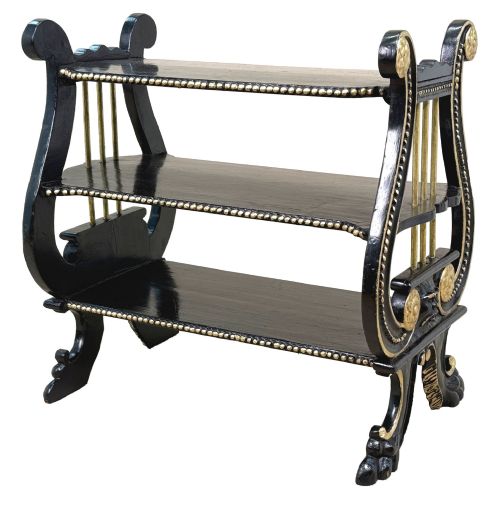
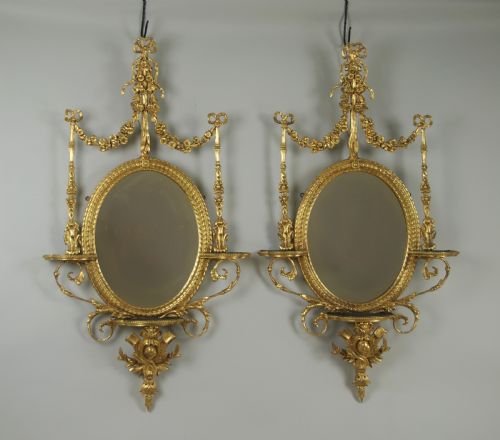
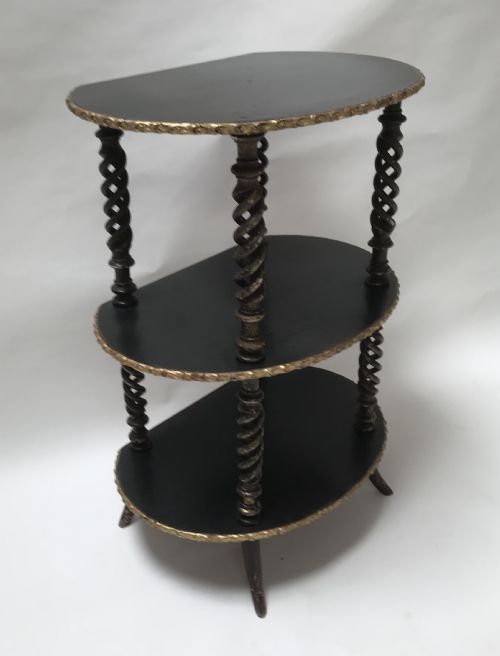
The most common examples you meet on this page are Victorian gilt wood and gesso mirrored display shelves and ebonised wall units decorated with parcel gilding. French influences appear frequently, alongside Aesthetic Movement and Rococo Revival styles that emphasise ornamentation and display.
Makers and origins stretch from Parisian workshops to English Victorian parlours and Japanese Meiji period cabinets. Each piece serves primarily to elevate ornaments while adding metallic or painted decorative presence to a room.
How they were made
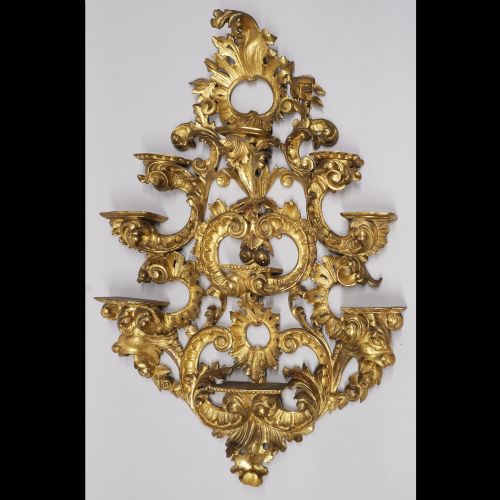
Carved giltwood and moulded gesso form the intricate scrolls and brackets of the Victorian and Rococo Revival periods. Mirrored backs incorporate bevel cut glass to amplify light behind displayed objects, and lacquer finishes define pieces like the Japanese Meiji period shodana cabinets.
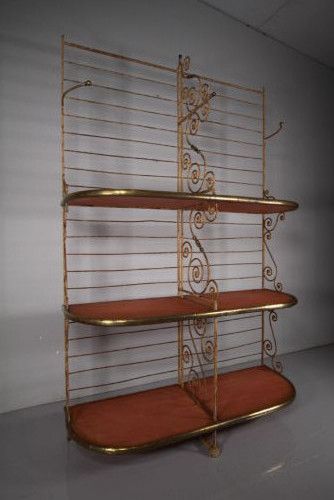
A sturdy baker's rack rubs shoulders with delicate Parisian étagères and Japanese lacquer cabinets.
What varies in quality
The standard of carving and the application of gold leaf or parcel gilding define the visual depth of each shelf. Finer pieces display crisp hand-carving in wood and gesso, whereas simpler items rely on smoother moulded surfaces.
The integration of bevel cut glass and the stability of wall brackets or étagère frames indicate the original workshop's joinery skills. Preservation of the original gilding, paint, and ebonised finishes preserves the character of the piece.
The Antique Gold Display Shelves Glossary
- Étagère
- A piece of furniture consisting of a set of open shelves for displaying small objects. These tiered units often incorporate mirrors and delicate supports.
- Parcel Gilded
- Partially gilded, where gold leaf is applied only to specific carved details or highlights against a contrasting painted or ebonised wood surface.
- Gesso
- A plaster-like mixture applied to wood as a base for carving and gilding. It allows for intricate relief ornamentation before the gold leaf is laid down.
- Shodana
- A traditional Japanese display cabinet with irregular shelving designed for curiosities. Meiji period examples feature detailed lacquerwork.
- Aesthetic Movement
- A late nineteenth-century design style emphasising visual beauty over narrative or moral function. It often combined ebonised finishes with Japanese-inspired motifs.
Antique Gold Display Shelves: Frequently Asked Questions
What can I display on these shelves?
These shelves suit small decorative objects such as porcelain figures, pocket watches, and small framed photographs. The ledges and mirrored brackets provide a dedicated stage for cabinet curiosities.
Heavier items require floor-standing étagères or robust wooden units rather than delicate wall-mounted brackets.
How do I hang antique wall brackets?
Wall-mounted display shelves and brackets require secure fixings suited to the weight of the carved wood and glass. Professional installation ensures the vintage fixings take the load safely.
Checking the wall structure prevents damage to both the plaster and the antique frame.
How do I clean gilded wood?
Dust gilded surfaces gently with a soft, dry brush to avoid disturbing fragile gold leaf or gesso. Moisture can damage old water gilding and antique paint finishes.
Keep these pieces away from direct sunlight and damp environments to protect the wood and mirrors.
Are these pieces French or English?
The listings include both English Victorian items and pieces of French origin, such as painted whatnots and Parisian iron racks. Styles like Rococo Revival and French Chateau point to continental design influences.
Victorian makers frequently adopted these European motifs alongside Aesthetic Movement designs.