

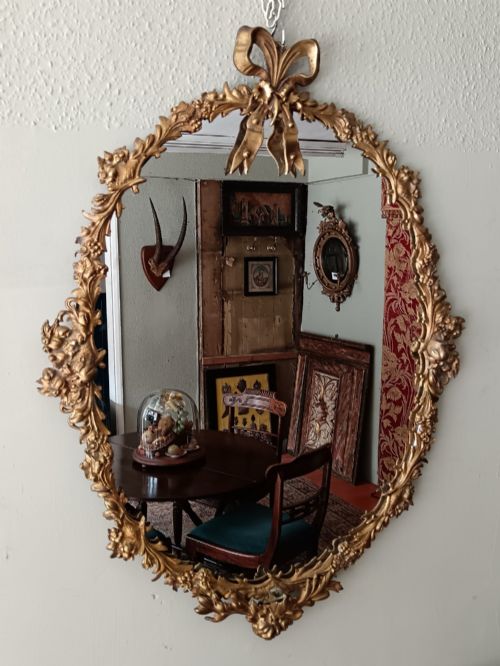


Ribbon Cresting Wall Mirrors
Ribbon cresting wall mirrors bring delicate neoclassical flair to a room, topped with carved bows and ribbons.
Ribbon Cresting Wall Mirrors
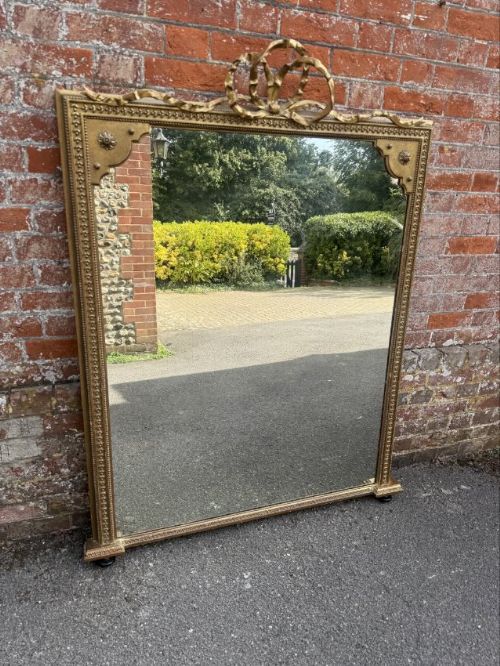
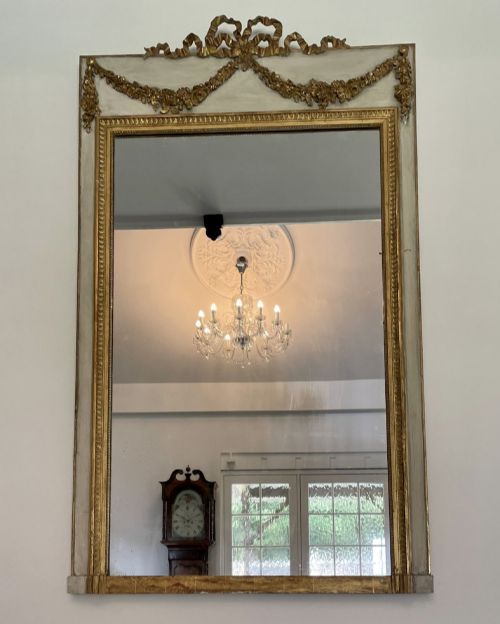
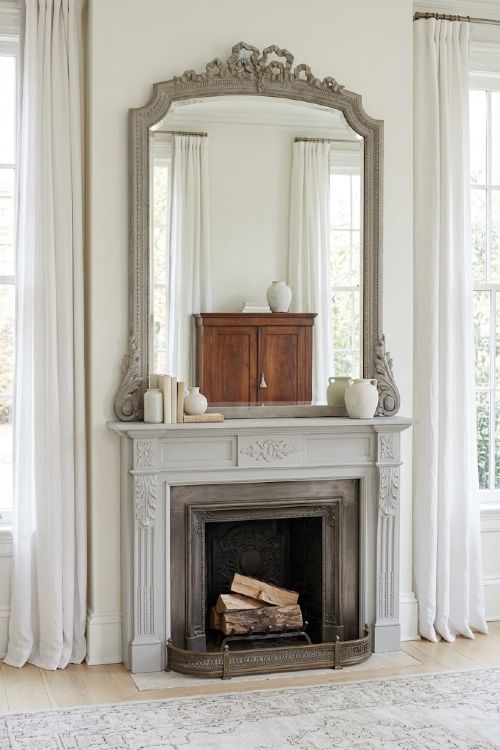
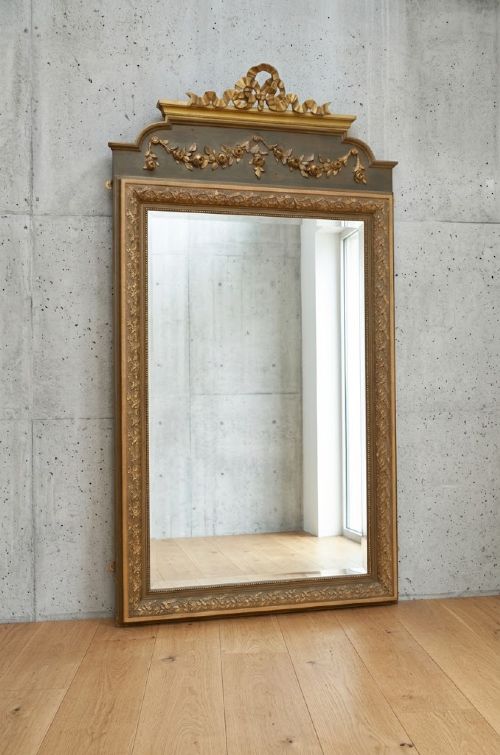
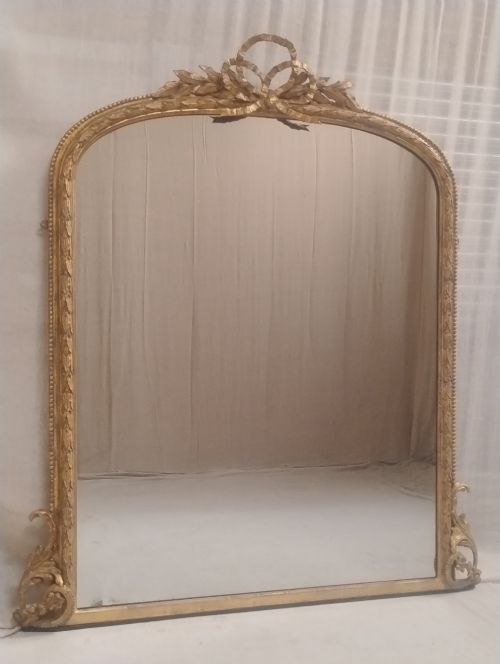
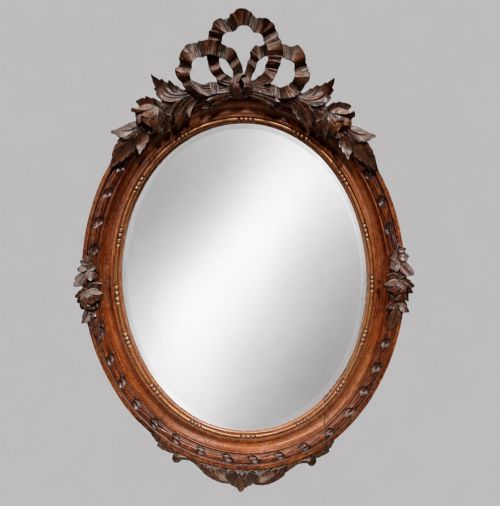
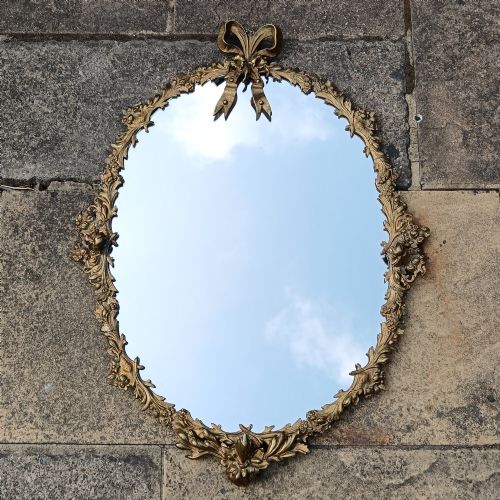
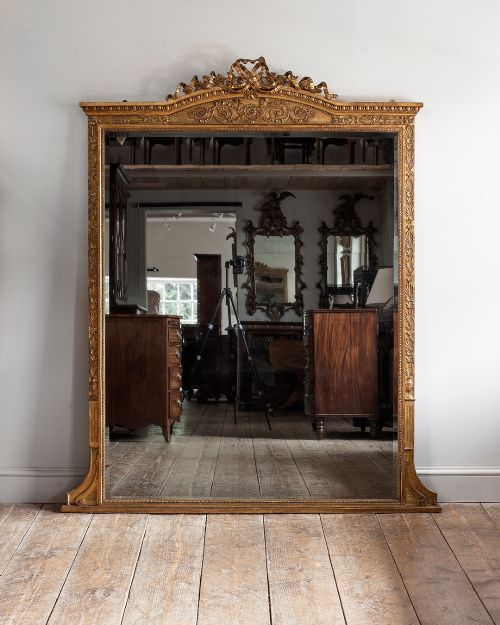
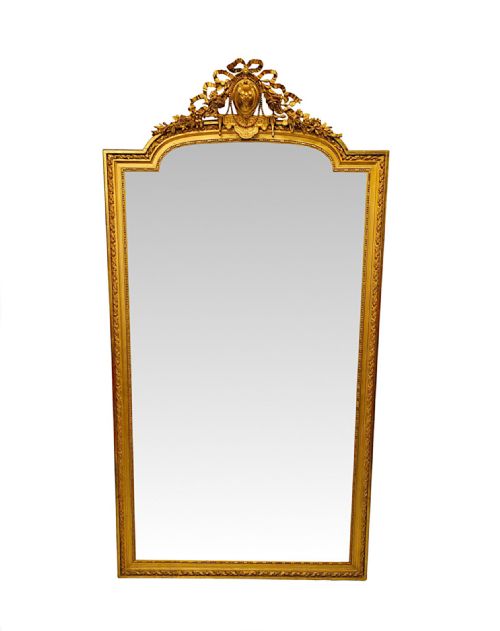
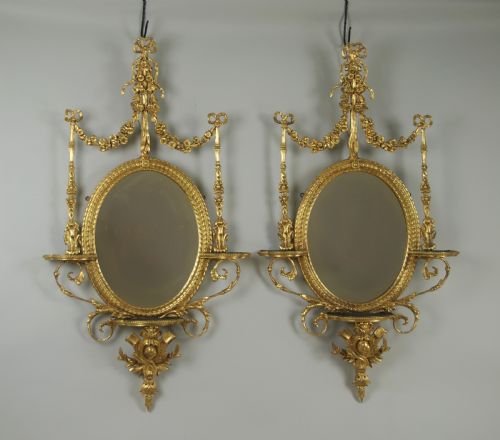
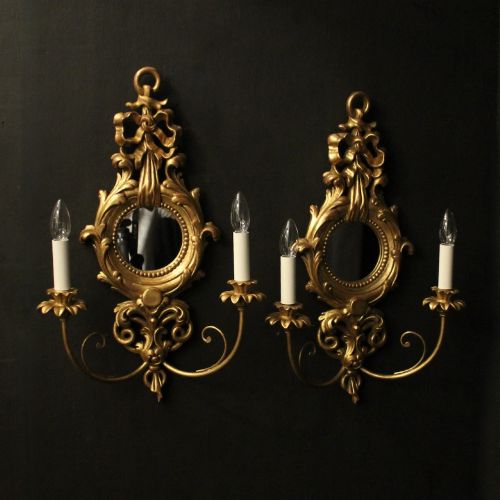
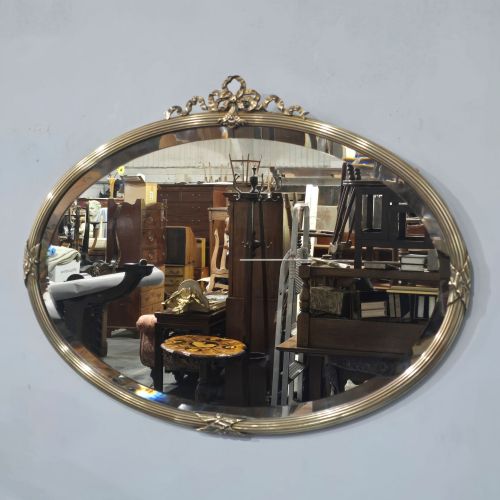
Ribbon cresting wall mirrors are ornamental looking glasses defined by decorative carved ribbons or bows crowning the upper frame. These pieces often draw upon Victorian and Louis XVI revival styles, bringing classical French and English design into domestic spaces.
The most common examples on this page are oval and rectangular wall mirrors, frequently rendered in giltwood and gesso. Overmantel mirrors and girandoles also appear, demonstrating the variety of forms produced across the nineteenth and early twentieth centuries.
Materials and construction
Carved wood and gesso form the structural base of many frames, providing a stable foundation for intricate ornamentation. Artisans applied layers of gold leaf or paint over these surfaces to achieve a luminous metallic finish.
Gilt bronze and brass also appear among the metal elements, alongside original bevelled glass plates. Composition material was frequently utilised for repetitive moulded details like ribbon crests and floral swags.
Some frames feature hidden hour-glass shapes and olive green accents tucked behind the ribbon crests.
Assessing quality in frames and glass
The crispness of the hand-carving in the ribbon crest separates superior examples from mass-produced alternatives. Sharp detailing in the bows and swags indicates skilled craftsmanship during the moulding and carving stages.
Original mirror glass with authentic foxing and depth carries distinct character compared to modern replacements. The preservation of the original gilt finish and structural joinery dictates the overall integrity of the piece.
Strahan of Dublin
The Ribbon Cresting Wall Mirrors Glossary
- Giltwood
- Wood carved and coated with gold leaf or powder. This finish gives the frame a bright metallic sheen that ages with a warm patina.
- Gesso
- A plaster-like mixture applied to wood frames before gilding. It provides a smooth surface for intricate mouldings and relief carving.
- Overmantel mirror
- A large glass designed to hang above a fireplace mantel. These pieces frequently span the width of the hearth and shape the room's proportions.
- Girandole
- A decorative wall mirror fitted with candle sconces attached to the frame. The polished glass reflects the candlelight to brighten dark rooms.
- Louis XVI Revival
- A nineteenth-century style emulating French neoclassical design. It relies on symmetrical geometry, straight lines, and classical motifs like ribbons and urns.
Ribbon Cresting Wall Mirrors: Frequently Asked Questions
Where should I hang a ribbon cresting wall mirror?
These mirrors suit placement above mantelpieces, dressing tables, or console surfaces in living areas and hallways.
Their decorative crests draw the eye upward, making them effective focal points on plain or panelled walls.
Are these mirrors heavy?
Giltwood and gesso frames containing thick glass plates often carry substantial weight despite their ornate appearance.
Secure wall fixings and appropriate anchor points are essential for supporting larger overmantel and floor-standing varieties safely.
How do I identify a Victorian piece?
Victorian mirrors often incorporate revival styles such as Adam or Louis XVI motifs executed in carved wood and gesso.
Examination of the backing boards, fixings, and glass bevelling helps confirm nineteenth-century origin.