

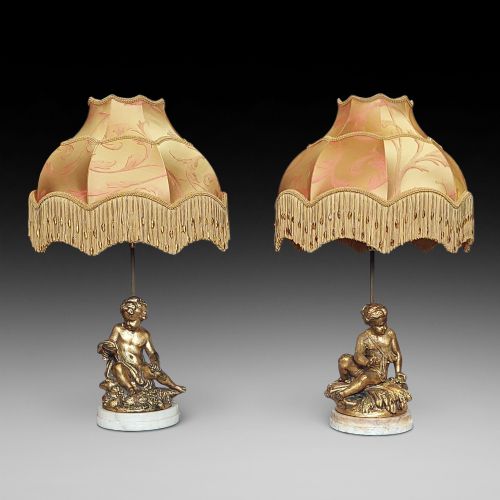


French Putto Table Lamp
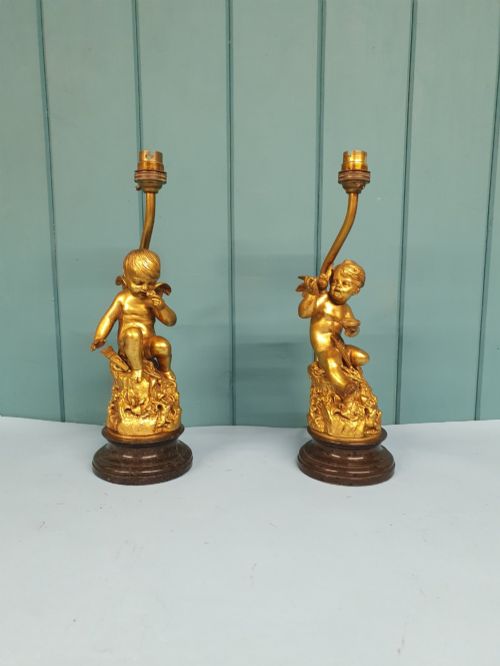
A french putto table lamp brings figurative charm and warm illumination to a room, cast in bronze, ormolu or porcelain.
French Putto Table Lamp
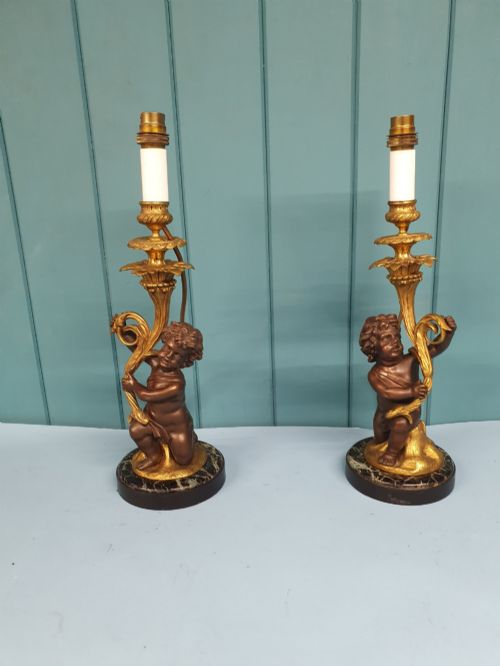
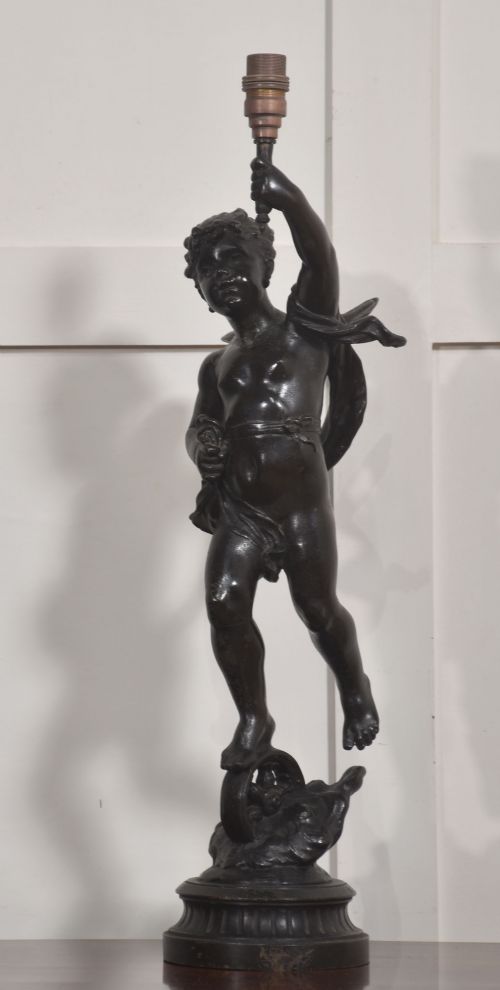
The form appears as single figural statuettes adapted for lighting alongside monumental candelabra and paired torchère designs. You will frequently encounter bronze, gilt bronze and ormolu examples mounted on marble or onyx bases.
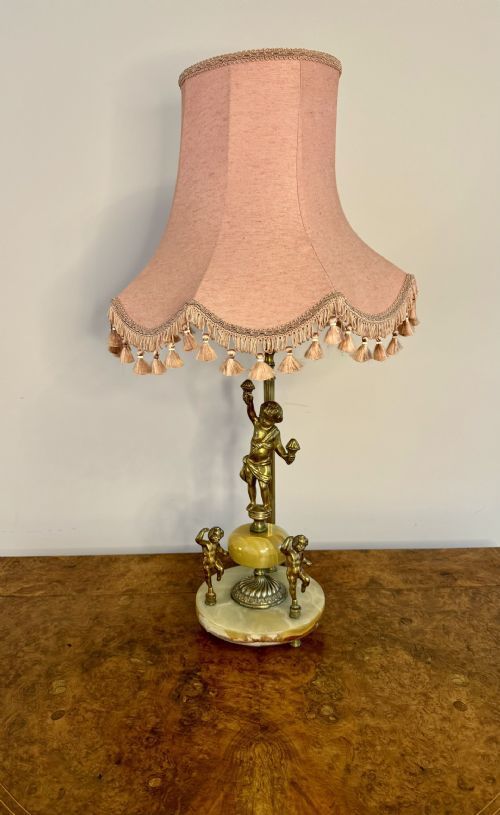
Makers utilised diverse materials from metal to porcelain and carved stone, sometimes incorporating beaded or fabric shades. The decorative vocabulary ranges from playful cherubs holding dolphins to classical torch-bearers.
How they were made
Foundry casting created the bronze, brass and ormolu figures, utilising techniques of patination and gilding to achieve rich surface finishes. Ormolu pieces display mercury gilding on bronze, producing a deep, enduring lustre.
Stonemasons shaped marble and onyx bases to support the weight of heavy metal statuary, while ceramic elements combined porcelain bodies with metal mounts. Later adaptations integrated electrical fittings into structures originally designed for candles or oil.
Textile shades in fabric and toleware completed the assembly, diffusing light across the metallic and sculptural surfaces of the lamp.
What varies in quality
Chasing and finishing define the sculptural merit of the metalwork, distinguishing crisp anatomical detail in the putto from softer, mass-produced casting. The depth and quality of the gilt bronze or ormolu surface reveal the standard of the original workshop.
Material selection for the base and column sets the piece apart, with dense marbles and fine onyx offering superior weight and stability compared to simpler wood or plaster alternatives. Integrated pairs demonstrate greater symmetry and balance than individual converted statuettes.
Aug Moreau·French Sevres
The French Putto Table Lamp Glossary
- Putto
- A plump, naked child figure, frequently winged, appearing in classical and revival art. These figures form the central sculptural element of the lamps.
- Ormolu
- Gilt bronze produced by applying a mercury and gold amalgam to a bronze base. This technique creates a rich, warm golden surface.
- Toleware
- Painted and lacquered sheet metal used for decorative shades and lamp components. It provides vibrant colour accents.
- Torchère
- A tall ornamental stand or lamp designed to hold a light source aloft. Examples often depict figures bearing torches.
- Patination
- The surface coloration and ageing acquired by bronze and other metals over time. Natural patination adds depth to the metal.
French Putto Table Lamp: Frequently Asked Questions
How do I date a lamp?
Examine the metal casting quality, base materials, and fastening methods to establish the period. Nineteenth century examples typically show heavier bronze and hand-chased detail.
Later twentieth century pieces often incorporate different wiring channels and alloy compositions that reflect industrial manufacturing shifts.
Were these originally electrified?
Most antique examples began life as oil lamps, gas fixtures, or candleholder candelabra before later conversion. Converted statuettes retain their original nineteenth century sculptural function.
Rewiring is standard practice for modern use while preserving the historic metal body and mounts.
How do I clean bronze mounts?
Dust gently with a soft dry cloth to protect delicate patination and gilding. Avoid chemical polishes that strip historical surface finishes.
Professional restoration is recommended for deep cleaning or repairing structural mounts on marble and onyx.
What is the difference between ormolu and brass?
Ormolu consists of gold applied to a bronze substrate through amalgamation, yielding a deep golden hue. Brass is a copper and zinc alloy with a paler tone.
Ormolu mounts generally indicate higher workshop status and finer sculptural execution.