

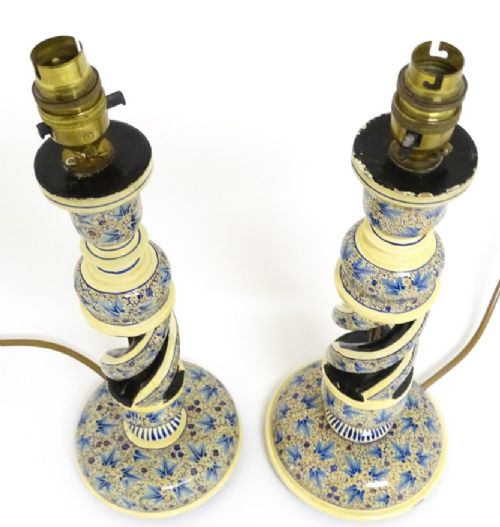
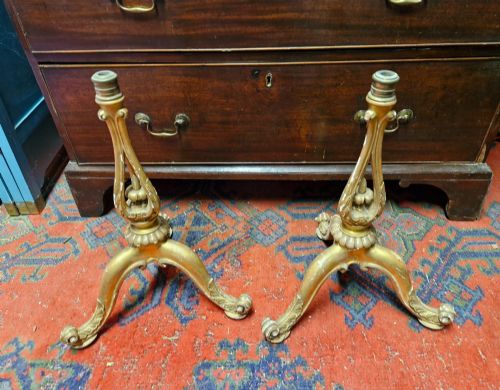
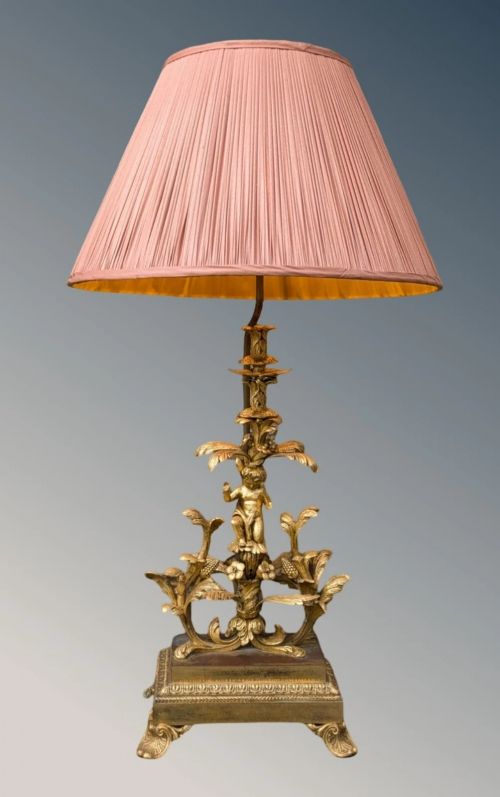
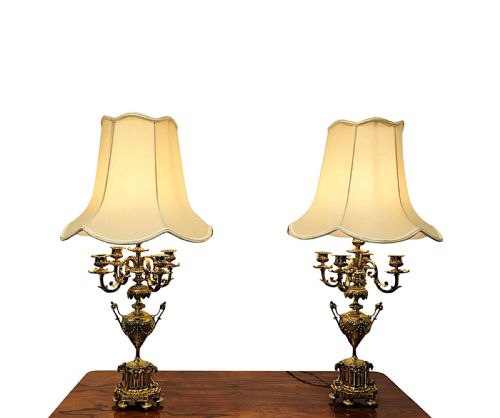

Ornate Table Lamp
An ornate table lamp brings heavy cast metal, coloured glass and period character to a room.
Ornate Table Lamp
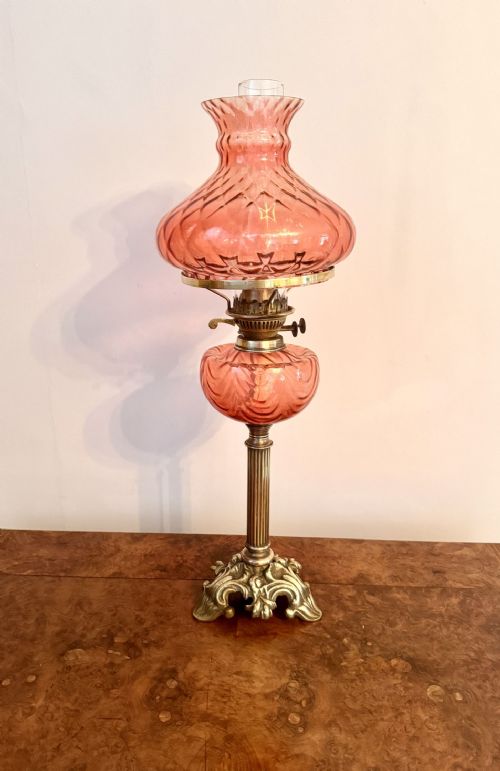
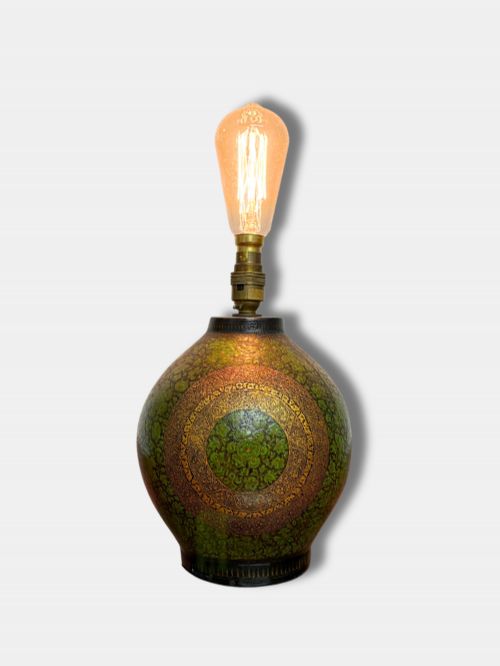
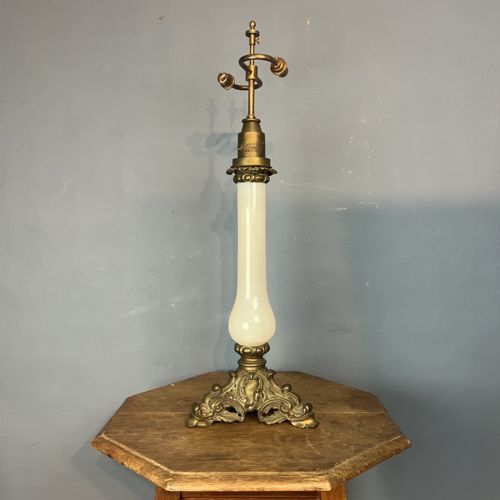
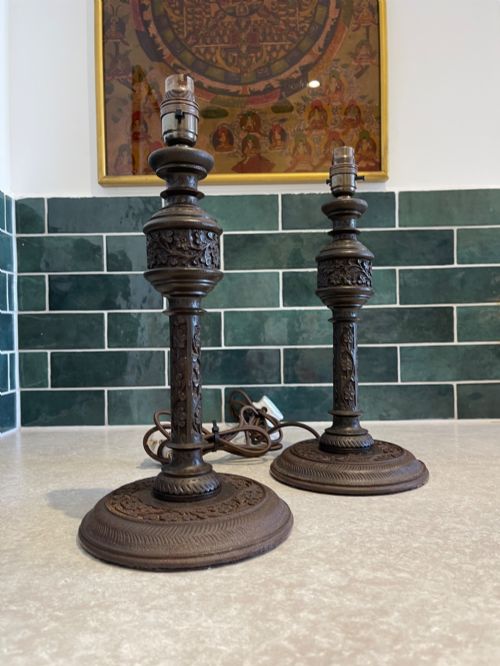
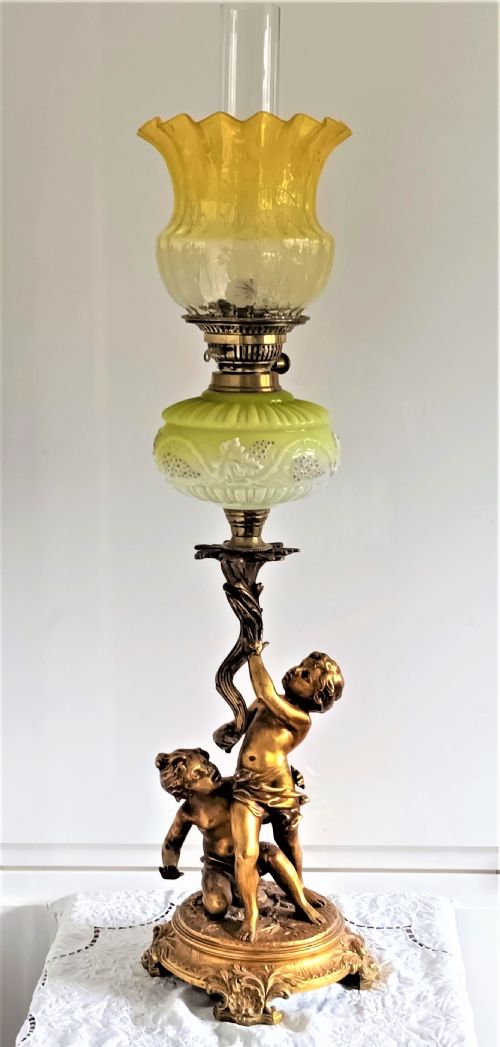
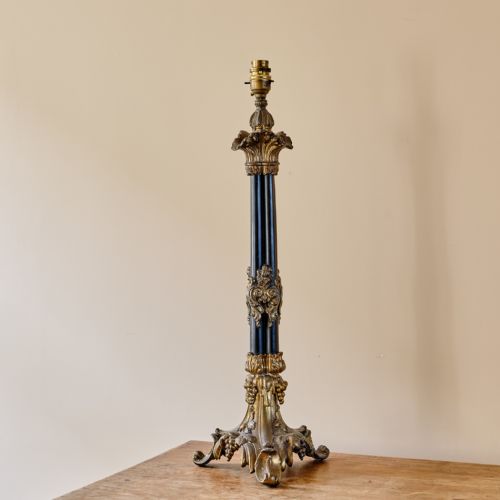
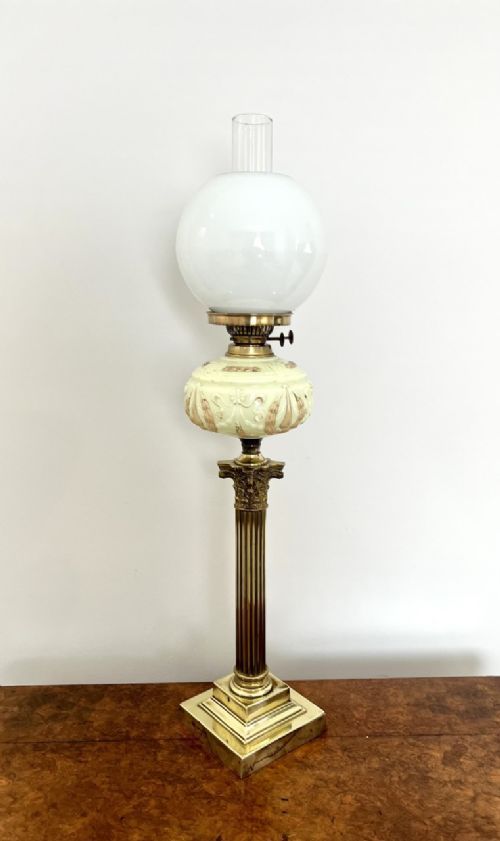
An ornate table lamp spans the nineteenth century through the early twentieth century, drawing on Victorian, Edwardian, Rococo Revival and Neoclassical styles. Buyers find heavy cast metal bases, converted oil lamps, and candelabra adapted for electricity.
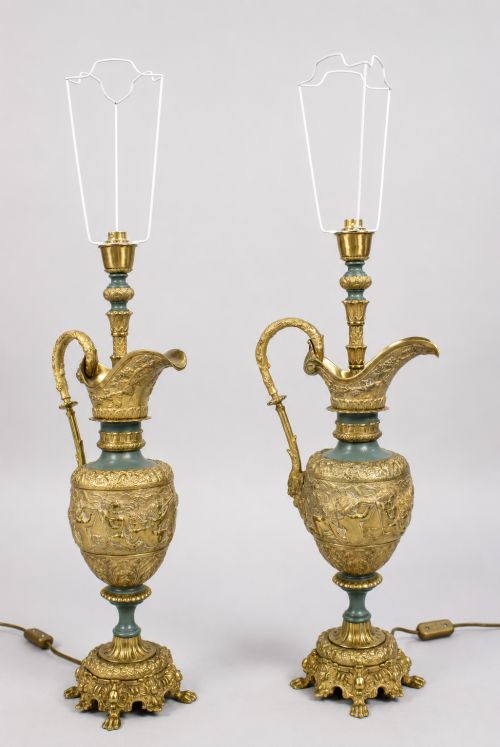
The most common examples on this page are constructed from brass and gilt metal, frequently taking the form of classical columns, ewer shapes or figural bases. Many items originate from French workshops or British makers of the period.
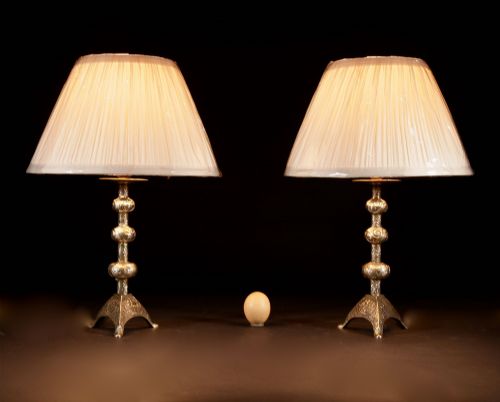
Form follows function from earlier eras, where candlesticks and oil lamps have been repurposed as table lights. These pieces combine decorative moulding with utilitarian wiring setups from later decades.
What separates the grades
The weight and crispness of the casting define the upper tier of metalwork, where floral and figural details retain sharp relief rather than smooth, indistinct edges. High-grade ormolu and gilt bronze exhibit deep, consistent gilding.
The integration of secondary materials such as marble bases, onyx plinths and hand-cut crystal elements indicates better workshop standards. Superior pieces preserve original glass shades and unpolished brass patination.
Listings feature brass, bronze, marble, glass and onyx across Victorian and Edwardian periods.
The Ornate Table Lamp Glossary
- Ormolu
- Gilded bronze, typically produced by applying a mercury and gold amalgam to cast bronze before heating.
- Ewer
- A large jug with a wide spout, often repurposed in nineteenth-century metalwork as a lamp base.
- Candelabra
- A branched candlestick holder designed for multiple candles, frequently converted to electrical table lamps.
- Opaline glass
- An opaque, milky-white glass popular in Victorian lighting and decorative objects.
- Pate sur pate
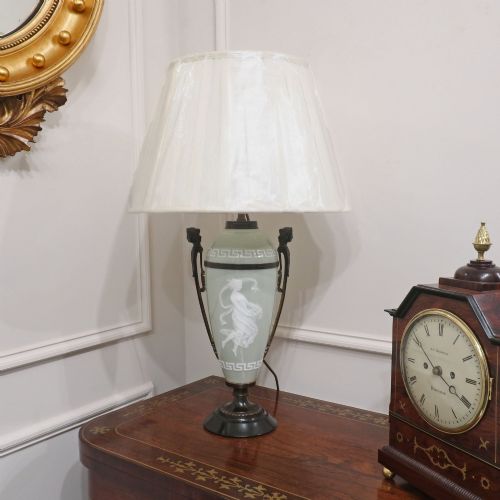
- A ceramic decorating technique where relief designs are built up using layers of liquid white clay on a coloured body.
Ornate Table Lamp: Frequently Asked Questions
How do I wire an old lamp?
Rewiring requires feeding modern heat-resistant flex through the central channel of the metal shaft. An earth wire must be attached to any exposed metal body.
Qualified electricians should test converted oil lamps and nineteenth-century brass columns to ensure safety standards are met.
Can I clean tarnished brass?
Light dusting with a dry cloth preserves the aged patina that collectors prefer. Heavy metal polishes strip away original surface character and age.
Wash glass shades gently in warm soapy water, avoiding harsh chemicals on painted or gilded surfaces.
What bulbs do these take?
Most converted lamps use standard modern screw or bayonet bulb holders fitted during rewiring. Check the internal fitting dimensions before purchasing replacement lampshades.
Low-heat LED bulbs prevent thermal damage to vintage fabric shades and delicate glass bodies.
Are converted oil lamps stable?
Heavy brass and marble bases provide a low centre of gravity for tall columns and figural lamps. Solid construction prevents tipping during daily use.
Check that the weighted base plate remains securely fastened to the central threaded rod.