
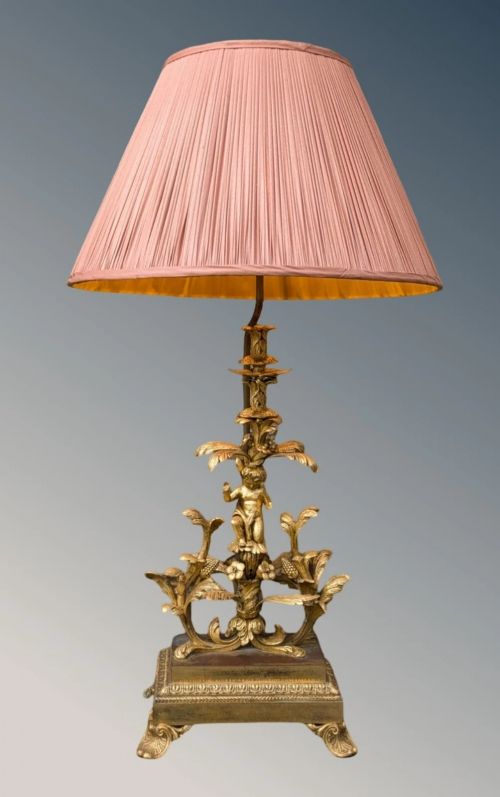


Bronze Cherub Lamp
A bronze cherub lamp brings sculptural presence and warm illumination to a room, drawing on classical figures cast in metal during the nineteenth and early twentieth centuries.
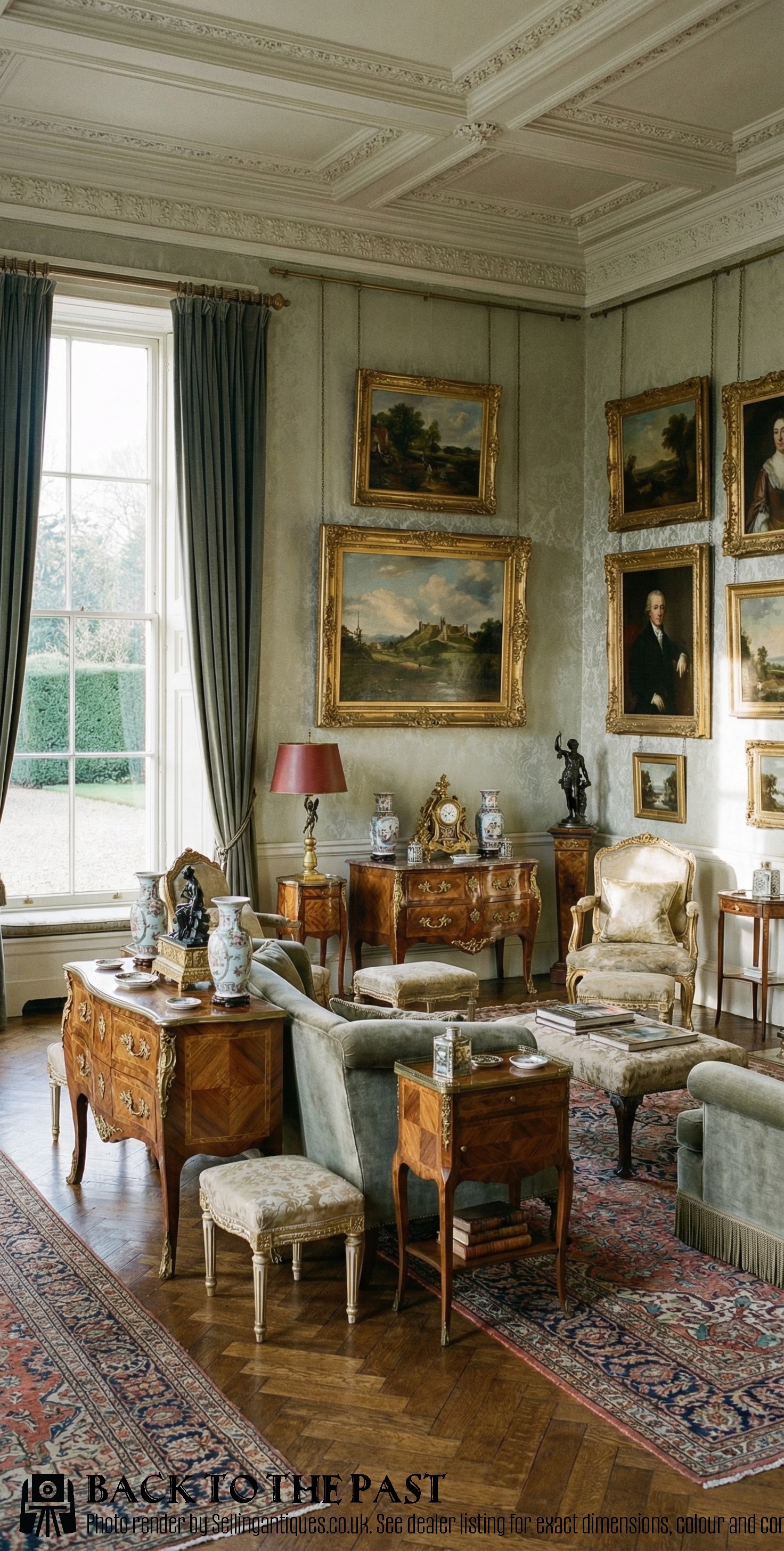
Bronze Cherub Lamp
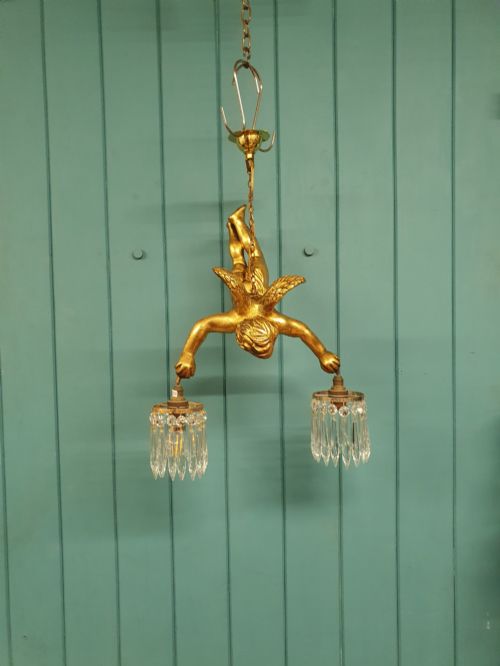
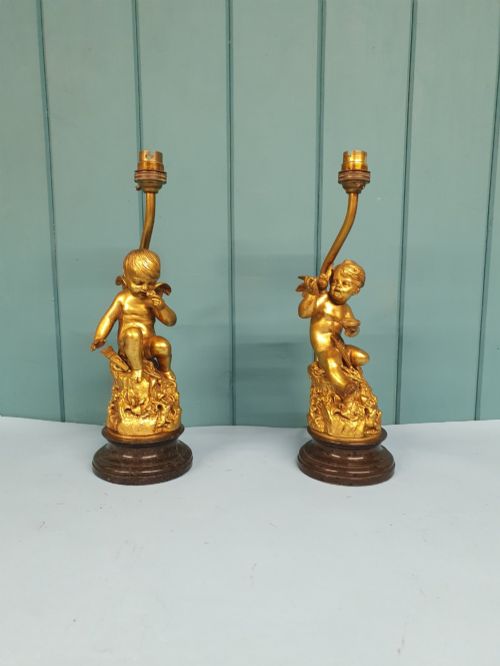
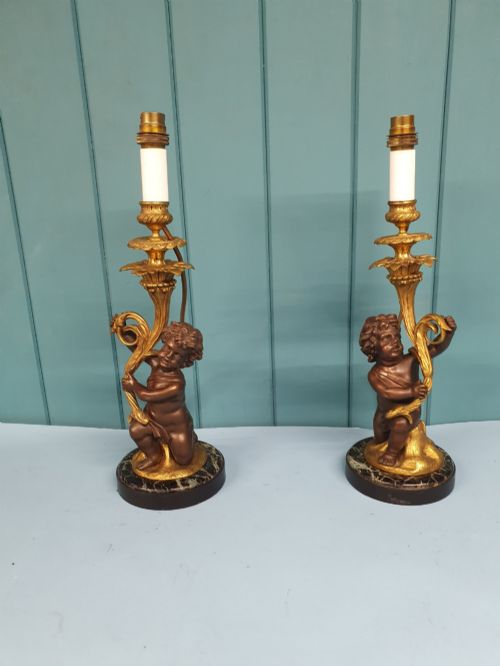
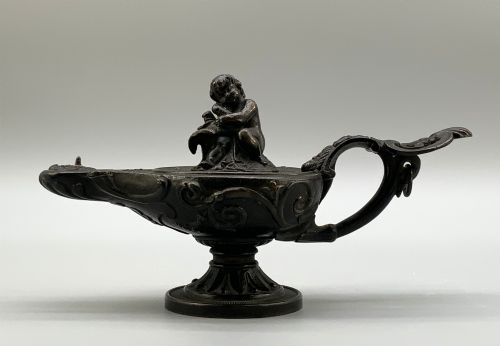
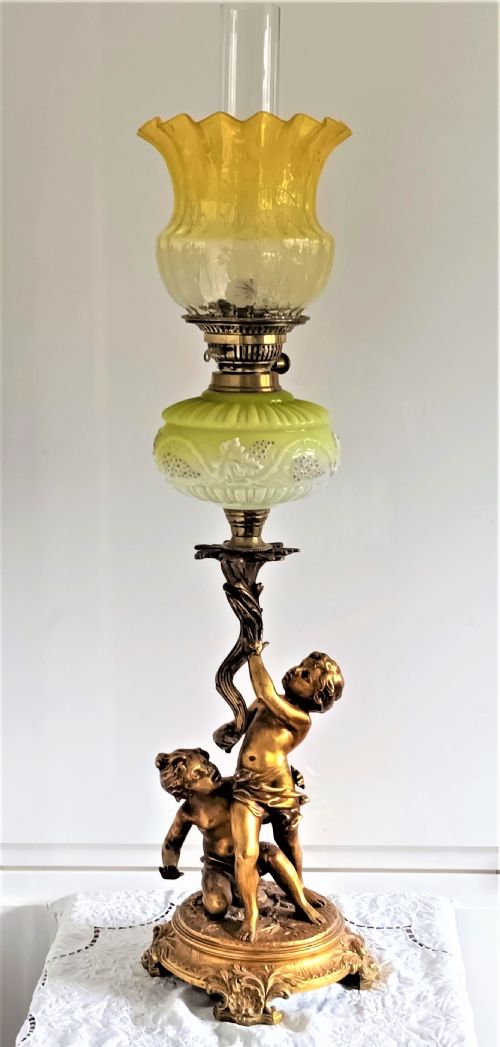
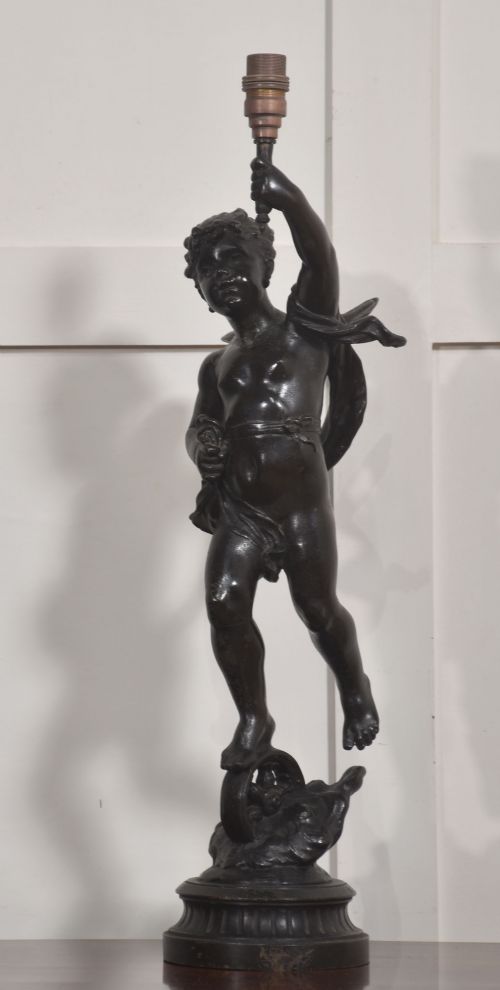
A bronze cherub lamp is a figural lighting piece featuring winged putti, cherubs, or classical children cast in metal. The selection spans table lamps, oil lamps, and wall lights originating primarily from nineteenth-century and early twentieth-century French and English workshops.
Table lamps dominate the available selection, often taking the form of converted oil lamps, torchères, or statuettes adapted for electrical wiring. Many examples pair the cast metal figure with marble bases, cut glass crystals, or fabric shades.
The style draws heavily on French Rococo Revival, Neoclassical, and Empire aesthetics, reflecting elaborate continental tastes. Buyers encounter both single statement pieces and matched pairs suitable for mantelpieces or side tables.
Materials and casting techniques
Bases frequently incorporate contrasting materials such as marble, brass, and porcelain, sometimes accented with glass shades or crystal drops. Many pieces began life as oil lamps or candlesticks before later conversion to electrical fittings.
Assessing quality and craftsmanship
The crispness of the chasing on the metal surface separates superior castings from softer, more generalised productions. Finer pieces retain sharp definition in the hair, feathers, and facial expressions of the cherub figure.
The integration of the figural base with auxiliary materials like marble or ormolu demonstrates the maker's skill. Weight, stability, and the depth of the patination or fire gilding indicate the original standard of manufacture.
Aug. Moreau·Ernest Justin Ferrand
The Bronze Cherub Lamp Glossary
- Ormolu
- Gilt bronze produced by applying a mercury-gilding amalgam to cast bronze. This technique creates a durable, rich golden surface seen on many nineteenth-century French pieces.
- Spelter
- A zinc alloy commonly utilised as a cheaper alternative to bronze. It accepts patination and gilding well, though it is softer and lighter than true bronze.
- Putti
- Plump, winged child figures frequently depicted in classical art. They form the central sculptural motif of these lamps.
- Torchère
- A stand or decorative support modelled after a torch-bearer. In lighting, it often describes a figure holding a light source aloft.
- Patination
- The surface coloration developed naturally over time or applied chemically by the foundry. It gives bronze its characteristic dark or antiqued tone.
Bronze Cherub Lamp: Frequently Asked Questions
Are these lamps safe for modern electrical use?
Many vintage and antique examples arrive rewired or require professional rewiring to meet current electrical standards. A qualified electrician can easily update internal components while preserving the historic body.
Original brass lamp holders and fabric cords can sometimes be retained if tested, but modern safety compliance often necessitates updated internal wiring.
How do I distinguish bronze from spelter?
Bronze is heavier, colder to the touch, and yields a deeper, more resonant sound when tapped gently. Spelter is a softer zinc alloy that feels lighter and shows a duller metallic grain where the finish wears thin.
Examining the underside of the base often reveals the paler grey metal beneath a worn spelter surface, whereas bronze retains a warm yellow-brown hue.
Can I convert an oil lamp back to oil?
Most pieces found today have already undergone permanent or semi-permanent conversion into electric table lamps. Reverting them to burn oil requires finding period burners and matching fonts that fit the original collar.
Because original conversion often involved drilling for wires, restoring a piece to burn oil is rarely practical without professional intervention.
How should I clean gilt bronze?
Dusting gently with a dry, soft microfibre cloth is the safest method for regular maintenance. Avoid commercial metal polishes, abrasive cloths, and liquid cleaners that strip away fragile ormolu and patination.
Water and harsh chemicals can damage nineteenth-century gilding and marble bases, so professional conservation is recommended for deep cleaning.