




Beaded Fringe Table Lamp
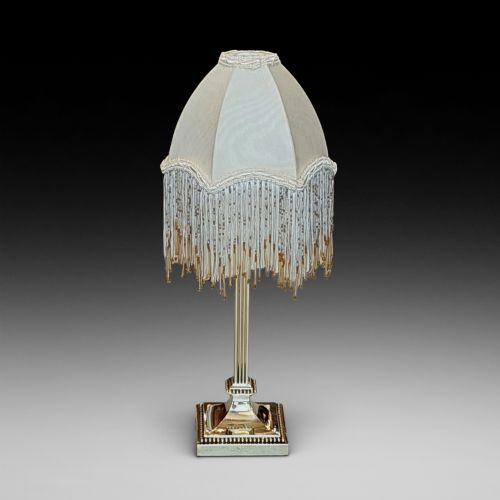
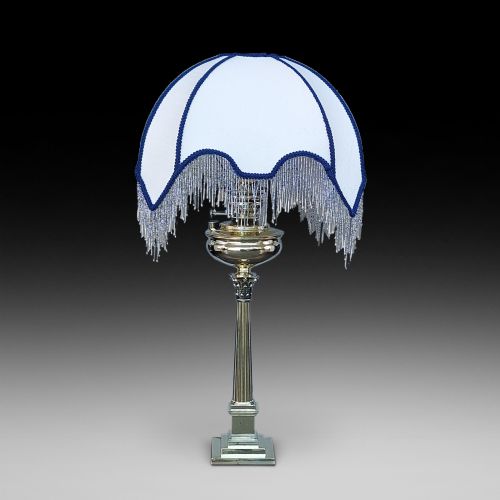
These beaded fringe table lamp pieces bring decorative period charm and soft illumination to a room, offering tactile shades and substantial metal bases.
Beaded Fringe Table Lamp
When you search for beaded fringe table lamp, you encounter lighting pieces drawn primarily from Victorian, Edwardian, and early twentieth century periods. The selection spans standard table lamps and converted oil lamps, reflecting the diverse lighting adaptations of past decades.
The most common versions on this page pair metal bases such as brass or bronze with fabric shades embellished with glass beads. These designs derive from styles including Neoclassical Revival, Art Nouveau, and Arts and Crafts.
How they were made
Makers utilised cast and chased metals including brass, bronze, silver plate, and gilded spelter to form sturdy structural columns and figures. These metal components frequently incorporate architectural details like Corinthian capitals or sculptural figures such as cherubs.
Shades combine lightweight fabrics like silk with glass beads suspended in decorative fringes to soften the illumination. Additional decorative elements include glass cabochons and painted metalwork.
Listings feature materials such as brass, bronze, glass beads, and silk, spanning the Victorian period to the nineteen-twenties.
What varies in quality
Quality rests in the precision of the metal casting and the complexity of the sculptural work, distinguishing finely rendered bronze and brass from simpler cast metal components. Heavier bases and crisp detailing indicate superior manufacture.
The integrity of the shade construction and the secure attachment of glass bead fringes separate standard examples from finer decorative pieces. Original pairings of shade and base carry greater cohesion.
Georges Leleu
The Beaded Fringe Table Lamp Glossary
- Corinthian column
- A classical architectural column style featuring an ornate capital decorated with acanthus leaves. This form appears frequently in metal table lamp bases from the nineteenth and early twentieth centuries.
- Spelter
- An alloy of zinc used as a cost-effective substitute for bronze, often painted or gilded to imitate more expensive metals. It provides detailed sculptural results in decorative bases.
- Cabochon
- A polished, convex gem or piece of glass without facets, set flush into metalwork. These add colourful focal points to lamp structures.
- Gilt toleware
- Painted tin or metal treated with a gold-coloured finish. It provides lightweight decorative elements for lamp assemblies.
Beaded Fringe Table Lamp: Frequently Asked Questions
What periods do these lamps come from?
The pieces span the Victorian and Edwardian eras, alongside early twentieth century decades up to the nineteen-thirties. You will find items representing styles such as Art Nouveau, Arts and Crafts, and Neoclassical Revival.
Dates range from the late nineteenth century through to the interwar period, reflecting shifts in domestic lighting technology and interior decoration.
Were these always electric lamps?
Many examples began as oil lamps or reading lamps before undergoing later conversion to electricity. Some started life as decorative bronze statuettes or architectural columns adapted for domestic illumination.
This history of conversion is standard for period lighting, blending original nineteenth or early twentieth century metalwork with modern wiring.
What materials make up the bases?
Bases utilise a range of metals including brass, bronze, silver plate, and gilded spelter. Some examples incorporate porcelain or marble elements to provide weight and visual contrast.
Metal selection often aligns with specific revival styles, such as brass Corinthian columns or bronze Art Nouveau figures.
How do glass beads feature on the shades?
Glass beads are suspended in decorative fringes around the lower edge of fabric shades, frequently made from silk. This technique creates a diffused, soft light and adds a tactile element to the piece.
The beadwork complements materials like glass cabochons and gilt metalwork on the body of the lamp.