




French Porcelain Plaque Desk
These french porcelain plaque desk pieces combine fine cabinetry with painted ceramic insets, offering refined writing spaces for the home.
French Porcelain Plaque Desk
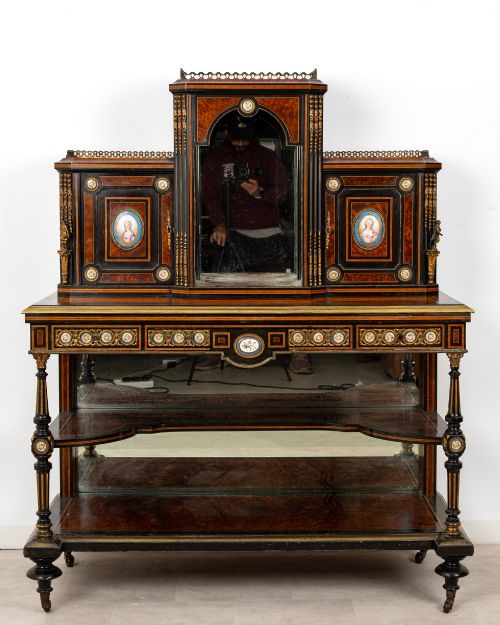
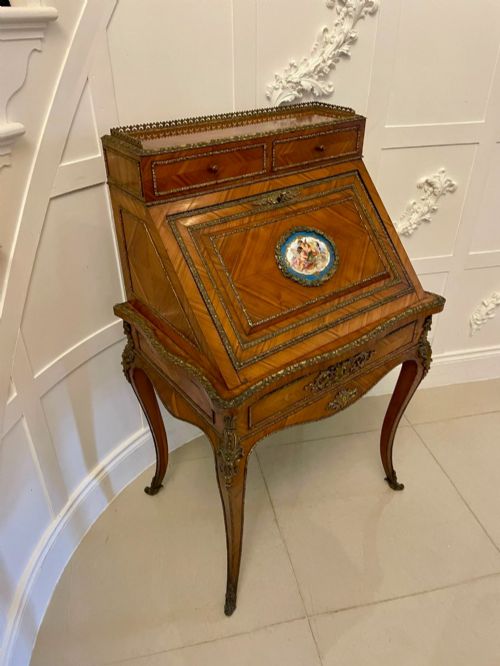
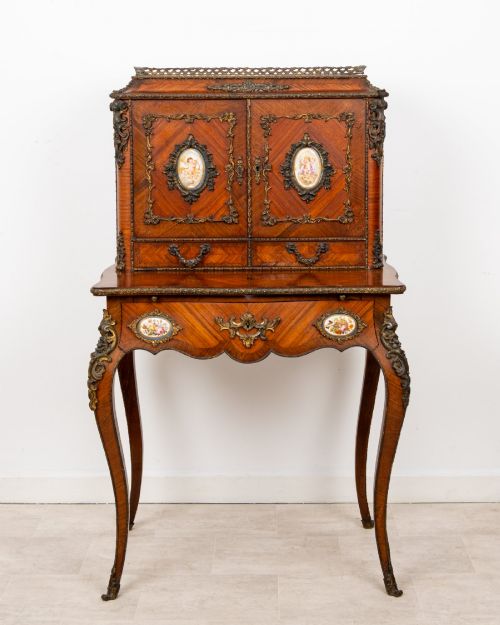
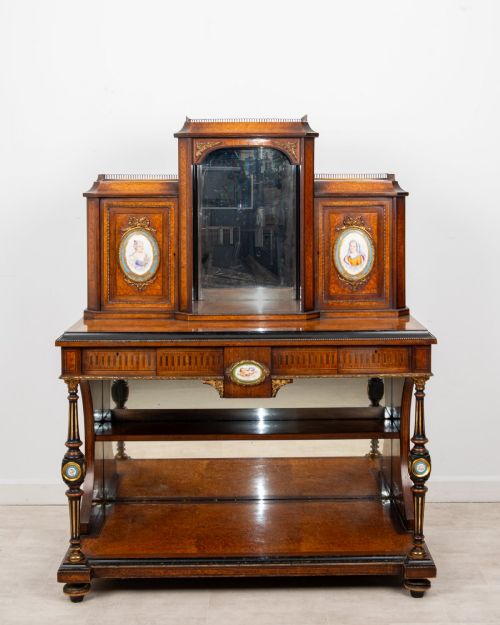
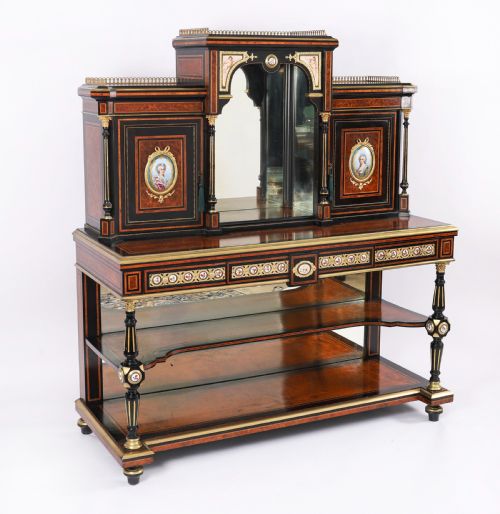
When you search for a french porcelain plaque desk, you encounter sophisticated writing furniture designed for domestic use during the nineteenth century. These items typically manifest as bonheur du jour writing desks, bureaux, and dressing tables incorporating decorative ceramic insets.
The pieces appearing on this page span several decades, with nineteenth-century examples and revival styles predominating. Craftsmen built these items using exotic timbers such as kingwood and amboyna, mounting them with cast bronze or ormolu and setting porcelain panels into the woodwork.
How they were made
Cabinetmakers constructed the carcase using hardwoods like walnut, satinwood, and mahogany, veneering the visible surfaces with decorative timbers including kingwood, amboyna, and rosewood. They frequently applied brass stringing, marquetry, and ebonised details to enrich the wooden surfaces.
Makers integrated porcelain plaques, often painted with floral subjects or pastoral scenes, directly into the timber framework. They secured these ceramic panels alongside cast ormolu and gilt bronze mounts, which framed the drawers, legs, and porcelain insets.
Revival aesthetics dominate the selection, referencing Louis XV and Louis XVI furniture designs alongside Victorian preferences.
What varies in quality
The caliber of the porcelain painting dictates much of the visual merit, with finely detailed hand-painted ceramic plaques commanding greater appreciation than simpler transfer-printed decorations. Artisans who executed delicate brushwork on the porcelain created pieces of higher distinction.
The precision of the ormolu mounts and the selection of cabinet woods also separate standard pieces from exceptional examples. Heavy, crisp bronze castings and rich kingwood or amboyna veneers demonstrate superior workshop standards.
Sevres
The French Porcelain Plaque Desk Glossary
- Bonheur du jour
- A small ladies writing desk featuring a tiered superstructure with shelves, drawers, or a cabinet above the main writing surface. This form gained popularity during the eighteenth century and saw significant revival periods in the nineteenth century.
- Ormolu
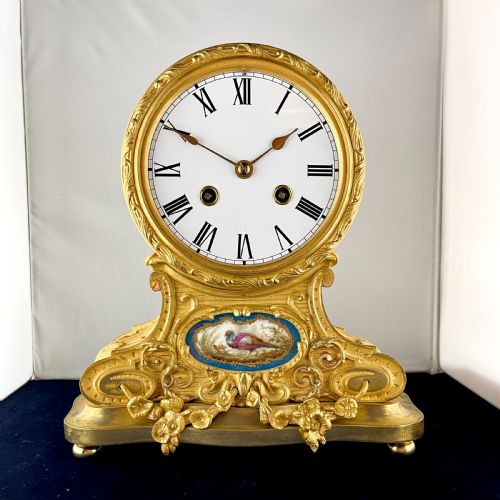
- Gilded bronze used extensively for decorative mounts, feet, and edging on furniture and clocks. The technique involves applying a gold amalgam to a bronze base and heating it.
- Kingwood
- A dense, heavy Brazilian timber displaying rich brown tones with dark violet-black grain patterns. Cabinetmakers utilised this wood extensively for decorative veneering.
- Amboyna
- A highly prized burr wood originating from Southeast Asia, known for its warm golden-brown coloration and intricate swirling grain. It frequently appears on luxury nineteenth-century writing furniture.
French Porcelain Plaque Desk: Frequently Asked Questions
What is a bonheur du jour?
A bonheur du jour is a light writing desk equipped with an upper cabinet or tiered shelving section. These pieces served as private writing spaces for correspondence and personal administration.
Originating in France, the form became a favoured item for domestic drawing rooms and boudoirs throughout the nineteenth century.
How are porcelain plaques secured?
Makers set the porcelain plaques flush into recesses carved directly into the wooden carcase or veneer. They frequently surrounded the ceramic panels with cast ormolu mounts to hold them firmly in place.
This method protected the edges of the porcelain while integrating the smooth ceramic surface with the surrounding timber.
Where were these desks used?
These desks primarily occupied private sitting rooms, bedrooms, and ladies boudoirs in grand nineteenth-century residences. They provided a compact and elegant surface for writing letters and managing personal papers.
Today, they function well in similar domestic settings as decorative writing surfaces or display tables.
How do I identify a revival style?
Nineteenth-century revival furniture often reinterprets earlier eighteenth-century aesthetics, blending Louis XV or Louis XVI forms with Victorian manufacturing techniques. Makers combined classical proportions with ornate ormolu mounts and porcelain plaques.
Examining the secondary timbers, construction joints, and casting quality helps distinguish original period pieces from later revival interpretations.