

French Ladies Bureau
When you search for a french ladies bureau, you enter a refined world of compact writing furniture designed for the private boudoir.
French Ladies Bureau
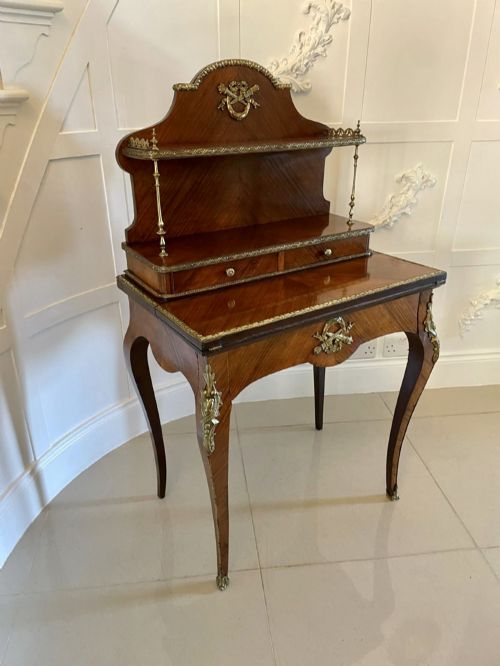
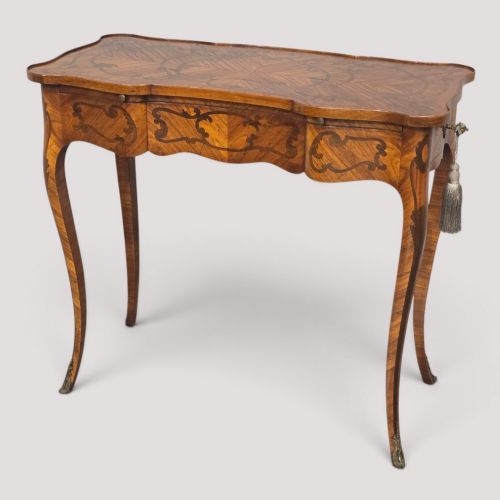
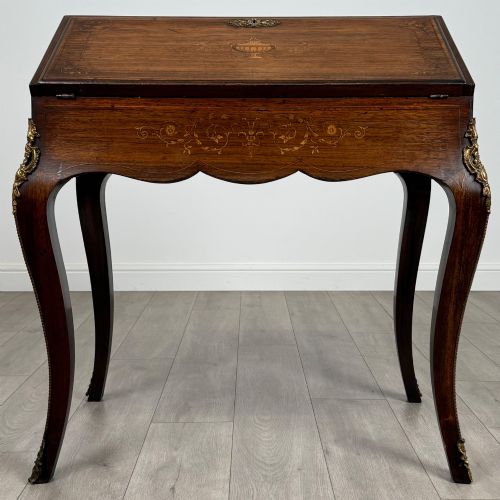
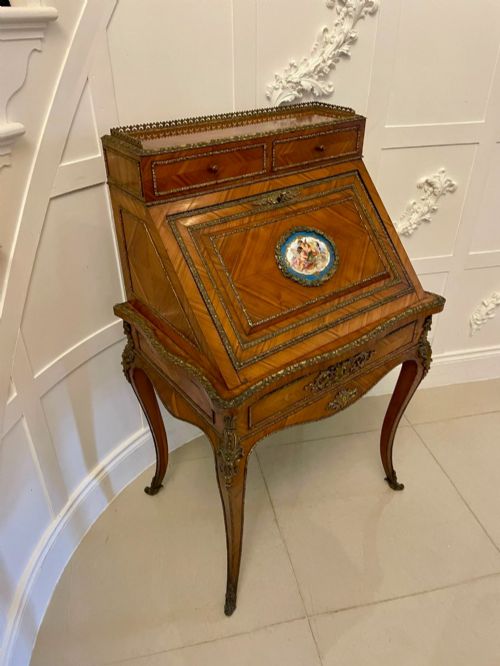
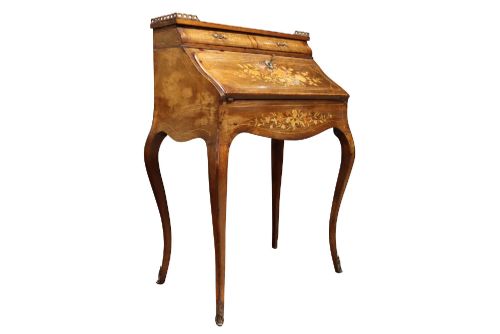
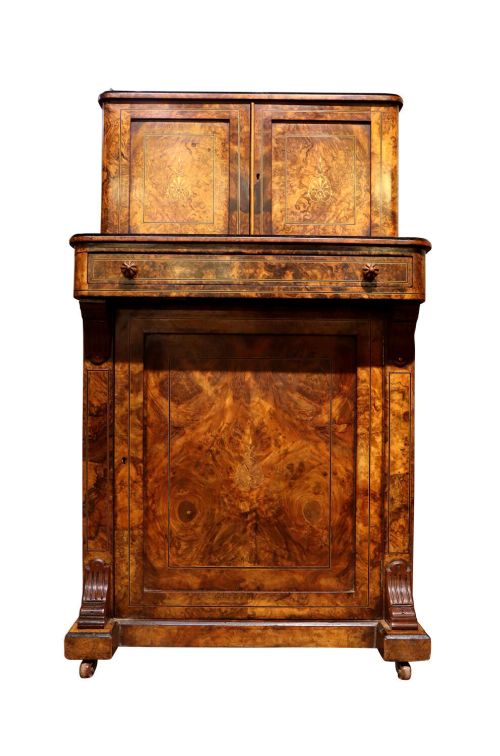
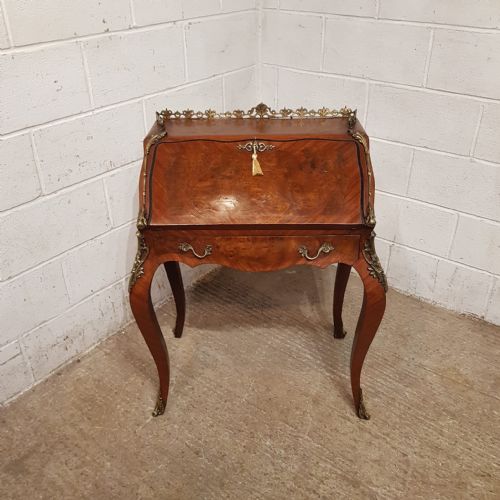
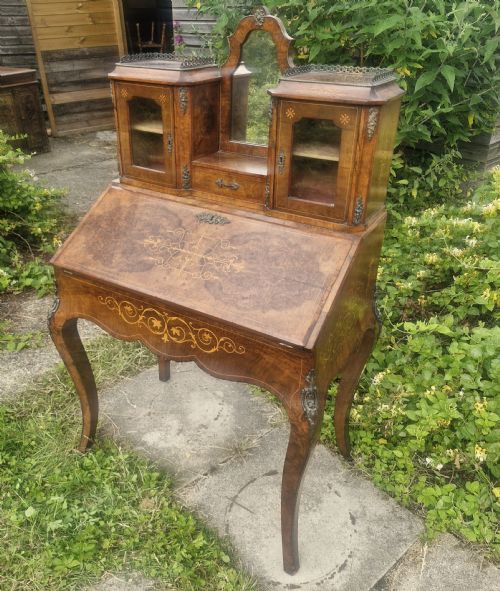
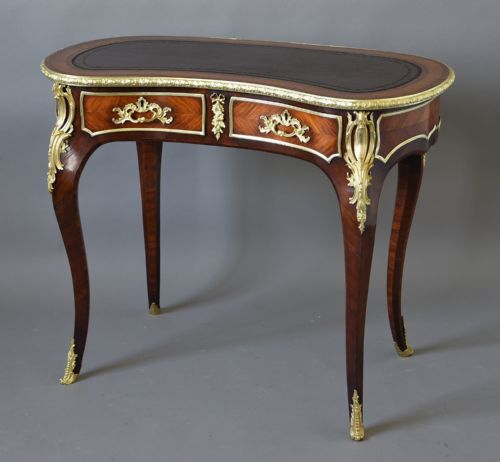
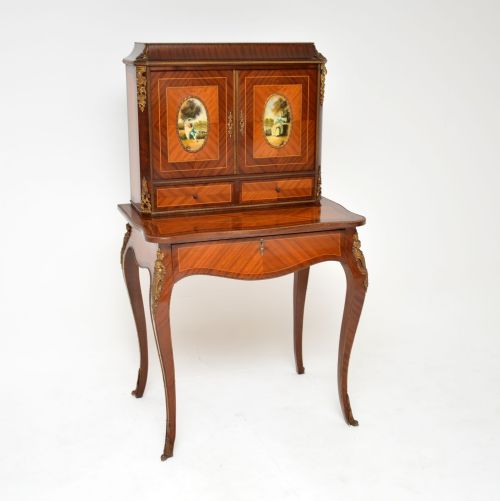
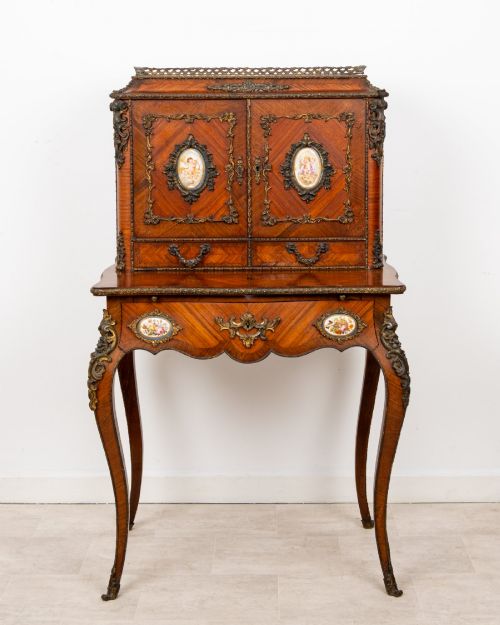
A french ladies bureau most commonly takes the form of a delicate bonheur du jour, a bureau de dame, or a compact writing table designed for light correspondence and private papers. These pieces span the nineteenth century, drawing heavily on Louis XV and Napoleon III revival styles that champion curved lines and elaborate ornamentation.
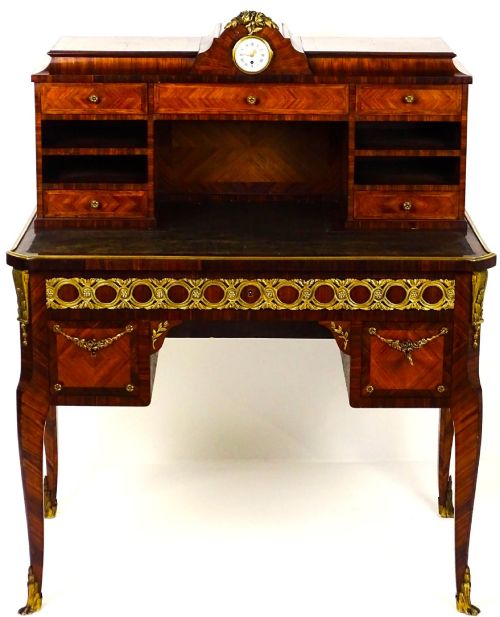
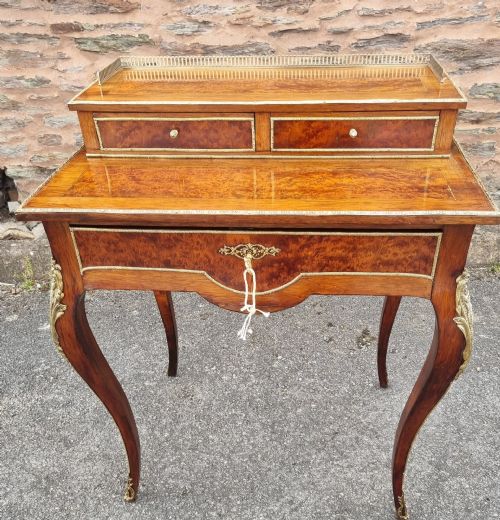
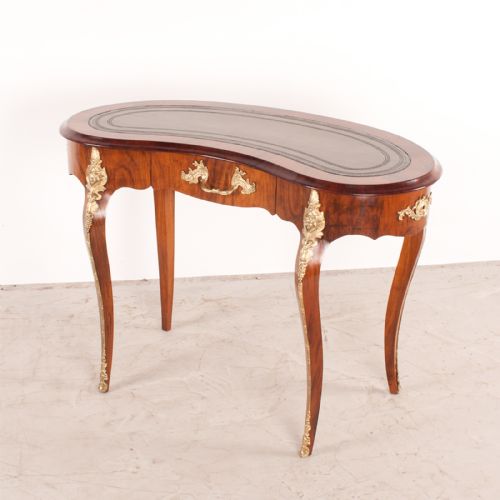
Buyers frequently encounter variants constructed with tiered superstructures, drawers, and small cabinets resting atop a writing surface. The kidney shaped writing desk and the serpentine bureau plat also appear regularly within this category, offering varied configurations for domestic workspaces.
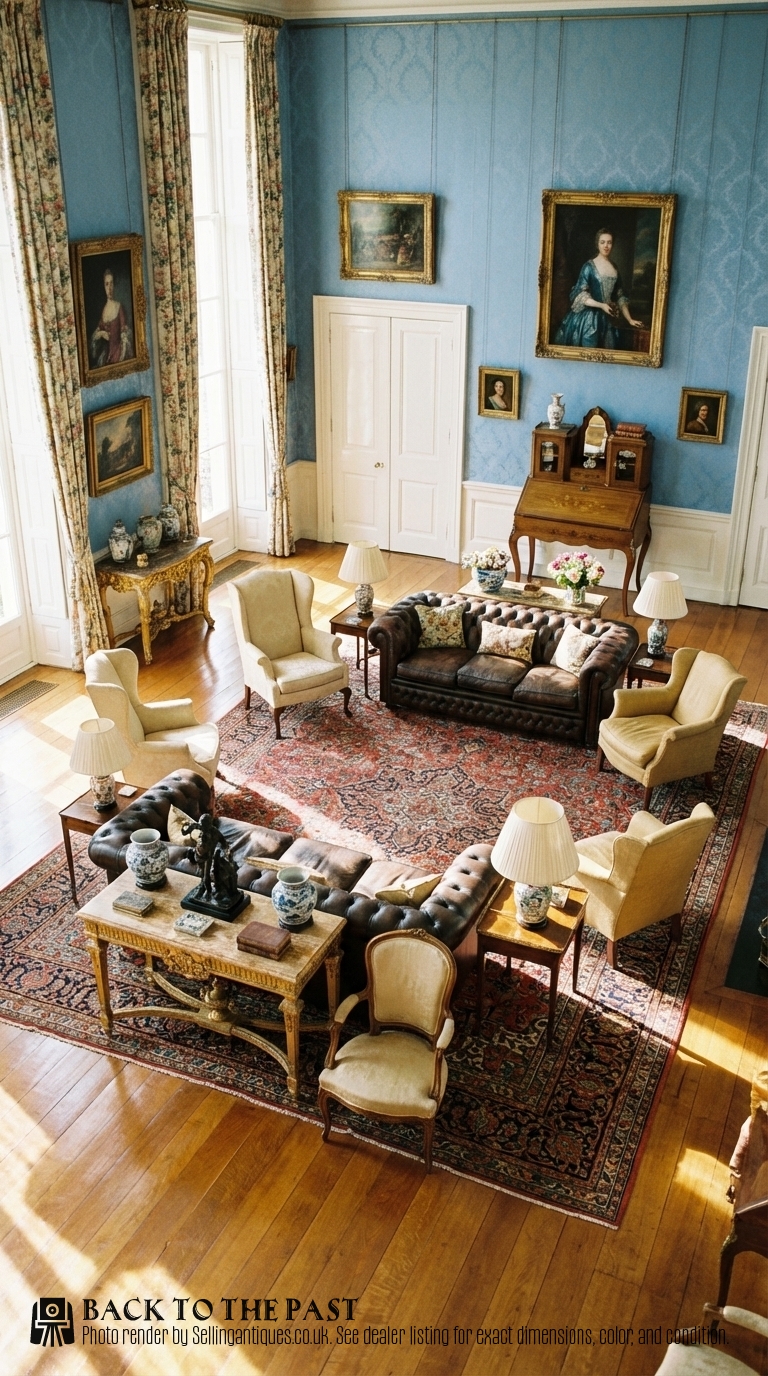
Originating predominantly from French workshops and Victorian interpretations of French taste, these desks combine practical writing surfaces with ornamental elegance. The scale remains intimate, intended for placement in drawing rooms and private chambers rather than grand libraries.
Materials and Techniques
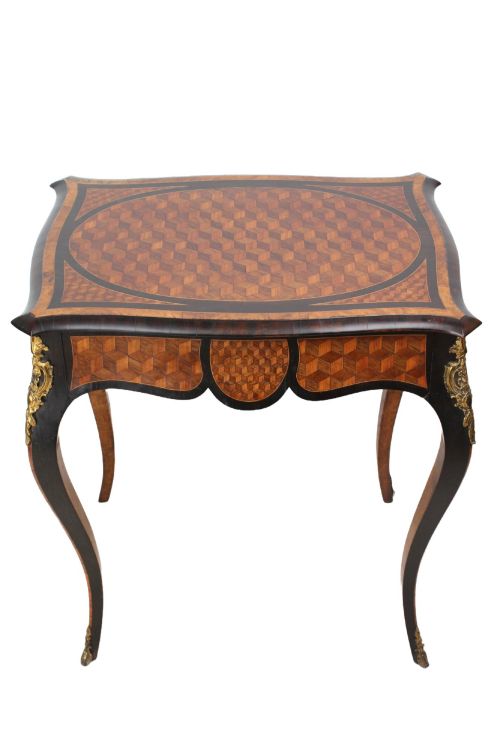
Cabinetmakers utilised dense exotic hardwoods such as kingwood, rosewood, walnut, and amboyna, often enhanced by intricate parquetry and floral marquetry patterns. Satinwood and mahogany also feature prominently as primary veneers or contrasting inlay elements across the desk surfaces.
Cast ormolu mounts and gilt bronze embellishments frame the contours, protecting corners and accentuating cabriole legs. Porcelain plaques, notably from Sevres, and painted Vernis Martin panels frequently inset into the cabinetry provide colour and decorative focal points.
Leather writing inserts, sometimes tooled with gilt borders, line the central pull-out or hinged writing slopes. Concealed compartments and secret drawers demonstrate the sophisticated internal joinery expected in high-status domestic furniture of the period.
French Ladies Bureau Retail Price Guide 2026
Typical asking prices for french ladies bureau among the pieces listed under this phrase on Sellingantiques today, from the lower quarter to the upper quarter. They describe what is for sale here now, not the wider market.
Materials commonly recorded include kingwood, rosewood, burr walnut, amboyna, and porcelain plaques mounted in ormolu frames.
Markers of Distinction
The sophistication of the timber veneers and the precision of the marquetry inlay determine the initial tier of distinction. Pieces featuring meticulously matched grain patterns and complex floral motifs separate standard production from superior cabinetwork.
The weight, chasing, and application of the ormolu mounts dictate another level of refinement. Crisp, hand-finished bronze details bolted securely to the carcase indicate a higher standard of manufacture than lighter, cast-imitation substitutes.
Maker attribution and integrated luxury elements such as hand-painted porcelain plaques or signed bronze components elevate individual examples. The harmony between the internal secondary woods and the external decorative scheme completes the evaluation.
JAS Shoolbred·Paul Sormani
The French Ladies Bureau Glossary
- Bonheur du jour
- A small ladies writing desk featuring a tiered superstructure with drawers, shelves, or a cabinet above the main writing surface. This form gained immense popularity during the mid-nineteenth century revival periods.
- Bureau de dame
- A traditional term for a lady's writing desk, often encompassing slope-front writing cabinets and small fitted writing tables. They are characterised by compact proportions and delicate ornamentation.
- Ormolu
- Gilt bronze mounts utilised to decorate and protect the edges and corners of fine furniture. The technique involves applying a mercury and gold amalgam to bronze before firing.
- Marquetry
- Decorative patterns formed by fitting together thin veneers of various coloured woods, ivories, or shells onto a structural carcase. It requires immense skill to achieve seamless floral or geometric designs.
- Vernis Martin
- A type of simulated Japanese lacquer developed in France, known for its translucent and polished finish. It frequently depicts pastoral scenes or exotic figures on cabinet panels.
French Ladies Bureau: Frequently Asked Questions
What is a bonheur du jour?
A bonheur du jour is a small, elegant writing desk featuring a raised cabinet or shelf section on top of the writing surface. This upper tier typically includes small drawers and pigeonholes for stationery.
Originally developed in France during the eighteenth century, these desks returned to fashion during the nineteenth century revival periods as sophisticated writing furniture for private rooms.
How do I use a bureau de dame today?
A bureau de dame serves exceptionally well as a compact workspace for a laptop or a dedicated station for handwritten correspondence. The internal compartments provide neat storage for modern stationery and small accessories.
Placing the desk in a study, bedroom, or living room allows the historic craftsmanship to remain visible while serving a practical daily function.
How do I care for kingwood and ormolu?
Maintain kingwood surfaces by dusting regularly with a soft, dry cloth and avoiding direct sunlight or excessive moisture. Periodic application of quality furniture wax preserves the depth and sheen of the wood grain.
Clean ormolu mounts gently with a dry microfibre cloth, keeping polishes and abrasive cleaners entirely away from the gilt bronze and the surrounding veneer.
How can I tell a Victorian copy from an 1860 original?
Examine the construction methods, secondary woods used in the interior drawer linings, and the wear patterns on the structural joints. Nineteenth-century pieces often display hand-cut dovetails and timber seasoning specific to that era.
Stylistic cues, such as the specific casting quality of the ormolu and the formulation of the French polish, help distinguish period manufacture from later reproductions.