


Louis XV Slant Front Desk
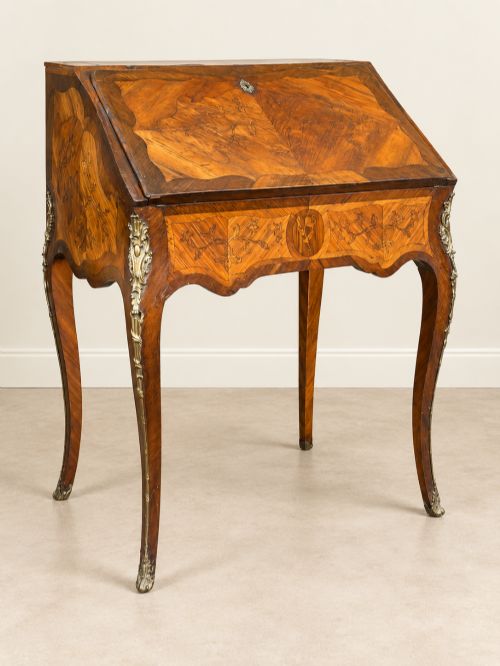
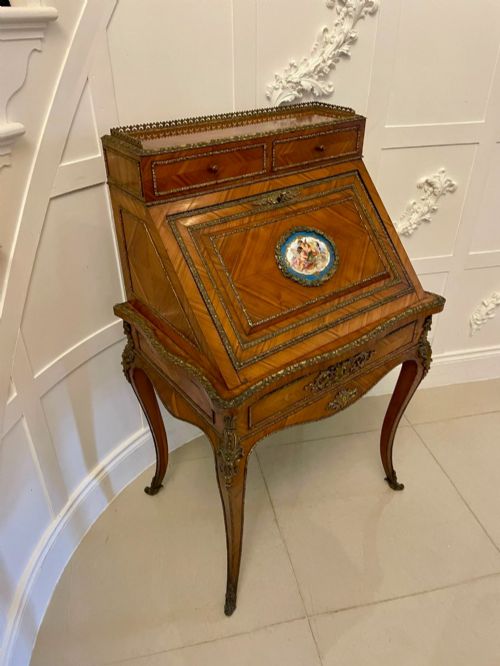
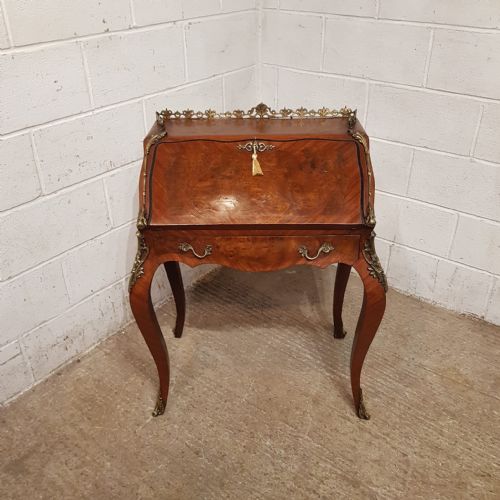
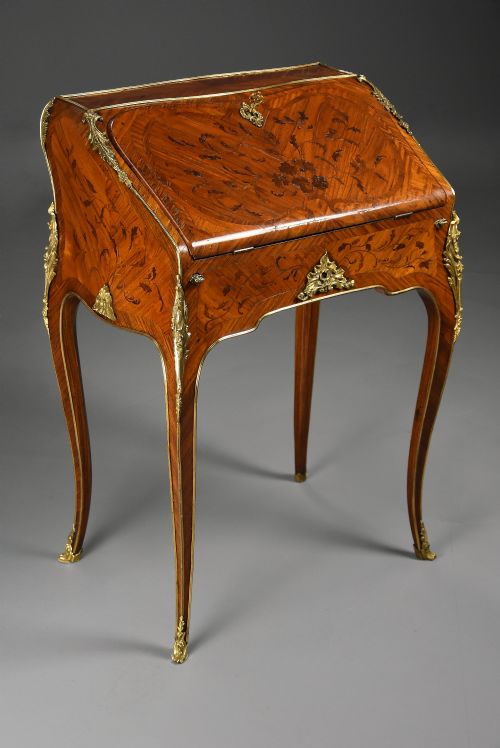
A louis xv slant front desk brings fluid rococo curves and rich exotic veneers to a room, offering a sloping writing flap that opens to reveal fitted internal compartments.
Louis XV Slant Front Desk
A louis xv slant front desk takes the form of a bureau, secretaire en pente, or bureau de dame, featuring a hinged writing flap that drops forward. These pieces combine practical writing surfaces with concealed pigeonholes and small drawers inside the slant lid.
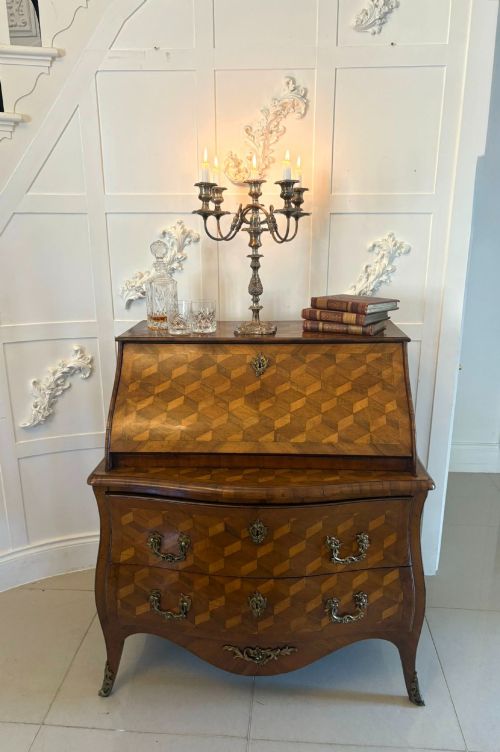
The pieces appearing on this page span the mid eighteenth century alongside nineteenth century revivals and later interpretations. Surviving examples range from robust walnut and bombé shapes to neat rosewood and kingwood ladies desks.
Makers working in the Louis XV and French Rococo revival styles adopt the characteristic cabriole legs and serpentine outlines. Buyers find both full sized writing desks and smaller lady's writing furniture designed for intimate chambers.
How they were made
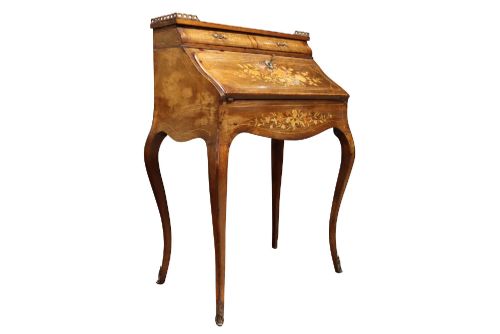
Cabinet makers construct these desks using solid structural timbers like walnut or mahogany, overlaid with decorative veneers including kingwood, tulipwood, and rosewood. Parquetry and marquetry patterns form geometric arrangements or floral motifs across the curved surfaces.
Gilt bronze and ormolu mounts edge the corners, aprons, and cartouches, while brass inlay threads through the timber panels. Porcelain plaques sometimes inset into the surface add an additional decorative element to the mounted woodwork.
What varies in quality
The precision of the cabinet work dictates the calibre of the piece, particularly in how smoothly the drop front operates and how tightly the internal drawers fit. Superior examples display crisp hand chiselling on the ormolu mounts rather than cast metal left dull or uniform.
The complexity of the wood selection marks the distinction between standard production and exhibition pieces. Elaborate floral marquetry cut from contrasting veneers requires advanced skill compared to straightforward plain timber surfaces.
The Louis XV Slant Front Desk Glossary
- Bureau de dame
- A small lady's desk, frequently featuring a sloping lid or a superstructure with compartments above the writing surface.
- Secretaire en pente
- A French term for a sloping front desk or bureau designed to conceal writing materials when closed.
- Ormolu
- Gilt bronze mounts applied to furniture edges and corners to provide decorative contrast against the wood veneer.
- Marquetry
- Inlaid wood veneers arranged in pictorial or decorative patterns across the exterior surfaces of the desk.
- Bombe
- A swelling, convex contour on furniture sides and fronts that curves outward from top to bottom.
Louis XV Slant Front Desk: Frequently Asked Questions
What is a louis xv slant front desk?
A louis xv slant front desk is a writing cabinet with a hinged sloping lid that conceals internal compartments. The form dates back to eighteenth century France and reappeared frequently during nineteenth century revivals.
These pieces typically stand on cabriole legs and feature curved or serpentine outlines characteristic of the rococo style. Inside, users find small drawers and pigeonholes for correspondence.
How do I use a slant front desk?
The sloping front flap drops down to form a horizontal writing surface supported by wooden lopers that pull out from the case. This design allows letters to be written and papers stored away quickly.
When the lid is closed, correspondence and writing implements remain hidden from view behind the locked flap. The internal compartments help organise stationery and small valuables.
How do I date a french bureau?
Dating involves examining the construction methods, secondary timbers inside the drawers, and the style of the mounts. Eighteenth century pieces show hand cut dovetails and native construction traits unique to the period.
Revival pieces from the nineteenth century often utilise machine sawn elements or different interior woods while imitating earlier rococo aesthetics. Comparing the veneer types and ormolu casting quality helps establish whether a piece is eighteenth century or a later revival.
Where should I place a ladies desk?
These compact desks suit reception rooms, bedrooms, or studies where floor space is limited. Because many examples feature finished backs, they can stand freestanding in the centre of a room rather than against a wall.
Positioning them away from direct sunlight protects delicate rosewood and kingwood veneers from fading. Pairing the desk with a low antique chair creates a functional writing station.