





Antique French Secretary Desk
When you search for an antique french secretary desk, you find sophisticated writing furniture from the eighteenth, nineteenth, and early twentieth centuries.
Antique French Secretary Desk
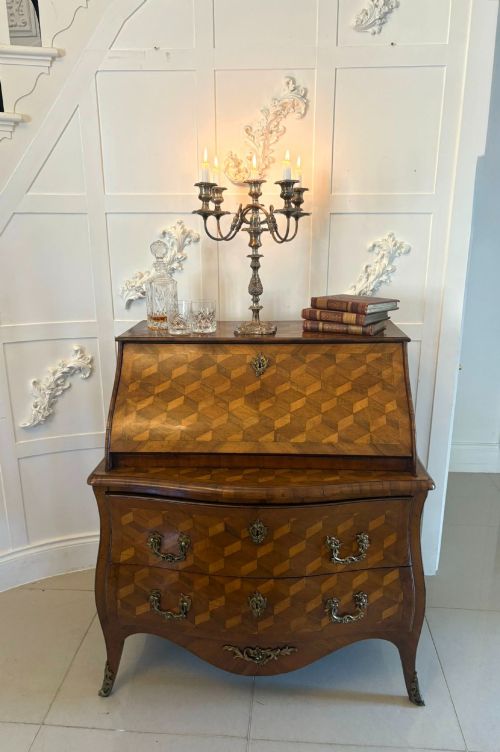
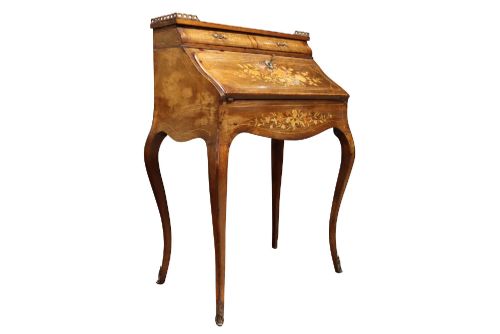
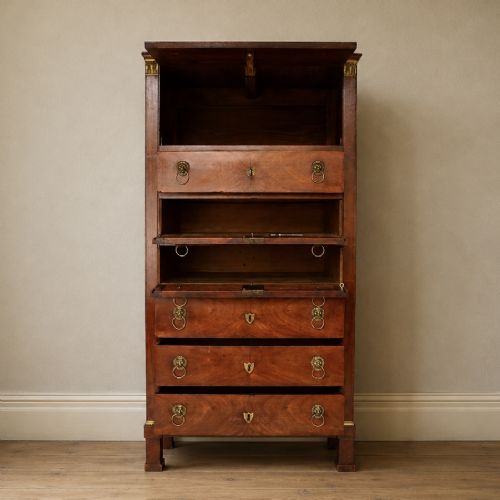
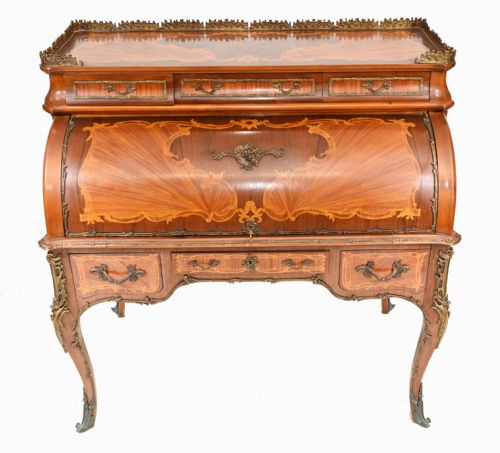
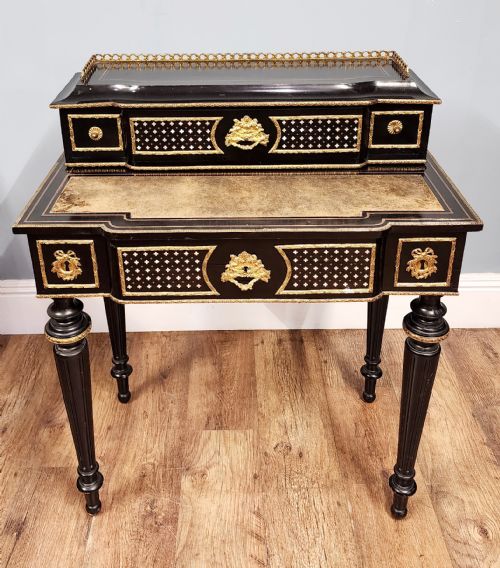
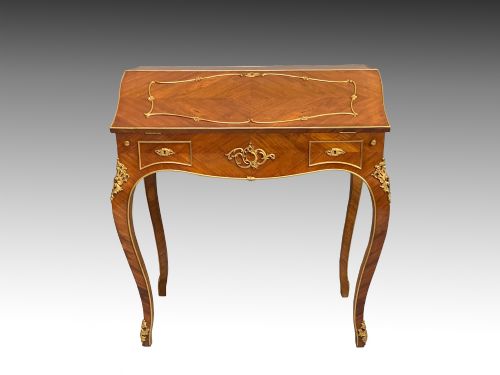
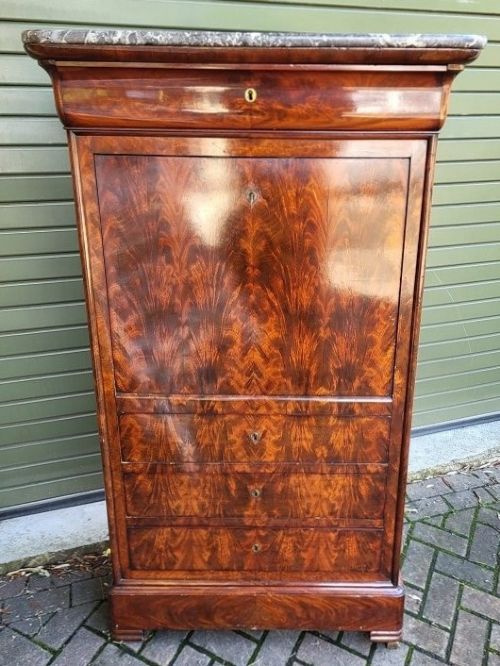
An antique french secretary desk combines practical writing surfaces with concealed compartments and drawers. You will frequently encounter forms such as the upright secrétaire à abattant, the delicate bonheur-du-jour, and the bombé bureau.
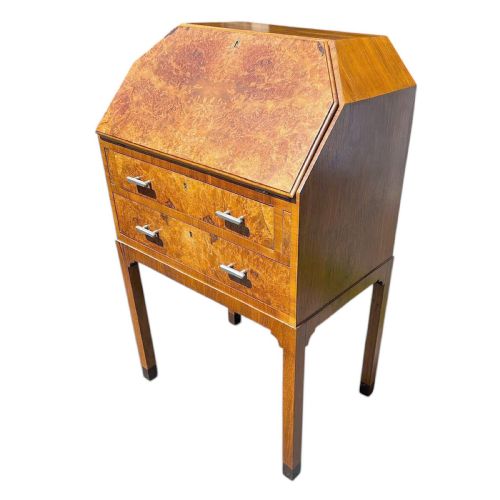
The pieces on this page span the eighteenth, nineteenth, and early twentieth centuries, reflecting changing tastes from Louis XV and Louis XVI revivals to Empire and Art Deco styles. These desks served primarily for private correspondence and the storage of important papers in domestic interiors.
Makers and workshops constructed these pieces in both grand proportions for formal reception rooms and smaller scales suited for ladies' writing cabinets and boudoirs.
Materials and construction
Cabinet makers utilised a rich palette of timbers including walnut, kingwood, mahogany, rosewood, tulipwood, and satinwood, often laid as intricate parquetry or marquetry patterns across flat and curved surfaces. Exotic veneers were applied over sturdier carcase woods to create elaborate decorative schemes.
Mounts in ormolu, gilt bronze, and brass accent corners, keyhole escutcheons, and legs, while inset panels of marble provide durable writing or display tops on many upright cabinets. Some specialised examples incorporate porcelain plaques or ebonised finishes to enhance their visual weight.
Antique French Secretary Desk Retail Price Guide 2026
Typical asking prices for french secretary desk among the pieces listed under this phrase on Sellingantiques today, from the lower quarter to the upper quarter. They describe what is for sale here now, not the wider market.
Secret compartments hidden within these desks often required a sequence of hidden spring-loaded buttons to release the private drawers.
Distinctions in quality
The fineness of the marquetry and parquetry work separates standard production from exceptional pieces, with intricate floral or geometric wood mosaics requiring immense skill to cut and fit. The weight, chiselling, and fire-gilding of the ormolu mounts further indicate the original workshop's investment in luxury.
Internal secondary timbers, the precision of dovetail joints in hidden drawer construction, and the smoothness of the drop-front writing flap mechanism demonstrate the underlying standard of joinery across different examples.
Edwards and Roberts·Gamichon A Paris
The Antique French Secretary Desk Glossary
- Secrétaire à abattant
- An upright writing cabinet featuring a hinged fall-front writing flap that conceals a fitted interior of small drawers and pigeonholes.
- Bonheur-du-jour
- A light, small ladies' writing desk, popular in the nineteenth century, typically featuring a small cabinet or tier of shelves atop the writing surface.
- Ormolu
- Gilt bronze mounts applied to furniture for decorative effect, created by casting and finishing bronze before applying gold amalgam.
- Marquetry
- The art of forming decorative patterns and pictures by applying thin veneers of various coloured woods to a structural carcase.
- Bombé
- A swelling or outward-curving contour found on the sides and fronts of certain eighteenth-century bureau forms.
Antique French Secretary Desk: Frequently Asked Questions
What is a secretaire abattant?
A secretaire abattant is a tall, upright cabinet with a vertical drop-front panel that pulls down to serve as a writing desk. Inside, you find a collection of small pigeonholes and secret drawers.
These pieces were designed to save floor space while offering substantial storage for stationery and correspondence in nineteenth-century homes.
How do I use a bonheur du jour?
A bonheur du jour functions as a light lady's writing desk, often placed in a drawing room or boudoir for writing letters. The upper tier provides display space for ornaments or small books.
Today, you can use one as a compact desk for a laptop or as a striking console table in a hallway.
What is ormolu?
Ormolu refers to gilded bronze mounts and decorative elements attached to the corners, feet, and aprons of fine furniture. It provides a bright metallic contrast to dark woods like mahogany and walnut.
In period pieces, these mounts were hand-chiseled after casting to achieve crisp detail and depth.
How do I identify Louis XV style?
Louis XV style furniture is characterised by asymmetrical curves, cabriole legs, and elaborate floral marquetry. The overall silhouette avoids straight lines in favour of flowing, organic shapes.
Nineteenth-century revivals frequently adopted these flowing rococo outlines alongside rich parquetry veneers.