




French Patinated Centrepiece
A French patinated centrepiece anchors a room with cast bronze and marble, bringing nineteenth-century presence to a table.
French Patinated Centrepiece
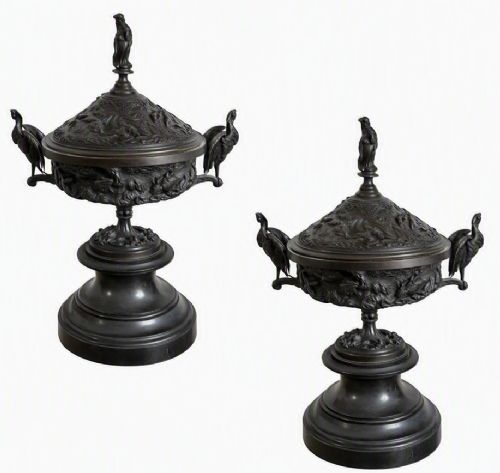
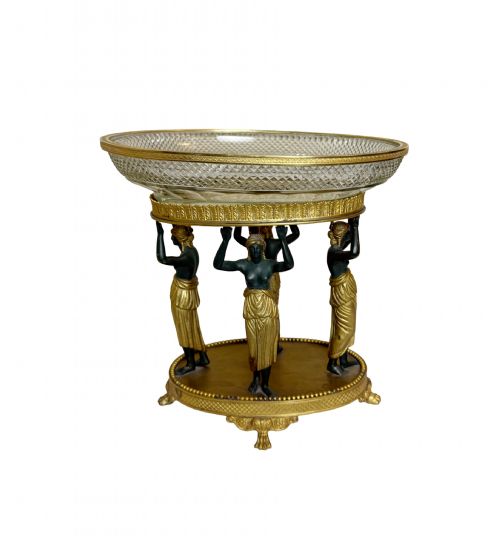
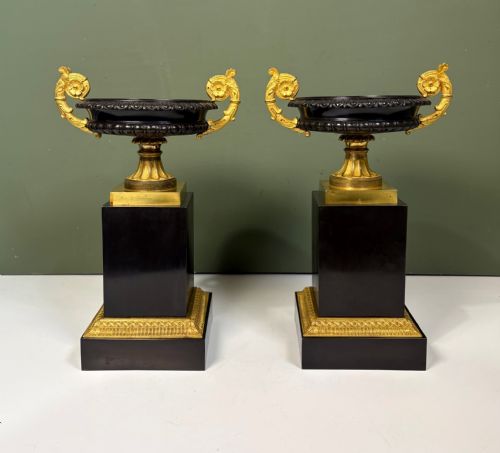
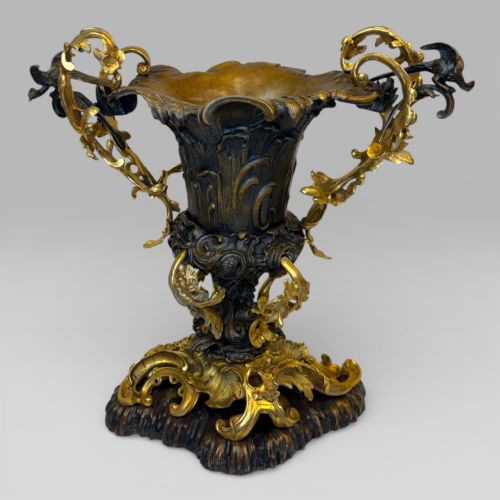
When you search for a french patinated centrepiece, you are looking at nineteenth-century table vessels, urns, tazzas, and candelabra designed to command attention in a formal interior. These pieces range from classical Revival styles to decorative compotes featuring cherubs, putti, and mythological figures like Bacchus.
The versions you are most likely to meet on this page date predominantly from the nineteenth century, spanning Regency, Louis XVI, Régence, and Art Nouveau aesthetics. They appear as standalone fruit bowls, paired garnitures, and multi-branch candelabra combining cast metal with stone bases.
Makers and sculptors of note such as Jules Moigniez and Henry Dasson influence these forms, bringing animalier studies and neoclassical casting traditions to the table. Whether cast as a winged cherub bowl or an architectural tazza, each object serves as a sculptural focal point.
Materials and Construction
These centrepieces rely on the interplay of patinated bronze, gilt bronze, and ormolu, cast in detailed sections and hand-finished. The dark, chemical patina on the bronze provides a rich contrast against bright fire-gilt highlights and polished surfaces.
Many designs incorporate heavy bases of white or black marble, providing structural stability and a cool contrast to the warm metallic tones. Cut crystal bowls and inserts occasionally sit within the bronze mounts, adding transparency and reflective depth to the composition.
French Patinated Centrepiece Retail Price Guide 2026
Typical asking prices for french patinated centrepiece among the pieces listed under this phrase on Sellingantiques today, from the lower quarter to the upper quarter. They describe what is for sale here now, not the wider market.
Materials recur in combinations of patinated bronze, gilt bronze, black and white marble, and cut crystal.
Assessing Quality and Execution
Proportion and the harmonious combination of materials drive the value of a piece. Superior examples integrate marble bases, cut crystal, and dual-tone patination with balanced architectural symmetry and secure, substantial fixings.
Jules Moigniez·Henry Dasson
The French Patinated Centrepiece Glossary
- Patinated Bronze
- Bronze treated with chemical solutions to produce a dark, protective surface skin. This technique enhances sculptural definition by creating tonal contrast against highlighted or gilt details.
- Ormolu
- Finely ground high-carat gold applied to a bronze base using a mercury amalgamation technique. It provides a durable, rich golden finish characteristic of decorative metalwork.
- Tazza
- A shallow ornamental vase or cup mounted on a stem and foot, traditionally displayed on a table or sideboard. These vessels often feature classical friezes or figural handles.
- Candelabra
- A branched candlestick designed to hold multiple lights, frequently produced as matching pairs alongside central bowls and urns. They share the cast ornamentation of the wider garniture.
- Grand Tour
- Souvenirs and decorative objects acquired by wealthy travellers in Europe during the nineteenth century. These pieces often replicate classical bronzes and architectural marbles.
French Patinated Centrepiece: Frequently Asked Questions
What is a French patinated centrepiece used for?
These pieces function primarily as decorative focal points for dining tables, sideboards, or mantelpieces. Historically, they held fruit, flowers, or simply displayed the wealth and artistic taste of the household through sculptural metalwork.
Today, they serve the same interior role, anchoring a room with nineteenth-century craftsmanship and providing vertical or horizontal emphasis to a surface.
How do I identify Regency pieces?
Regency items often draw heavily on classical antiquity and military or abolitionist motifs, such as the Au Bon Sauvage designs. They utilise crisp bronze casting alongside ormolu mounts and architectural forms characteristic of early nineteenth-century taste.
Look for restrained neoclassical proportions, dark patination contrasting with bright gilding, and themes that reflect the aesthetic interests of the early eighteen-hundreds.
Where were these centrepieces displayed?
Owners placed them centrally on large dining tables during banquets or arranged them on serving consoles and pier tables when not in use. Pairs of candelabra or urns frequently flanked the central bowl to create a balanced garniture.
In grand nineteenth-century interiors, they occupied prominent public rooms where guests would admire their material quality and sculptural narrative.
How should I care for patinated bronze?
Dust the surface regularly with a soft, dry cloth to prevent particulate accumulation in the crevices of the casting. Avoid chemical cleaners, water, or abrasive polishes that can strip the original chemical patina or damage the gilt bronze.
Maintain stable indoor humidity levels to protect any integrated marble bases and cut crystal elements from thermal shock or moisture damage.