






Putti Fruit Bowl
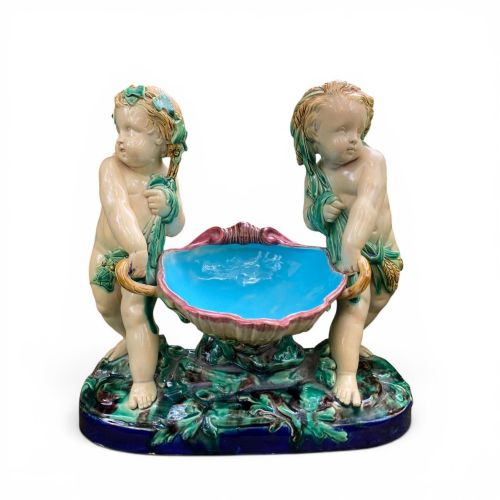
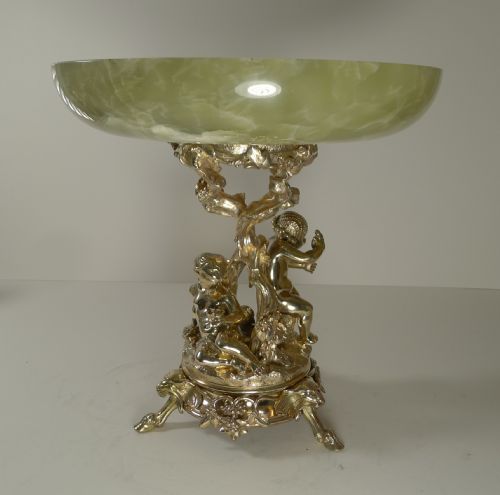
These putti fruit bowl pieces bring sculpted figures and grand table presence to a room, offering both decorative display and classical charm.
Putti Fruit Bowl
When you search for a putti fruit bowl, you are looking at substantial table centrepieces, comports, and compotes designed to hold fruit or serve as sculptural focal points. The pieces on this page span the Victorian and Edwardian eras, reaching back into the nineteenth century with dates such as eighteen sixty, eighteen sixty-eight, and nineteen ten.
The dominant forms include large porcelain and earthenware baskets supported by cherubs or putti, alongside gilt and patinated bronze centrepieces paired with cut crystal, mother-of-pearl, or glass dishes. You will encounter English, French, and German works, from makers like Minton, Plaue Schierholz, and Christofle.
Styles lean heavily towards French Rococo Revival, Victorian, and Napoleon III aesthetics, often incorporating applied roses, musical figures, and shell motifs. These items function primarily as grand table centrepieces rather than everyday kitchenware.
Materials and construction methods
Makers utilised moulded porcelain, majolica, and earthenware for the figural putti and bowls, frequently applying hand-painted details, glazed finishes, and delicate applied roses. German factories like Plaue Schierholz and Saxony produced complex porcelain assemblies requiring intricate firing techniques.
Metal components rely on cast bronze with gilt or patinated finishes, alongside silver-plate elements paired with heavy cut crystal and mother-of-pearl dishes. The combination of cast metal supports and glass or shell bowls demands careful mechanical joining to secure the heavy upper vessels.
Putti Fruit Bowl Retail Price Guide 2026
Typical asking prices for putti fruit bowl among the pieces listed under this phrase on Sellingantiques today, from the lower quarter to the upper quarter. They describe what is for sale here now, not the wider market.
Listings feature items from the Victorian and Edwardian periods, spanning the years eighteen sixty through to nineteen twenty.
Distinctions in craftsmanship and design
The division between standard production and exceptional work lies in the crispness of the modelling in the putti figures and the complexity of the surrounding ornamentation, such as applied floral work and musical instruments. Finer examples display meticulous hand-painting and substantial cast bronze or porcelain weight.
The integrity of the central bowl, whether cut crystal, mother-of-pearl, or glazed ceramic, alongside the quality of the gilding and patination on the bronze mounts, dictates the visual authority of the piece on the table.
Minton·Plaue Schierholz·Christofle Paris
The Putti Fruit Bowl Glossary
- Putti
- Plumed or unwinged infant figures, often resembling cupids, frequently sculpted supporting bowls or romping around the base of a centrepiece. They derive from classical art and remain central to Rococo Revival design.
- Centrepiece
- A large decorative object placed in the middle of a dining table or sideboard. These items often incorporate bowls for fruit or flowers.
- Comport
- A raised dish or bowl on a stem, used historically for serving fruit or sweetmeats. They match the height and scale of traditional centrepieces.
- Majolica
- A type of earthenware coated with an opaque tin glaze and painted with metallic oxide colours. Minton utilised this technique for figural fruit baskets.
- Gilt Bronze
- Bronze metal coated with a thin layer of gold or gold leaf, providing a durable and lustrous metallic finish. It appears frequently on French nineteenth-century mounts.
Putti Fruit Bowl: Frequently Asked Questions
What were putti fruit bowls used for?
These pieces served as grand decorative centrepieces on formal dining tables, often holding fresh fruit, flowers, or sweetmeats during large dinners.
Their ornate design and elevated height allowed them to act as conversation pieces and visual anchors for the room.
How do I date a porcelain centrepiece?
Dating relies on stylistic clues such as Rococo Revival motifs, maker marks, and recorded production periods from the nineteenth and early twentieth centuries.
Porcelain bodies, glaze characteristics, and the style of the applied putti figures provide further context for establishing an approximate decade of origin.
How do I care for gilt bronze and crystal?
Dust bronze and gilt surfaces gently with a soft, dry cloth without chemical polishes that might strip the finish. Crystal and glass bowls can be lifted and washed in lukewarm soapy water, ensuring they dry completely before replacement.