

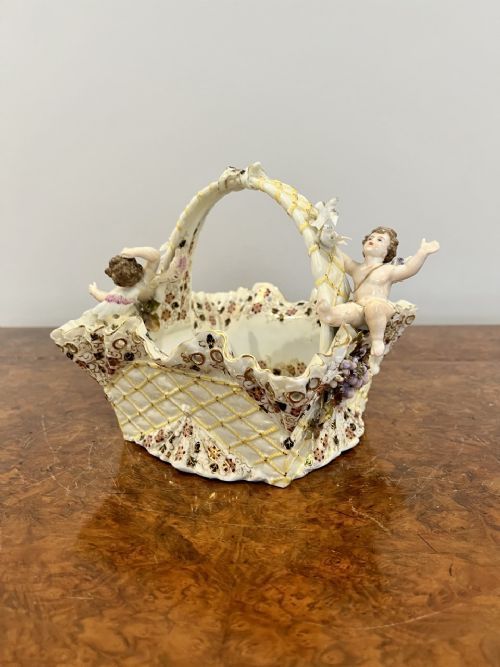


Cherub Decorative Bowl
These cherub decorative bowl pieces bring figurative bronze, porcelain, and marble into nineteenth century table settings.
Cherub Decorative Bowl
A cherub decorative bowl combines figurative casting or ceramic modelling with a central vessel, taking forms such as tazzas, comports, centrepieces, and baskets. The selection spans the nineteenth century through the Edwardian period, capturing Victorian, Rococo Revival, French Empire, and Regency stylistic influences.
Most examples function as table centrepieces or decorative comports, utilising materials ranging from gilt and patinated bronze to porcelain and black marble. German, French, Italian, and English workshops contributed to this repertoire, producing items designed for grand display.
Buyers encounter pieces featuring winged figures supporting shallow dishes of porcelain, cut glass, malachite, blue John, or mother-of-pearl. The scale varies from single comports to matched pairs intended for symmetrical placement.
How they were made
Metal components rely on bronze casting, utilising both patinated and gilt finishes alongside ormolu work to shape the figures and mounts. Marble, malachite, blue John, and mother-of-pearl provide contrasting bases and dishes.
Ceramic vessels involve porcelain modelling and glazed earthenware production, sometimes enhanced with gilded enamel. Metal frameworks often incorporate silver plate or cast bronze to support glass and ceramic bowls.
Cherub Decorative Bowl Retail Price Guide 2026
Typical asking prices for cherub decorative bowl among the pieces listed under this phrase on Sellingantiques today, from the lower quarter to the upper quarter. They describe what is for sale here now, not the wider market.
Listings feature items from the 1880s, 1890s, and Edwardian eras, utilising materials such as porcelain, gilt bronze, and black marble.
What varies in quality
The definition in the cast figures separates standard production from finer work, particularly where facial expressions and wing feathering retain crisp detail. Heavier metalwork and substantial marble or mineral bases indicate superior construction.
The integration of varied materials dictates overall refinement, especially in pieces combining bronze with stone dishes or cut glass. Harmonious proportions between the supporting cherub figures and the upper bowl distinguish the better examples.
Schierholz·Minton·Sevres
The Cherub Decorative Bowl Glossary
- Tazza
- A shallow bowl or cup mounted on a stem and foot, frequently utilised for display on dining tables.
- Ormolu
- Gilded bronze applied to decorative objects and furniture mounts, popular in French and English luxury goods.
- Comport
- An ornamental dish or bowl raised on a foot, used for serving fruit or sweets.
- Jardiniere
- An ornamental pot or stand for holding plants or flowers within a domestic interior.
Cherub Decorative Bowl: Frequently Asked Questions
What were cherub bowls used for?
These vessels served as ornamental centrepieces on dining tables and sideboards during the nineteenth and early twentieth centuries. They held fruit, flowers, or sweetmeats for formal meals and gatherings.
Over time, their role shifted from functional dining ware to decorative cabinet pieces and focal points for interior display.
How do I date these pieces?
Dating relies on stylistic markers such as Rococo Revival curves or Regency mounts, alongside material evidence like bronze patination and porcelain body types. Hallmark stamps on silver plate or ceramic marks provide additional chronological clues.
Comparative analysis of the casting quality and the specific minerals used in the dishes helps narrow down the decade of manufacture.
How should I clean bronze and ormolu?
Dusting with a soft, dry brush removes surface particles without disturbing the patination or the delicate gilt layer. Avoid abrasive cleaners, water, and chemical polishes that strip historical finishes.
Professional conservation advice is recommended for pieces showing tarnish or structural instability in the metal joints.
Are these items purely decorative?
While many function as decorative centrepieces, pieces with hardstone or glass bowls can still hold lightweight arrangements or display items. Care must be taken with delicate porcelain and mineral dishes during handling.
Placing them on stable surfaces away from direct sunlight protects both the gilt bronze and the natural stone components.