
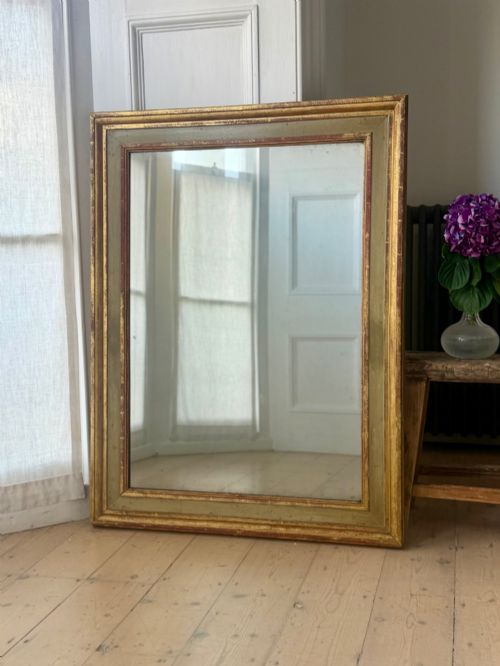
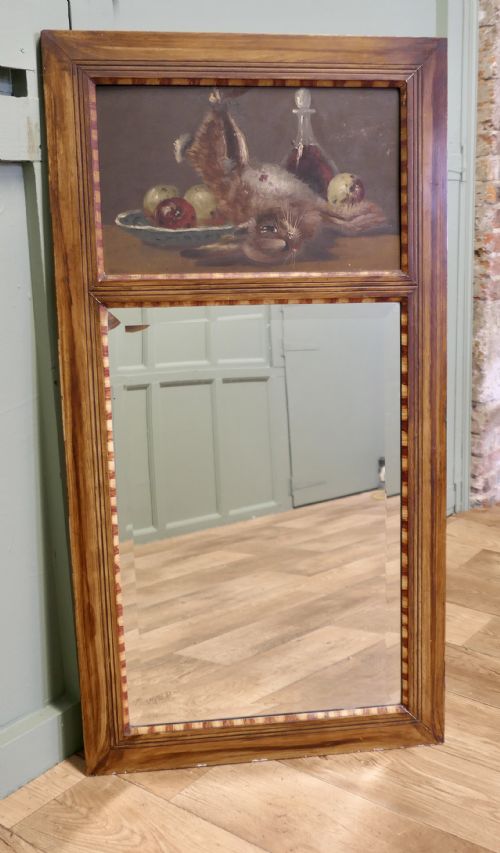
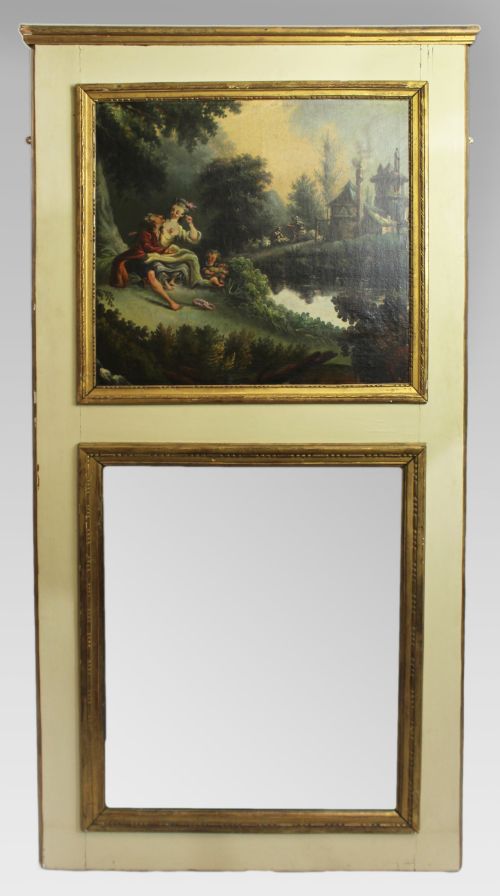
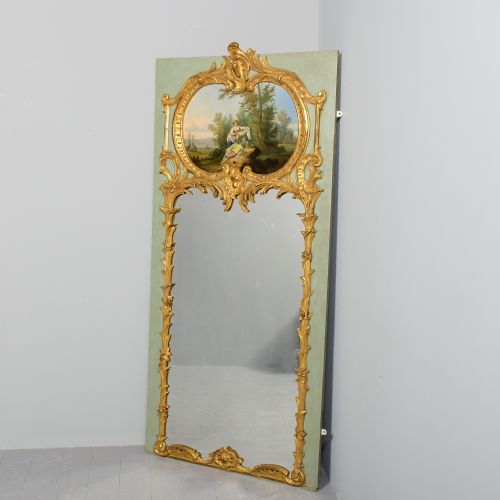


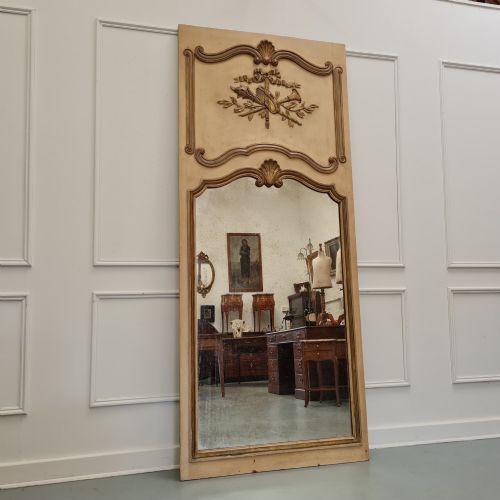


French Painted Trumeau Mirror
A french painted trumeau mirror brings architectural presence and decorative oil panels into a room through carved woodwork designed for period interiors.
French Painted Trumeau Mirror
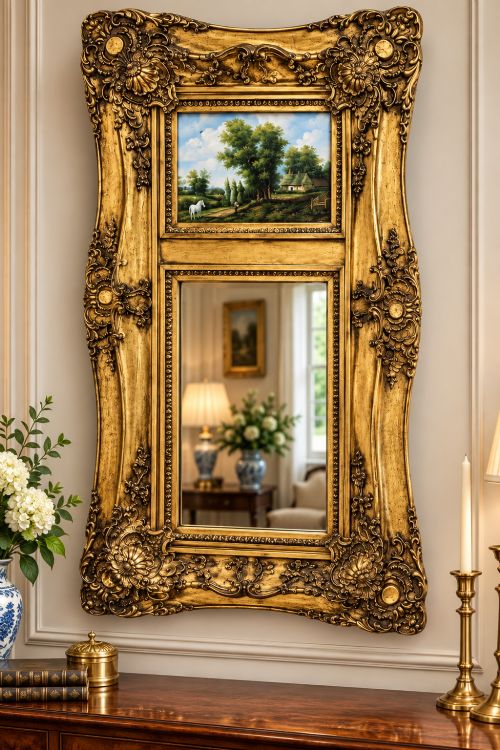
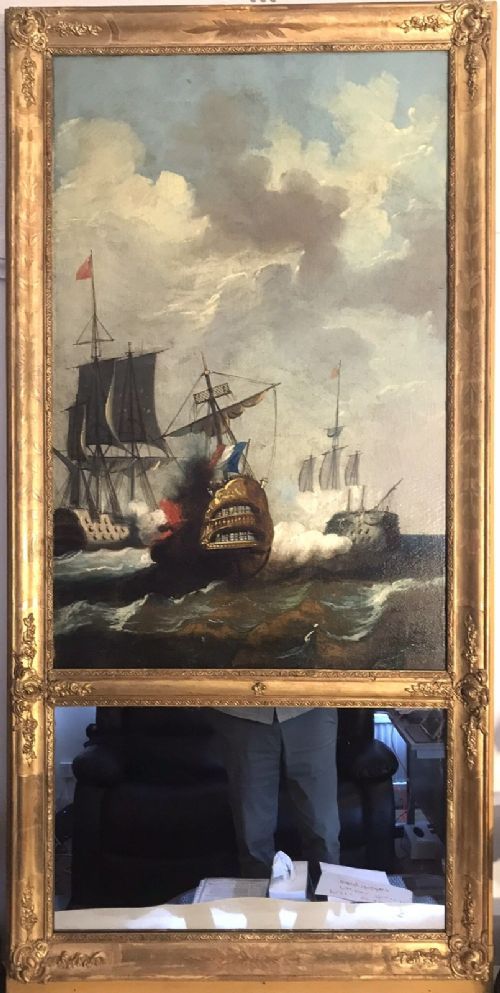
A french painted trumeau mirror combines a vertical wall-hanging glass plate with an integrated decorative panel above, typically depicting pastoral scenes, seascapes or classical motifs on canvas or wood.
The version most commonly met on this page is a 19th-century example displaying painted and parcel-gilt finishes over carved wooden frames, originating from country houses or urban chateaux.
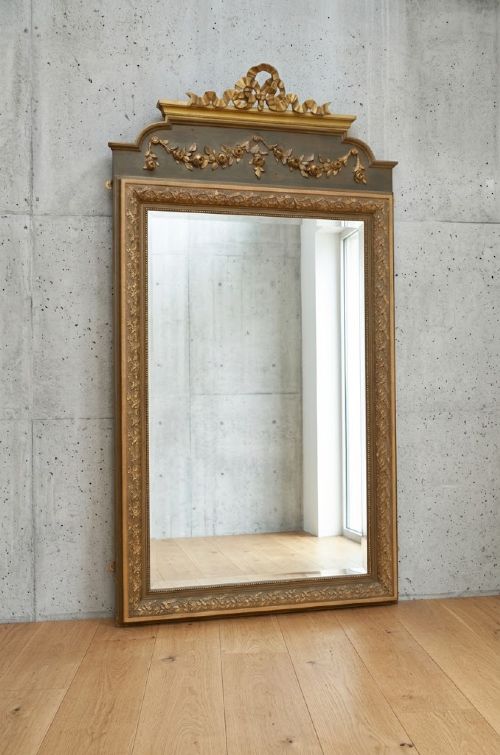
Beyond standard wall mirrors, these pieces appear as tall pier mirrors designed to stand between windows, as well as overmantel configurations meant for placement above fireplace mantels.
How They Were Made
Makers built the primary structures from carved wood and gesso, applying layers of paint and gold leaf to create parcel-gilt surfaces that highlight architectural mouldings and relief details.
The upper sections frequently incorporate oil paintings on canvas or wood panels, while the lower sections rely on silvered mirror plates, including early mercury glass examples showing age spots.
Listings feature periods spanning from the 18th century through the Victorian era, utilising carved wood, gesso, paint, canvas, and mercury glass.
What Varies In Quality
Quality rests upon the execution of the hand-carved wood elements and the artistic merit of the integrated oil painting above the glass plate rather than simple decorative application.
The integrity of the original painted surface, depth of gesso moulding, and the presence of original mercury glass distinguish superior examples from later or heavily restored pieces.
The French Painted Trumeau Mirror Glossary
- Trumeau
- An architectural pier glass or decorative wall panel designed for the space between windows. It typically combines a mirror plate below with an oil painting or carved relief above.
- Parcel-gilt
- A decorative surface treatment where portions of a painted wooden object are highlighted with applied gold leaf. This technique emphasises specific carved details like scrollwork and moulding.
- Pier Mirror
- A tall mirror specifically proportioned to hang on the narrow wall space between two windows. These pieces often coordinate with matching console tables positioned directly underneath.
- Gesso
- A plaster-like mixture applied to wood frames to create a smooth base for gilding and painting. Carvers cut intricate relief ornament directly into this hardened material.
- Mercury Glass
- An early type of double-walled glass blown with a liquid mercury amalgam sealed inside to create a reflective coating. It produces a soft, mottled reflection distinct from modern silvering.
French Painted Trumeau Mirror: Frequently Asked Questions
Where should I hang a trumeau mirror?
These mirrors function effectively as focal points above fireplace mantels or mounted on prominent wall spaces in living rooms and hallways. Their vertical proportions draw the eye upward and reflect ambient light across the interior.
Pier glass variants suit placement between windows or above matching console tables, echoing the traditional room layouts of 19th-century French interiors.
How do I care for antique painted wood?
Maintain the painted and gilded surfaces by dusting gently with a dry, soft cloth without applying liquid polishes or chemical cleaners. Keeping the piece away from direct sunlight and damp conditions preserves the original finish.
Inspect the wall fixings periodically to ensure the substantial weight of the carved wood and glass frame remains securely supported against the wall.
What is the difference between a pier mirror and an overmantel mirror?
Pier mirrors are built with tall, narrow proportions intended for wall spaces between architectural openings like windows or doors. They frequently pair with console tables positioned at the base.
Overmantel mirrors are typically wider in format to span the horizontal expanse of a fireplace mantel, often featuring low-relief panels depicting mythological or pastoral subjects.
Are the paintings on these mirrors original?
Many examples retain their original oil paintings on canvas or wood panels, depicting pastoral landscapes, maritime scenes with galleons, or classical figures. These integrated artworks formed part of the initial design for the architectural panel.
Examining the craquelure, pigment oxidation, and how the panel fits into the wooden frame helps determine if the artwork belongs to the original construction period.