

French Ormolu Pedestals
French ormolu pedestals combine cast gilt bronze mounts with stone columns to elevate decorative objects in formal rooms.
French Ormolu Pedestals
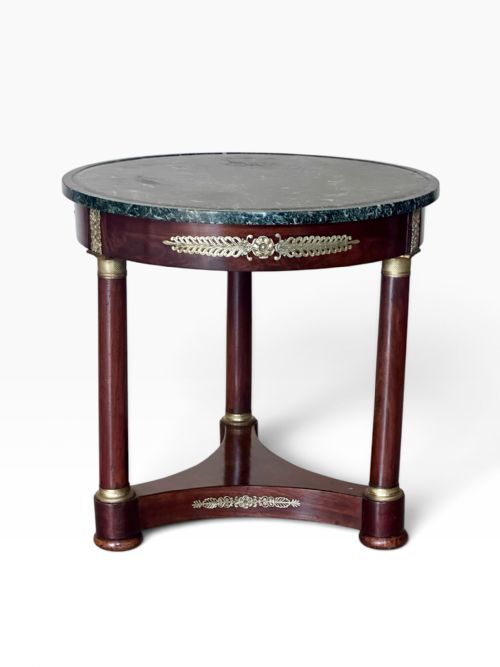
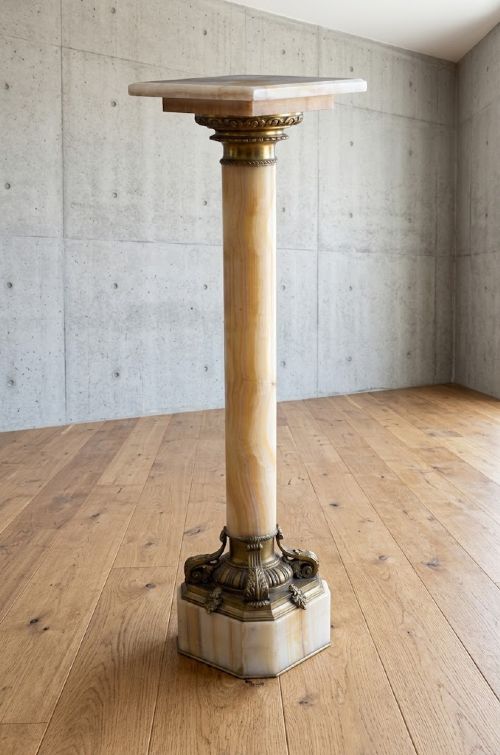
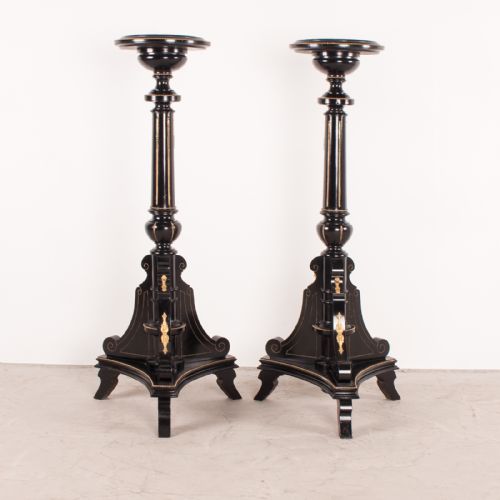
French ormolu pedestals comprise columnar supports in marble, onyx or wood, enriched with cast gilt bronze mounts. Buyers searching for french ormolu pedestals commonly find 19th-century stands, columns and torchères produced in various revival styles.
Most examples date from the nineteenth century, ranging from French Empire to Louis XVI and Rococo revival designs. These pieces function as display stands for bronze figures, urns, tazzas and clocks.
How they were made
Makers formed the structural columns from solid blocks of natural marble or onyx, turned on lathes to achieve smooth cylindrical or fluted profiles. Wooden carvers prepared the timber bases in mahogany, walnut, kingwood or ebonised wood for marquetry and gilt mounts.
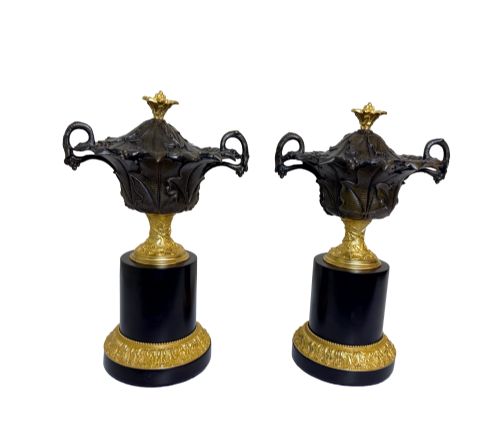
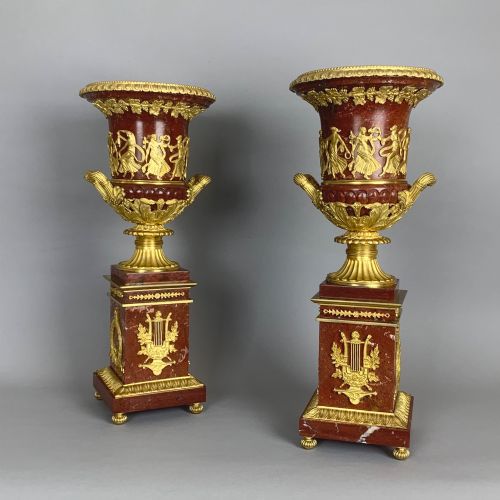
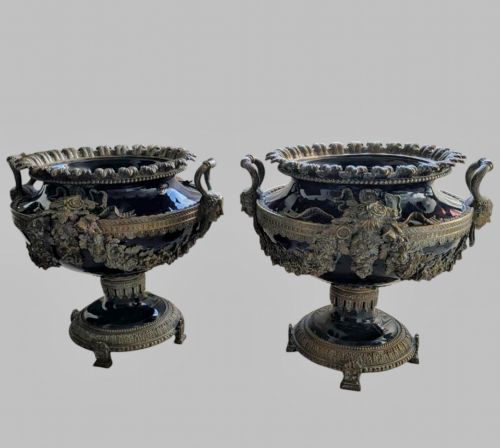
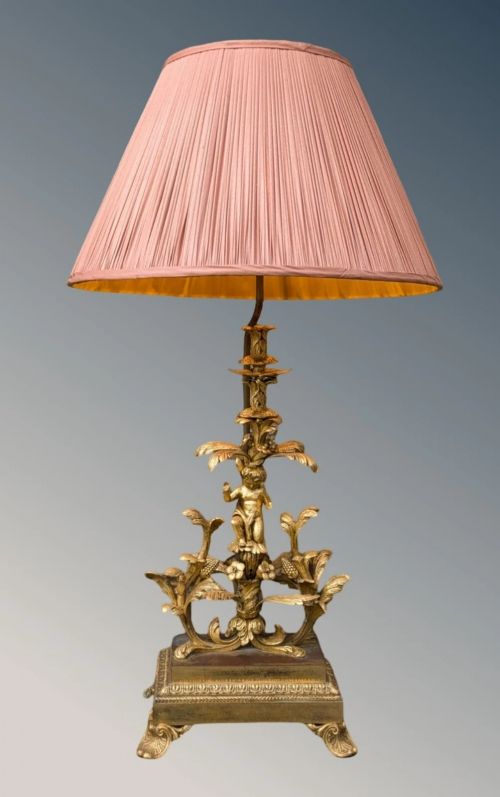
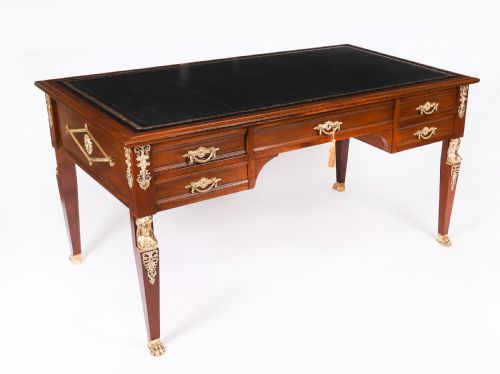
Foundries produced the ormolu elements by casting bronze through the lost-wax or sand-casting method, followed by mercury gilding or electroplating to achieve a bright gold finish. Artisans then chased the metal surface by hand with chisels and gravers to sharpen decorative details before mounting the pieces onto the stone and wood.
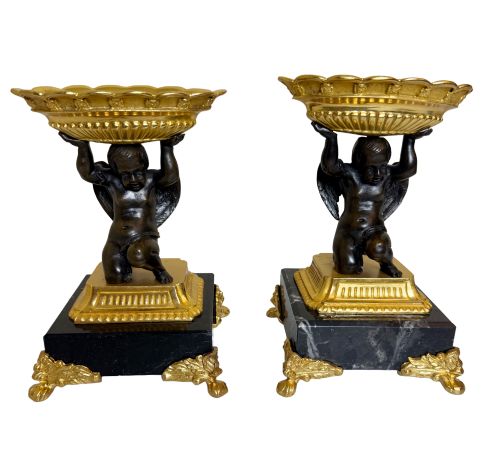
Cherubs occasionally peek from bronze mounts, holding up heavy marble tazzas as if weight means nothing.
What varies in quality
The distinction between standard production and exceptional work rests on the crispness of the bronze chasing and the selection of the stone. Hand-chased ormolu exhibits sharp undercuts and clear definition in leaf or scroll motifs, whereas mass-produced metalwork appears soft and flat.
Architectural proportions and the integration of mounts dictate overall refinement. Superior examples employ carefully matched marble varieties with precise joinery between stone shafts, wooden plinths and heavy metal collars.
The French Ormolu Pedestals Glossary
- Ormolu
- Gilt bronze produced by applying a gold amalgam to a bronze base and heating it to drive off the mercury. This technique creates a durable golden surface characteristic of 18th and 19th century French decorative arts.
- Torchère
- A tall, slender stand or column designed to support a lamp, urn or candelabrum. These pieces typically feature circular tops supported by marble or wooden shafts.
- Tazza
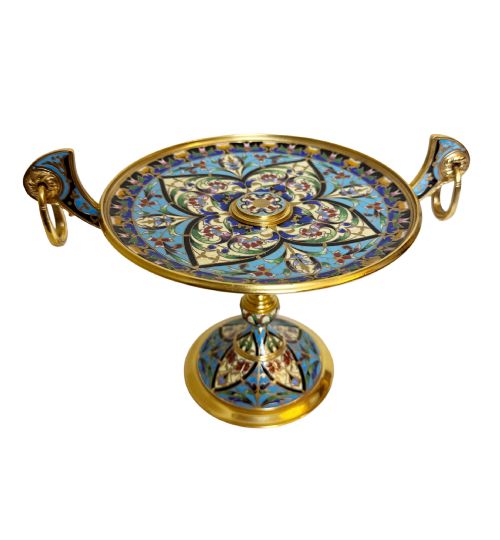
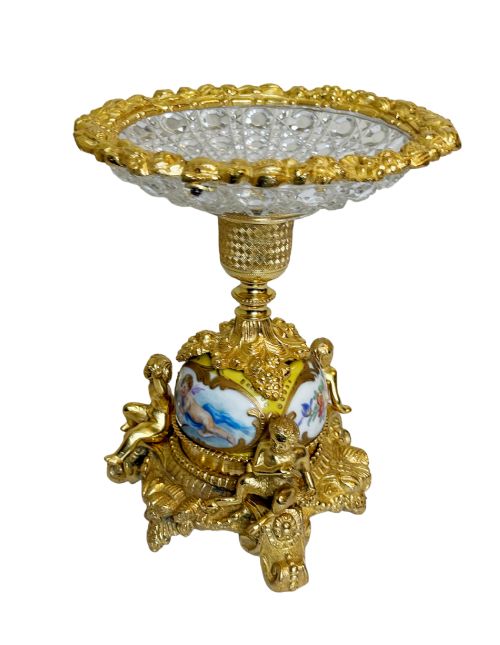
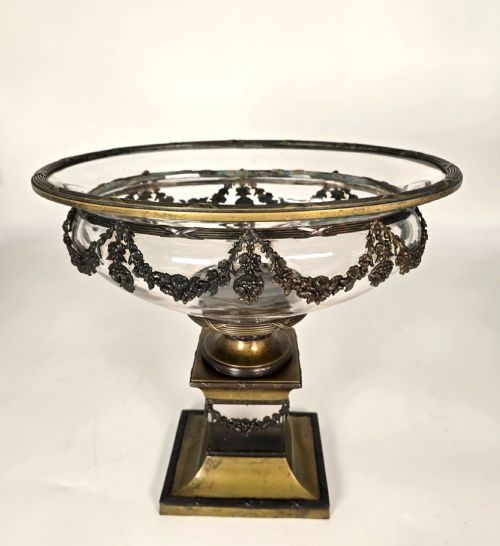
- A shallow ornamental cup or vase mounted on a stem and footed base. They appear frequently in bronze, marble and ormolu on display surfaces.
- Gueridon
- A small circular table supported by a central pillar or multiple legs. French examples often incorporate marble tops and elaborate gilt bronze mounts.
French Ormolu Pedestals: Frequently Asked Questions
What were french ormolu pedestals used for?
These pieces served as elevated display stands for decorative arts in grand salons and drawing rooms.
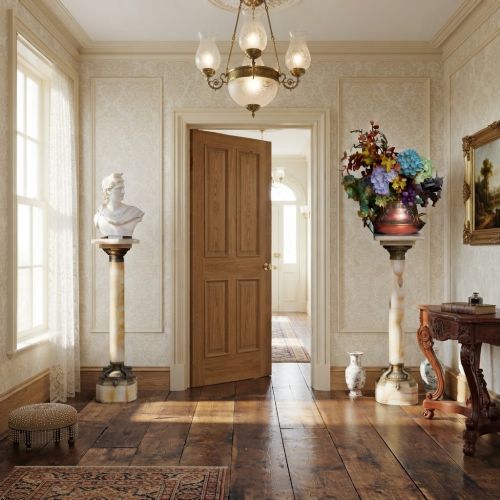
Owners placed marble busts, bronze urns, clocks and porcelain vases on top to showcase decorative objects at eye level.
How do I identify the period of a pedestal?
Dating relies on stylistic clues and material combinations linked to specific 19th-century revivals. Empire pieces favour strict classical symmetry with military or laurel motifs, while Rococo and Louis XVI styles feature asymmetrical scrolls or refined floral marquetry.
Stone types also provide context, as onyx and specific coloured marbles gained popularity during different decades of the Victorian era.
Where should I place a pedestal at home?
Pedestals suit corners, entrance halls or empty wall spaces where they can stand independently as architectural accents.
Ensure the floor is level and place substantial sculptures or urns on top to maintain balance and stability.
Can these pedestals support heavy stone vases?
Solid marble and onyx columns with timber cores provide robust support for heavy decorative objects.
Weight distribution depends on the width of the top surface and the integrity of the internal construction.