






Antique Marble Display Stands
Antique marble display stands elevate sculpture, plants and decorative objects using classical stone tops and sturdy structural bases.
Antique Marble Display Stands
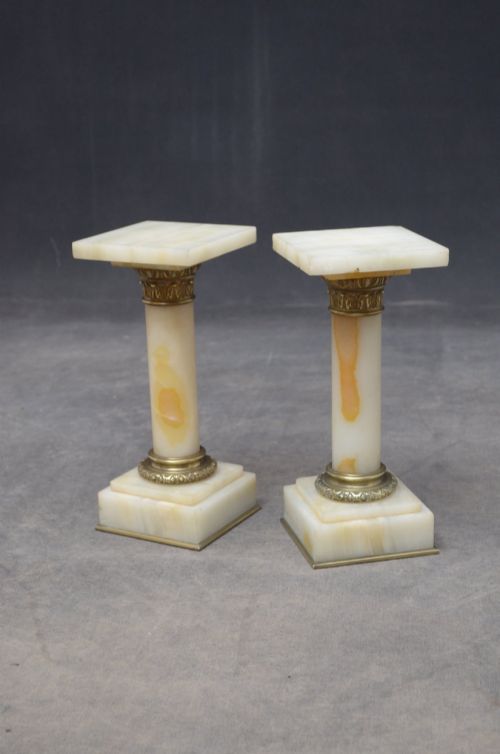
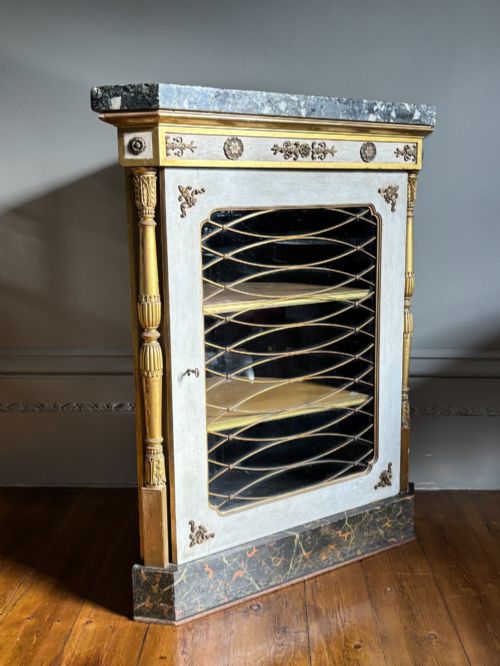
When you search for antique marble display stands, you encounter a specialised group of elevated furniture designed to showcase decorative objects, urns and plants within a room. These pieces function primarily as columns, pedestals, plant stands and low occasional tables.
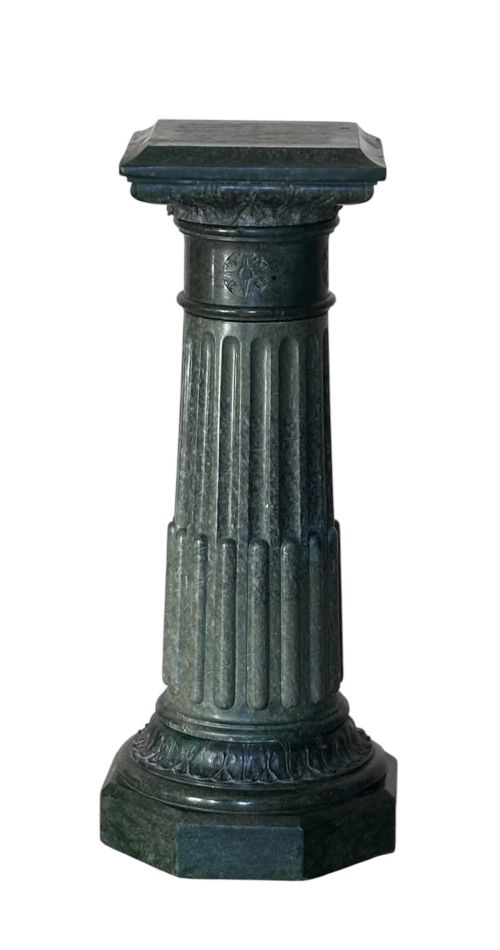
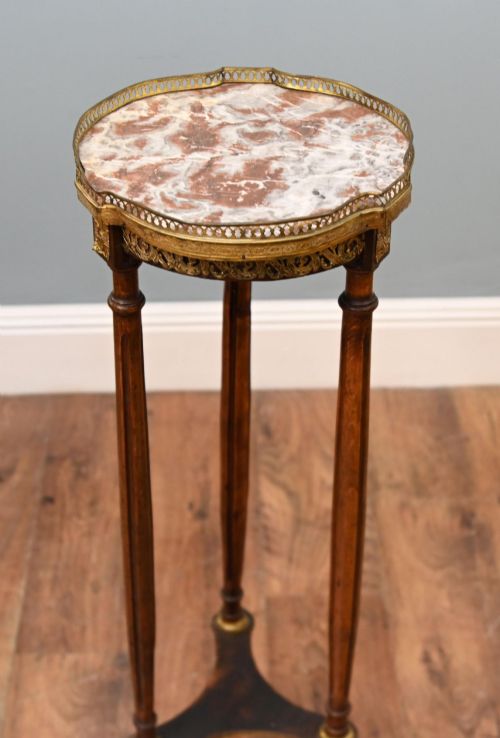
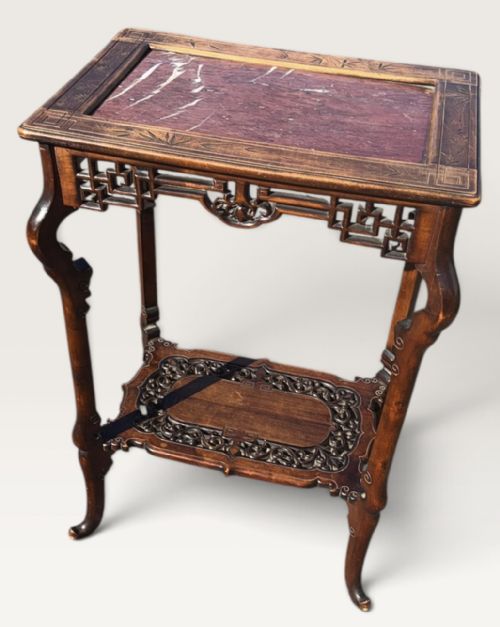
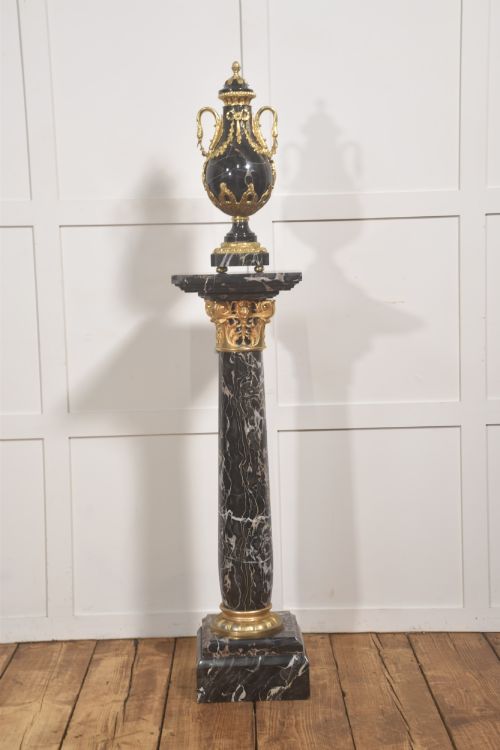
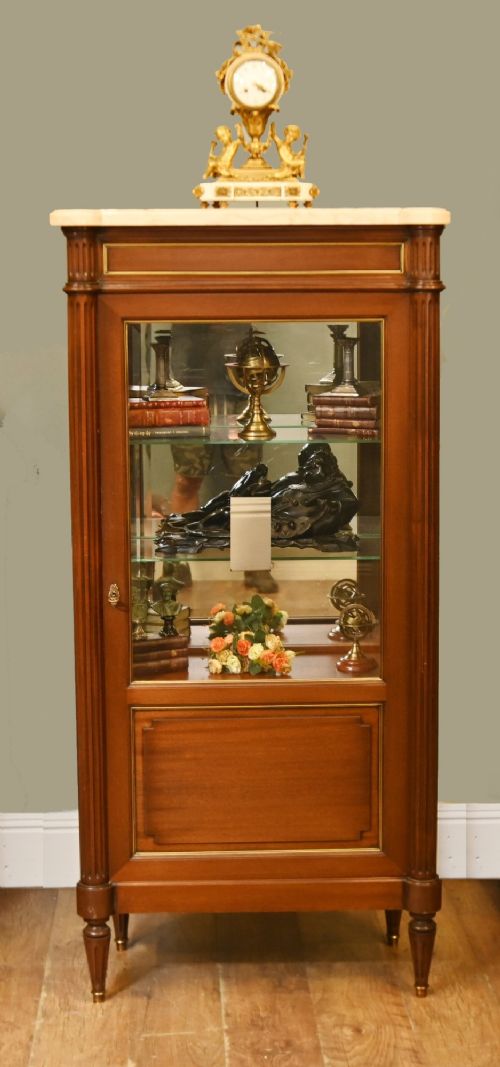
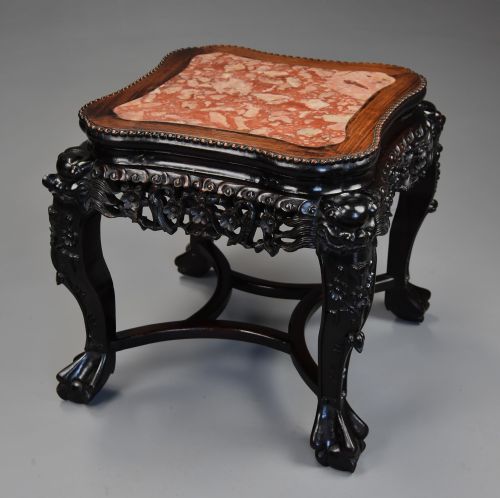
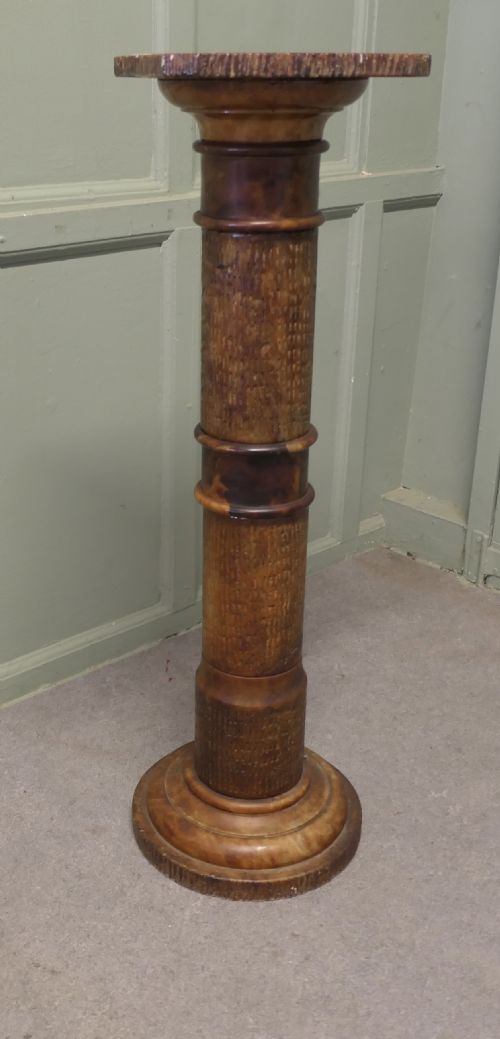
The selection ranges from tall nineteenth-century architectural columns to compact Chinese hardwood pot stands inset with circular stone panels. You also find French gueridons and occasional tables combining timber frames with variegated stone surfaces.
Origins span European revival movements and traditional Chinese export workshops, reflecting diverse interior tastes across the nineteenth and early twentieth centuries. European examples often lean towards classical architectural forms, while Asian pieces showcase intricate timber carving around inset stone tops.
How they were made
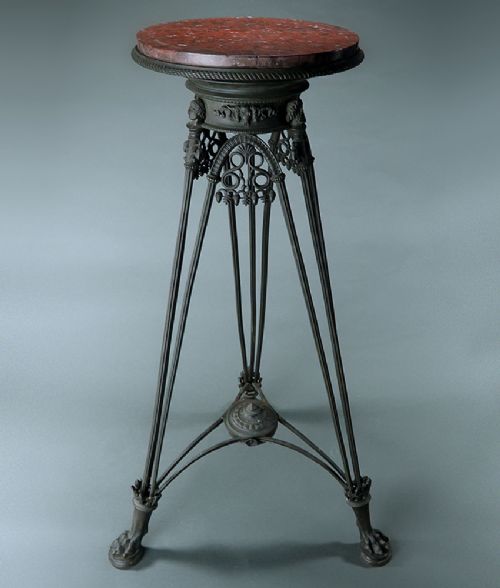
Maker workshops combined heavy natural stones such as carrara, bardiglio, onyx and verde antico with structural frames built from hardwoods, brass and ormolu. The stone sections were turned, cut and polished to reveal natural veining before being fitted tightly into wooden or metal chassis.
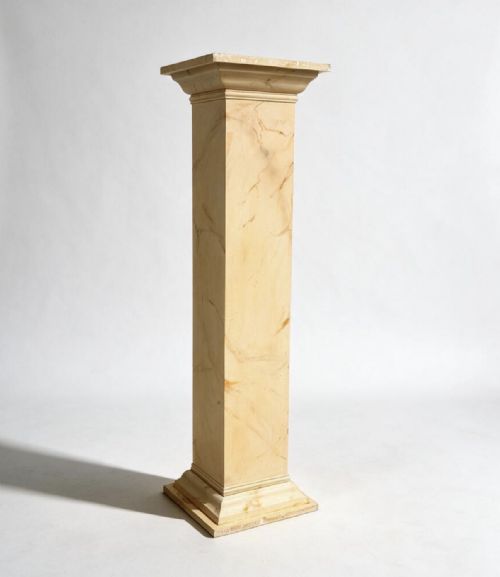
Asian pieces utilised dense timbers like padouk, rosewood and various hardwoods, carved by hand with floral motifs and fitted with shaped marble insets held securely by traditional joinery. European columns frequently incorporated cast brass collars and scagliola imitation finishes over core materials.
Antique Marble Display Stands Retail Price Guide 2026
Typical asking prices for marble display stands among the pieces listed under this phrase on Sellingantiques today, from the lower quarter to the upper quarter. They describe what is for sale here now, not the wider market.
Periods represented span from the eighteenth century through the Victorian era, Edwardian period and into the early twentieth century.
What varies in quality
Quality rests upon the selection and preparation of the materials, particularly the depth of colour and absence of structural fissures in the stone top. Finer examples display carefully matched marble graining that integrates harmoniously with the supporting base.
The execution of the joinery and metalwork dictates the overall integrity of the piece, distinguishing finely hand-carved hardwood or crisp ormolu mounts from simpler turned construction. Attention to detail in the secondary wood and stability under weight separate standard items from superior works.
The Antique Marble Display Stands Glossary
- Scagliola
- A composite material made from selenite, glue and pigments, manipulated to imitate genuine decorative marbles. It is applied to core structures and polished to a high sheen.
- Ormolu
- Gilt bronze mounted onto furniture frames or used as decorative collars and mounts. The technique involves applying a gold amalgam to bronze components.
- Jardiniere stand
- A tall piece of furniture specifically designed to hold heavy indoor plant pots and floral arrangements. These often feature water-resistant stone or tiled upper surfaces.
- Guéridon
- A small French table supported by a central pillar or a series of columns. They frequently incorporate circular marble tops and decorative tripod bases.
- Bardiglio
- A grey-blue Italian marble characterised by darker veins and cloudy patches. It appears frequently in nineteenth-century neoclassical architectural columns.
Antique Marble Display Stands: Frequently Asked Questions
What were antique marble display stands used for?
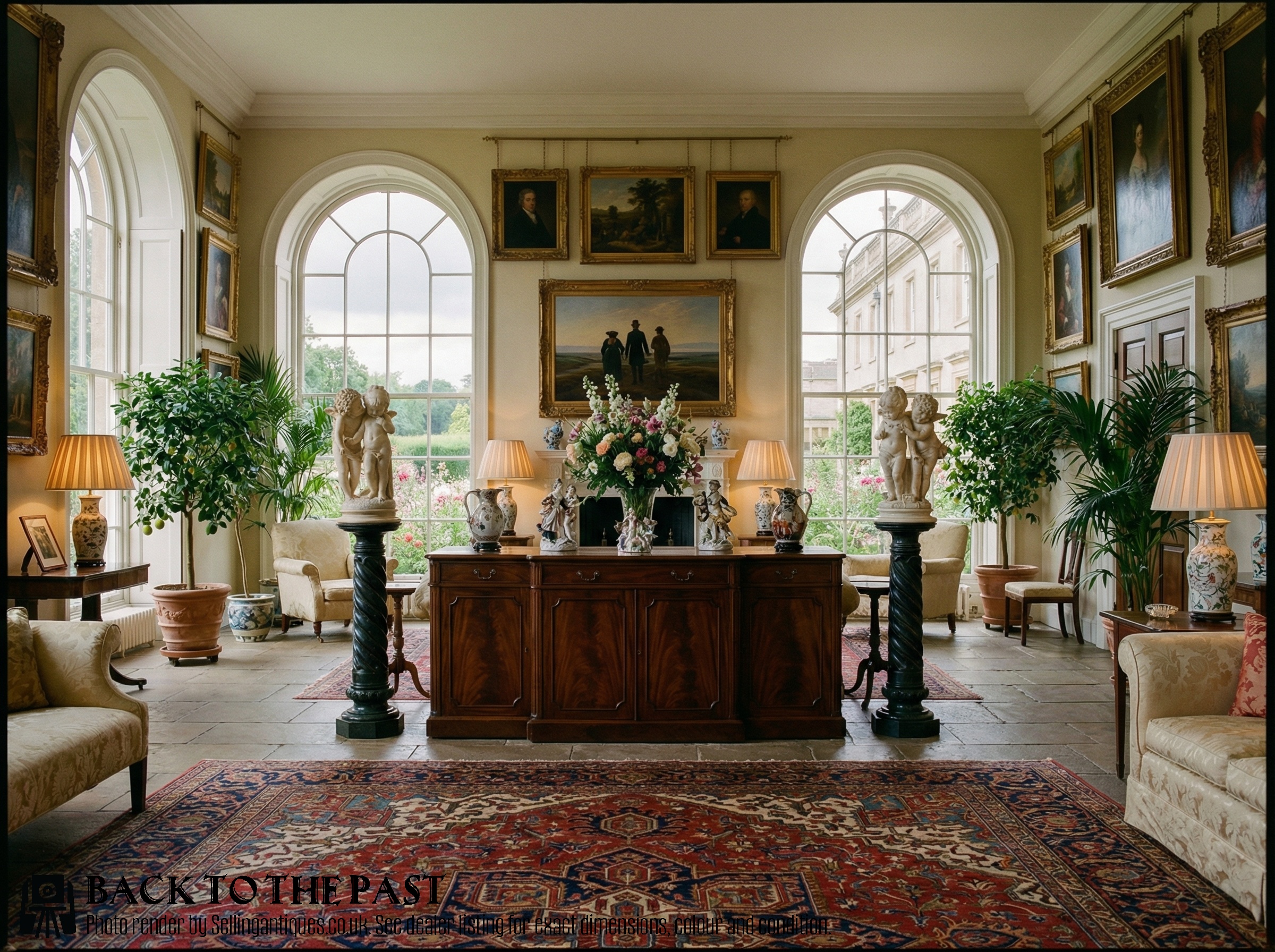
These elevated pieces served primarily to hold heavy decorative items, bronze figures, urns and potted plants at a comfortable viewing height within nineteenth-century drawing rooms and conservatories.
They allowed collectors to display cabinet treasures and sculptures where light could catch the stone surfaces and intricate carving.
How do I clean an antique marble top?
Maintenance requires only a soft, dry cloth or a slightly damp sponge using plain water without harsh chemical detergents. Acidic liquids must be kept away from the stone to prevent etching on the polished surface.
Regular dusting prevents abrasive particles from dulling the historical polish over time.
Are these stands strong enough for heavy plants?
Most structural columns and plant stands were engineered specifically to bear significant weight from stone urns, large jardiniere pots and heavy bronzes. The solid stone tops combined with dense hardwood or metal frames provide substantial load-bearing capacity.
Distribution of weight remains important, keeping heavy objects centred safely over the vertical axis of the column.
How can I tell a Chinese pot stand from a European one?
Chinese stands rely on dense Asian hardwoods like rosewood and padouk, featuring deep hand-carved floral aprons and tight mortise joints around the inset stone. European examples typically draw upon neoclassical architecture, incorporating ormolu collars, turned mahogany, walnut or painted scagliola.
The decorative vocabulary divides distinctly between oriental flora motifs and Western classical revival columns.