
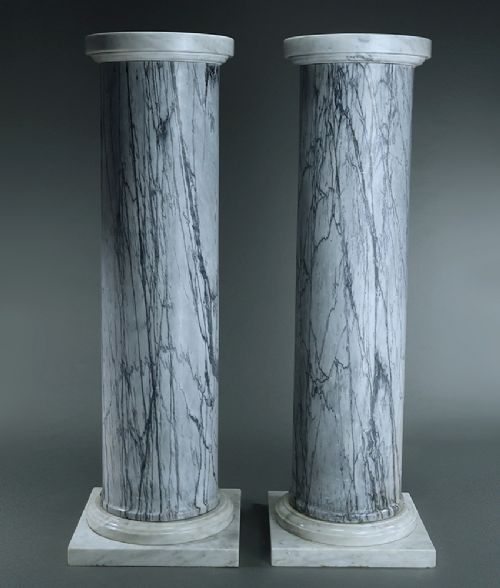


Pair Marble Sculpture Stands
These pair marble sculpture stands elevate display pieces through classical presence, offering substantial support fashioned from fine stone.
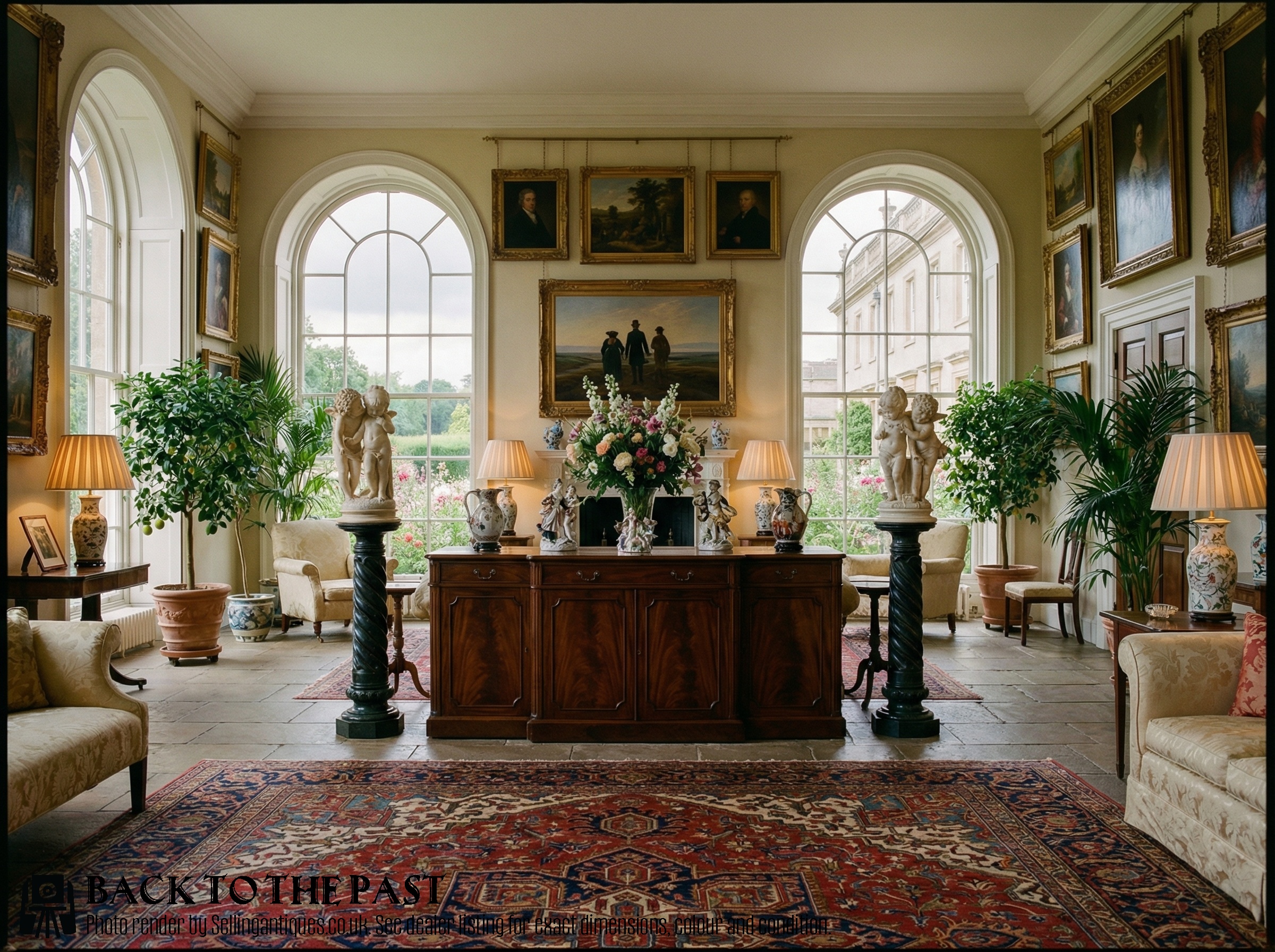
Pair Marble Sculpture Stands
When you search for pair marble sculpture stands, you encounter heavy architectural columns and pedestals designed to elevate urns, busts, and plants in domestic interiors. These structural supports originate from the nineteenth century onward, encompassing Victorian and Edwardian examples alongside French neoclassical pieces.
The selections span distinct geological varieties, featuring Bardiglio, Carrara, rouge, and green serpentine marble alongside alabaster and painted plaster alternatives. Alongside stone columns, you find complementary materials including mahogany, satinwood, and ormolu mounts that enhance the vertical display.
How they were made
The construction relies upon heavy natural stone, employing solid blocks of marble and alabaster turned on large lathes to form slender shafts and fluted columns. Artisans combined these mineral pillars with finely grained cabinet timbers like mahogany and satinwood for transitional top sections and plinths.
Decorative embellishments required specialised metalworking and painting skills, integrating cast ormolu mounts and applying surface pigments over plaster cores. Stonemasons polished the varied mineral surfaces to highlight the natural veining characteristic of serpentine, Bardiglio, and Carrara varieties.
Listings demonstrate materials spanning Carrara marble, green serpentine, alabaster, and painted plaster alongside mahogany and satinwood timbers.
What varies in quality
The distinction between standard supports and exceptional examples rests upon the geological quality of the stone and the ambition of the carved detail. Uniform veining in serpentine or rouge marble, coupled with crisply executed neoclassical revival motifs, elevates a piece significantly.
Integration of secondary materials dictates overall refinement, where finely chased ormolu mounts or richly figured mahogany framing demonstrate superior workshop capability. Simpler turned plaster or softwood variations represent a more utilitarian approach to interior display.
The Pair Marble Sculpture Stands Glossary
- Bardiglio marble
- A dense grey Italian marble characterised by darker grey or black veining and cloud-like patterning. It was frequently utilised in nineteenth-century decorative columns and architectural elements.
- Carrara marble
- A famous white or blue-grey stone quarried in the city of Carrara in Tuscany, Italy. Sculptors and stonemasons prized this material for its fine, consistent grain.
- Ormolu
- Gilding technique of applying finely ground high-carat gold-mercury amalgam to a bronze object. The finish provides rich metallic highlights on classical furniture mounts.
- Serpentine marble
- A green mineral aggregate resembling snakeskin in its mottled patterning. It creates dramatic visual contrast when polished for architectural pedestals.
Pair Marble Sculpture Stands: Frequently Asked Questions
What were pair marble sculpture stands used for?
These tall architectural supports elevated heavy decorative items such as bronze busts, carved urns, and large indoor plants. Placing them strategically within reception rooms and halls created balanced focal points.
By raising sculptures to eye level, nineteenth-century interiors achieved a classical symmetry inspired by ancient architecture.
How do I identify a neoclassical style stand?
Neoclassical pieces draw heavily upon ancient Greek and Roman architectural forms, featuring straight fluted columns and restrained geometric lines. They often incorporate classical orders in their capital designs.
Look for formal proportions and materials like Carrara marble that evoke ancient temples and palaces.
Are all these stands made of solid stone?
While many examples utilise solid blocks of marble, alabaster, or serpentine, others combine stone tops with timber or plaster construction. Some nineteenth-century pieces feature marble or alabaster display surfaces paired with mahogany or satinwood.
Painted plaster versions offered a lighter, alternative construction method for decorative interior use during the early twentieth century.
How should I care for marble and alabaster?
Gentle dusting with a soft, dry cloth preserves the polished surface of stone columns without risking abrasion. Avoid chemical cleaners and acidic substances that etch polished marble and softer alabaster.
Protecting the base from moisture prevents staining and maintains the structural integrity of the underlying material.