




Sculpture Pedestal Columns
Sculpture pedestal columns lift busts and figures into the room, turning ordinary corners into points of focus.
Sculpture Pedestal Columns
Sculpture pedestal columns arrive in many guises, from simple cylindrical stands to elaborate architectural supports meant for display. The pieces on this page span several centuries, with nineteenth-century examples appearing frequently alongside earlier carved wooden columns and twentieth-century stone plinths.
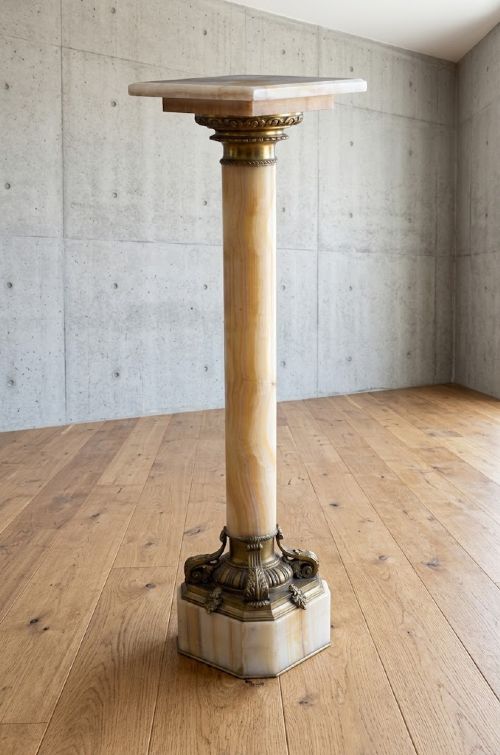
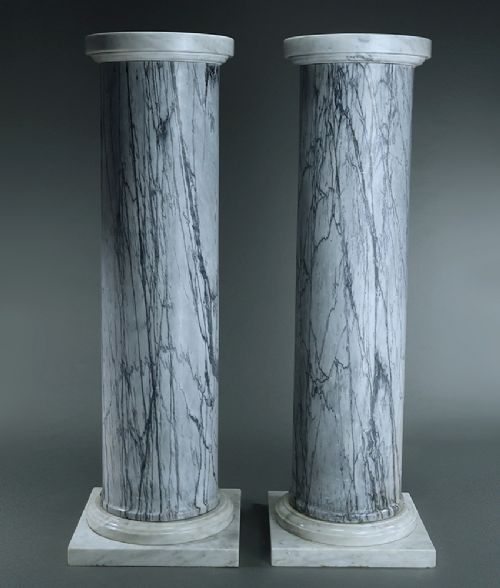
Makers fashioned these supports as pedestals and plinths, torchieres, and plant stands, often pairing them with marble tops or classical ornamentation. Buyers encounter forms ranging from slender wooden columns to robust stone cylinders designed to hold heavy garden statuary or portrait busts.
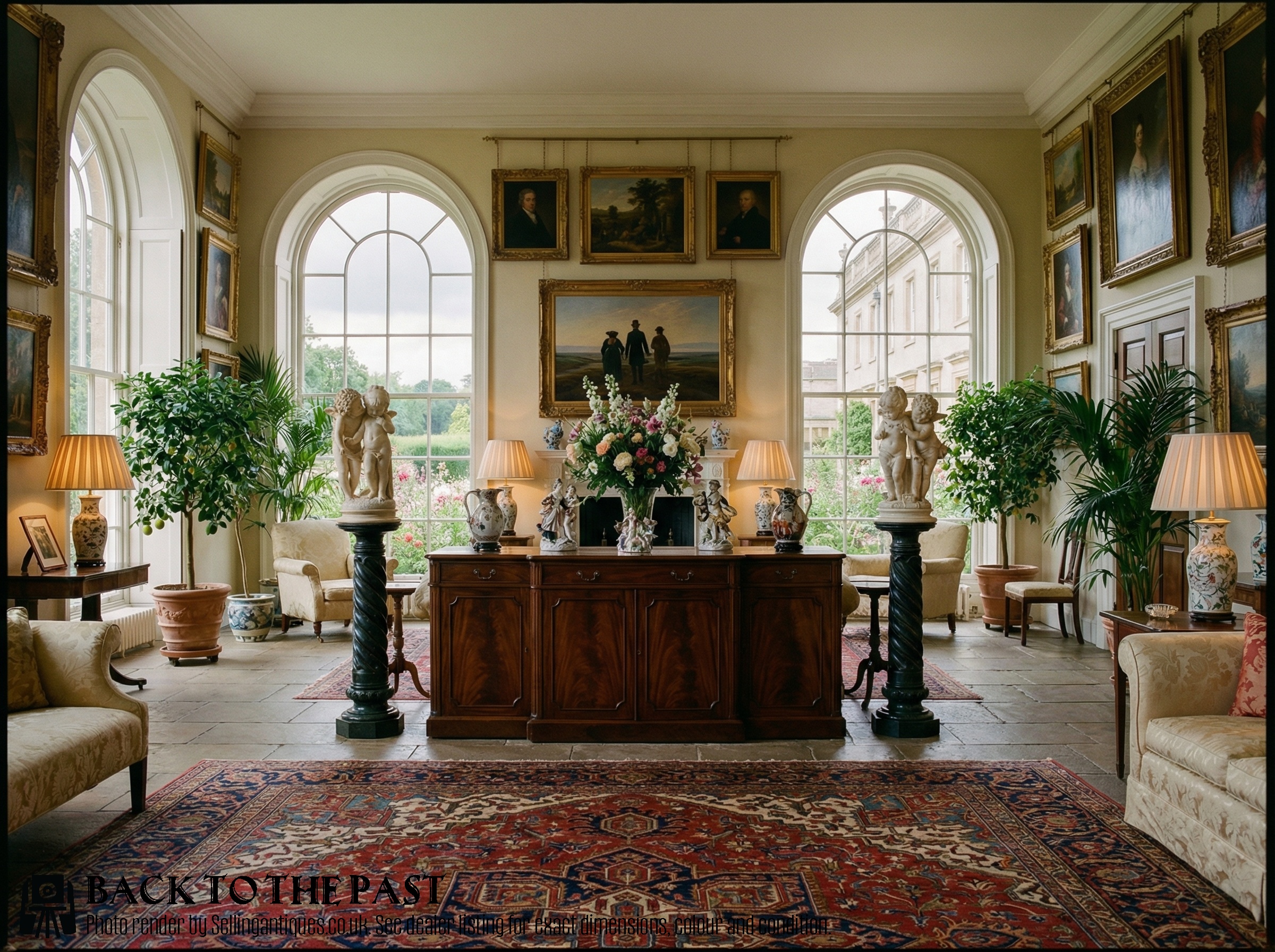
Originating in domestic interiors, country houses, and sculpture galleries, these stands serve to elevate artworks to eye level. The selection includes Neoclassical marble columns, carved oak and walnut structures, and painted plaster bases reflecting diverse revival styles.
Materials and Technique
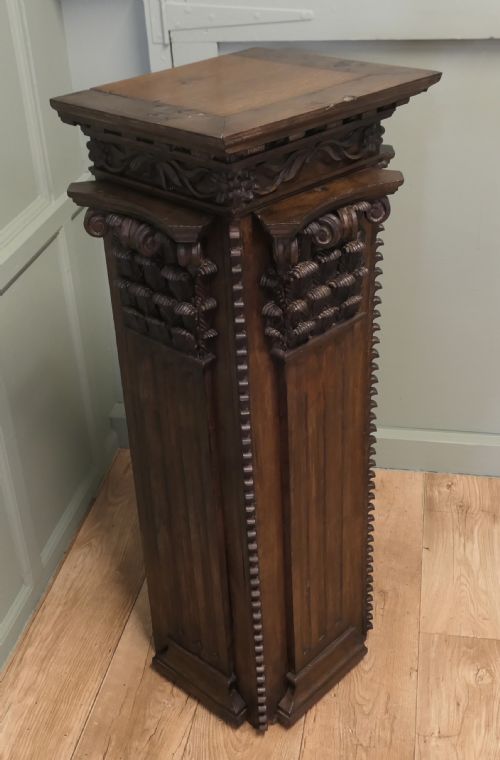
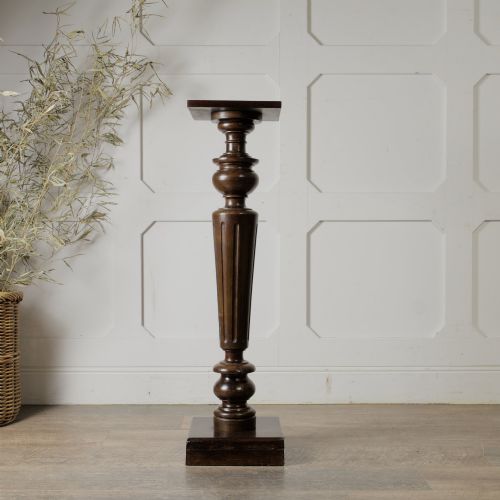
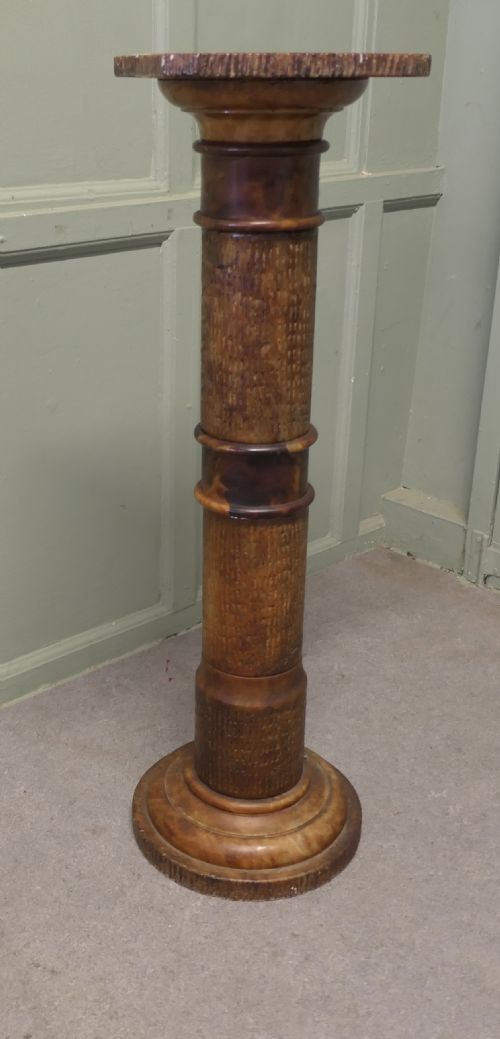
Cabinetmakers and masons utilised a variety of materials including mahogany, oak, walnut, satinwood, amboyna, and diverse marbles such as verde antico, bardiglio, and carrara. Wood surfaces were turned, carved, ebonised, or grain painted to imitate costlier stones, while stone and marble columns relied on precision cutting and polishing.
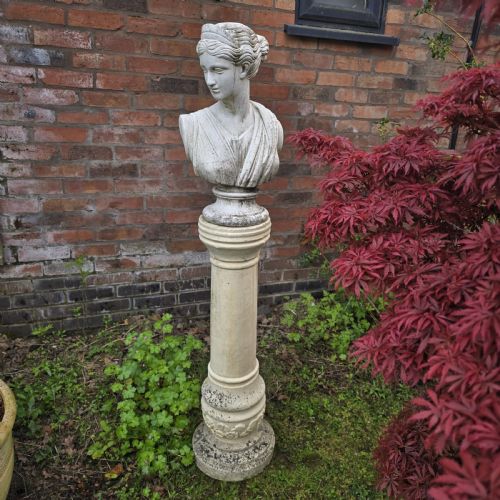
Metal mounts in ormolu frequently decorated nineteenth-century pieces, accentuating collars and capitals with cast bronze detailing. Plaster and reconstituted stone served for garden statuary and architectural plinths, enduring outdoor conditions while providing stable weight for heavy busts.
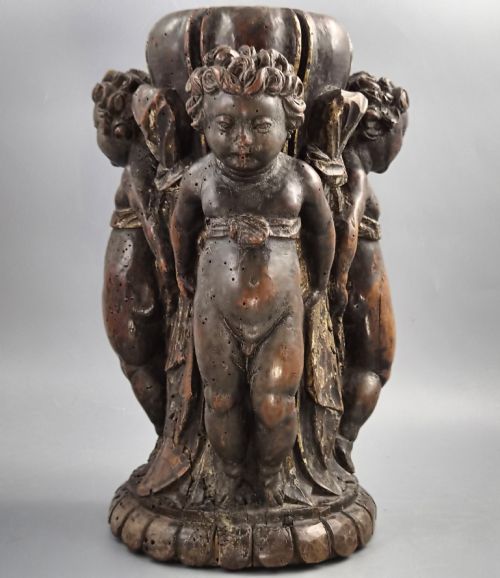
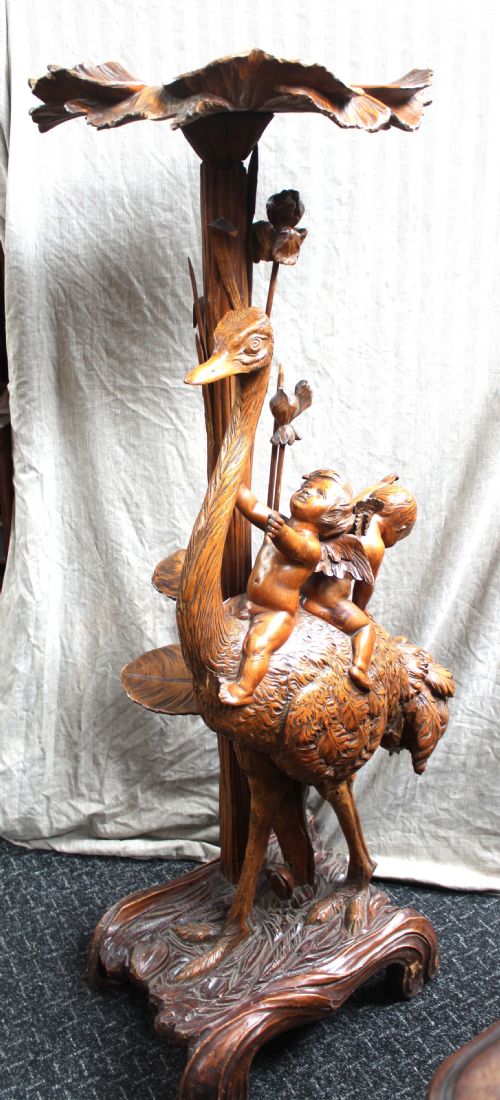
Three carved wooden putti hold up one walnut torchiere base.
Standards of Execution
The distinction between ordinary stands and exceptional pieces lies in the crispness of the carving, the selection of figured timbers like macassar ebony, and the richness of the marble veining. Finer examples display meticulous joinery and balanced proportions that support heavy weights without visual top-heaviness.
Workmanship shows in the finishing of hidden surfaces, the precision of turned columns, and the integrity of applied ormolu or carved putti. Pieces commissioned for exhibitions or grand houses demonstrate superior material choice and sculptural depth compared to utilitarian workshop productions.
Gillow & Co.
The Sculpture Pedestal Columns Glossary
- Torchiere
- A tall stand or pedestal originally intended to hold a torch or lamp. These pieces now support figures, vases, and busts in domestic interiors.
- Solomonic
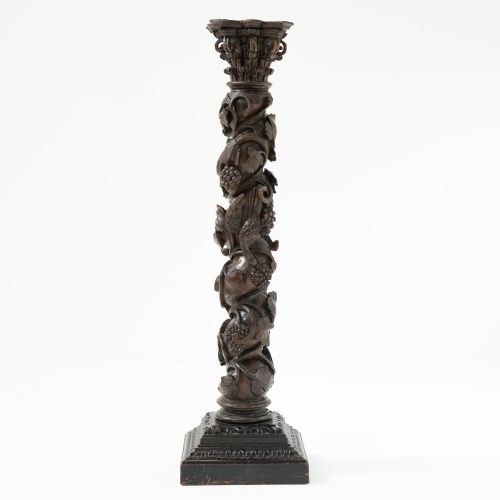
- A helical column shaft winding in a spiral twist. This form appeared in seventeenth and eighteenth-century furniture and architectural woodwork.
- Verde Antico
- A dark green serpentine breccia marble prized in classical and neoclassical design. Italian quarries supplied much of this decorative stone for nineteenth-century columns.
- Plinth
- A heavy flat base supporting a statue, column, or bust. Plinths provide essential stability for tall sculptural compositions.
- Ormolu
- Gilt bronze mounted onto furniture and decorative objects. Craftsmen used ormolu collars and mounts to enrich marble and wooden columns during the nineteenth century.
Sculpture Pedestal Columns: Frequently Asked Questions
What holds heavy marble busts securely?
Sturdy stone columns and solid wood pedestals with wide bases provide the necessary equilibrium for heavy marble sculpture.
Weight distribution matters greatly when placing dense portrait busts or cast metal figures at height.
How do I choose the right height?
Consider the viewing angle of the sculpture or bust intended for display and match it to the room proportions.
Tall torchiere stands suit corners, while lower plinths work better beneath large garden statues.
Can these columns support outdoor displays?
Reconstituted stone and weathered natural stone plinths endure external garden environments without sustaining moisture damage.
Wooden and veneered columns require indoor placement to preserve polish and prevent timber movement.
How do I identify nineteenth century marble?
Examine the specific veining patterns and coloration, noting varieties such as bardiglio, carrara, and verde antico.
Nineteenth century workshops frequently imported these decorative marbles from Italian quarries for columnar mounts.