


Carved Marble Plant Stand
A carved marble plant stand brings heavy stone and dense timber together to elevate your greenery.
Carved Marble Plant Stand
A carved marble plant stand serves to elevate pots, vases and urns above the floor using a combination of stone and timber. When you search for this phrase, you meet surfaces designed to support heavy botanicals while displaying intricate craftsmanship.
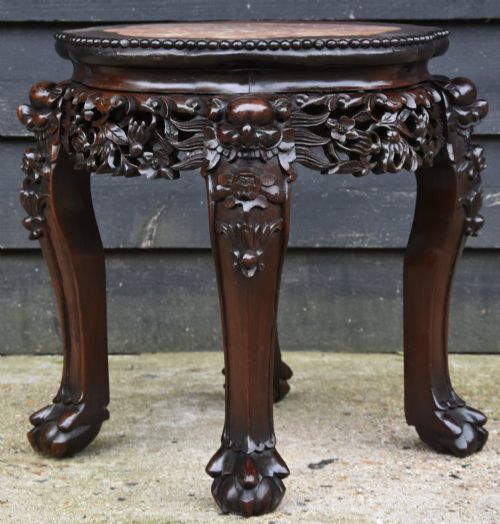
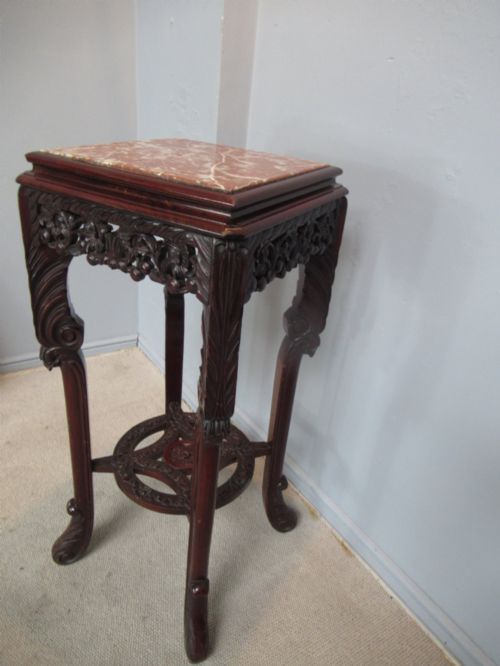
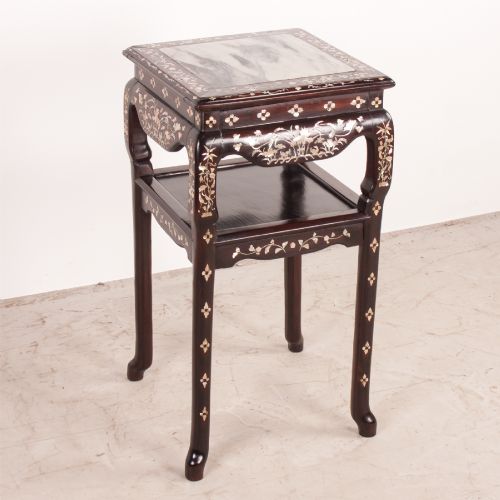
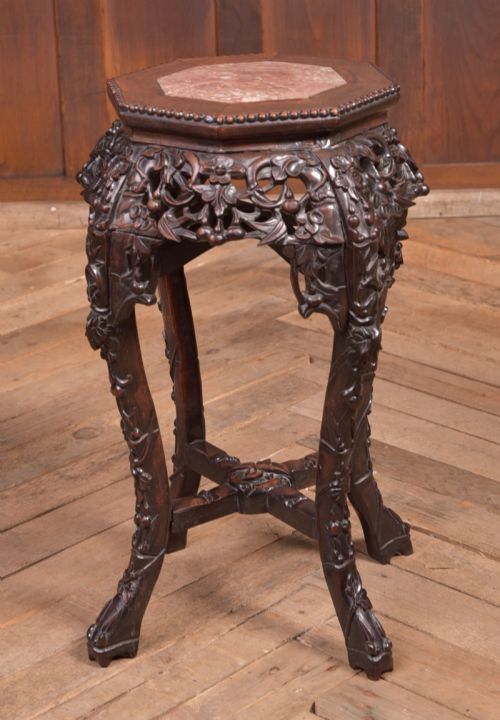
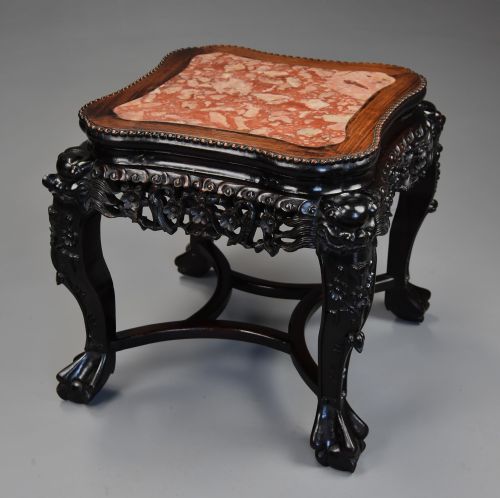
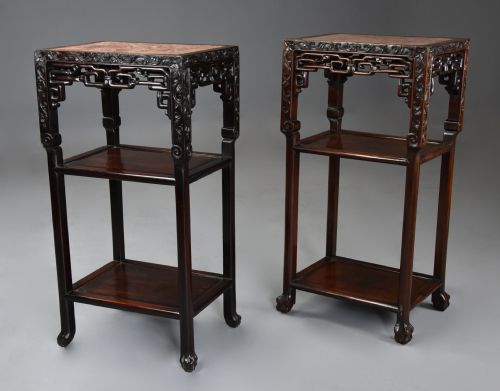
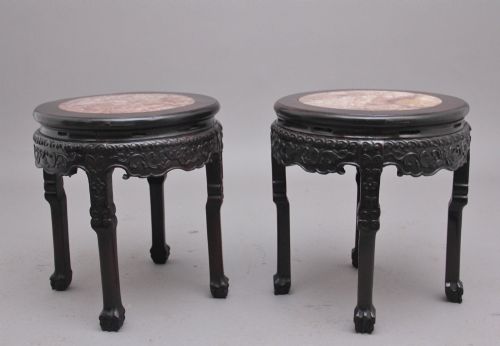
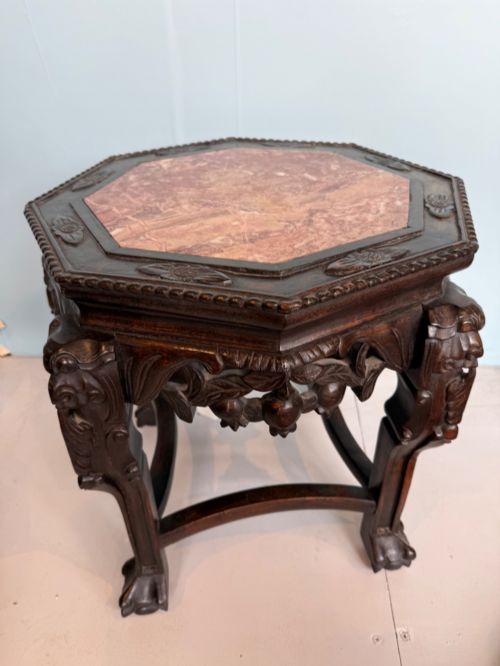
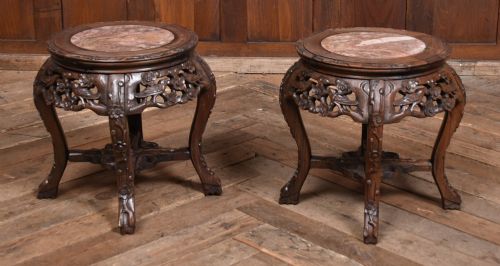
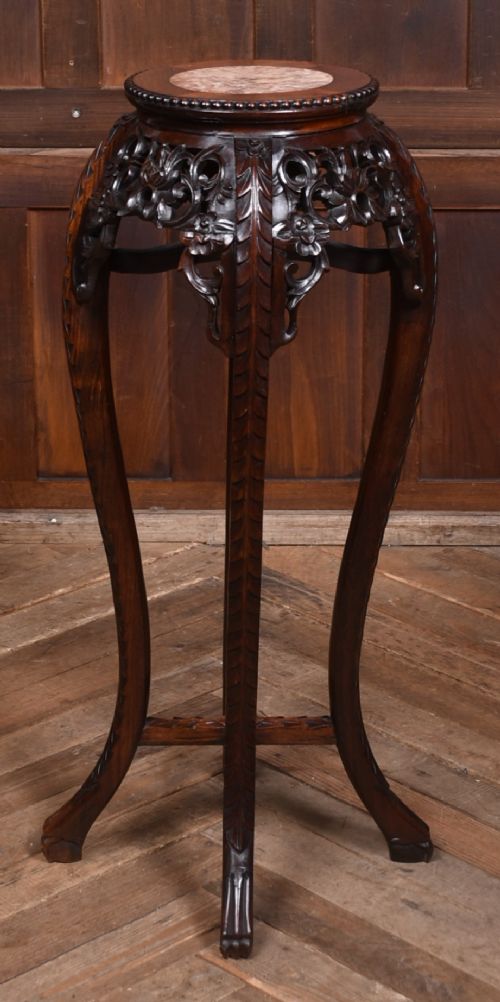
The most common examples on this page are nineteenth-century Chinese hardwood pieces featuring inset marble panels. These range from low pot stands to taller pedestals originating from the Qing Dynasty and Chinese Export traditions.
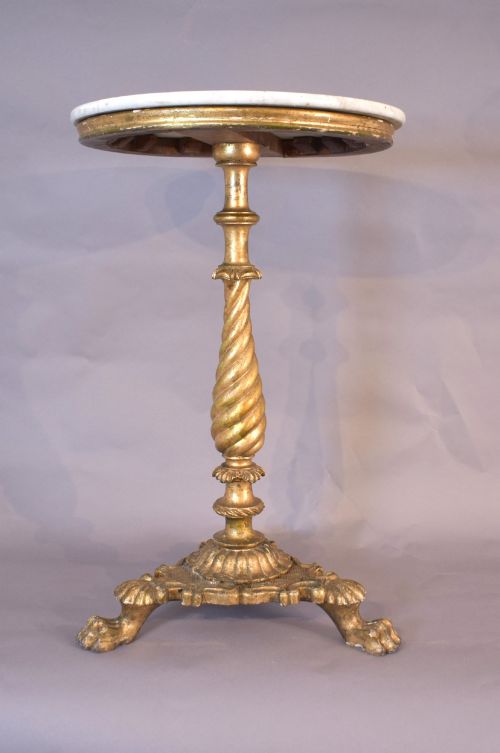
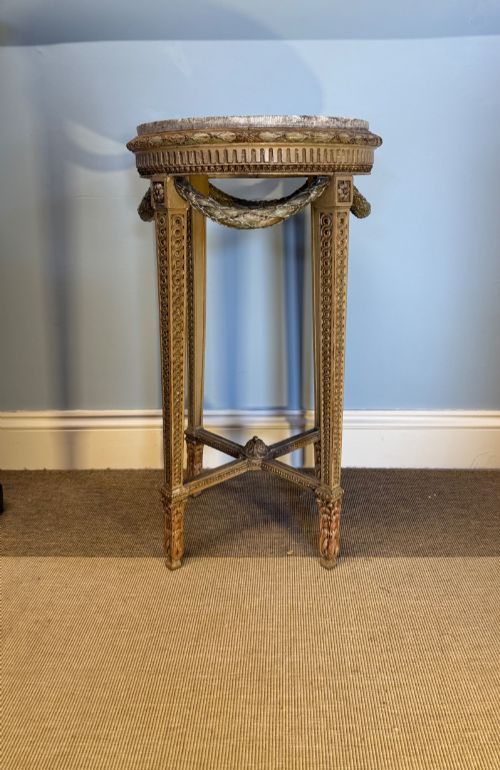
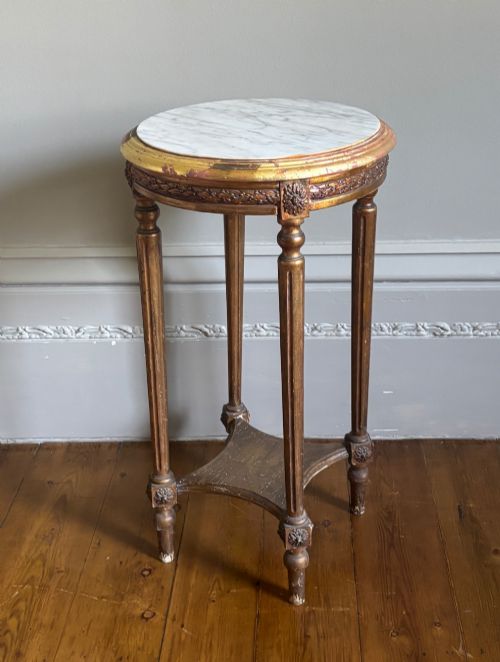
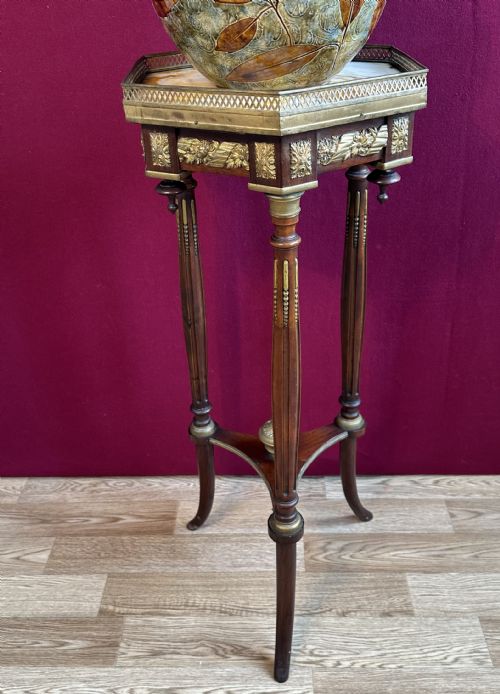
Alongside Asian pieces, the selection includes European furniture, notably French occasional tables, neoclassical columns and English tripod designs. These incorporate contrasting materials such as giltwood, brass and mahogany alongside their stone tops.
How They Were Made
Maker's workshops built these stands using dense imported timbers like rosewood, padouk and hongmu alongside European hardwoods such as oak, walnut and mahogany. Workers carved floral and geometric motifs into the wood by hand, creating deep relief and shaped aprons.
Marble inserts - ranging from white statuary stone to variegated rouge and arabescato varieties - were cut to fit precisely into recessed wooden frames. Giltwood and brass elements added metallic contrast, while mother-of-pearl inlay provided surface decoration on specific tables.
One unusual survivor incorporates a deep quartz top cradled inside twisted rootwood branches from the late nineteenth century.
What Varies in Quality
The depth and crispness of the wood carving separate basic production from exceptional examples. Skilled carvers produced undercut foliage and fluid joints that remained tight after decades of humidity changes.
The quality of the marble insert matters significantly, with fine pieces showing natural, uninterrupted mineral veining and a smooth, level polish. Heavier, denser hardwoods command attention for their structural integrity and weight.
The Carved Marble Plant Stand Glossary
- Jardiniere stand
- A decorative low table or pedestal specifically designed to hold a ceramic flower pot or plant container. These often feature inset waterproof tops.
- Hongmu
- A traditional Chinese term denoting dense, dark hardwoods used for fine furniture and decorative stands. It translates directly to red wood.
- Neoclassical
- A style drawing on classical antiquity, visible in columns, statuary marble and restrained decorative motifs. It spans late eighteenth and nineteenth-century European production.
- Triform
- A three-sided base or pedestal design providing stability for tall columns and occasional tables. This configuration appears frequently in nineteenth-century tripod pieces.
- Verde Antico
- A dark green serpentine marble often used in classical columns and tabletops. Its appearance mimics ancient Roman decorative stone.
Carved Marble Plant Stand: Frequently Asked Questions
What were carved marble plant stands used for originally?
These pieces held heavy ceramic pots containing large indoor plants, ferns or floral arrangements in nineteenth-century drawing rooms and parlours. Raising the plants protected timber floors from water damage and displayed the greenery at eye level.
They also functioned as display surfaces for decorative vases, bronzes and lamps when not supporting foliage. Their sturdy construction allowed them to carry considerable weight without tipping.
How do I care for the marble top?
Clean the stone surface using a damp cloth and mild, pH-neutral soap to avoid etching the polish. Acidic liquids like plant fertilisers or vinegar should be wiped away immediately.
Apply a specialist marble wax occasionally to protect the finish from moisture rings and stains. Avoid placing unglazed ceramic pots directly onto the stone to prevent scratching.
Are Chinese and European stands constructed differently?
Chinese hardwood stands often utilise complex interlocking joinery without metal fasteners, featuring inset marble panels dropped into shaped frames. The carving typically includes traditional motifs like prunus blossom or dragons.
European examples frequently employ turned columns, giltwood frames or brass mounts reflecting neoclassical or Victorian tastes. Their construction relies more heavily on traditional cabinet-making pins, screws and glue blocks.
Can these stands support modern heavy planters?
Most antique stands were built to carry heavy ceramic and bronze vessels, making them structurally capable of supporting substantial modern pots. The dense hardwoods used in their construction provide robust load-bearing strength.
Check the stability of the joints and the integrity of the marble before placing exceptionally heavy items on top. Distributing weight evenly prevents undue stress on the wooden aprons and legs.