



French Ormolu Garniture Set
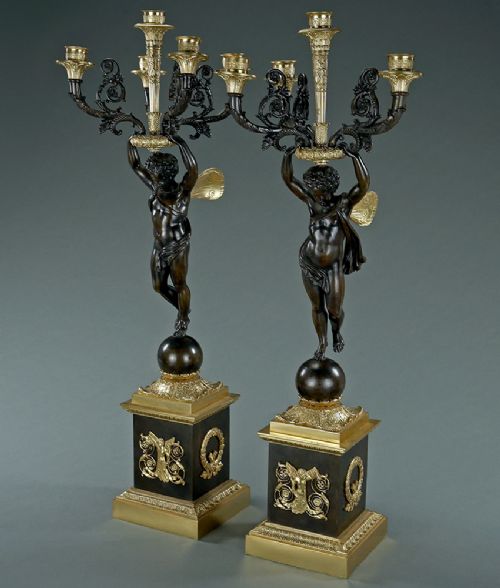
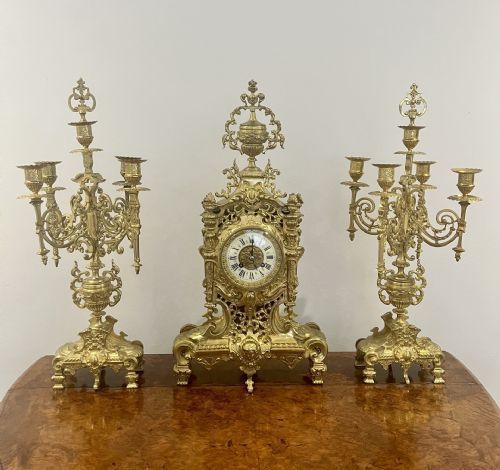
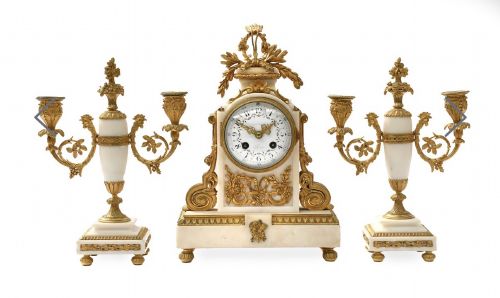
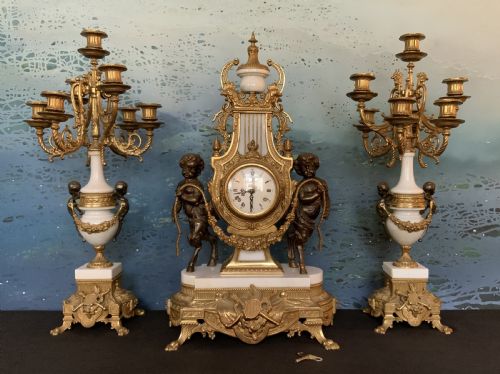
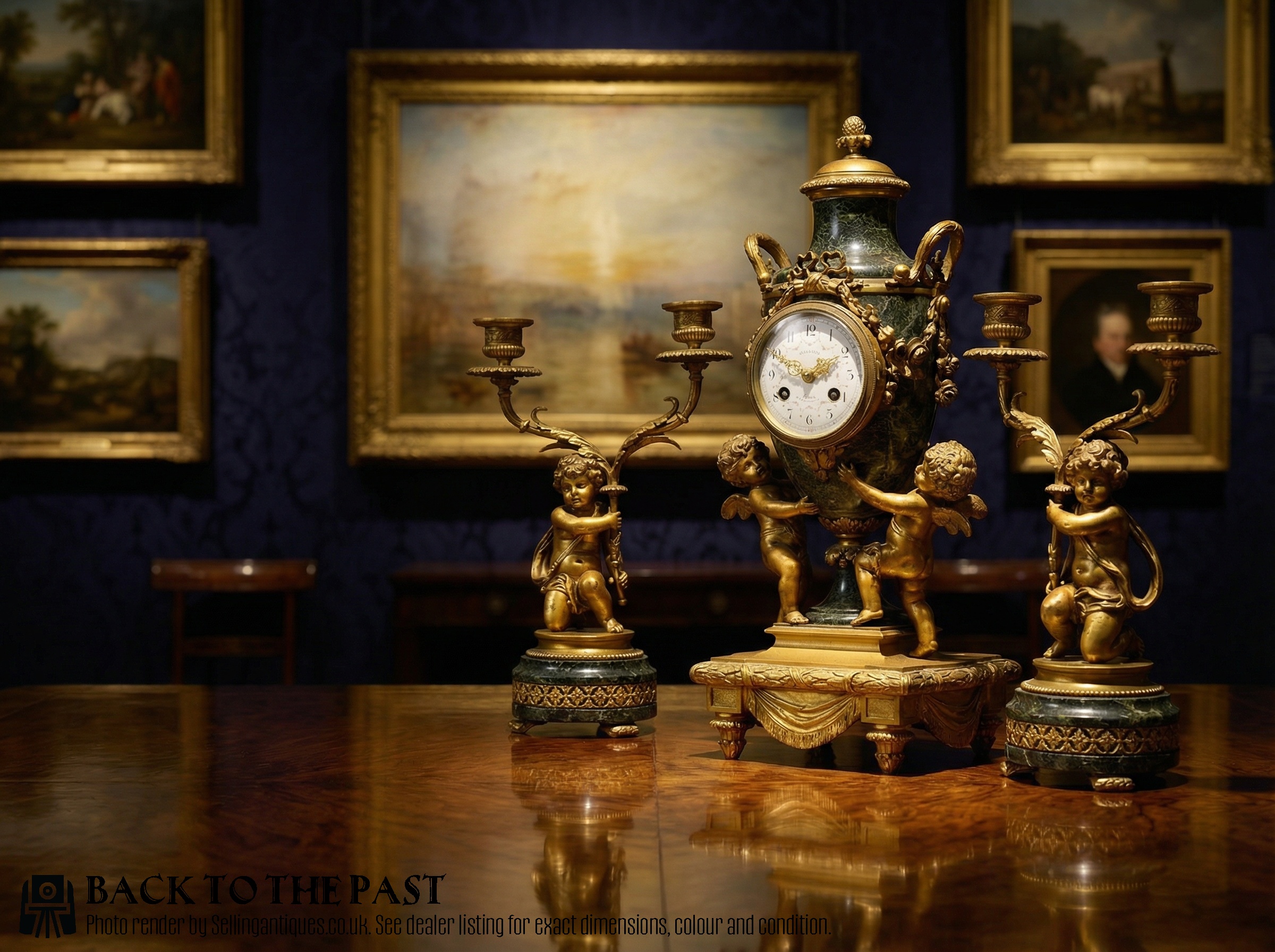
A french ormolu garniture set brings heavy nineteenth-century display presence to a mantelpiece through coordinated metalwork and matching side pieces.
French Ormolu Garniture Set
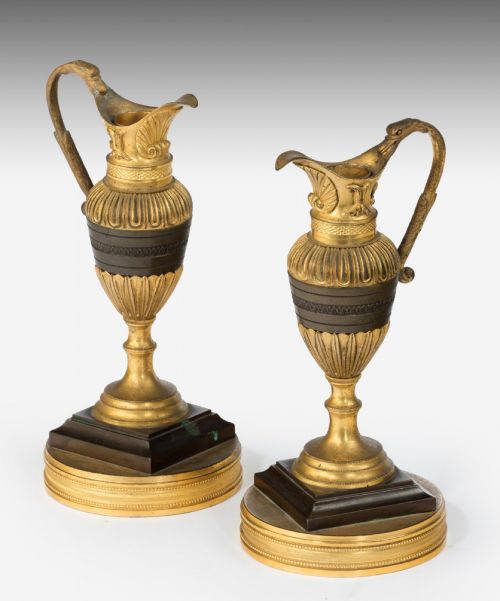
A french ormolu garniture set typically consists of a central mantel clock accompanied by matching side pieces such as candelabra, urns, or ewers designed to sit together as a unified decorative scheme. These multi-piece ensembles appear frequently in nineteenth-century styles, drawing heavily on Louis XVI revival, Rococo, and Empire aesthetics.
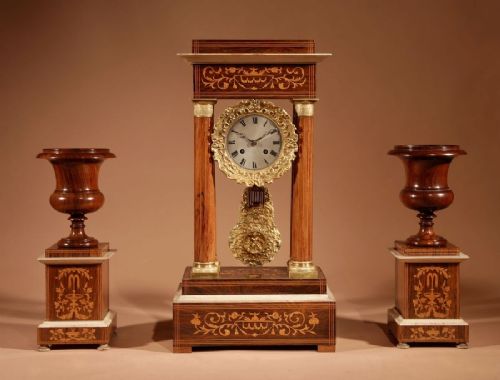
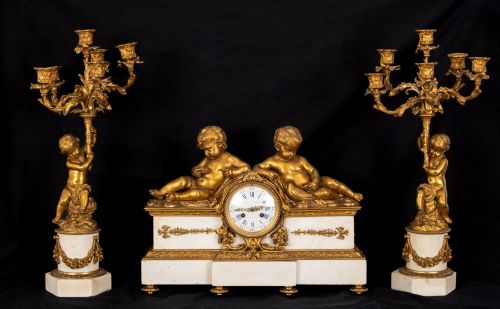
The objects take various physical forms, ranging from portico clocks and porcelain lyre clocks paired with cherub-decorated candleholders to large marble and gilt-bronze arrangements housed under glass domes. They serve primarily as formal interior ornaments that reflect the ornate tastes of the Victorian and Second Empire periods.
How They Were Made
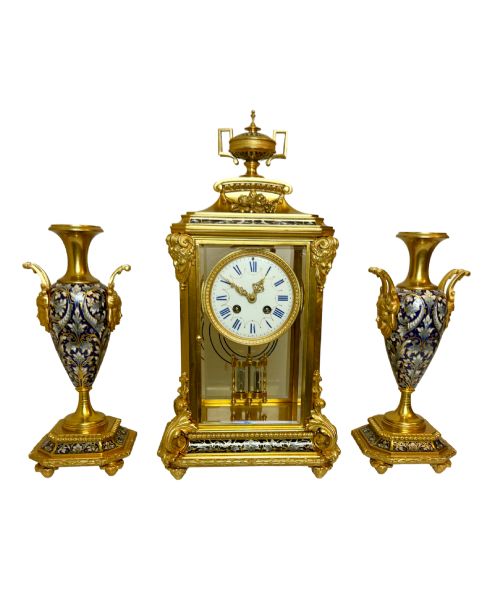
Maker workshops constructed these sets using cast bronze or brass that received a layer of gold amalgam through mercury gilding to produce the characteristic ormolu finish, alongside structural elements carved from white marble, onyx, or toleware. Artisans integrated painted porcelain plaques, glass components, and champleve enamel panels to add colour and texture to the metallic surfaces.
Movements within the central clocks relied on eight-day striking mechanisms produced by specialist clockmakers, while the matching candelabra and side pieces required precise metal-chasing and assembly by hand to match the central timepiece.
The listings show nineteenth-century French garniture sets combining gilt bronze, white marble, onyx, and hand-painted porcelain.
What Varies in Quality
The crispness and depth of the metal chasing define the upper tier of these pieces, where master workshops achieved sharp relief in foliage, cherubs, and classical motifs rather than soft, rounded casting edges. Better examples utilise substantial mounts of heavy gilt bronze combined with genuine marbles or fine Sevres-style porcelain rather than lighter brass and lesser composite materials.
The coherence of the set dictates desirability, with original matched groupings displaying uniform patination, identical gilding wear, and consistent stylistic detailing across both the clock and its flanking companions.
Henry Dasson·A.D Mougin·H Luppens Paris·Vincenti of Paris
The French Ormolu Garniture Set Glossary
- Ormolu
- Gilt bronze produced by applying a mixture of mercury and gold to a cast metal base, then heating it to drive off the mercury. This technique creates a durable, golden surface finish characteristic of antique French decorative objects.
- Champleve
- An enamelling technique where troughs or cells are hollowed out of the metal surface and filled with vitreous enamel powder before firing. The resulting design shows coloured enamel flush with the surrounding metal partitions.
- Portico clock
- A mantel clock featuring an architectural case supported by four or more columns resembling a classical temple facade. These structures often incorporate heavy marble bases and central pendulum movements.
French Ormolu Garniture Set: Frequently Asked Questions
How do you style a garniture set?
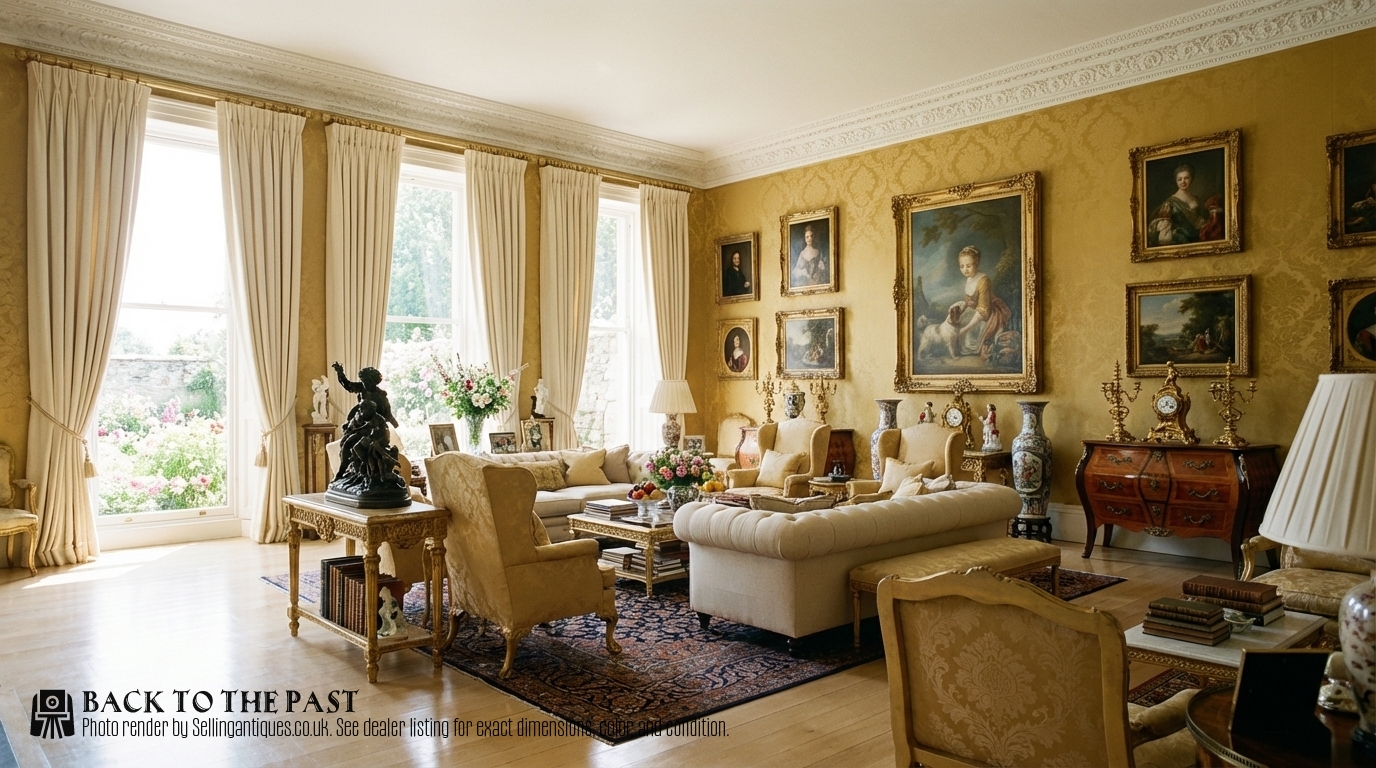
Garniture sets are traditionally placed along the length of a mantelpiece, with the central clock taking the primary position and the matching side pieces arranged symmetrically on either side. They also sit effectively on large sideboards or console tables.
Because these sets are visually heavy and ornate, they function best against simple background walls that allow the gilt bronze and marble details to stand out.
How do you wind the clock?
Most nineteenth-century French clocks within these sets use an eight-day mechanical movement driven by wound springs, accessed through small winding holes on the dial face. A dedicated key turns the arbors to tension the springs.
Care must be taken not to overwind the mechanism, and many collectors prefer professional setup to ensure the pendulum remains in beat for accurate timekeeping.
How do you identify Louis XVI revival style?
Louis XVI revival pieces draw on neoclassical design principles, featuring straight structural lines, symmetrical proportions, and motifs such as urns, ribbons, swags, and fluted columns. This contrasts with the more asymmetrical and fluid curves of earlier Rococo styling.
The materials often include white marble paired with restrained ormolu mounts rather than dense, swirling ornamentation.