
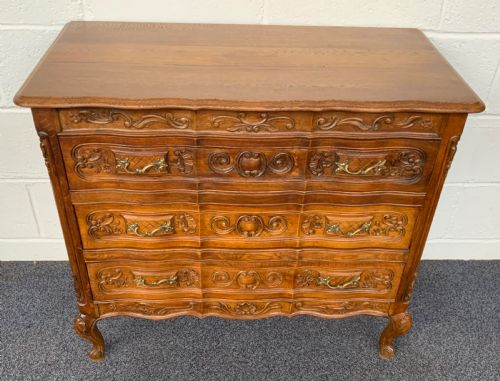


French Oak Chest
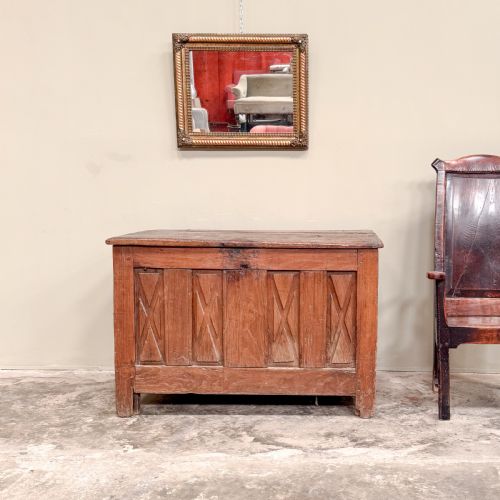
When searching for a french oak chest, collectors encounter robust coffers, commodes, and storage pieces built to endure generations of domestic use.
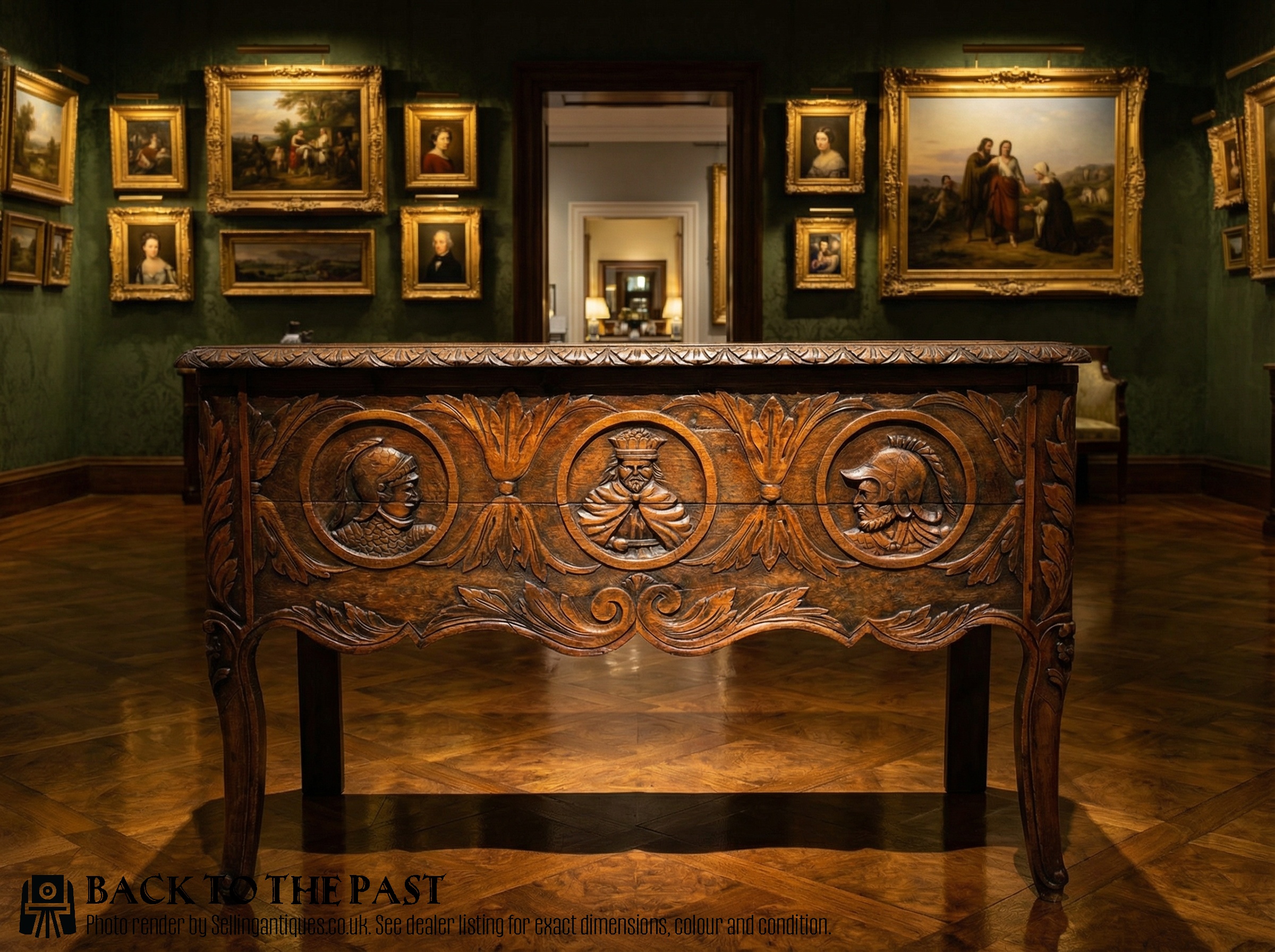
French Oak Chest
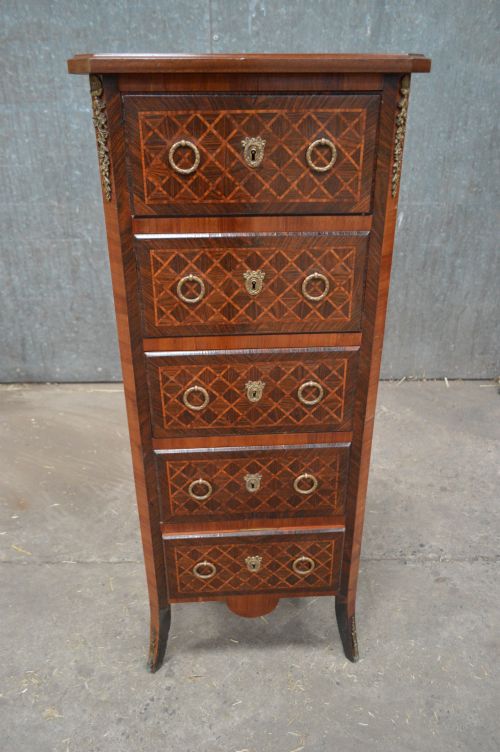
A french oak chest encompasses a broad category of storage furniture, ranging from early planked coffers to refined later commodes and drawer chests. The selections here span centuries of provincial and urban design, reflecting shifting domestic needs across France.
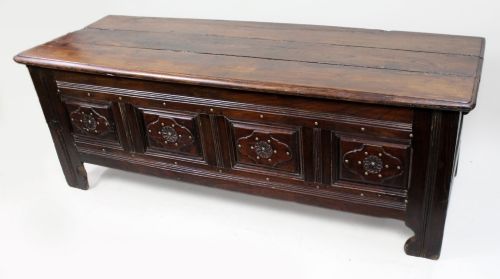
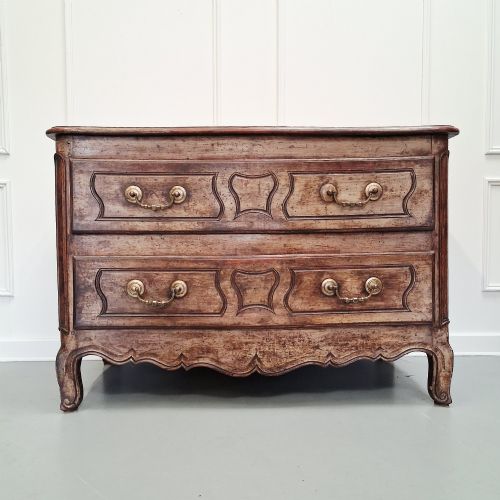
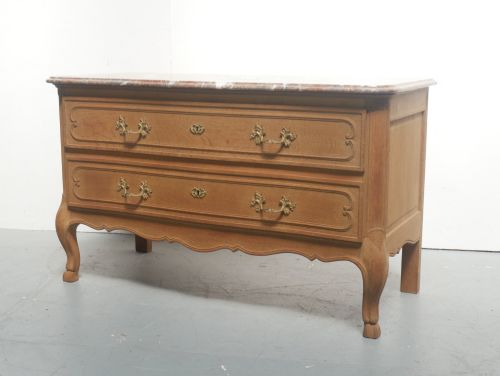
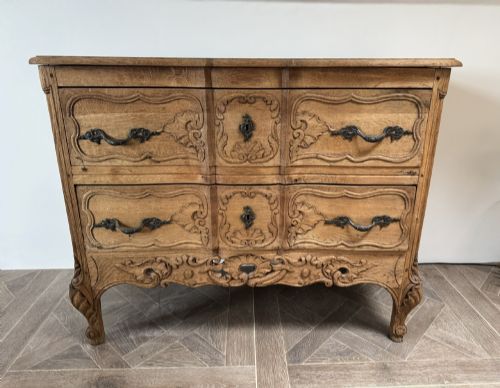
Buyers most frequently encounter provincial drawer chests and commodes alongside earlier hinged coffers. These pieces often display regional characteristics, from the heavy framing of seventeenth-century panels to the softer, curving lines of eighteenth-century serpentine fronts.
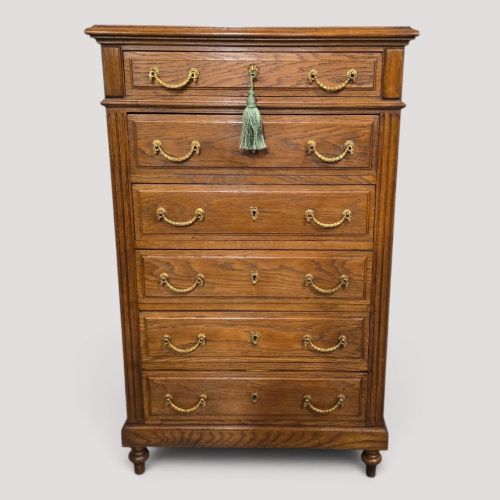
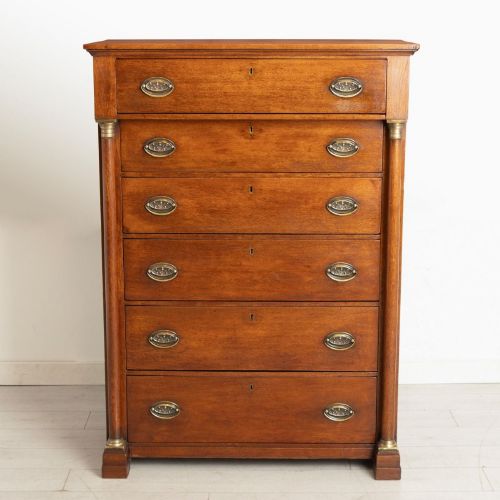
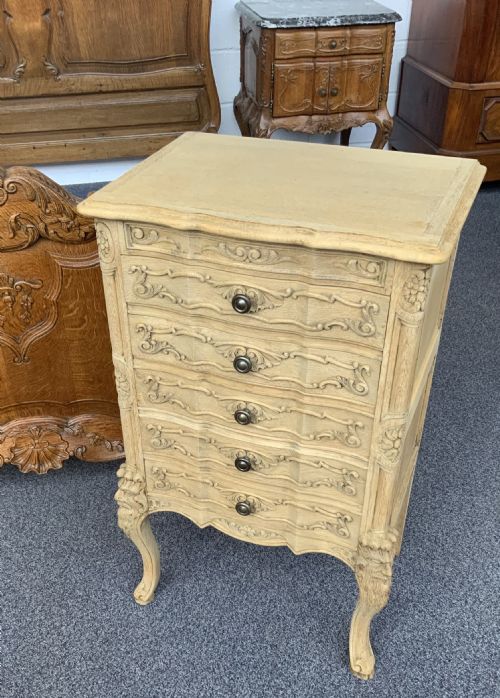
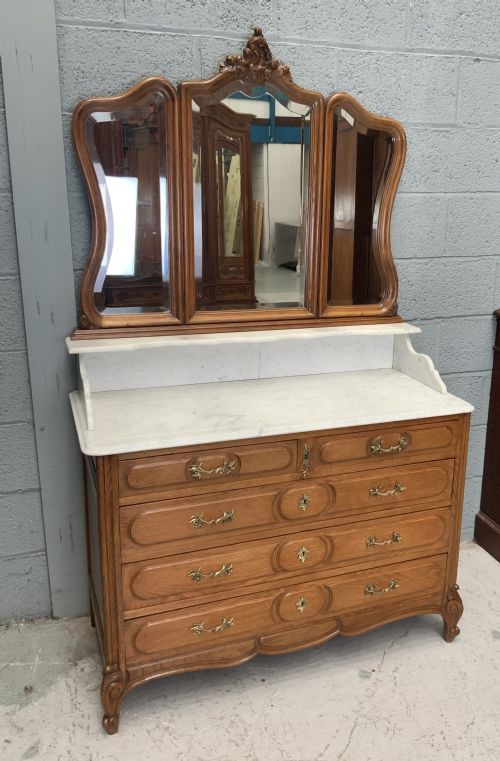
Beyond traditional chests of drawers, the category includes specialised forms such as marble-topped washstands, bedside cabinets, and tall storage units. Oak remains the consistent structural constant, frequently paired with chestnut, metal fittings, or painted surface treatments.
How they were made
Cabinetmakers relied primarily on solid oak, utilising frame-and-panel construction to accommodate the natural expansion and contraction of the timber. Dovetail joints secured drawer corners, while hand-carved ornamentation adorned drawer fronts, rails, and structural stiles.
Secondary materials such as chestnut appear in internal framing and drawer linings, while brass handles, keyplates, and iron hinges provide functional articulation. Later examples occasionally incorporate marble slabs fitted to the top surface as durable working counters.
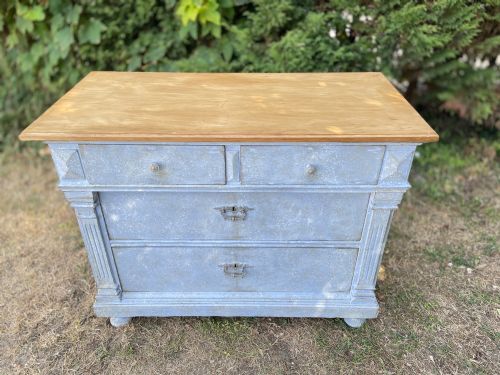
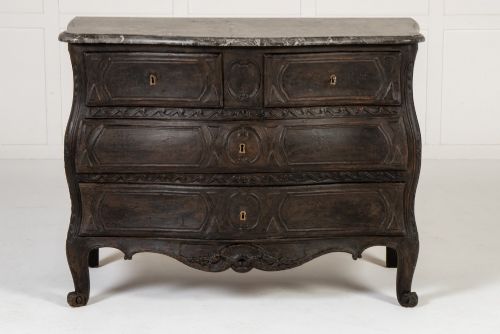
Surface finishes vary widely across the inventory, encompassing scrubbed timber, traditional paint, ebonized treatments, and intentional bleaching. These treatments reflect both original regional preferences and subsequent decorative interventions.
One stubborn nineteenth-century cabinet arrived directly from a repurposed Brittany enclosed bed front.
What varies in quality
The standard of execution separates everyday utility pieces from finer salon furniture, particularly in the precision of the joinery and the depth of the carving. Crisp execution of mouldings and balanced proportions distinguish superior regional examples.
The integrity of the timber and the preservation of original hardware heavily influence overall desirability. Pieces retaining their period handles, locks, and uncompromised structural wood command greater attention from discerning collectors.
Tahan of Paris
The French Oak Chest Glossary
- Commode
- A low chest of drawers or cabinet developed in France during the seventeenth century. These pieces typically feature multiple drawer tiers and elaborate front profiles.
- Coffer
- A heavy wooden storage chest with a hinged lid, often predating standard drawer chests. Early examples utilise pegged frame construction for maximum durability.
- Serpentine
- A furniture front characterised by a undulating line with a convex centre flanked by concave curves. This contour requires skilled carpentry to shape from solid timber.
- Parquetry
- A geometric mosaic of wood pieces used for decorative veneer on furniture surfaces. It appears on selected case pieces to create patterned visual interest.
- Bombe
- A swollen or bulging commode profile where the sides and front curve outward. This dramatic silhouette gained prominence during the eighteenth century.
French Oak Chest: Frequently Asked Questions
How do I date an old oak chest?
Dating relies on examining construction methods, tool marks, and overall stylistic proportions. Early pieces utilise pegged joints and hand-riven boards, whereas later nineteenth-century examples display machine-sawn elements and standardised fixings.
Hardware styles, timber patination, and regional design traits also provide reliable chronological markers for distinguishing seventeenth-century coffers from later provincial commodes.
Where were these chests used originally?
These storage pieces served utilitarian functions throughout the home, from bedrooms and hallways to kitchens and formal reception rooms. Deep coffers held linens and valuables, while commodes provided bedside or chamber storage.
Regional workshops tailored forms to local domestic habits, producing specialised furniture designed for daily household organisation and display.
How should I maintain a bleached oak surface?
Bleached or scrubbed timber requires minimal intervention, benefiting primarily from dry dusting with a soft cloth. Avoid applying modern silicone polishes, which can penetrate porous grain and alter the matte appearance.
Feeding the dry wood occasionally with a suitable microcrystalline wax helps protect the surface from moisture while preserving the natural texture of the oak.