




19th Century Oak Coffer
A 19th century oak coffer provides enduring storage with solid timber construction and traditional panelled designs.
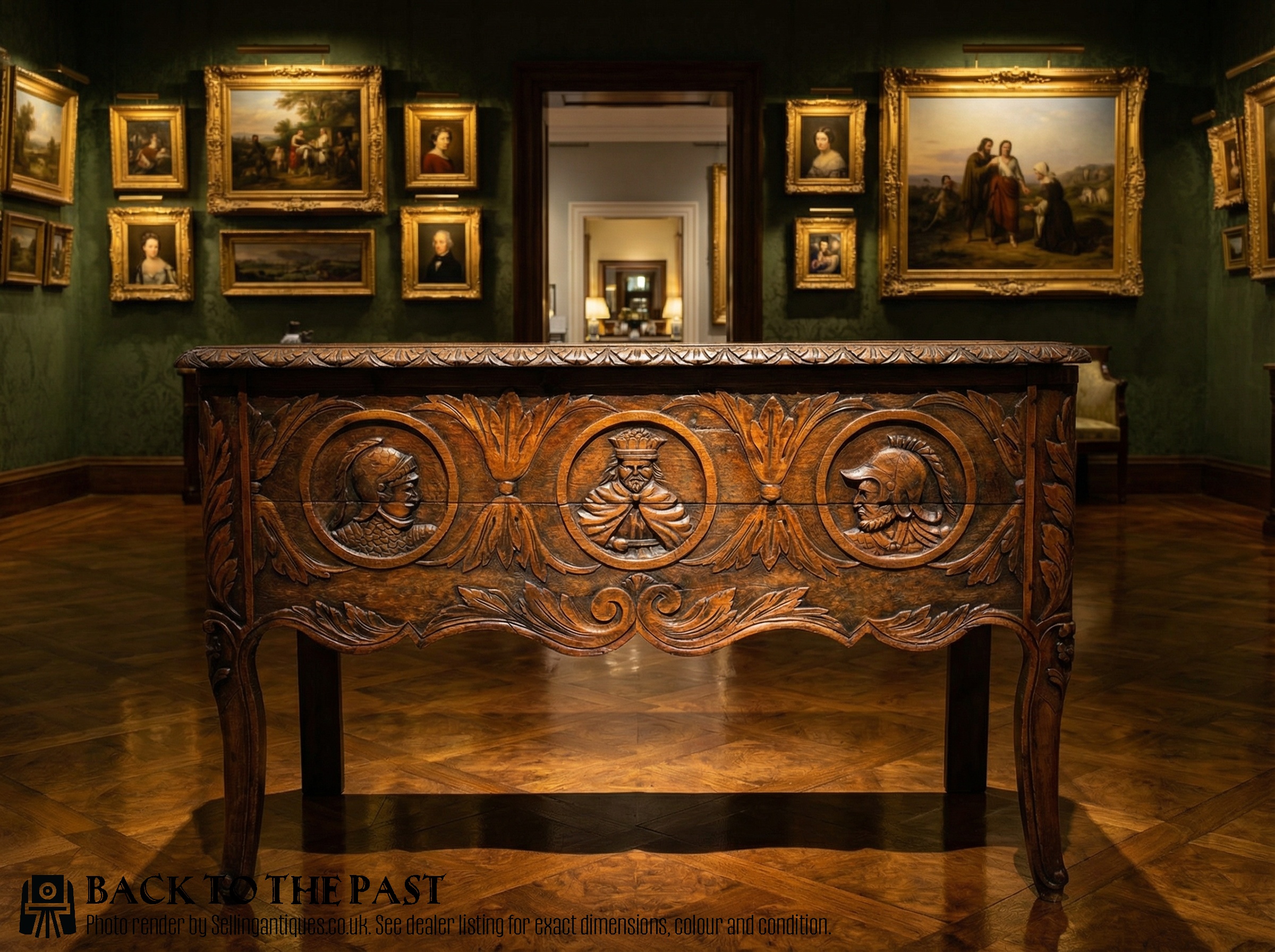
19th Century Oak Coffer
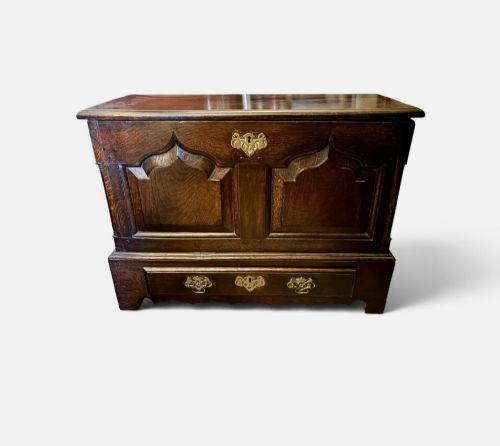
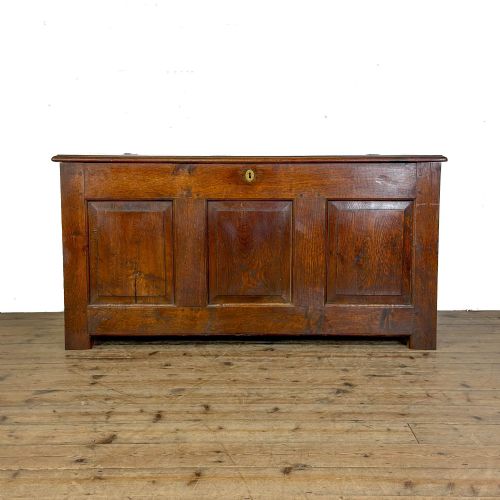
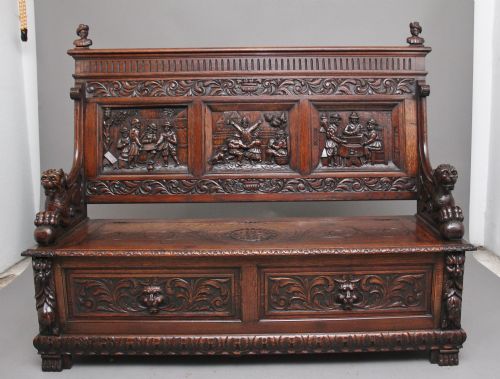
A 19th century oak coffer serves as a sturdy timber storage chest, blanket box, or occasional bench found across English, Welsh, and continental traditions. These pieces range from plain panelled construction to heavily carved revival styles incorporating Jacobean and Gothic motifs.
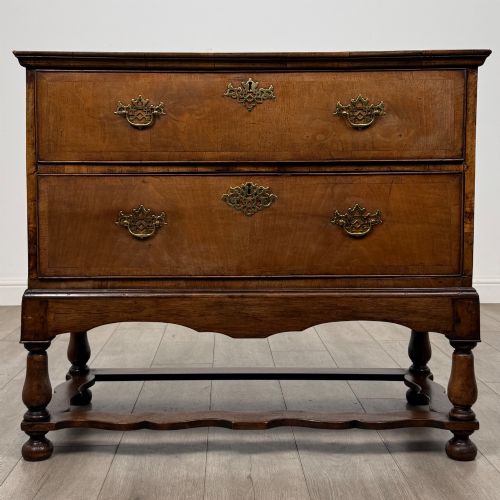
Buyers frequently encounter variants such as the small coffer bach, mule chests with lower drawers, and heavily iron-banded silver trunks. The selection spans straightforward domestic blanket boxes alongside architectural forms with dome tops and carved dragon details.
Origins stretch across regional workshops, with Welsh coffer bach examples and Swedish hand-painted pieces appearing alongside standard English country furniture. This diversity reflects both utilitarian travel requirements and decorative domestic storage needs.
How they were made
Cabinet makers utilised solid oak timbers, often combining panelled construction with joined framing to prevent warping in large storage boxes. Secondary woods like elm occasionally appear in base boards or internal partitions.
Metalwork played a structural role in transportation pieces, utilising brass mounts, cast iron banding, and wrought iron straps to reinforce heavy trunks. Hand-painted finishes also appear on specific regional pieces alongside traditional beeswax polish on bare timber.
Materials span solid oak, elm, brass mountings, wrought iron bands, and decorative fabric linings within travelling silver chests.
What varies in quality
Timber selection and grain figure dictate the visual presence of a piece, distinguishing plain utility boxes from richly figured golden oak boards. The crispness and depth of hand-carving separate standard regional production from more ambitious revival work.
Structural integrity depends on the retention of original brass or iron hardware, hinges, and interior tills. Altered stands, replaced panels, and heavily restored surfaces influence the overall integrity of surviving examples.
Elkington
The 19th Century Oak Coffer Glossary
- Coffer bach
- A small Welsh tabletop or miniature chest traditionally used for storing valuables or documents. These diminutive boxes mirror the construction of full-sized storage chests.
- Mule chest
- A storage chest featuring one or more drawers built into the base beneath the main lift-up compartment. This form bridges the evolution between traditional coffers and modern chests of drawers.
- Silver chest
- A heavy-duty travel trunk lined for flatware and plate, fitted with iron or brass banding and robust carrying handles. They were built to secure valuable household silver during transit.
- Panelled construction
- A method of framing where thin central boards float within grooved stiles and rails to accommodate wood movement. This technique prevents splitting as atmospheric humidity changes.
- Dome top
- A rounded lid profile designed to shed water during travel and increase internal capacity. These curved lids appear frequently on stronger storage trunks and continental pieces.
19th Century Oak Coffer: Frequently Asked Questions
What was a coffer used for?
Historically, these sturdy chests stored domestic textiles, blankets, and personal valuables securely within the home. Their robust flat lids also allowed them to function as makeshift benches or tables in period interiors.
Over time, specialised variations emerged for transporting silverware, documents, and clothing during travel. Their heavy timber build ensured contents remained protected from dampness and theft.
How do I tell an 18th century coffer from a 19th century one?
Nineteenth-century examples often incorporate revival styles such as Gothic, Jacobean, or Baroque motifs executed with machine-assisted or distinctively 19th-century hand-carving techniques. Timber preparation and secondary woods used internally also offer clues regarding the true date of manufacture.
Many pieces from this era deliberately emulate earlier 17th or 18th-century aesthetics while retaining Victorian construction signatures. Examining hinge types, internal nails, and timber shrinkage helps clarify the exact period.
How do I care for an antique oak chest?
Keep wooden storage pieces away from direct heat sources and dramatic humidity swings to prevent the oak boards from splitting. Regular application of traditional beeswax helps maintain the lustre of the timber.
Avoid harsh chemical cleaners on original painted surfaces or patinated metal hardware. Gentle dusting with a dry cloth preserves the historical finish and accumulated character.