


French Neoclassical Urns
French neoclassical urns bring classical restraint and gilt-mounted gravity into a room, drawing on centuries of architectural design.
French Neoclassical Urns
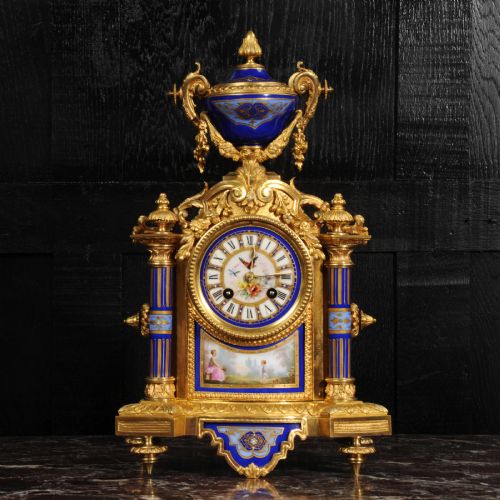
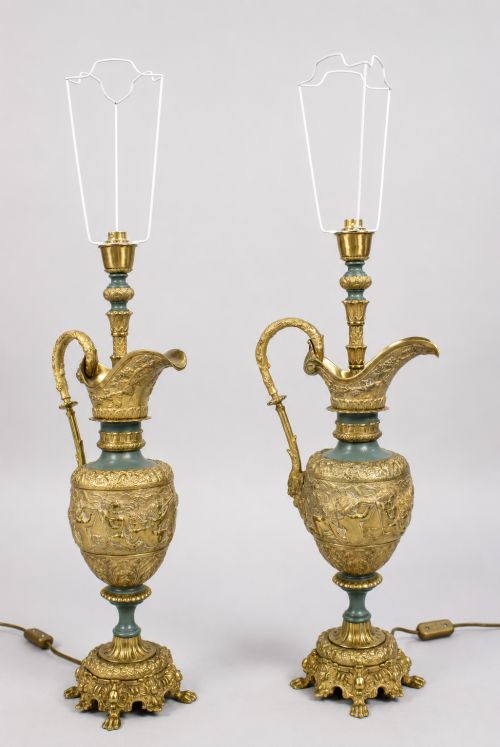
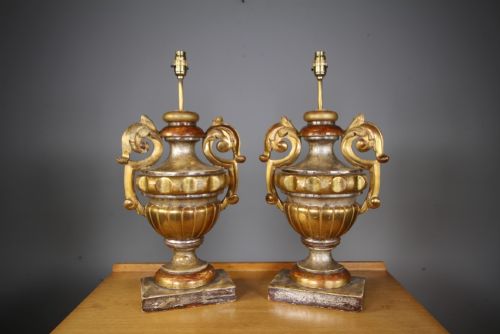
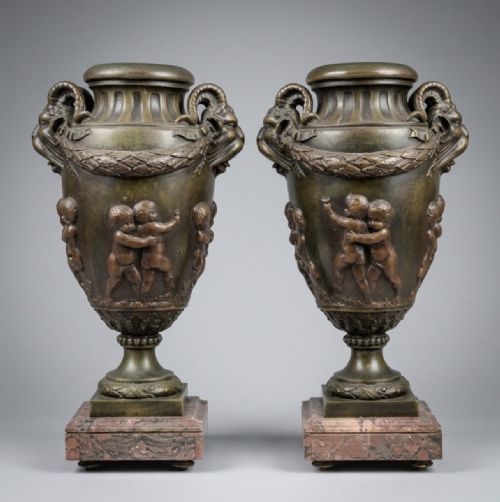
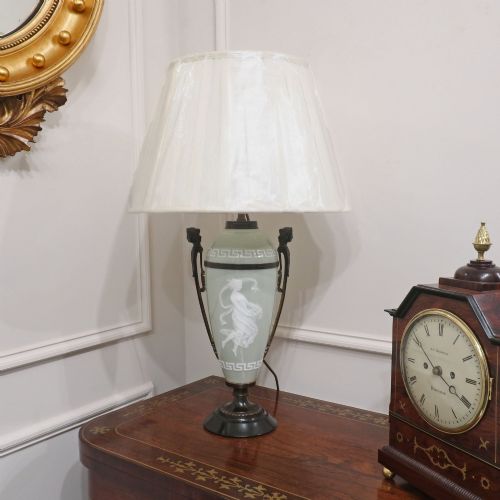
French neoclassical urns take the form of decorative vessels, mantel ornaments, and converted lamps rooted in the aesthetic vocabulary of the eighteenth century. You encounter these pieces most frequently in nineteenth-century interpretations reflecting Louis XVI, Empire, and Grand Tour revivals.
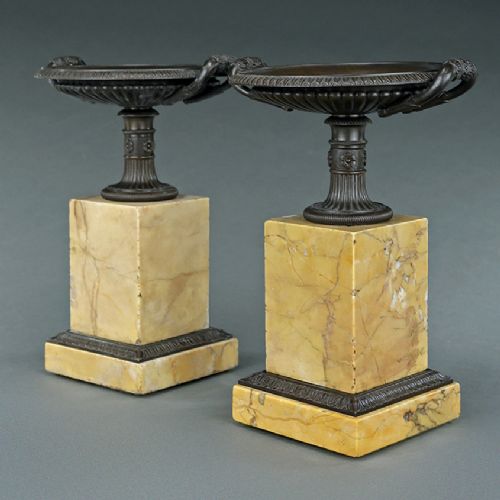
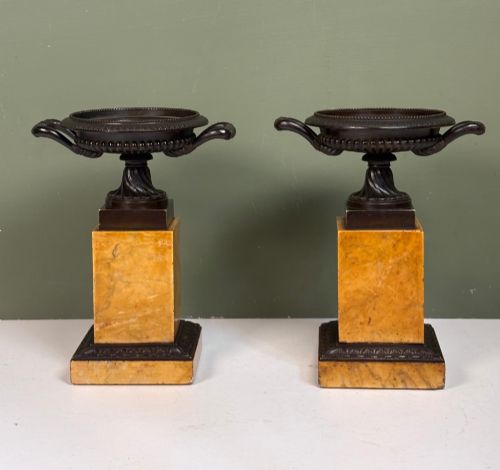
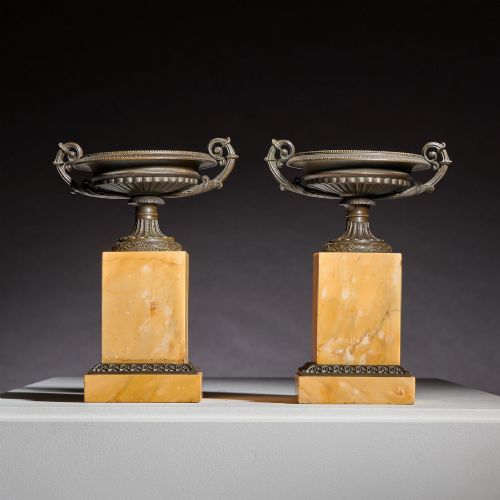
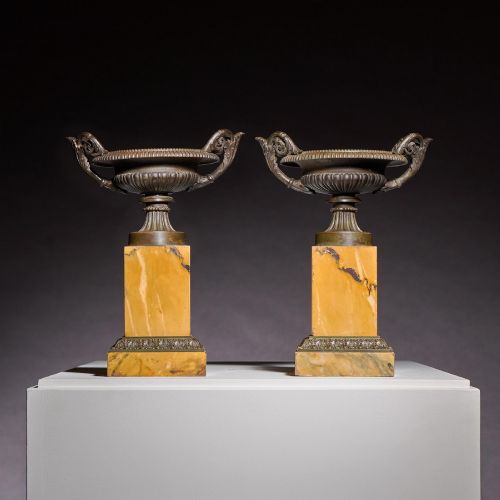
The selection centres on decorative objects, table lamps, and tazzas constructed from dense stones and cast metals. Surviving examples demonstrate how makers translated antique archaeological discoveries into domestic ornaments for nineteenth-century interiors.
The objects bridge the gap between architectural sculpture and functional decor, often incorporating handles, covers, and pedestals. Buyers find pairs dominating the available options, designed symmetrically for mantelpieces, console tables, and pedestals.
Materials and manufacture
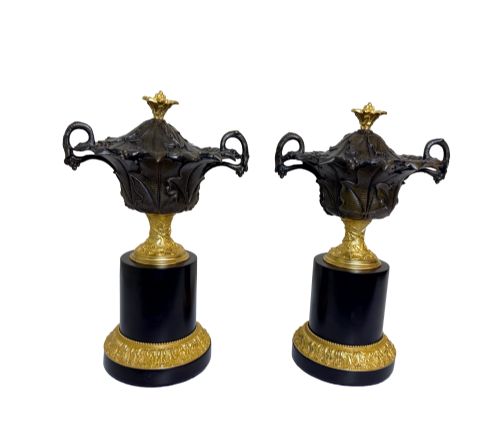
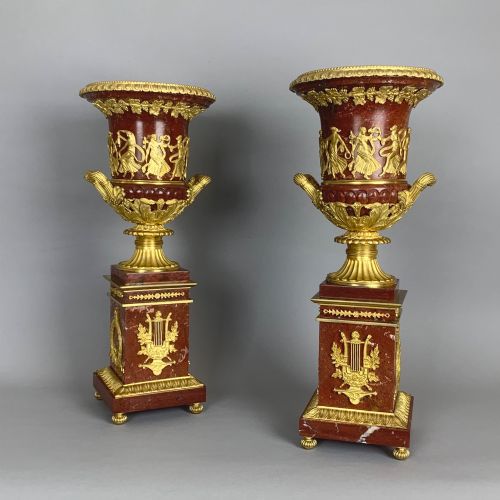
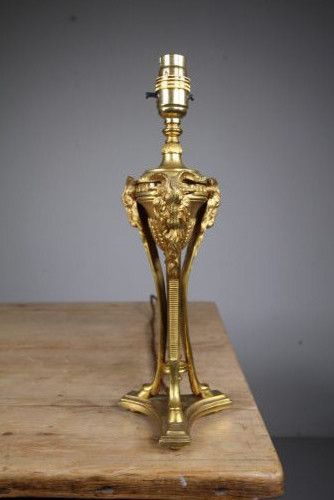
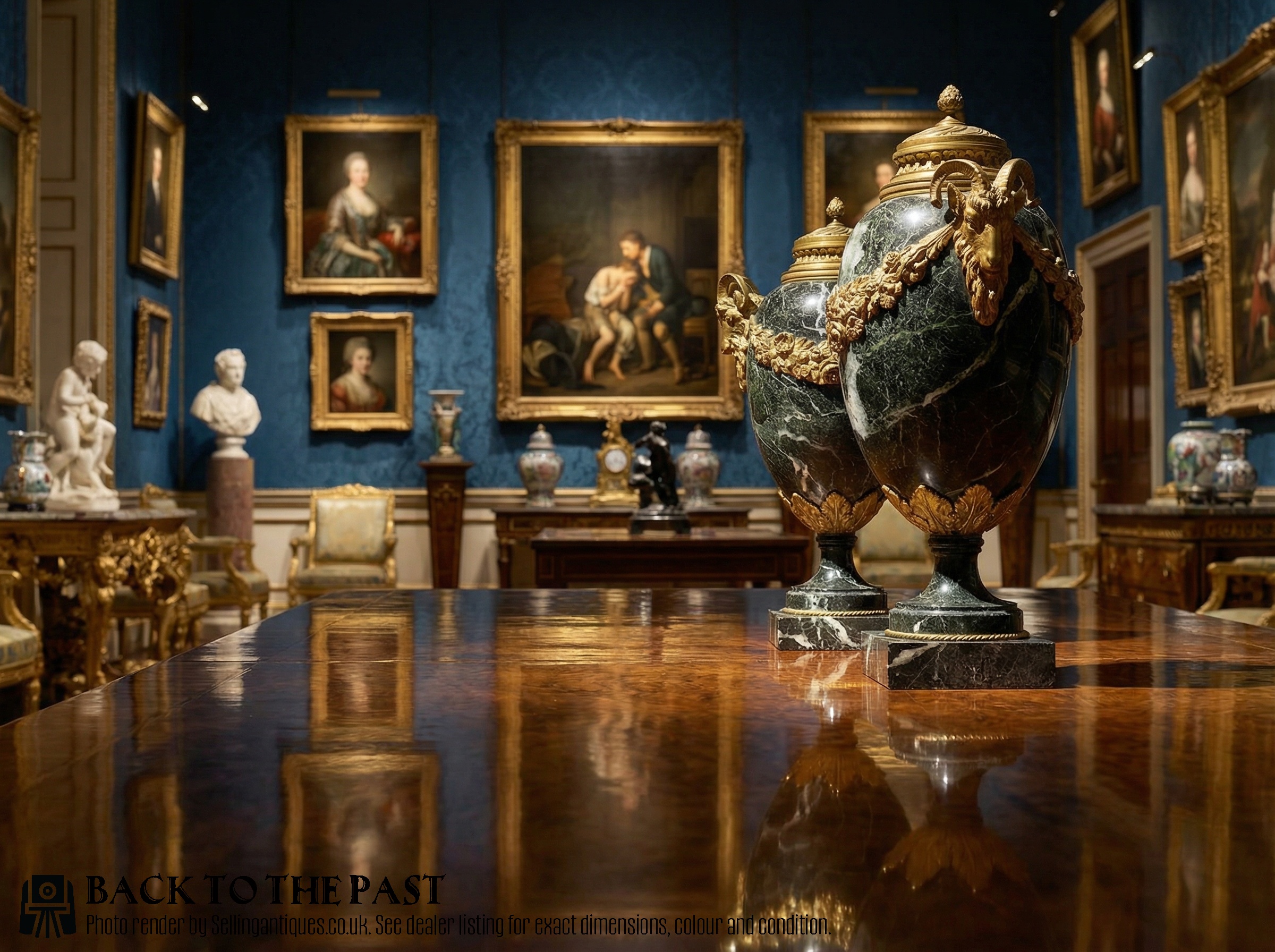
Makers combined cast metals such as bronze, brass, and ormolu with natural stones including marble and Siena marble. Gilt bronze mounts were chased and fire-gilded to contrast sharply against patinated bronze bodies or polished stone bases.
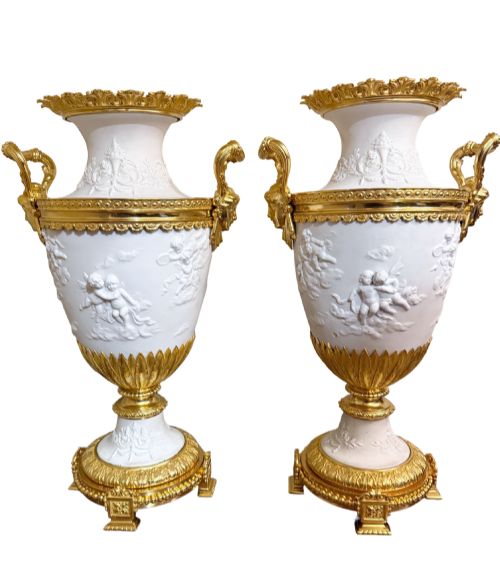
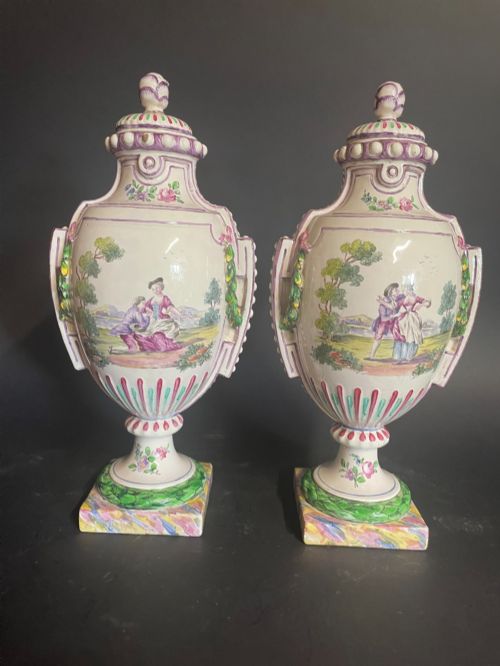
Porcelain elements, including Sevres and faience bodies, frequently feature alongside metal mounts and pate sur pate decoration. Carved pine, giltwood, and ebonised wood appear in related forms, while glass and fabric complete specific lamp adaptations.
Several grand tour tazzas incorporate miniature ram heads so convincingly that visitors instinctively check if they need feeding.
Quality variations
The crispness of the chasing on gilt bronze mounts distinguishes superior pieces from softer, later castings. Sharp details in acanthus leaves, ram head masks, and classical drapery indicate skilled hand-finishing by the bronze smith.
The selection and density of the underlying marble or porcelain body dictate the visual weight and stability of the piece. Fine-grained marbles and well-fired porcelain with unblemished glaze and intact gilding elevate the status of an urn or tazza.
Japy Freres·Sevres
The French Neoclassical Urns Glossary
- Ormolu
- Gilt bronze produced by applying a mercury-gold amalgam to a bronze base and heating it to drive off the mercury. This technique creates a durable, golden surface finish characteristic of fine French decorative arts.
- Tazza
- A shallow cup or vase set on a pedestal foot, originating in ancient pottery and metalwork. These vessels served primarily as decorative display pieces during the neoclassical revivals.
- Grand Tour
- A cultural journey undertaken by wealthy young Europeans to study classical antiquities in Italy. Souvenirs brought back from these travels heavily influenced nineteenth-century bronze and marble urn production.
- Cassolette
- A decorative vase fitted with a reversible lid that functions either as a closed urn or a container for burning perfumes. They often feature elaborate ormolu mounts and marble bodies.
- Pate sur pate
- A ceramic decoration technique where liquid clay is applied in successive layers to a contrasting background to create a low relief cameo effect. It appears on porcelain bodies mounted with gilt bronze.
French Neoclassical Urns: Frequently Asked Questions
What is a French neoclassical urn?
These pieces are decorative vessels modeled after ancient Greek and Roman forms, adapted by French designers during the eighteenth and nineteenth centuries.
They function primarily as sculptural mantel ornaments, display tazzas, or converted table lamps resting on stone and gilt metal bases.
How were these urns used originally?
In period interiors, they served as purely decorative architectural accents on mantelpieces, sideboards, and pier tables. Their design emphasised classical symmetry and balance rather than practical utility.
Many surviving examples from the nineteenth century were later adapted into electric lamps while retaining their original bronze and marble bodies.
How do I distinguish Louis XVI style from Empire style?
Louis XVI style urns display lighter, straighter lines with restrained classical motifs like ribbons, delicate swags, and antique floral pattering. They lean on architectural grace and refined proportions.
Empire style pieces are heavier and more militaristic or imperial in character, incorporating bold patinated bronzes, sphinxes, and prominent handles intended to project authority.
How should I clean marble and ormolu?
Dust marble gently with a dry, soft cloth and avoid abrasive cleaners or acidic liquids that etch the stone surface. Ormolu requires minimal intervention beyond light dusting to protect the historic gilt finish.
Harsh chemical polishes strip the mercury gilding from bronze mounts, so preservation relies on gentle maintenance in stable indoor environments.