
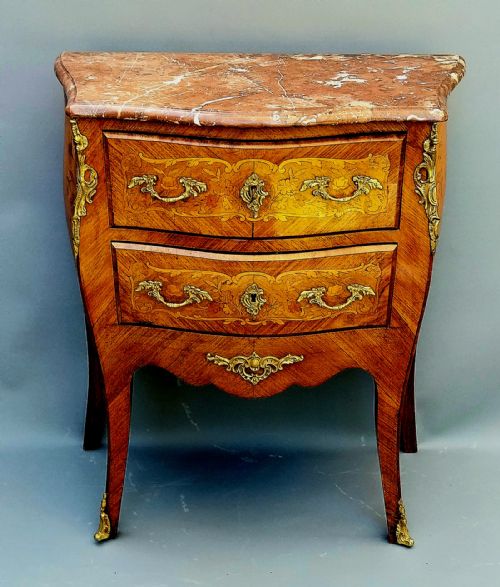


French Marquetry Bedside Chest
When sourcing a French marquetry bedside chest, you are looking at small-scale cabinetry that combines detailed wood-pattern work with practical bedside storage.
French Marquetry Bedside Chest
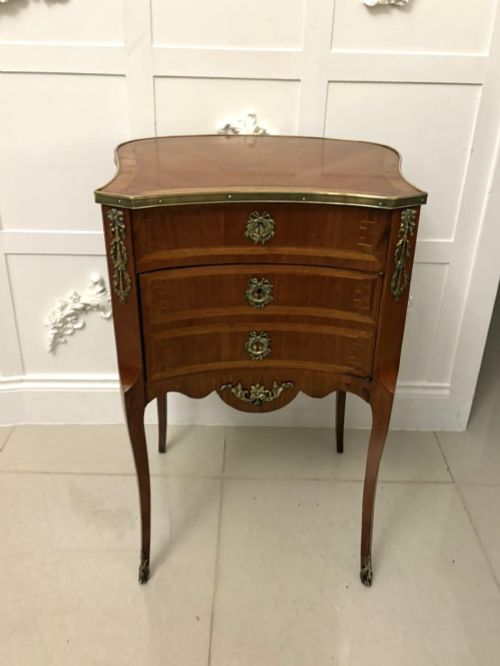
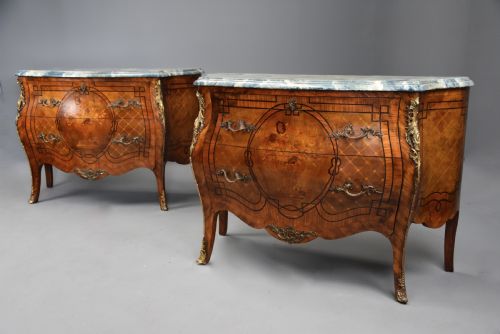
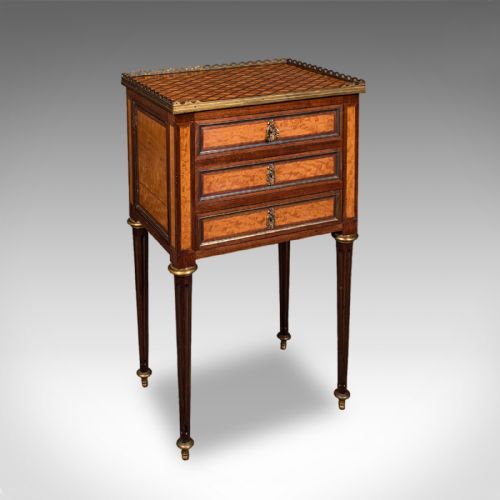
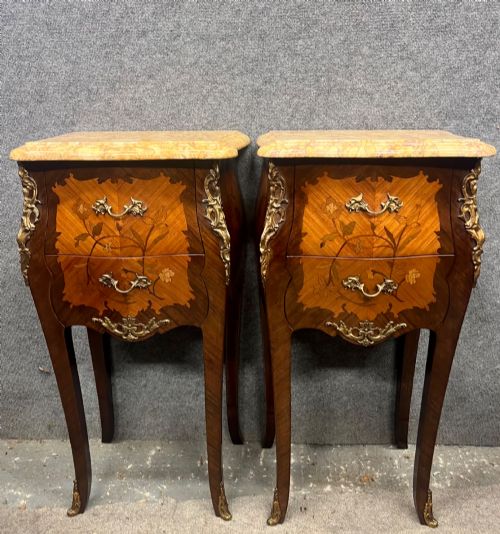
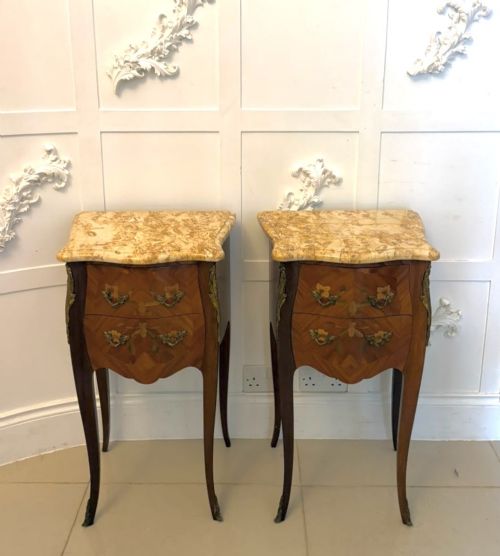
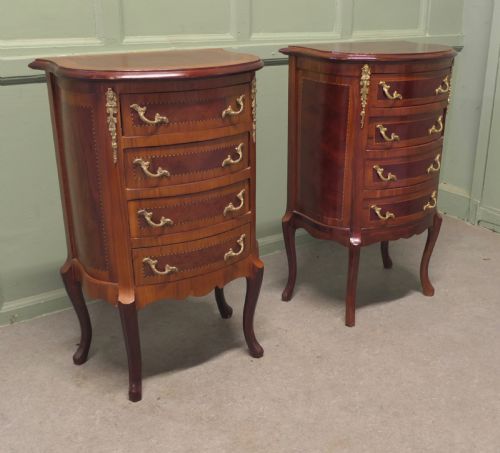
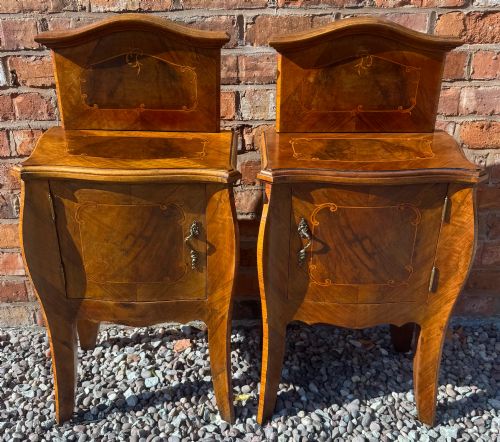
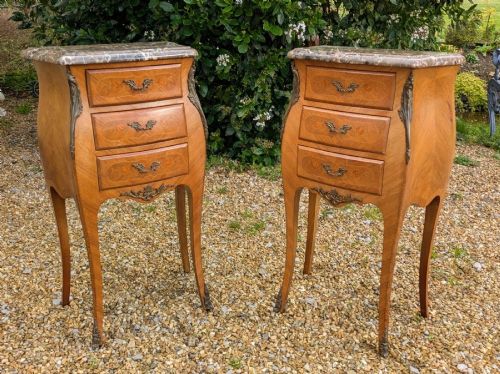
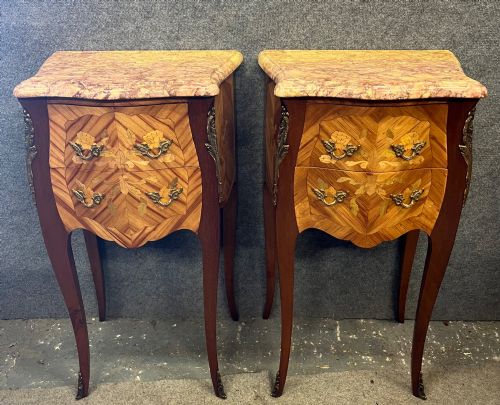
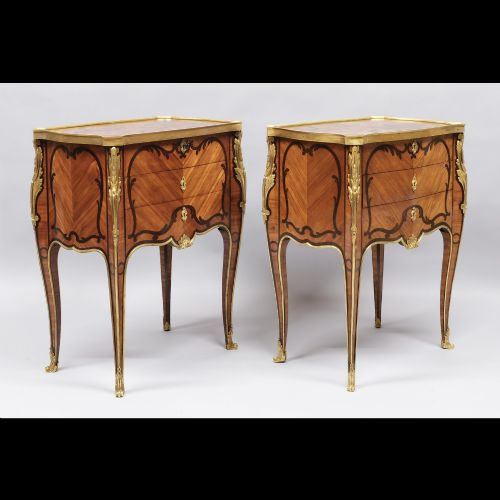
A French marquetry bedside chest typically takes the form of a small commode, side cabinet or nightstand designed for the bedroom. These pieces draw heavily on Louis XV and Louis XVI revival styles, echoing the curved lines and ornamental mounts of earlier periods.
Most examples found in current and archive records date from the nineteenth and early twentieth centuries, spanning periods from the Victorian era through the 1930s. They appear frequently as pairs, offering matched storage flanking a bed.
How they were made
Cabinetmakers constructed the carcase using secondary timbers such as walnut or mahogany, then applied fine veneers of kingwood, rosewood and tulipwood to the exterior. They cut contrasting woods into pictorial or geometric patterns to form the marquetry designs across the drawer fronts and sides.
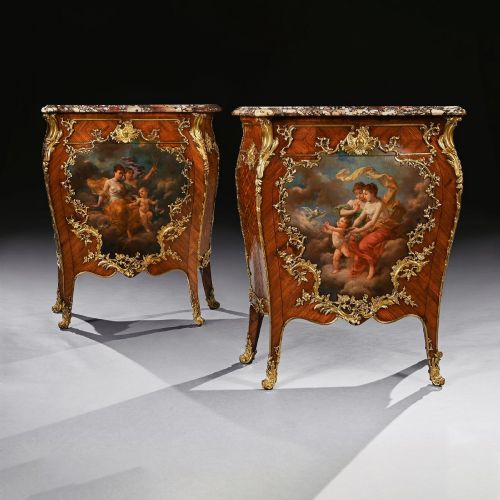
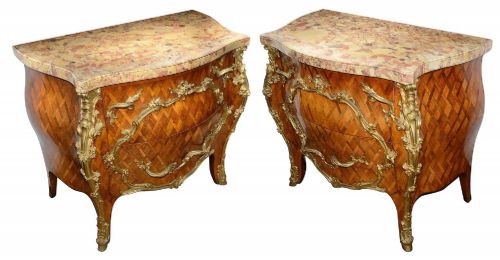
Many pieces incorporate shaped marble tops, often fitted precisely to the contours of serpentine or bombe frameworks. Cast or chased ormolu and gilt bronze mounts accent the corners, handles and feet.
Listings span periods from the eighteenth century to the 1930s, featuring marble, walnut, kingwood, and ormolu.
What varies in quality
The distinction between standard and top-tier pieces rests on the precision of the marquetry cutting and the choice of timbers. Finer examples feature intricate, multi-toned wood veneers fitted seamlessly together without excessive filler.
Hardware and secondary materials also indicate grade, with heavier cast ormolu mounts and thick, well-figured marble slabs marking out superior workshops from mass-produced equivalents.
Sormani
The French Marquetry Bedside Chest Glossary
- Marquetry
- Decorative veneer work forming pictures or patterns by arranging small pieces of different coloured woods. This technique requires steady hand-cutting and precise assembly.
- Bombe
- A bulging, outward-curving shape found on the front and sides of certain chests. It demands advanced cabinetmaking skill to shape wood and veneer to these swelling contours.
- Ormolu
- Gilded bronze used for decorative mounts and furniture feet. The term derives from the French for ground gold.
- Kingwood
- A dense, heavy timber with rich dark brown and violet colouring, frequently utilised in French cabinetmaking. It provides strong contrast in geometric and floral marquetry.
- Petit commode
- A small chest of drawers or bedside cabinet. These compact units replicate the proportions of full-sized salon furniture on a diminutive scale.
French Marquetry Bedside Chest: Frequently Asked Questions
Are these chests always found in pairs?
Many listings show matched pairs intended to sit on either side of a double bed, though single chests appear frequently in the record.
Single pieces often originate from larger bedroom suites or were used as standalone lamp tables in reception rooms.
How do I clean the marble top?
Marble surfaces require simple wiping with a damp cloth and mild, non-acidic soap to prevent staining. Avoid harsh household chemicals that can etch the polished stone finish.
Waxing is generally unnecessary for the stone top, though the surrounding wood veneer benefits from occasional appropriate polishing.
What is the difference between Louis XV and Louis XVI styles?
Louis XV pieces, often called Rococo revival, feature sweeping curves, asymmetrical lines and bombe shapes. They lean towards organic forms without sharp corners.
Louis XVI style shifts towards straight lines, fluted columns and neoclassical symmetry, reflecting a later eighteenth-century aesthetic revived in the nineteenth century.
Can I use these as lamp tables?
Their height and surface area make them suitable for bedside lamps, books and small decorative objects. The fitted marble tops provide a durable surface resistant to minor spills.
Drawers and cupboards below offer concealed storage for modern bedroom items while maintaining the antique appearance.