
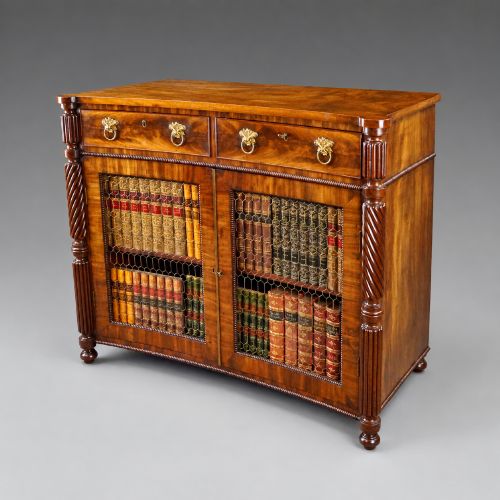
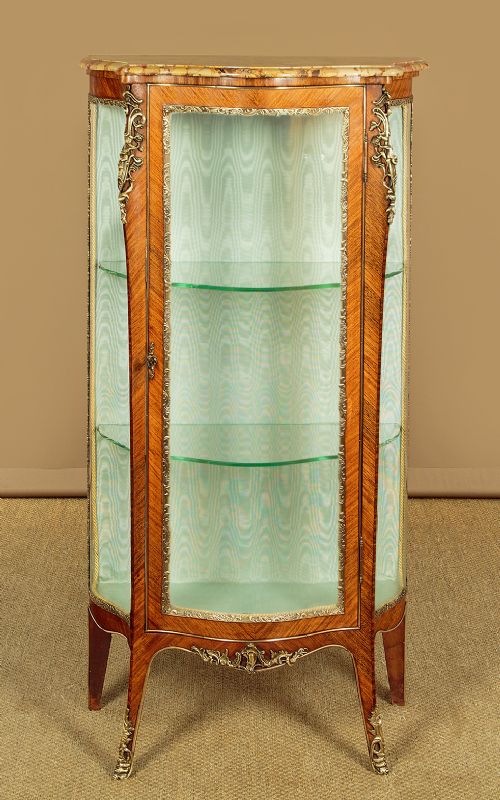
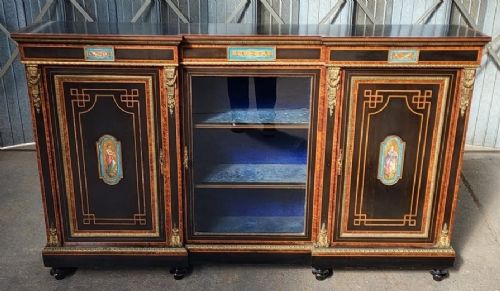
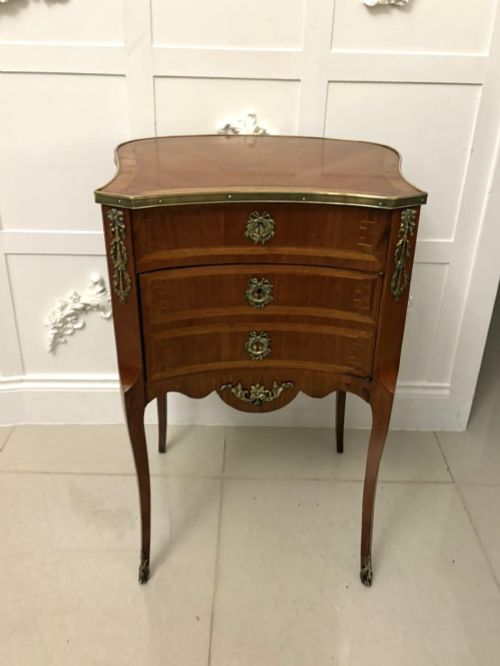
Brass Mounted Side Cabinet
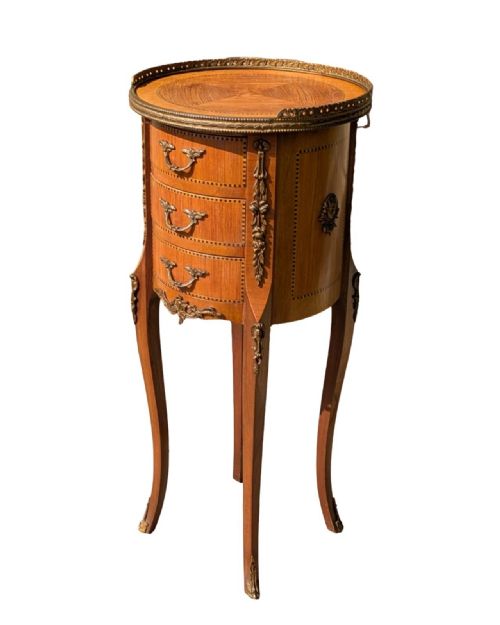
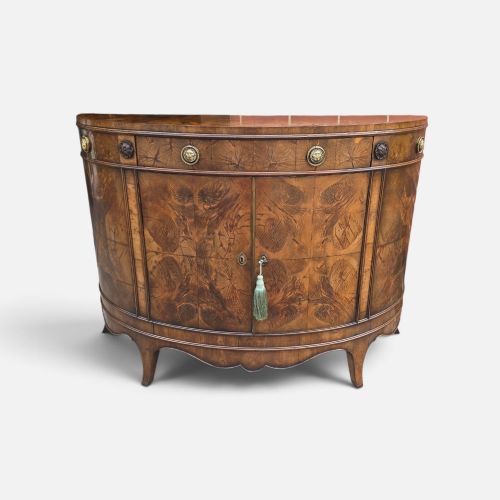
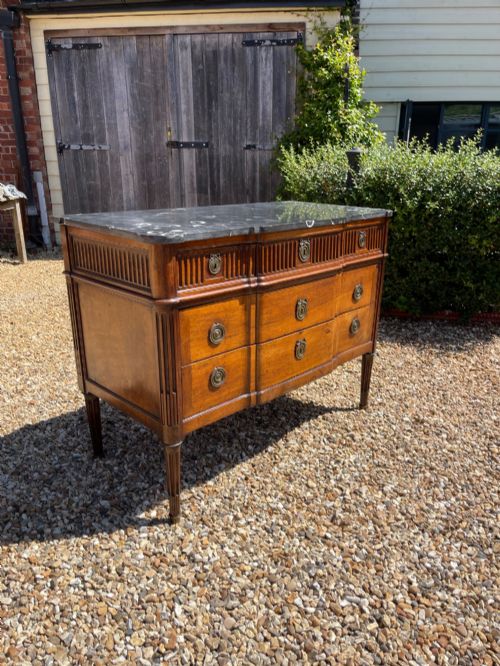
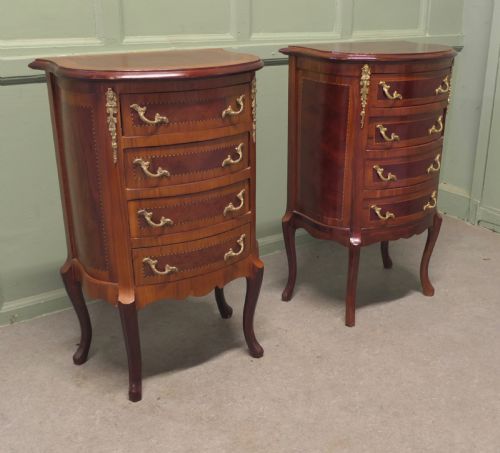
A brass mounted side cabinet brings architectural presence and polished metal detail to a room, offering practical surface space and enclosed storage.
Brass Mounted Side Cabinet
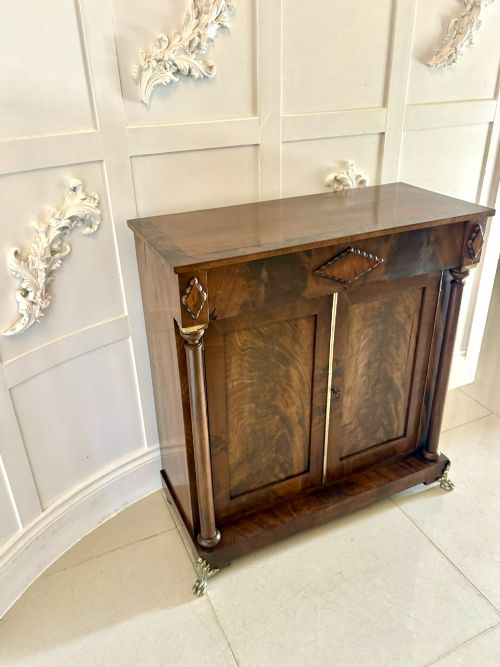
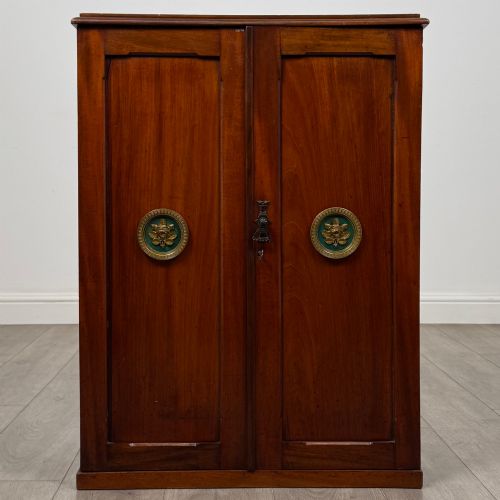
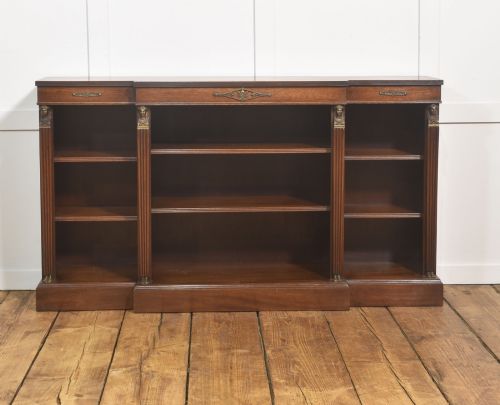
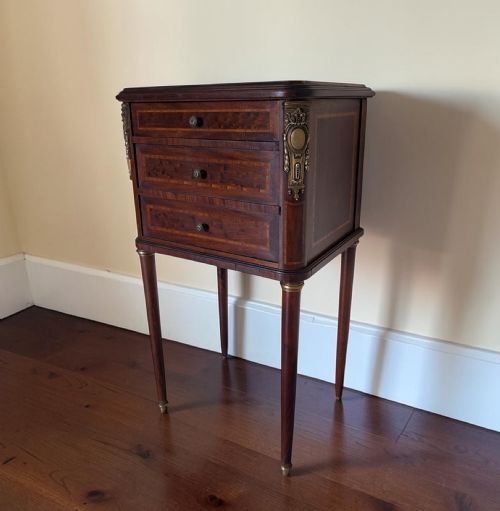
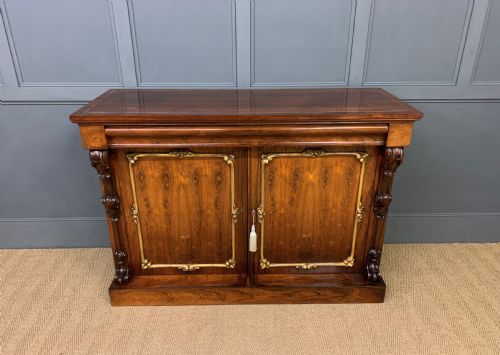
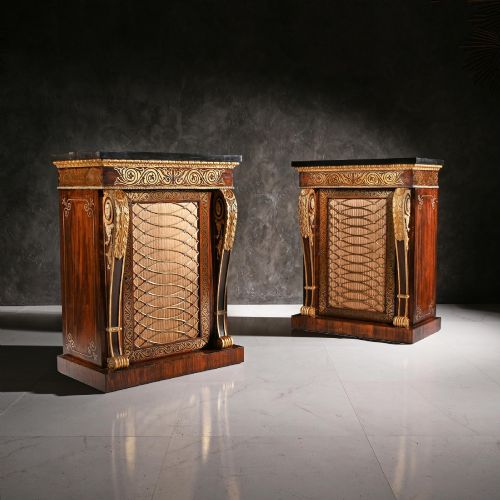
A brass mounted side cabinet combines timber cabinetry with metal mounts, trims or inlays, providing a structured place for display and storage. When exploring a brass mounted side cabinet, buyers encounter forms ranging from compact bedside pieces to large multi-door reception room furniture.
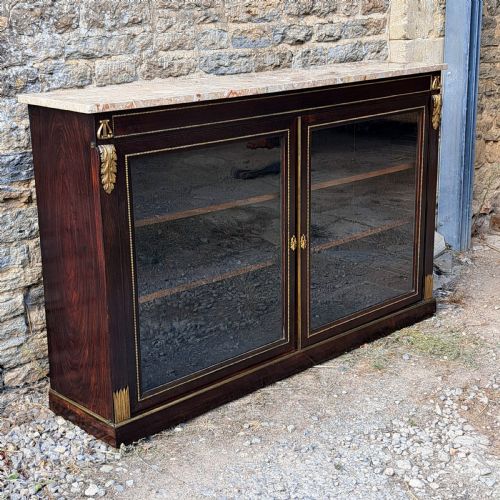
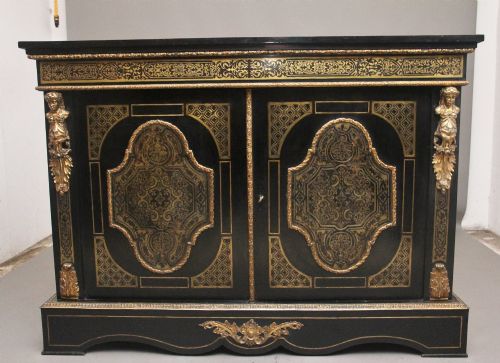
The selection includes pieces spanning the Regency, Victorian and later periods, with strong representation from French ateliers alongside English workshops. Common configurations include open shelves, glazed doors and marble tops supported by timbers such as rosewood, mahogany and ebonised wood.
How they were made
Cabinet makers utilised dense hardwoods like mahogany and rosewood as carcase foundations, often applying fine veneers or marquetry patterns in satinwood and kingwood. Timber preparation required careful seasoning to prevent warping across panel doors and curved demi-lune fronts.
Metal components involved cast or chased ormolu and brass, secured to the timber surfaces with pins or screws to frame glass panels and door edges. Marble tops were cut and polished to fit precise surface dimensions, sitting flush upon the wooden frames.
Brass Mounted Side Cabinet Retail Price Guide 2026
Typical asking prices for brass mounted side cabinet among the pieces listed under this phrase on Sellingantiques today, from the lower quarter to the upper quarter. They describe what is for sale here now, not the wider market.
Listings feature 19th Century, Victorian and Regency periods, alongside 1930 examples constructed in mahogany, rosewood, walnut and ebonised wood.
What varies in quality
The refinement of the brass mounts and ormolu detailing distinguishes standard production from exceptional examples, as sharper casting and deeper chiselling require skilled hand labour. Timber selection also dictates grade, with figured mahogany and finely matched rosewood veneer demonstrating superior cabinet work.
Structural joinery and the integrity of internal carcases indicate the standard of construction, particularly in pieces featuring curved doors or complex boullework. Originality of mounts and marble tops preserves the cohesive integrity of the piece.
Louis Constantin Le Gaigneur·Liberty and Co
The Brass Mounted Side Cabinet Glossary
- Ormolu
- Gilded bronze used for decorative mounts and trims on furniture. This technique was widely utilised by French makers during the nineteenth century.
- Boulle
- An intricate marquetry technique combining tortoiseshell and brass inlay. It is named after the French cabinet maker André-Charles Boulle.
- Chiffonier
- A small tall sideboard or cabinet with shelves and doors. These pieces emerged during the Regency period for storage in living spaces.
- Demi-lune
- A half-moon shape used for console tables and small cabinets. This form fits neatly against walls in narrow hallways or reception rooms.
- Pier cabinet
- A narrow display cabinet designed to stand against the wall space between windows. Victorian examples frequently incorporate glass doors and velvet-lined interiors.
Brass Mounted Side Cabinet: Frequently Asked Questions
What is a brass mounted side cabinet used for?
These cabinets provide surface space for lamps or decorative objects alongside enclosed shelving for books and tableware. They function effectively in living rooms, dining spaces and bedrooms.
Smaller variations serve well as bedside storage while larger multi-door formats anchor a room's perimeter walls.
How do I identify a Regency period piece?
Regency pieces often feature classical architectural proportions, dark rosewood or mahogany timbers, and precise brass inlay work. Look for restrained ornamentation influenced by ancient Greek and Roman design.
Cabinet makers of this era favoured clean lines balanced by rich wood grain and subtle metal mounts.
Are marble tops original to these cabinets?
Many French and Victorian cabinets were designed with fitted marble tops to provide a durable, heat-resistant surface. These slabs sit directly into the wooden carcase frame.
Matching the marble colour and edge profile to the cabinet style helps confirm the period integrity.
How do I care for rosewood and brass?
Keep wooden surfaces clean using a soft, dry cloth and avoid placing furniture in direct sunlight or near heat sources. Excessive temperature changes can cause veneers to split.
Polish brass and ormolu sparingly with non-abrasive materials to preserve the original patination without wearing down the metal surface.