
French Nightstand Cabinet
A french nightstand cabinet brings continental elegance to the bedroom, offering concealed bedside storage combined with decorative marble tops and fine wood veneers.
French Nightstand Cabinet
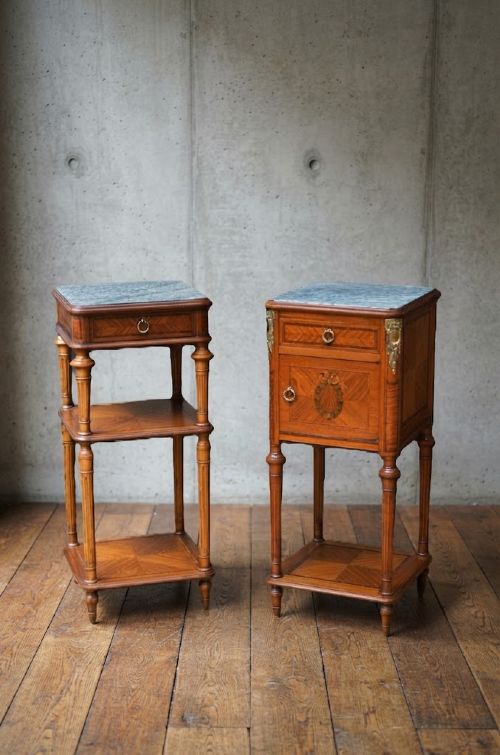
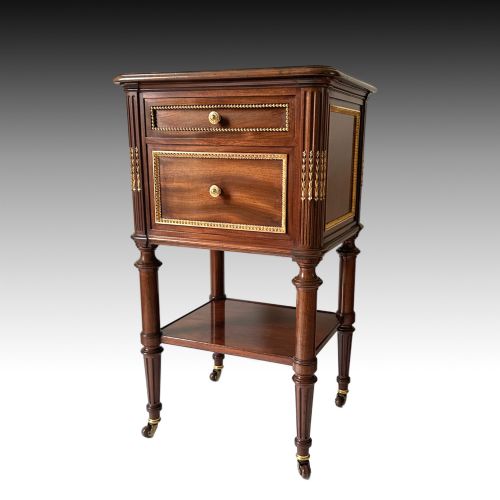
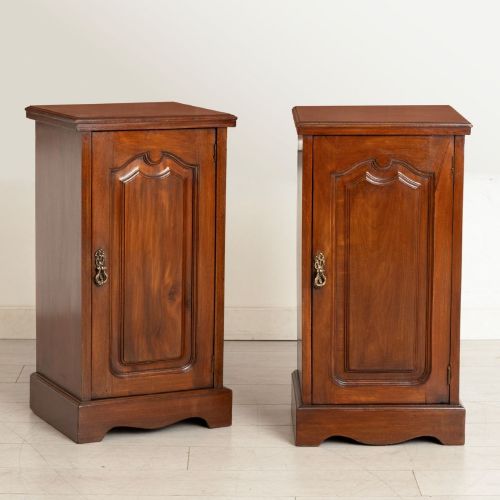
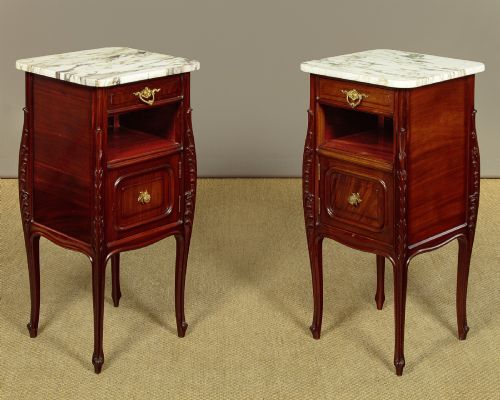
A French nightstand cabinet serves as a bedside storage unit, appearing in forms such as bedside tables, compact cupboards, commodes, and side cabinets. These pieces date across the nineteenth and twentieth centuries, spanning periods from the Edwardian era through to Art Deco designs.
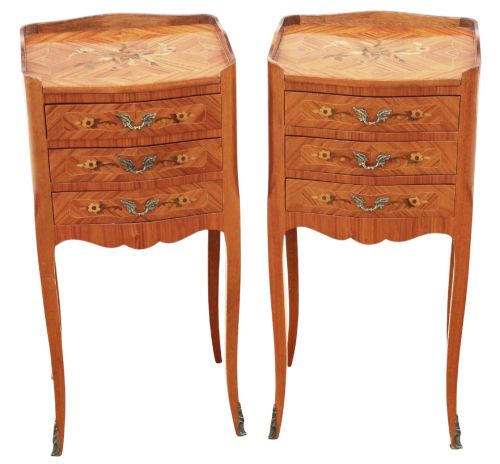
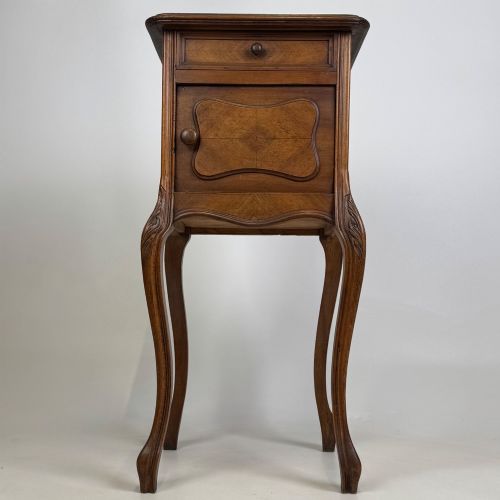
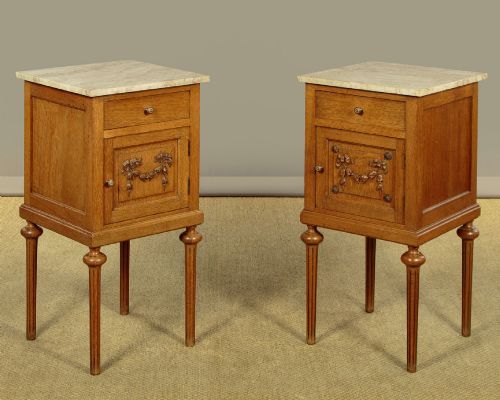
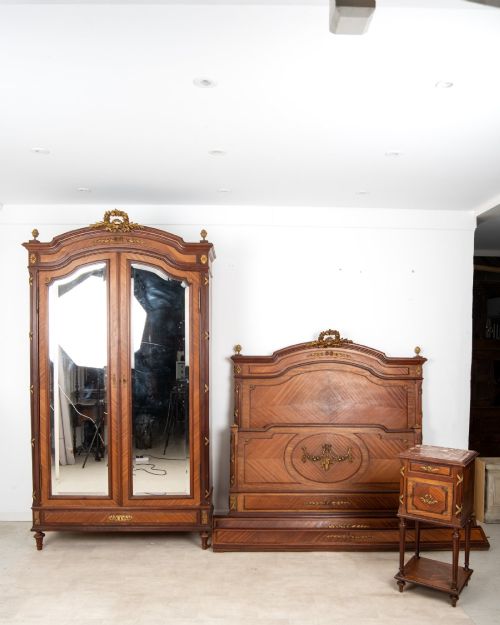
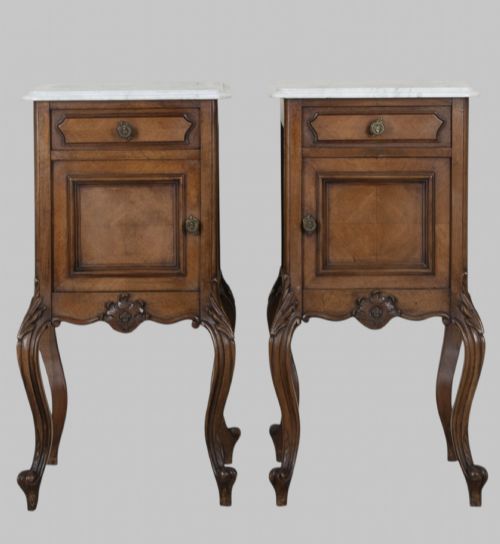
Stylistic influences heavily draw on historical French design movements, including Louis XV and Louis XVI revivals alongside provincial interpretations. Pieces range from restrained oak constructions to ornate veneered items adorned with marquetry.
How they were made
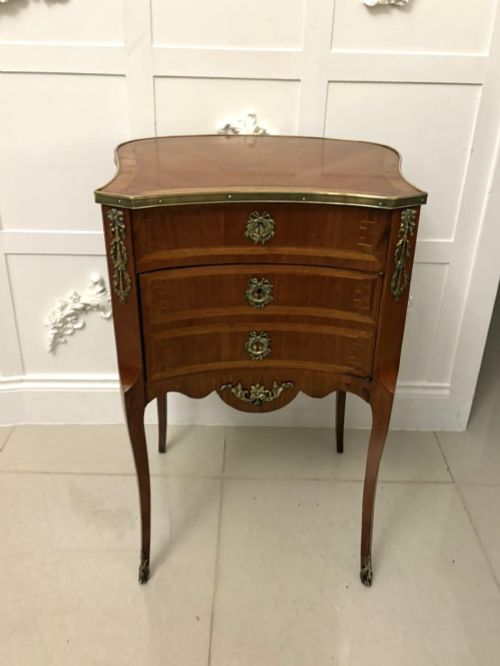
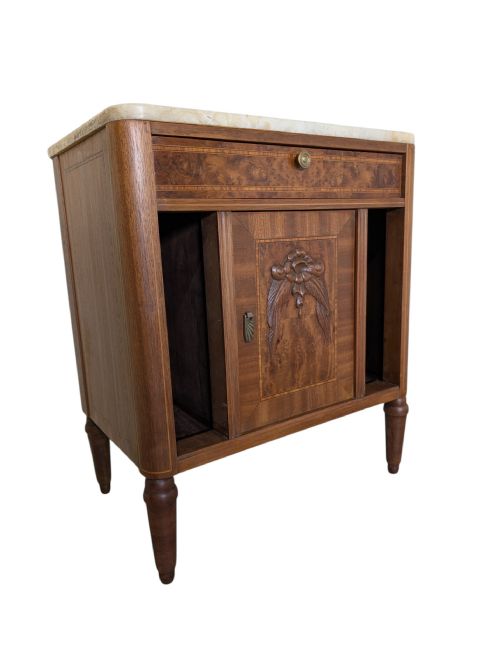
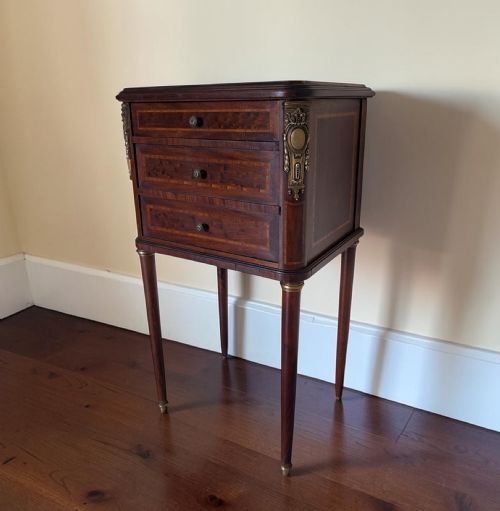
Cabinetmakers constructed these pieces using dense hardwoods like mahogany, walnut, oak, and cherrywood, often applying decorative veneers such as kingwood, satinwood, and rosewood. Marquetry inlays create intricate geometric or floral patterns across door fronts and tabletops.
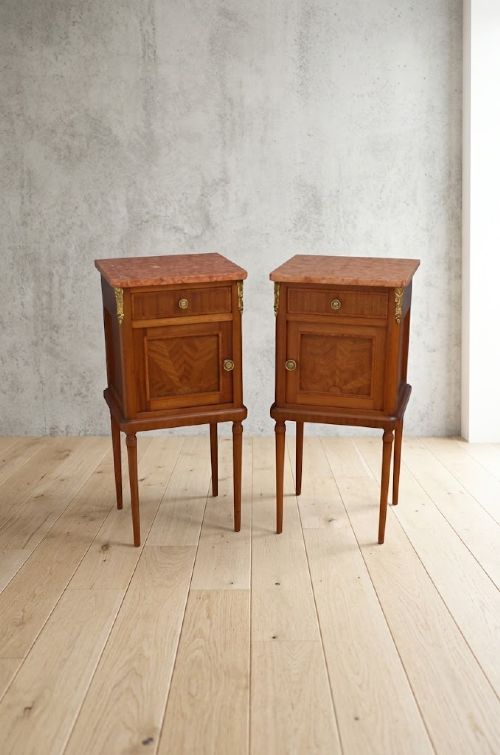
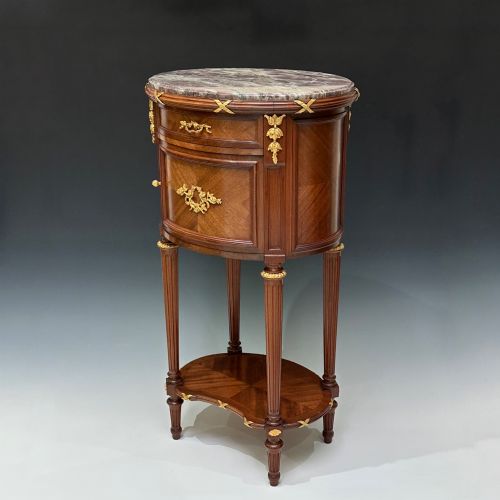
Surface detailing frequently includes cast brass or ormolu mounts that accent corners, handles, and legs. Many cabinets feature fitted marble tops, requiring precise stone-cutting to match the curved or straight contours of the wooden carcase.
Some nineteenth-century bedside cupboards doubled as discreet storage for chamber pots before modern plumbing arrived.
What varies in quality
The standard of timber selection and veneer work dictates much of the distinction between pieces, with complex multi-wood marquetry and well-matched grains representing higher craftsmanship. The crispness of hand-carving and the weight of cast ormolu mounts further differentiate standard production from finer workshop output.
Structural integrity depends on the joinery used in the carcase and drawers, alongside the precise fitting of marble slabs and cabinet doors. Original hardware and matching pairs command greater recognition than assembled matches or heavily altered examples.
François Linke
The French Nightstand Cabinet Glossary
- Ormolu
- Gilded bronze mounts applied to furniture for decoration. These metal details typically accent corners, feet, and key escutcheons.
- Marquetry
- Decorative patterns created by fitting thin pieces of wood veneer onto a structural carcase. This technique produces detailed pictorial or geometric designs.
- Pot cupboard
- A compact bedside cabinet historically designed to enclose a chamber pot. These practical units feature a small door and interior shelf.
- Kingwood
- A dense, richly figured Brazilian timber utilised for high-end cabinet veneers. It displays dark violet-brown tones with lighter streaks.
- Louis XV Revival
- A nineteenth-century design style emulating the curved lines, cabriole legs, and rococo ornamentation of the mid-eighteenth century. Furniture from this movement prioritises asymmetric flow and natural motifs.
French Nightstand Cabinet: Frequently Asked Questions
What is a French nightstand cabinet?
A French nightstand cabinet is a small bedside storage unit designed in a continental style, featuring cupboards, drawers, or open shelving.
These pieces often combine decorative wood veneers with stone tops and metal mounts, serving as functional bedside tables.
How were marble tops used?
Marble tops provided a durable, wipe-clean surface for bedside items like water jugs and candlesticks. Slabs were cut to fit the exact contours of the wooden cabinet base.
White, grey, and veined marble varieties appear frequently across nineteenth and twentieth-century examples.
What is a pot cupboard?
A pot cupboard is a specific form of bedside cabinet designed with an enclosed door to hide a chamber pot. These compact units kept necessary chamber items out of sight.
Over time, many of these cabinets transitioned into general bedside storage for books and personal items.
How do I identify Art Deco cabinets?
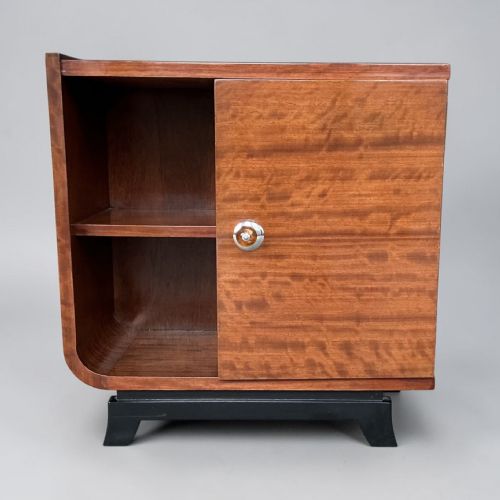
Art Deco bedside cabinets display cleaner geometric lines, simplified forms, and symmetrical veneer patterns without historical revival ornamentation. Oak and exotic woods often define this twentieth-century aesthetic.
These pieces reflect the design shifts away from ornate nineteenth-century revivals toward streamlined modernity.
Are pairs common?
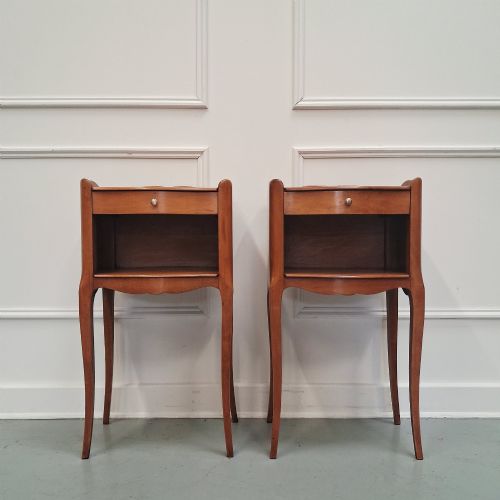
Pairs of bedside cabinets appear frequently in the selection, offering matching storage for both sides of a bed. Matched sets usually share identical dimensions, wood grains, and hardware.
Finding a true pair from the nineteenth or early twentieth century adds consistency to bedroom decor.