
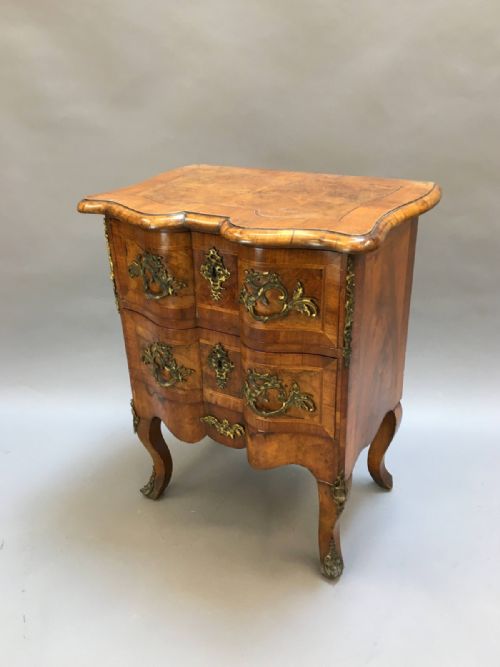


Petite French Commode
These small serpentine chests and bedside tables bring classic continental elegance to any room.
Petite French Commode
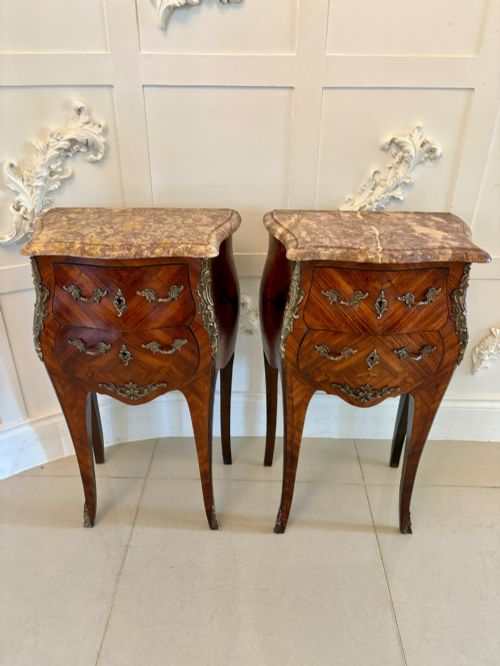
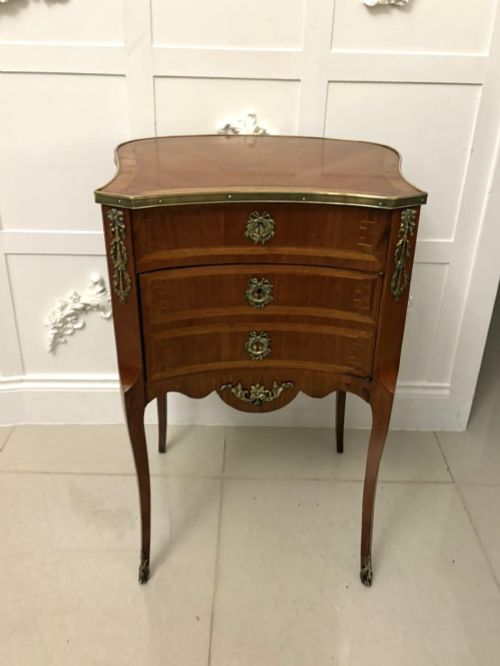
A petite french commode provides compact drawer storage or bedside display through distinct continental forms. These pieces range from bedside tables and side cabinets to small chests of drawers.
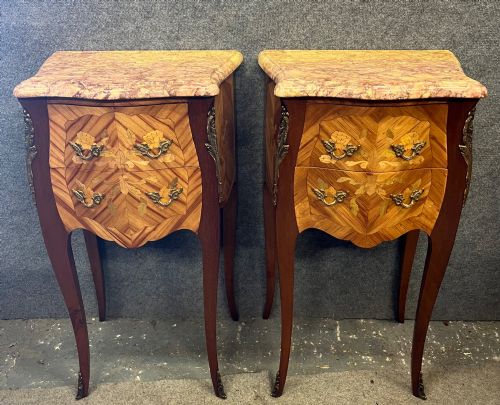
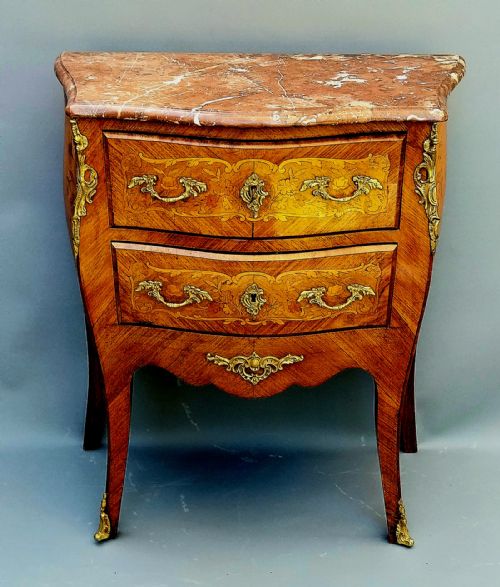
The version most commonly met on this page combines a marble top with Louis XV style curves and marquetry inlay. Walnut, kingwood and rosewood form the primary bodies of these compact items.
How they were made
Cabinet makers utilised wood veneers such as kingwood and rosewood over solid timber carcasing, arranging grain patterns for decorative effect. Floral marquetry inlay appears frequently across the drawer fronts and side panels.
Mounts in ormolu and gilt bronze accent the corners and handles, while shaped marble tops sit flush upon the bombe or serpentine carcasses.
Several bedside cabinets arrive with secret drawers hidden just beneath their marble rims.
What varies in quality
The distinction between standard and superior examples lies in the crispness of the bronze mounts and the intricacy of the marquetry work. Finer pieces display seamless veneer matching across complex curved surfaces.
Marble tops fitted precisely to the wooden contour indicate higher workshop standards than those with loose or poorly aligned stone.
The Petite French Commode Glossary
- Bombe
- A bulging, outward-curving chest shape characteristic of Rococo furniture. This swollen contour requires skilled veneer work to follow the compound curves.
- Marquetry
- Decorative patterns formed by fitting small pieces of coloured wood veneer into a background sheet. Floral designs appear often in these pieces.
- Ormolu
- Gilded bronze ornamentation applied to furniture mounts and handles. The material provides a bright metallic contrast against dark timber veneers.
- Kingwood
- A dense, richly figured tropical timber utilised for high-status cabinet making. Its dark grain contrasts sharply with lighter inlay woods.
- Louis XV Style
- An 18th-century design idiom revived in later centuries, defined by asymmetry and natural curves. Pieces in this style avoid straight lines in favour of flowing contours.
Petite French Commode: Frequently Asked Questions
What rooms suit a petite french commode?
These compact chests function well as bedside tables or small storage units in reception rooms. Their modest proportions allow them to fit tight spaces where standard furniture fails.
They pair effectively with traditional and contemporary interiors alike, serving as lamp tables or decorative focal points.
How do I identify a revival piece?
Revival items frequently date from the 19th or early 20th century while adopting 18th-century Louis XV design motifs. Construction details and timber maturity help distinguish these later interpretations from original period pieces.
Examining the interior timber linings and drawer dovetails provides clear indicators of the actual production era.
Are marble tops original?
Many commodes carry fitted marble tops designed to follow the serpentine or bombe contours of the wooden frame. These stone surfaces offer a durable finish well suited for bedside use.
Replacements do occur, so matching the stone edge profile to the cabinet rebate remains standard practice for verification.
How should I clean the marquetry?
Maintenance requires dry dusting with a soft cloth to protect delicate veneer surfaces from moisture damage. Wax polish applied sparingly preserves the sheen of rosewood and walnut.
Harsh chemical cleaners strip the traditional French polish finish and should be avoided entirely.