

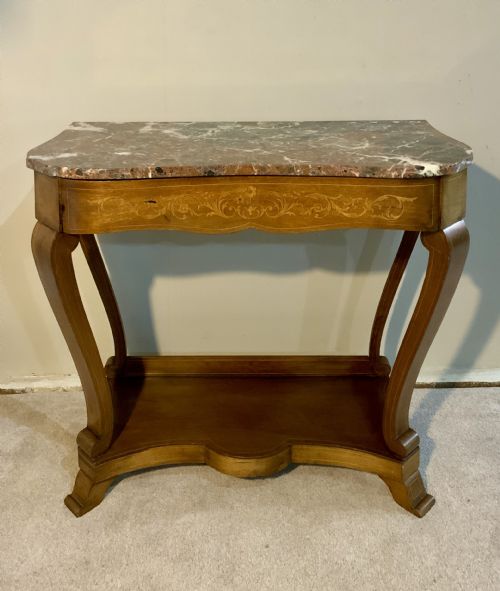
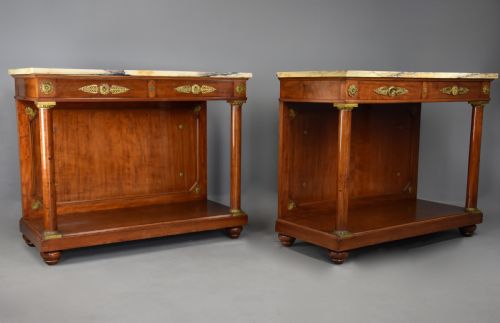


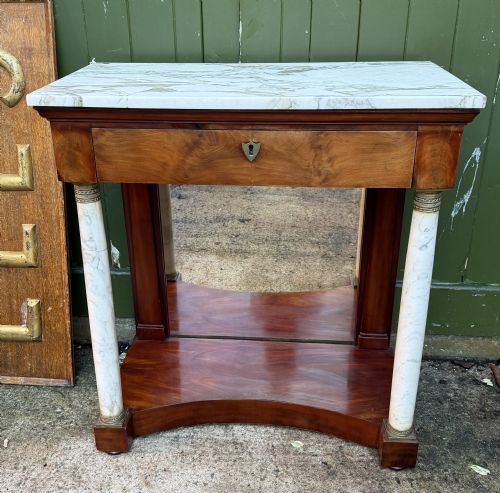


French Mahogany Pier Table
A french mahogany pier table brings architectural presence and classic stone-topped surface to an interior.
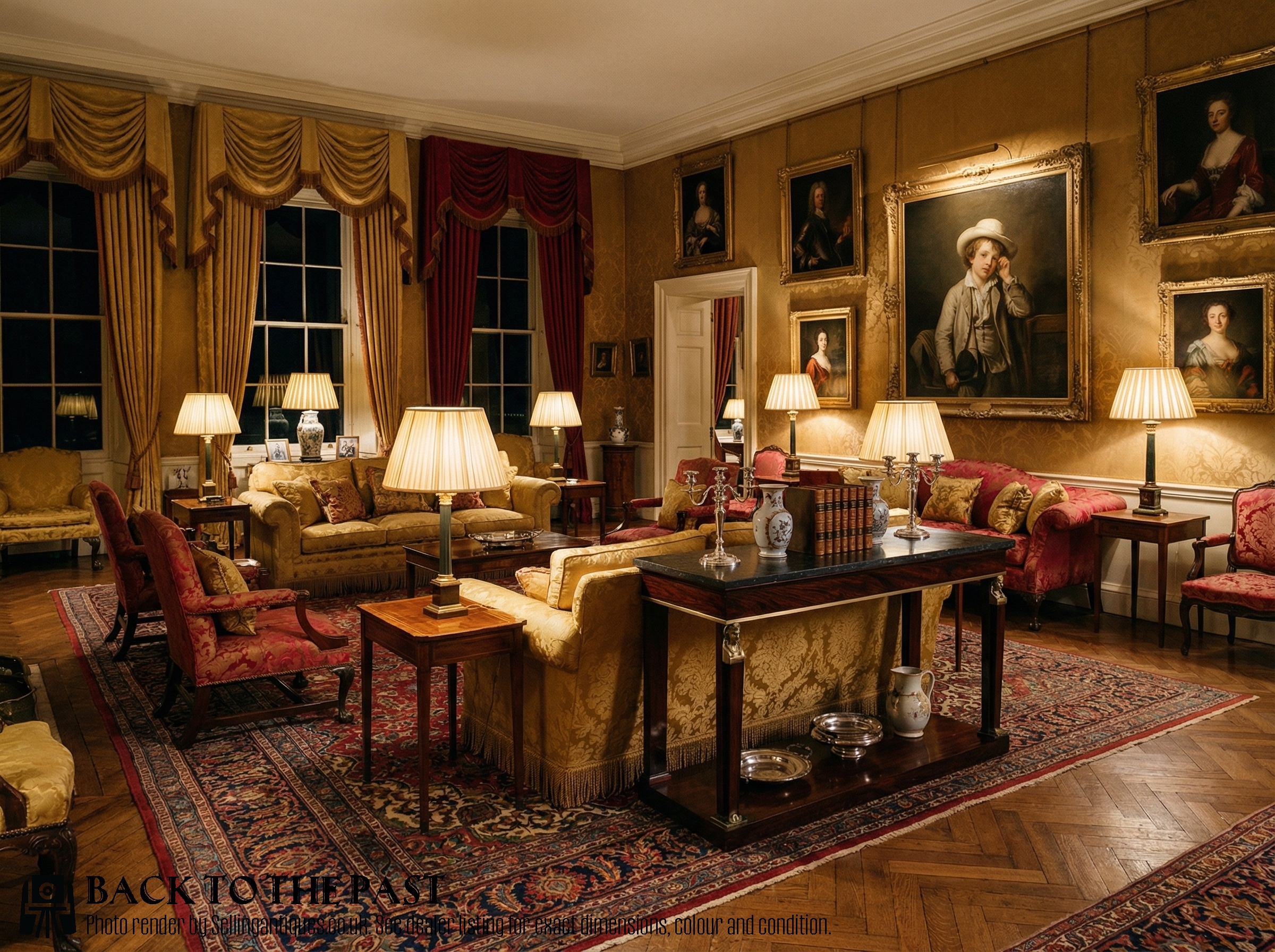
French Mahogany Pier Table
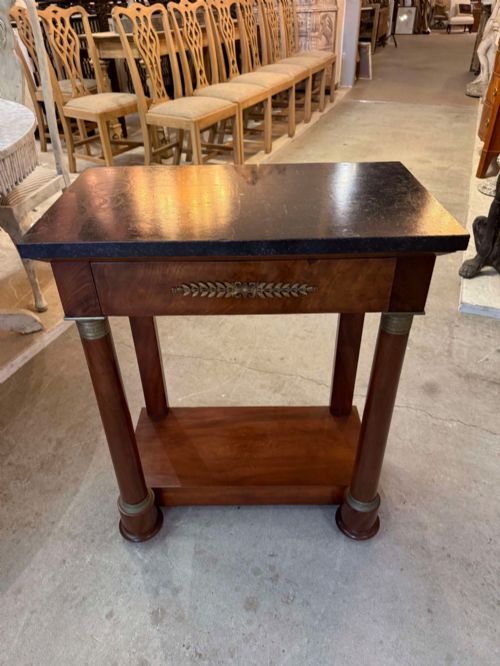
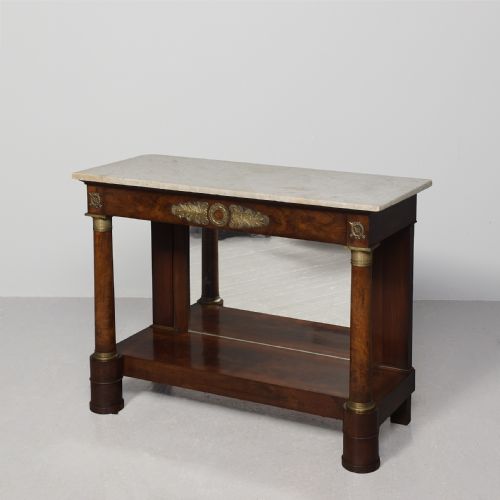
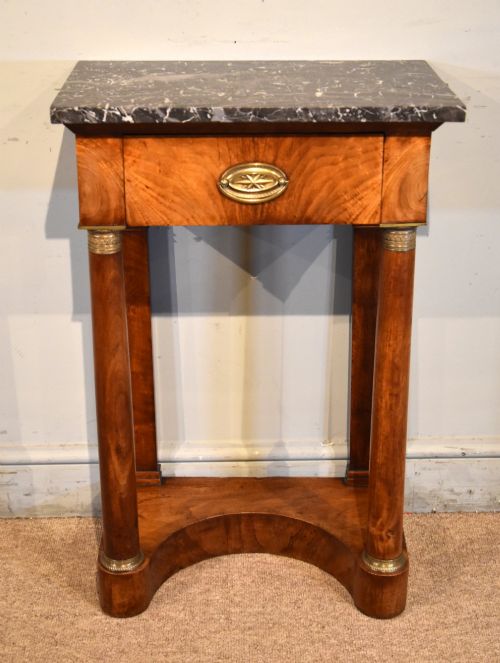
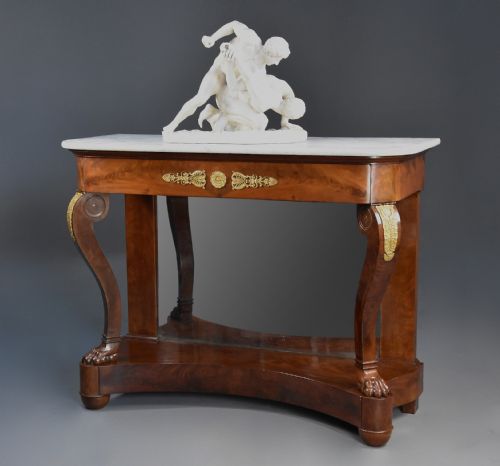
When you search for a french mahogany pier table, you encounter substantial console and side tables designed to stand against a wall, frequently between windows. The examples appearing here span the nineteenth century and the early twentieth century, taking forms such as console tables, side tables, and centre tables.
The aesthetic vocabulary encompasses French Empire, Charles X, Louis Philippe, and various revival styles including Louis XVI, Rococo, and Grand Regency. These pieces combine rich mahogany timbers with contrasting stone tops, fulfilling both ornamental and functional roles in formal rooms.
How they were made
Cabinetmakers utilised dense mahogany veneers and solid timbers, often selecting figured and flame grains to create striking visual movement across the surfaces. Wood inlay techniques further enriched the cabinetry on selected pieces.
Marble tops, including Italian marble and fossil marble variants, provide heavy, durable surfaces. Metal mounts in ormolu, gilt bronze, brass, and bronze are applied to accentuate the structural lines and decorative motifs.
French Mahogany Pier Table Retail Price Guide 2026
Typical asking prices for french mahogany pier table among the pieces listed under this phrase on Sellingantiques today, from the lower quarter to the upper quarter. They describe what is for sale here now, not the wider market.
The inventory records console tables, side tables, and centre tables spanning French Empire, Charles X, Louis Philippe, and various revival movements.
What varies in quality
Quality rests in the selection of the mahogany veneer, where dramatic flame and figured patterns elevate the visual impact above plain timber. The integration of the marble top and the crispness of any cast bronze or ormolu mounts also set finer examples apart.
Maker attribution and provenance distinguish exceptional pieces, particularly when bearing stamps such as those from Krieger Paris or Jean Joseph Chapuis. Structural balance between the wooden base and the heavy stone top dictates the overall integrity of the construction.
Krieger Paris·Jean Joseph Chapuis
The French Mahogany Pier Table Glossary
- Pier table
- A table designed to fit against a wall space between architectural windows, frequently accompanied by a matching mirror above. It provides a stable surface for decorative objects.
- Ormolu
- Gilded bronze applied as decorative mounts to furniture frames. This technique adds metallic brilliance and highlights architectural details.
- Flame mahogany
- Timber cut from the fork of the mahogany tree to produce a distinctive, flamy grain pattern. Cabinetmakers prized this figure for principal display surfaces.
- Carrara marble
- A white or blue-grey marble quarried in Italy, frequently utilised for classical table tops. Its smooth surface offers a cool contrast to warm mahogany.
- Charles X period
- A French design era bridging the early nineteenth century characterised by refined classical proportions and understated elegance. Pieces from this time often feature architectural mahogany carcase work.
French Mahogany Pier Table: Frequently Asked Questions
Where do you put a pier table?
These tables are traditionally placed against a flat wall, specifically the pier wall situated between two windows. They suit entrance halls and principal reception rooms where their decorative profiles can be viewed.
Because they stand flush against the wall, they occupy minimal floor space while offering a useful surface for lamps, vases, or clocks.
How do I identify a Charles X table?
Charles X pieces typically date to the early nineteenth century and display clean architectural lines executed in rich mahogany. They frequently combine plain or figured wood veneers with white carrara marble tops.
Unlike heavier Empire designs, Charles X furniture often favours understated geometric forms with minimal gilt bronze mounts.
Are marble tops original to these tables?
The marble tops on nineteenth-century console and pier tables were generally specified during the initial construction to provide a durable and luxurious surface. Different stone varieties, including fossil marble and Italian marble, were selected according to regional workshops and prevailing styles.
Evaluating the fit between the stone edge and the mahogany frame helps confirm the relationship between the top and the base.
How do Empire and revival styles differ?
Original Empire pieces date from the early nineteenth century and reflect the classical military motifs favoured during the Napoleonic era. Revival pieces, produced later in the Victorian period or around nineteen hundred, reinterpret these earlier classical vocabularies with varied proportions.
Revival furniture often incorporates broader stylistic influences, such as Louis XVI or Rococo revival details, alongside standard Empire characteristics.