



Classical Bronze Mounted Table
A classical bronze mounted table brings grand French Neoclassical and Empire proportion into a room through heavy metalwork and stone.
Classical Bronze Mounted Table
When you search for a classical bronze mounted table, you encounter substantial furniture pieces and decorative objects from the nineteenth century. These works combine sturdy structural timbers or stone with cast metal mounts in French Empire, Louis XVI and Victorian Classical Revival styles.
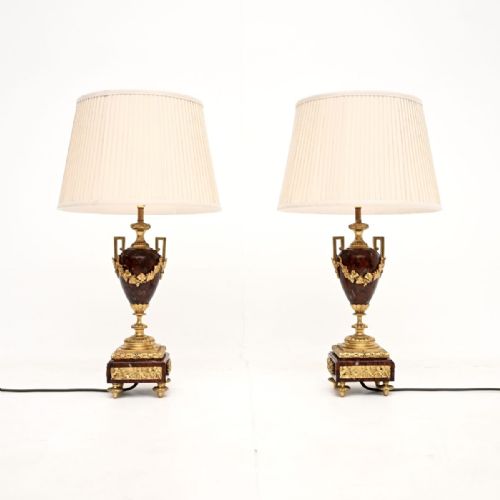
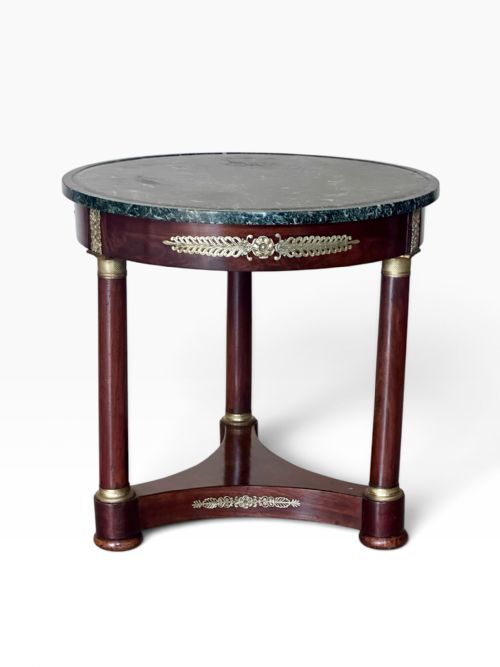
The selections span larger centre tables and console tables alongside smaller items that share the exact same vocabulary of cast metal mounts. Pieces frequently feature rouge marble, flame mahogany and green marble paired with ormolu or gilt bronze elements.
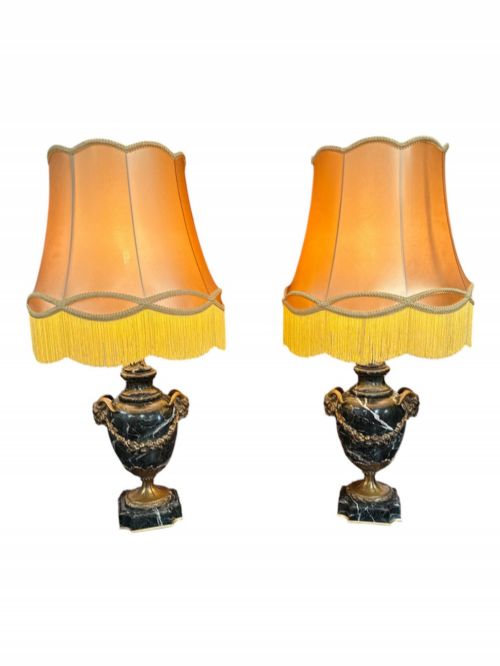
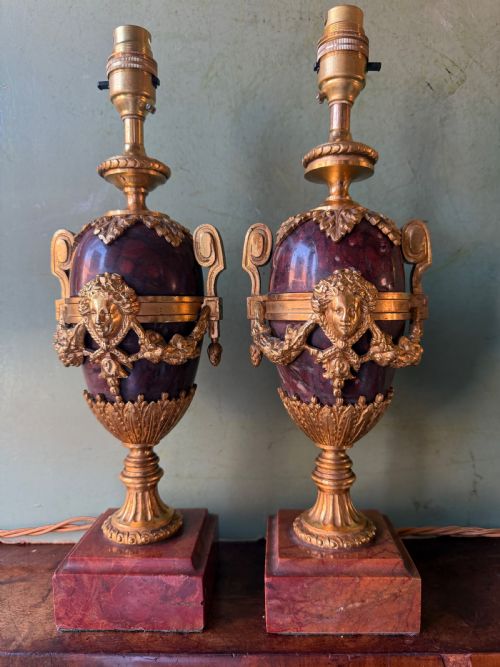
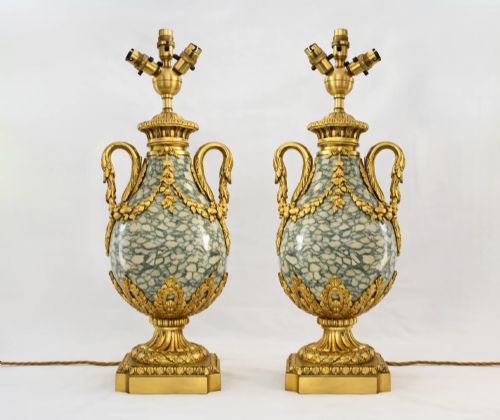
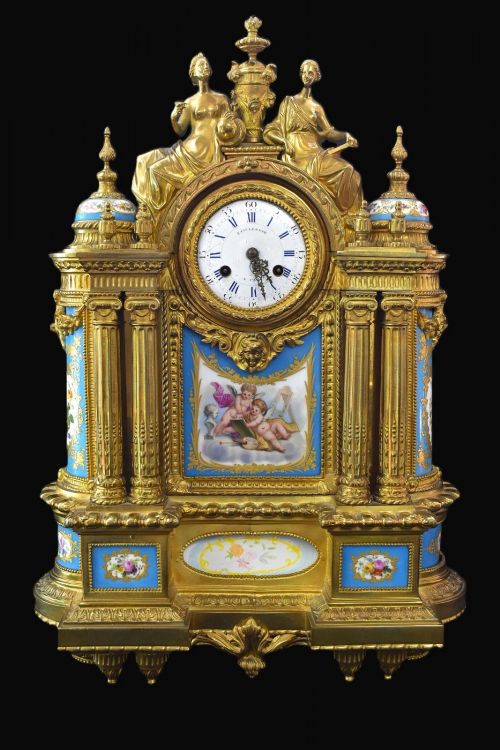
Nineteenth-century makers adopted classical architectural motifs, placing cast mounts upon polished stone columns and wooden frames. The resulting forms range from monumental centre tables to tall table lamps and architectural mantel clocks sharing identical mount details.
Materials and construction methods
Craftsmen utilised heavy stones including rouge marble, white marble, green marble, Siena marble and onyx for the primary structural bodies and columns. These dense mineral bases provide the solid weight necessary to support elaborate metal fixtures.
Foundries cast bronze, brass and ormolu into decorative mounts, foliage, caryatids and classical plaques before applying gilt finishes. Artisans then secured these metal components to the marble and mahogany bodies using threaded fixings.
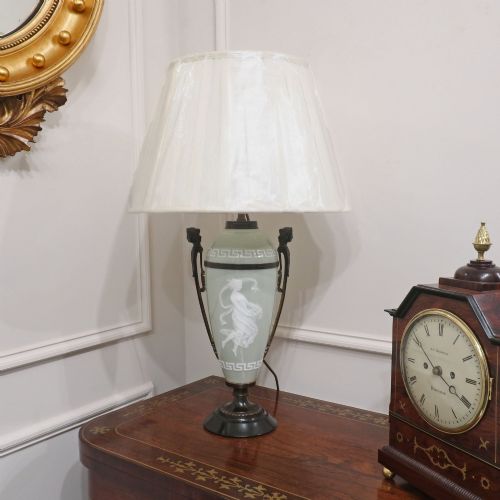
Materials appearing across current inventory include ormolu, rouge marble, porcelain, flame mahogany and bronze.
Distinguishing quality across examples
Superior examples display crisp, deeply chased detail within the ormolu and gilt bronze mounts, whereas lesser pieces show soft, shallow casting marks. The definition in acanthus leaves, cherubs and classical borders reveals the skill of the original foundry.
The selection of stone dictates the piece's standing, with richly figured rouge or Siena marble commanding greater presence than plain or uniform substitutes. Timber sections like flame mahogany exhibit tight, deliberate grain matching the grandeur of the metalwork.
Etienne Lenoir·James Ritchie And Son
The Classical Bronze Mounted Table Glossary
- Ormolu
- A gilded bronze application used for decorative mounts on furniture and clocks. The technique involves treating cast bronze with a mercury and gold amalgam before heating.
- Rouge marble
- A deep red, variegated limestone quarried primarily in France and prized for decorative architectural elements. Its intense colour forms a stark visual contrast against polished ormolu mounts.
- Gueridon
- A small circular table supported by a central column or multiple legs, originating in seventeenth-century France. Nineteenth-century variants frequently incorporate bronze mounts and marble tops.
- Console table
- A wall-mounted or freestanding table designed to stand against a vertical surface, often featuring front legs and rear brackets. These pieces provide a formal display surface in classical interiors.
- Cassolette
- A decorative vessel shaped like an urn, often designed to function as a perfume burner or convert into a lamp. In nineteenth-century French pieces, these containers feature removable lids and rich ormolu mounts.
Classical Bronze Mounted Table: Frequently Asked Questions
What defines a classical bronze mounted table?
These items unite wooden or stone structures with cast metal decorative elements drawn from French Neoclassical and Empire design traditions. They rely on heavy materials like marble and mahogany to anchor ornate gilt bronze ornamentation.
Created primarily during the nineteenth century, the form encompasses large centre tables, console tables and related decorative objects that utilise the same architectural vocabulary.
Where should I place a console table?
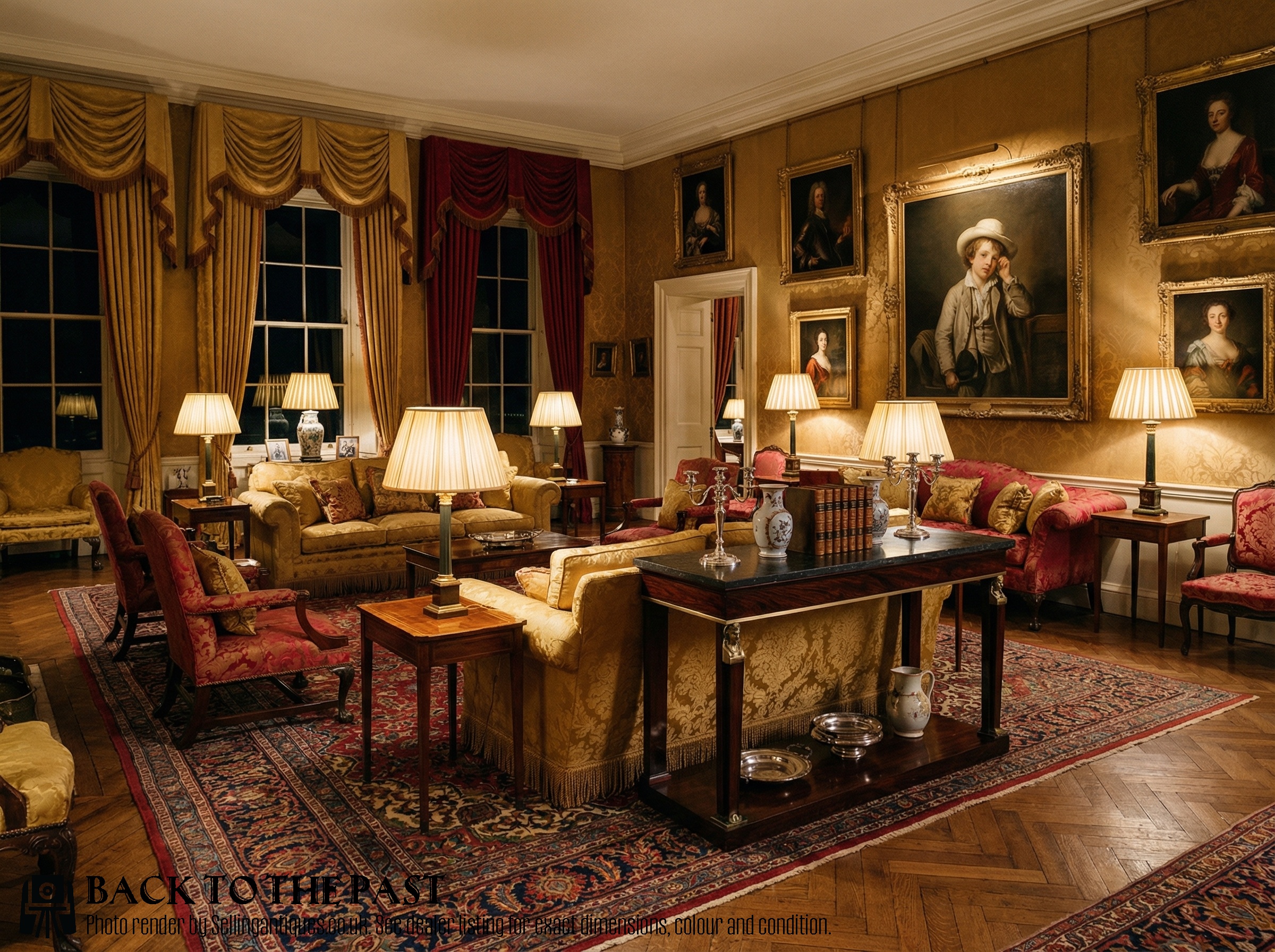
Console tables fit naturally against flat walls in hallways, reception rooms and dining spaces where floor depth is limited. Their structural design allows them to serve as stable surfaces for lamps, clocks and decorative objects.
Pairing a console table with a complementary mirror or painting creates a traditional focal point within a room. Ensure the piece sits on a level floor to maintain the stability of heavy marble tops.
How do I recognise Louis XVI style?
Louis XVI style relies on straight architectural lines, symmetrical arrangements and classical motifs such as fluted columns, ribbon twists and laurel wreaths. This aesthetic contrasts directly with the earlier curved lines of the Rococo period.
Pieces in this style utilise restrained geometric forms paired with high-quality ormolu mounts on marble or mahogany bases. The overall effect emphasises proportion, dignity and classical restraint.