
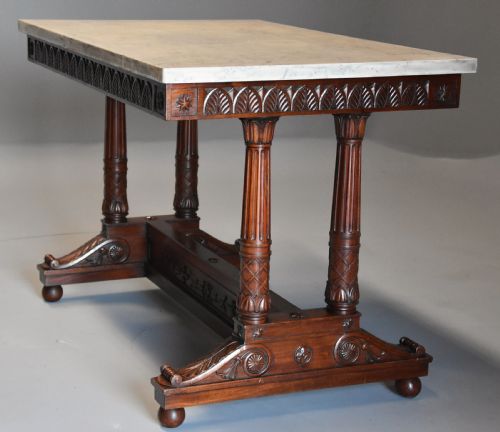

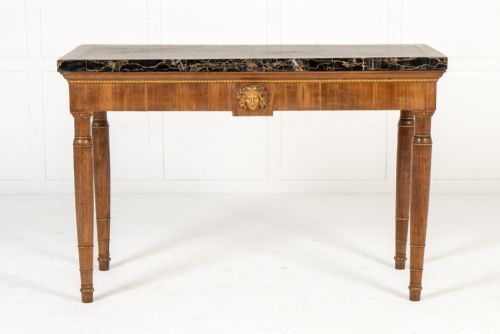

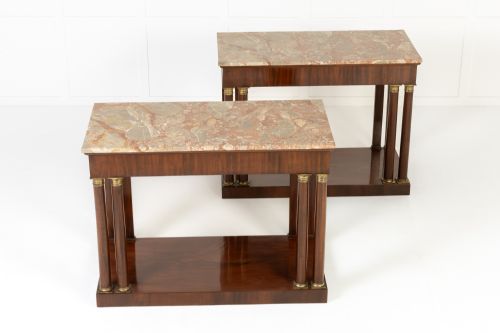


Empire Marble Top Console
An empire marble top console brings classic neoclassical presence into a room, pairing stone surfaces with rich timbers.
Empire Marble Top Console
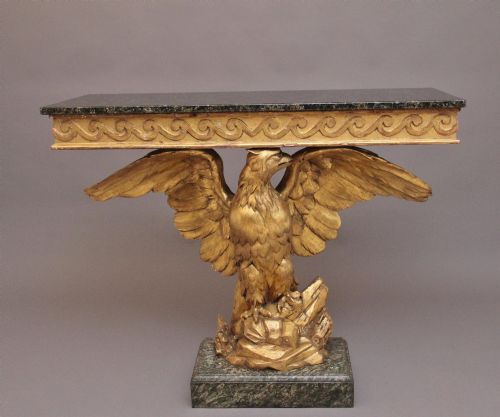
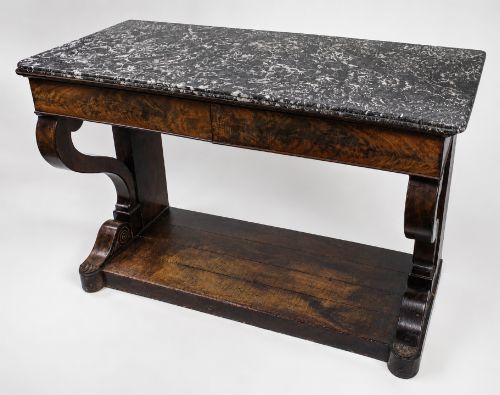
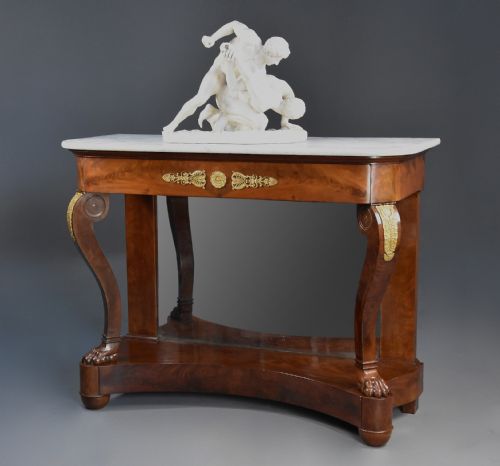
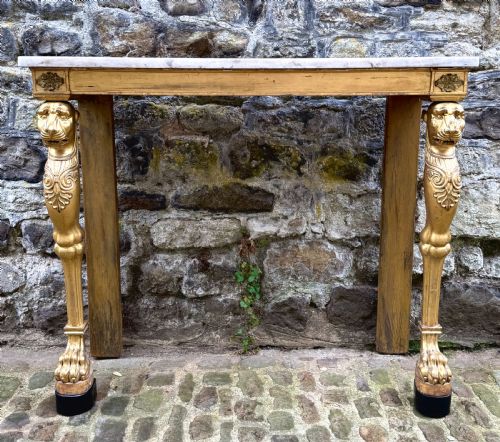
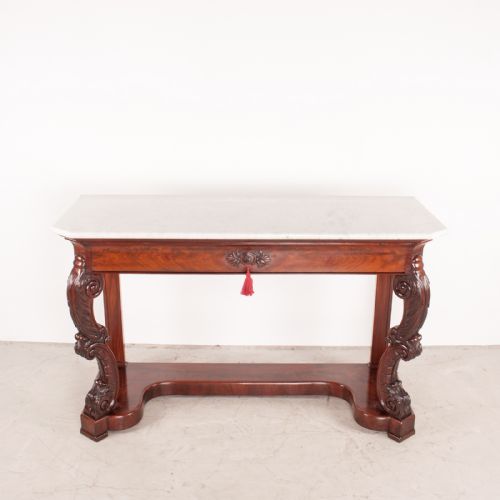
When you search for an empire marble top console, you encounter substantial architectural furniture designed to sit flat against a wall or anchor a hallway. These pieces combine heavy stone surfaces with timber bases built in French Empire, Italian Neoclassical, and Regency styles.
Most examples appearing here span the nineteenth century, ranging from the strict symmetry of the 1800s to later revival periods in the twentieth century. Alongside standard console tables, the selection includes related forms like pier tables, side cabinets, and centre tables featuring stone surfaces.
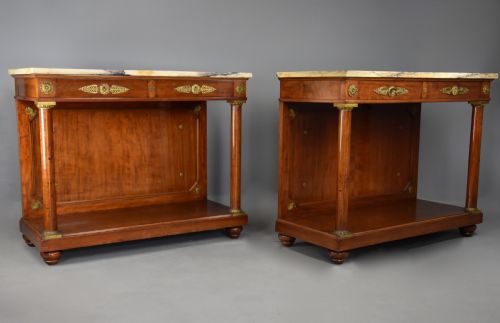
Makers and workshops construct these items to display strong linear forms, often incorporating mirror backs, structural columns, or gilt bronze mounts. Buyers select them to anchor reception rooms or grand entryways with traditional weight and formal polish.
How they were made
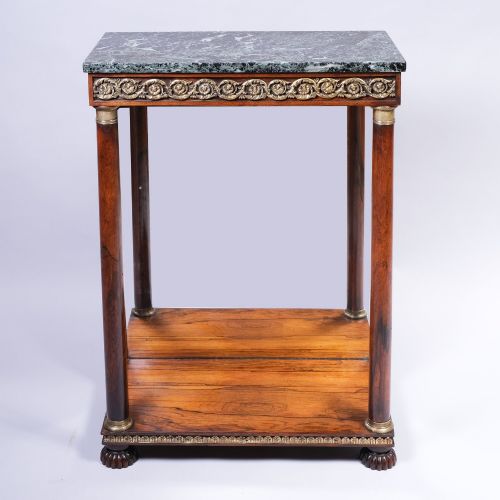
Cabinetmakers build the foundational carcase using dense timbers such as mahogany, walnut, rosewood, and satinwood, frequently applying flame mahogany veneers for rich surface figuring. Artisans then mount polished marble slabs directly onto the timber frames, using fossil marble or standard white varieties.
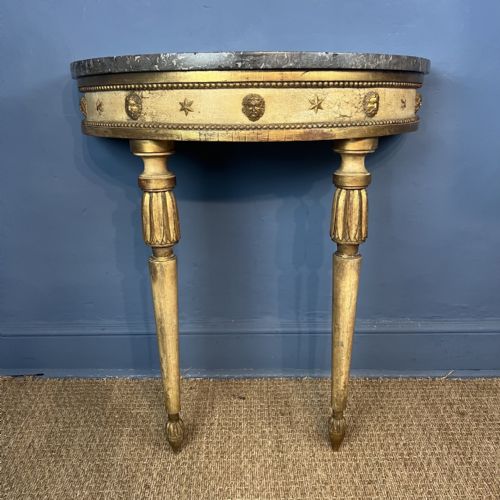
Makers enhance the timber structures with cast or chased ormolu, brass mounts, gesso details, and parcel gilt highlights. Workshops apply cream paint or ebonised finishes to achieve specific regional tastes seen across French, Italian, and Swedish pieces.
Materials appearing across the inventory include fossil marble, ormolu mounts, brass details, and hand-painted wood finishes.
What varies in quality
The sophistication of the timber veneer and the precision of the cabinetwork separate standard pieces from exceptional examples. Heavy flame mahogany or figured walnut requires skilled hand-selection to ensure balanced grain patterns across the front apron and supports.
The crispness of the cast ormolu mounts and the integration of the marble slab define the upper tier of production. Stamped maker marks from established Parisian workshops indicate higher workshop standards and documented craftsmanship.
Krieger Paris·JACOB·Jean Joseph Chapuis
The Empire Marble Top Console Glossary
- Ormolu
- Gilt bronze mounted to furniture surfaces through a mercury amalgamation process. This technique gives metallic mounts a distinct golden lustre.
- Console table
- A wall-mounted or heavily bracketed table designed for display. These forms traditionally sit beneath large mirrors.
- Gueridon
- A small French table supported by one or more central columns. The form developed significantly during neoclassical periods.
- Carrara marble
- A type of white or blue-grey stone quarried in Italy. It provides a smooth, cool surface for heavy tabletops.
- Parcel gilt
- Woodwork partially decorated with thin gold leaf applied to specific carved details. This highlights structural motifs against dark timber.
Empire Marble Top Console: Frequently Asked Questions
Where should I place an empire marble top console?
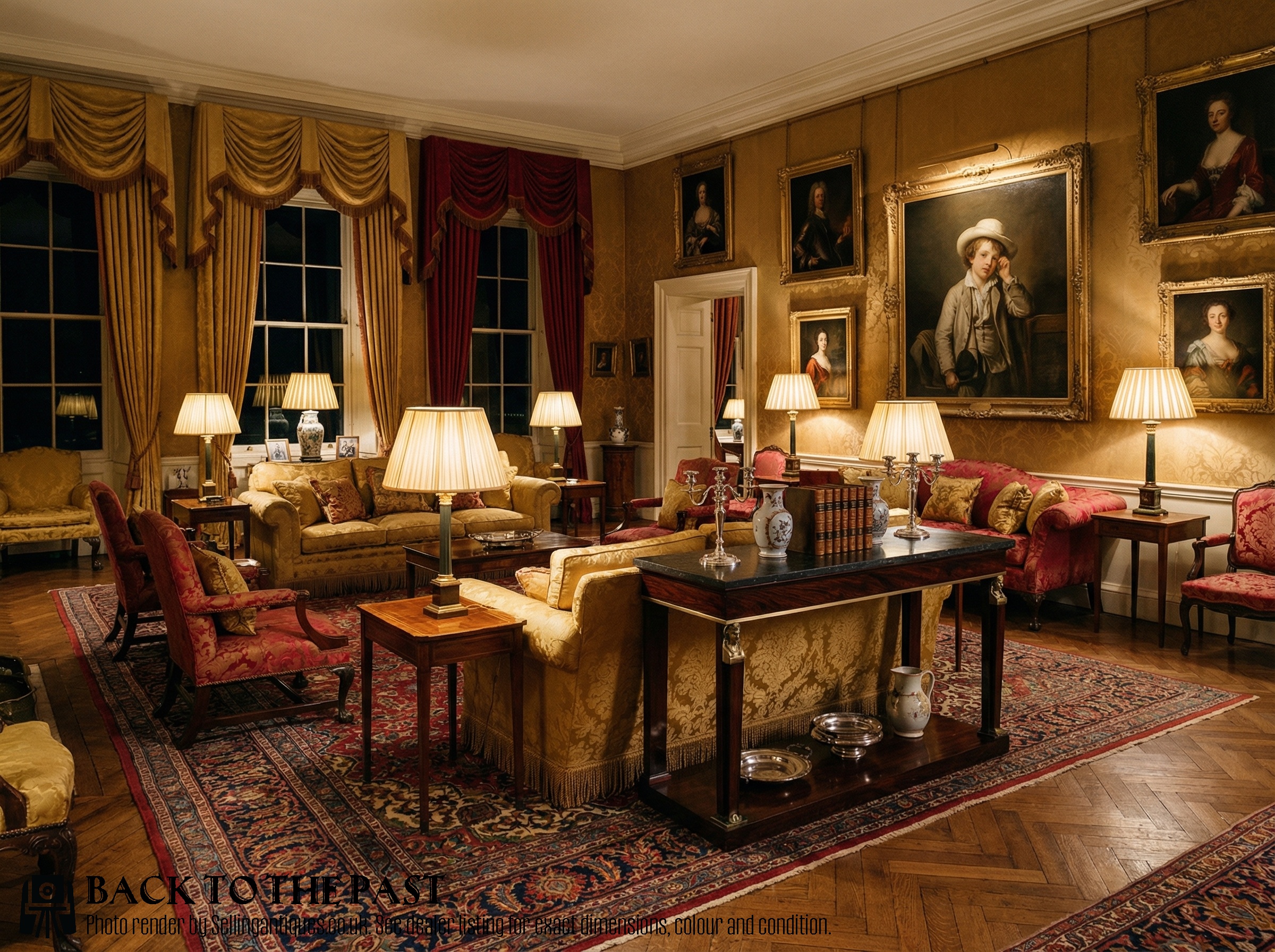
These tables suit hallways, living rooms, and grand entryways where wall space allows the piece to anchor the room. They sit flush against vertical surfaces, often beneath large mirrors or paintings.
The heavy stone top and formal timber base require a solid wall for stability. Placing the table away from direct heat sources protects the timber veneers and polished marble finishes.
How do I care for the marble top?
Marble requires gentle cleaning with warm water and a soft cloth to preserve the polished finish. Acidic liquids can etch the stone surface if left unattended.
Using coasters and protective mats prevents scratching and staining. Periodic application of specialised stone wax maintains the natural sheen of the marble.
What is the difference between a console and a pier table?
Console tables are designed to stand against a wall, sometimes secured with wall brackets for added stability. Pier tables specifically occupy the wall space between two windows.
Both forms frequently feature marble tops and mirror backs in nineteenth-century designs. The distinction often relates to the architectural placement within a room rather than the construction method.