

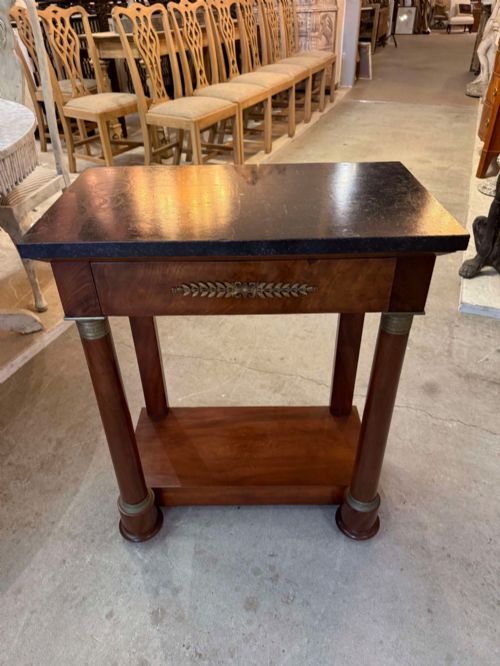
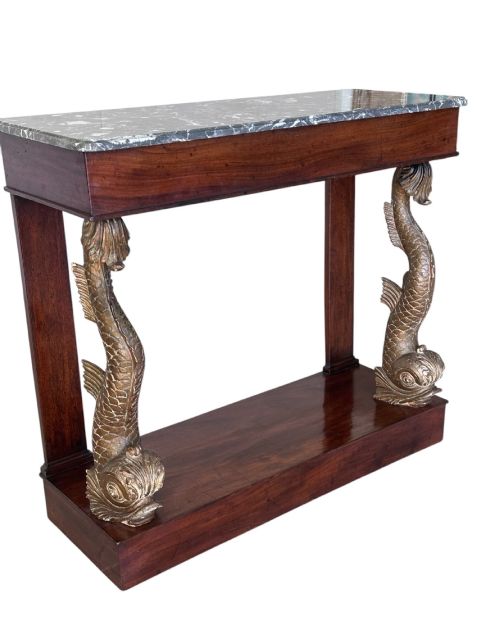
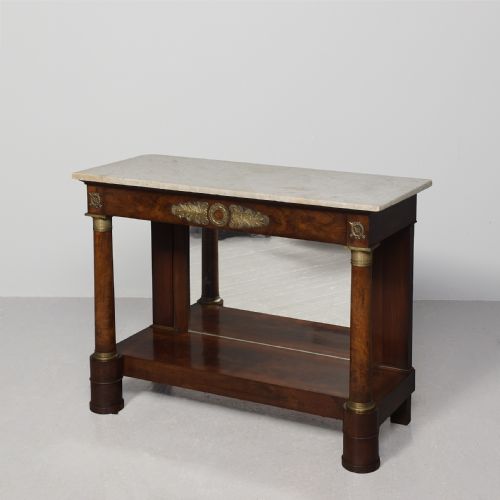
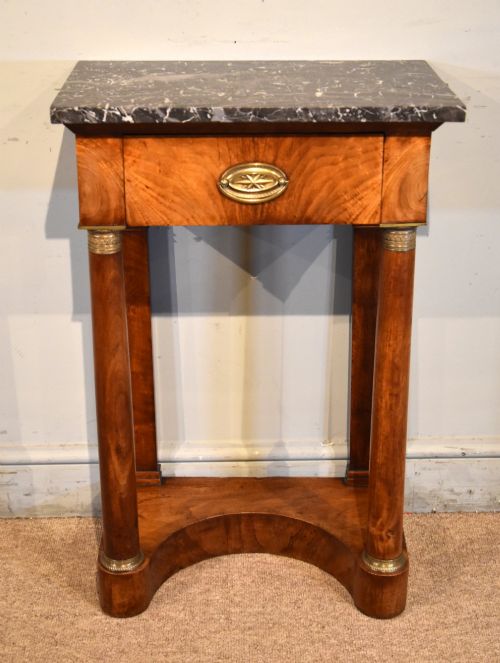



Empire Style Pier Table
An empire style pier table brings architectural presence and classical proportion to a hallway, anchored by rich timber and cool stone.
Empire Style Pier Table
An empire style pier table is a substantial console designed to sit flat against a wall, frequently positioned beneath a mirror or between windows. Buyers searching for this phrase seek grand classical forms that combine monumental presence with functional surface area.
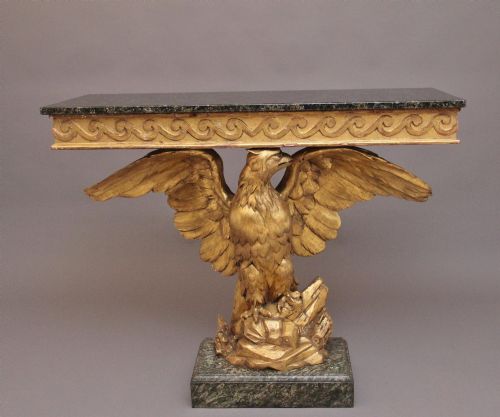
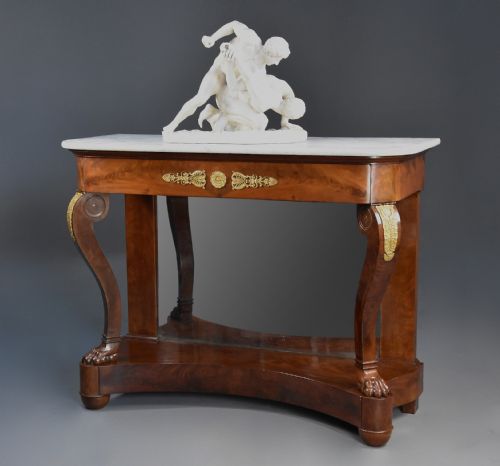
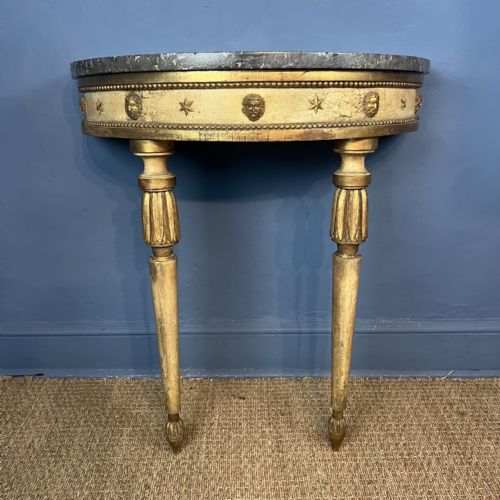
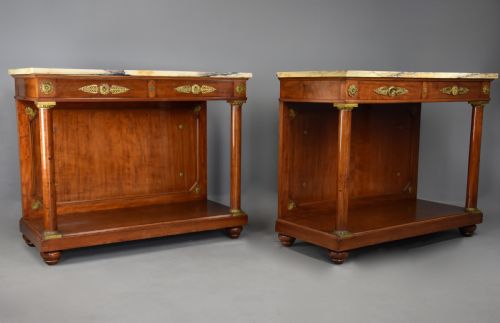
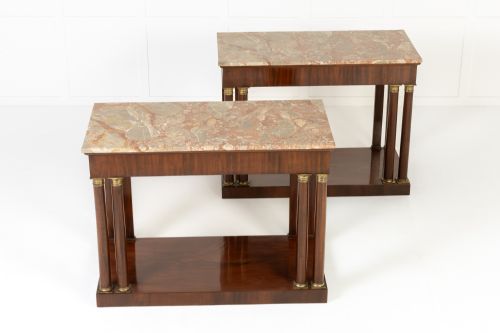
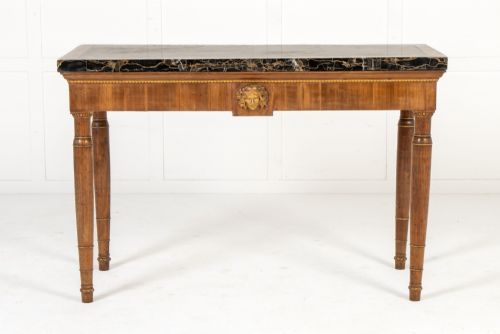
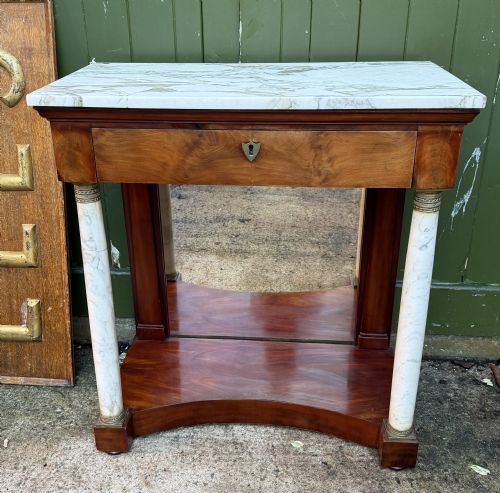
The pieces on this page are dominated by nineteenth-century examples and later revivals, spanning French, Italian, English, and Swedish workshops. You will encounter console tables and centre tables executed in mahogany, walnut, burr birch, and painted wood, topped with marble.
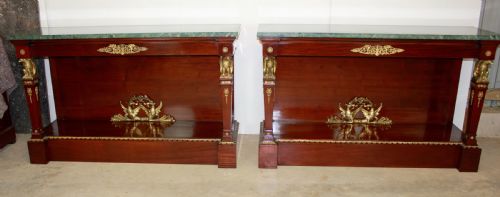
French models and Italian neoclassical interpretations form the core of the selection, ranging from authentic early nineteenth-century pieces to twentieth-century revivals. Each iteration adopts the vocabulary of columns, gilt bronze mounts, and bold geometric lines characteristic of the style.
How they were made
Cabinetmakers constructed these tables using dense timbers like mahogany and walnut as a carcase, often applying figured veneers to create striking grain patterns on the frieze and base. Solid secondary woods provide structural integrity beneath the decorative surfaces.
Heavy marble tops, typically white or dark grey, rest directly upon the timber frame to provide a durable and cool horizontal surface. Giltwood, ormolu, brass, and gesso elements are applied to highlight architectural details, pilasters, and mounts.
Empire Style Pier Table Retail Price Guide 2026
Typical asking prices for empire style pier table among the pieces listed under this phrase on Sellingantiques today, from the lower quarter to the upper quarter. They describe what is for sale here now, not the wider market.
Listings feature nineteenth-century originals alongside early twentieth-century revivals, utilising mahogany, walnut, burr birch, and painted wood paired with marble tops.
What varies in quality
The distinction between standard examples and superior pieces rests upon the selection of timber veneers and the crispness of the carving or cast metal mounts. Master cabinetmakers utilised tightly figured mahogany or burr birch, aligning grain patterns meticulously across the drawer fronts and aprons.
Structural proportion and the integration of the marble top define the architectural success of the table. Fine workshop execution shows in the precision of parcel gilt details and the weight of the bronze or brass ornamentation rather than mere surface decoration.
Krieger Paris
The Empire Style Pier Table Glossary
- Pier table
- A table specifically designed to stand against the wall between two windows, often placed beneath a pier glass mirror. They share a shallow depth to fit narrow wall spaces.
- Ormolu
- Gilded bronze mounts cast and chased to adorn furniture frames. This technique was widely utilised during the nineteenth century to add metallic contrast to dark wood.
- Console table
- A table supported by wall brackets or console legs rather than four independent vertical supports. They rely on the wall for absolute stability.
- Gesso
- A plaster-based mixture applied to wood surfaces and smoothed to receive gilding or paint. It allows for sharp, intricate relief work on mouldings.
- Parcel gilt
- Portions of a painted or wood surface highlighted with gold leaf. This technique emphasises carved details and architectural motifs.
Empire Style Pier Table: Frequently Asked Questions
Where should I place an empire style pier table?
These tables suit hallways, grand landings, and principal reception rooms where their shallow depth allows them to sit flush against a wall without obstructing pathways. Placing one beneath a large mirror or artwork creates a traditional focal point.
Because they often feature heavy marble tops, they require stable wall positioning or placement on level flooring to ensure safety and balance.
How do I care for the marble top?
Marble requires gentle cleaning with a damp cloth and neutral soap, avoiding acidic substances like vinegar, citrus, or wine that can etch the polished surface. Regular dusting keeps the stone protected.
Heavier polishing compounds should be used sparingly and only by hand to maintain the original sheen without wearing down the natural stone.
Are these tables sturdy enough for daily use?
Nineteenth-century console tables are constructed from solid hardwoods and heavy stone, making them exceptionally stable for everyday placement of lamps and decorative objects. Many designs rely on wall brackets or sturdy front legs for weight distribution.
Care should be taken not to sit or lean heavily on the edges, as the cantilevered design of certain console formats places stress on the wall fixings.
How do I distinguish an original from a revival piece?
Examination of construction methods, tool marks on the secondary timbers, and the natural ageing of the wood and patination provide clues to a piece's age. Nineteenth-century examples often exhibit hand-cut joints and older patination on the timber carcase.
Revival pieces from the early twentieth century utilise historical styles while displaying machine-sawn elements and different secondary woods consistent with later workshop practices.