





Pair French Console Tables
When you search for pair french console tables, you meet matched furniture built to stand against a wall, mostly originating from the nineteenth century.
Pair French Console Tables
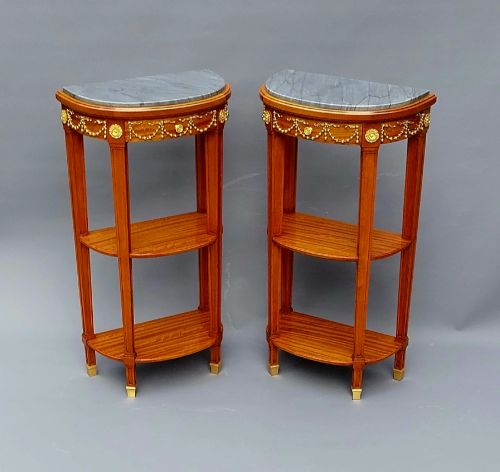
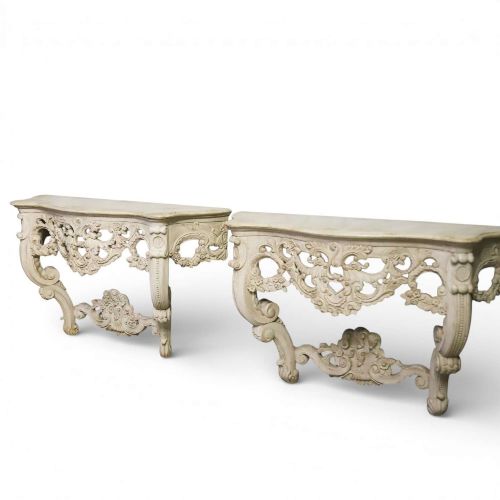
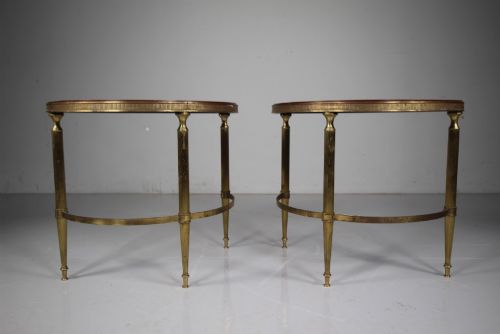
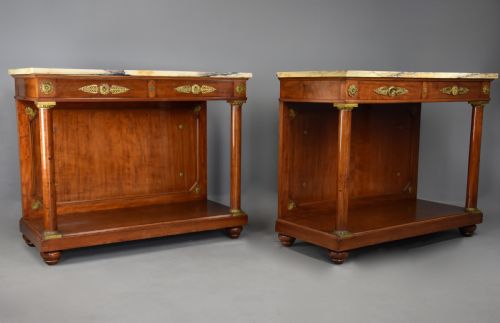
When you search for pair french console tables, you encounter matching sets designed to anchor a room, often placed beneath mirrors or in entrance halls. The forms appearing on this page span from eighteenth-century giltwood examples to nineteenth-century Empire and Rococo revival pieces, alongside twentieth-century painted and brass variations.
The layout of these tables includes wall-mounted consoles, half-moon demi-lune shapes, and freestanding serving or card tables. Surviving pieces frequently utilise architectural symmetry to balance interior spaces, reflecting the formal demands of period salons and dining rooms.
Materials and construction methods
Cabinetmakers utilised hardwoods such as mahogany, walnut, oak, and cherry as structural carcasses, frequently applying veneers of exotic timbers or decorative paint finishes. Giltwood examples display intricate hand-carved details finished in gold leaf over gesso.
Many surfaces incorporate heavy slabs of marble, particularly white Carrara, secured across the timber frames. Ormolu mounts, cast bronze, and brass details are frequently applied to accentuate the corners, aprons, and legs of Empire and neoclassical styles.
Pair French Console Tables Retail Price Guide 2026
Typical asking prices for pair french console tables among the pieces listed under this phrase on Sellingantiques today, from the lower quarter to the upper quarter. They describe what is for sale here now, not the wider market.
Tailors shop display tables occasionally moonlight as grand hallway consoles.
Distinctions in craftsmanship and origin
The distinction between standard workshop production and master craftsmanship lies in the crispness of the hand-carving and the integration of the mounts. Maker-stamped pieces and documented attribution separate workshop output from everyday furniture.
Condition and originality dictate the character of surviving examples, distinguishing untouched antique surfaces from later restorations. The weight of the marble top and the depth of the timber seasoning define the longevity of each frame.
Krieger Paris·Jean Joseph Chapuis·Bettenfeld Paris
The Pair French Console Tables Glossary
- Demi-lune
- A half-moon shape used for tables designed to sit flush against a wall. This profile became particularly common for smaller side and console tables during the eighteenth and nineteenth centuries.
- Ormolu
- Gilded bronze mounts applied to furniture for decorative contrast. The technique involves treating metal with a mixture of gold and mercury.
- Giltwood
- Timber that has been coated with a thin layer of gold leaf over a prepared gesso base. This finish is characteristic of formal French console tables from the eighteenth century onwards.
- Boulle
- A form of marquetry utilising tortoiseshell and brass inlay developed in France. It frequently appears on nineteenth-century card and console tables.
- Console table
- A table supported by wall brackets or console legs rather than four independent vertical supports. They were traditionally manufactured to display decorative objects in formal rooms.
Pair French Console Tables: Frequently Asked Questions
Where should I place these tables?
These pieces suit entrance halls, drawing rooms, or dining spaces where a shallow footprint is required against a wall. They function well beneath large mirrors or artwork.
Matching pairs allow for balanced interior arrangements on either side of a fireplace or doorway.
How do I identify Empire style?
Empire pieces display strong classical motifs, dark mahogany timbers, and prominent cast ormolu mounts. The lines tend to be architectural and imposing.
They reflect nineteenth-century revivals of Roman and Greek forms popular during the Napoleonic era.
Are marble tops original?
Marble tops on period examples were cut to fit the specific timber frame during manufacture. Carrara and other stones were selected to contrast with mahogany or giltwood bases.
Close inspection of the rebate reveals how the stone rests within the wooden moulding of the console.
What is a demi-lune shape?
A demi-lune is a half-circle design that allows the flat edge to sit directly against the wall. This form saves floor space in narrower hallways.
It appears frequently across nineteenth-century painted and mahogany examples on this page.