




Painted Wood Pier Table
A painted wood pier table brings architectural grace to a hallway or drawing room, anchoring the wall below a mirror.
Painted Wood Pier Table
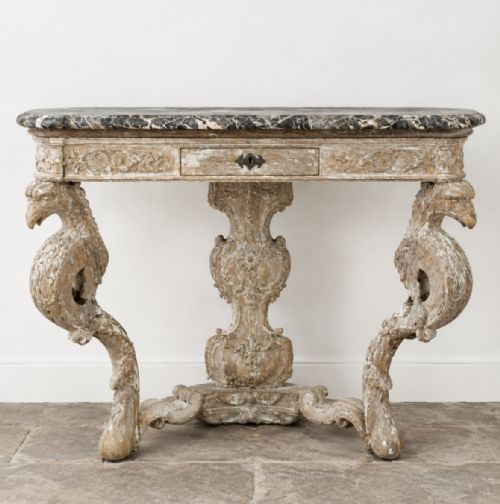
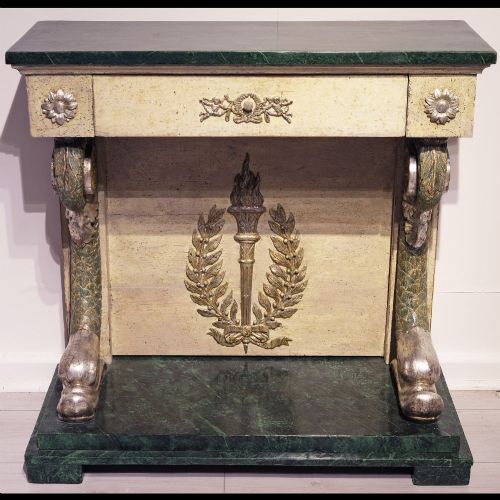
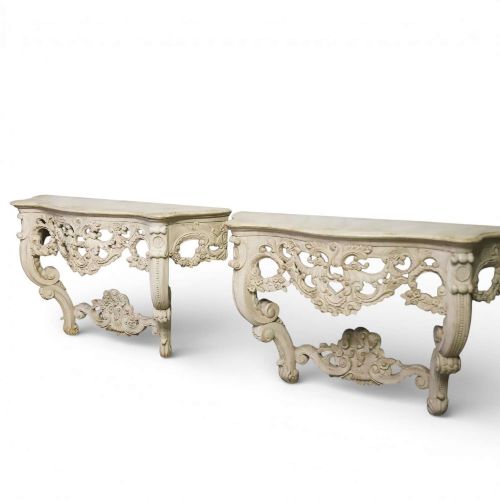
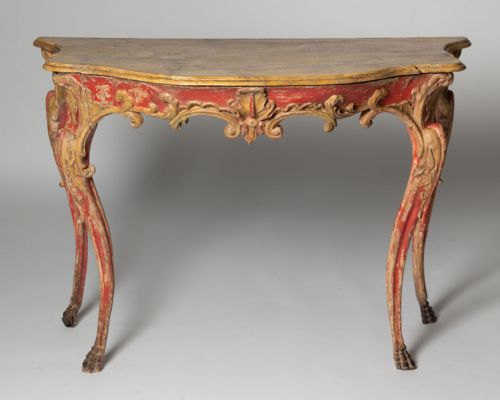
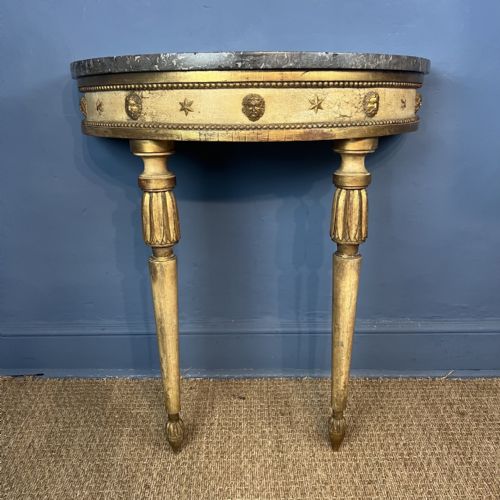
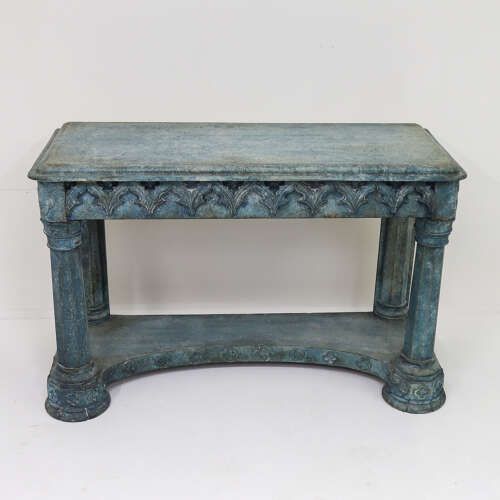
A painted wood pier table is a console designed to stand flat against a wall, frequently beneath a pier glass or mirror. These pieces emerge across the eighteenth and nineteenth centuries, taking forms such as the demi-lune, half moon, and rectangular console.
The selection here draws primarily from nineteenth-century examples alongside eighteenth-century works and later twentieth-century interpretations. French, Italian, English, and Swedish workshops provide the regional variations seen in these listings.
Makers employ styles ranging from French Rococo and Neoclassical to Gustavian, Sheraton, and Gothic tastes. Many pieces arrive as pairs, intended for symmetrical placement within formal reception rooms.
Materials and construction methods
Construction relies upon carved wood and beech, often shaped into demi-lune or rectangular frames supporting heavy stone surfaces. Marble, faux porphyry, and Sienna marble form the tabletops, resting securely on the wooden bases.
Surfaces receive layers of paint, gesso, and gold leaf or giltwood to achieve antique white, cream, and parcel gilt finishes. Artisans carve decorative motifs directly into the timber before applying the final painted scheme.
Regional styles on this page include French Rococo, Italian Neoclassical, Gustavian, Sheraton, and Gothic tastes.
Assessing craftsmanship and finish
Quality depends upon the crispness of the wood carving and the harmony between the painted surface and the supporting structure. Superior examples display subtle depth in the paint layers and meticulous application of gold leaf or parcel gilding.
The choice of top elevates a piece, with solid marble or Sienna marble slabs marking finer production than simpler wooden surfaces. The integrity of the original paint finish, whether Gustavian cream or antique white, dictates the visual authority of the table.
The Painted Wood Pier Table Glossary
- Demi-lune
- Having a half-moon shape with a flat back edge designed to sit flush against a wall. This profile characterises many eighteenth and nineteenth-century console tables.
- Pier glass
- A tall mirror specifically proportioned to hang on the pier of wall space between two windows. It frequently pairs directly with a console table placed below.
- Gesso
- A plaster-like mixture applied to wood surfaces to prepare them for painting or gilding. It provides a smooth base for intricate carved details.
- Parcel gilt
- Partially gilded with gold leaf, leaving portions of the underlying painted wood visible. This technique highlights specific carved details on the frame.
- Faux porphyry
- A decorative paint finish imitating the deep purple-red igneous rock prized since antiquity. Italian neoclassical pieces frequently utilise this illusion.
Painted Wood Pier Table: Frequently Asked Questions
Where should I place a pier table?
These tables belong against a flat wall, traditionally in a hallway, reception room, or between windows beneath a matching mirror. Their shallow depth ensures they occupy minimal floor space while making a strong decorative impact.
Matching pairs work well flanking a doorway or fireplace, whereas single demi-lune tables anchor smaller entrance spaces.
How do I care for the marble top?
Clean the marble surface using a soft, damp cloth and mild soap, avoiding acidic solutions that etch the stone. Placing felt pads beneath decorative objects prevents scratching the polished finish.
Treat the painted wooden base with a dry duster, keeping moisture away from gesso and gilt details.
Are these tables designed to be free-standing?
Pier tables require the support of a wall because their shallow frames and leg configurations rely on architectural stability. Most historical examples feature flat backs intended to rest flush against plaster.
Some designs include rear brackets or fixings to secure the piece safely to the wall.
What distinguishes Gustavian tables from French styles?
Gustavian pieces from Sweden favour restrained neoclassical lines, pale cream paintwork, and understated carving. French Rococo and Neoclassical designs tend towards more elaborate forms, heavier gilding, and dynamic curves.
Both traditions utilise painted wood and marble tops but express different regional interpretations of elegance.